TST Trainer

Three Tidbit Stories

History.

3 random tidbit stories in about 3 minutes.

1.

History FAQ.

While Charles Forster commercialized the first wood toothpick in 1869, the story of the toothpick stretches far back into the Stone Age, long before modern civilization. The earliest use of toothpicks can be traced to Homo habilis, an ancient human ancestor who lived around 2.3 million years ago. By about 1.84 million years ago, Homo habilis began using simple toothpicks—likely small sticks—leaving behind telltale grooves in their fossilized teeth. This practice of using readily available things like twigs, feathers, and bones has been a human endeavor for millions of years. 

What makes this discovery fascinating is the timeline. Homo habilis had already been shaping stone tools for nearly a million years, developing tools for tasks like cutting meat and plants. This tool use reflected increasing cognitive abilities. Over the next half-million years, this brain evolution fueled cultural innovations like using toothpicks. This dynamic between biological evolution and cultural advancements—where each fed into the other—shows just how adaptive and resourceful early humans were, even when it came to something as simple as cleaning their teeth!



That History FAQ, 

was first published on TST 2 years ago.

2.

History TST Term.

Impermanence is the truth that reality is always changing. Everything flows. Everything shifts. Stars are born and die. Bodies age. Emotions rise and fade. Civilizations emerge, transform, and collapse. Even the self you carry through life is not frozen in place.

In 30 Philosophers, impermanence is one of the book’s core threads. In the East, Buddhism and other traditions use impermanence to show why attachment causes suffering. In the West, Heraclitus gives us flux: the world as an ever-changing river. You cannot step into the same river twice, because the river has changed, and so have you.

In philosophy, impermanence can be used as a grounding idea. Reality is not static. It is a self-reconfiguring process. Matter and energy do not appear from the void and vanish back into it. They rearrange. Patterns form, dissolve, and reform. What we call a thing is often a temporary stability inside a larger flow.

This matters because much of human suffering comes from treating temporary things as permanent. We cling to youth, certainty, identity, status, relationships, institutions, and old versions of ourselves. Impermanence does not tell us to stop loving life. It tells us to love it honestly, knowing it moves.


That History TST Term, 

was first published on TST 19 hours ago.

3.

History Story.

700,000 BCE

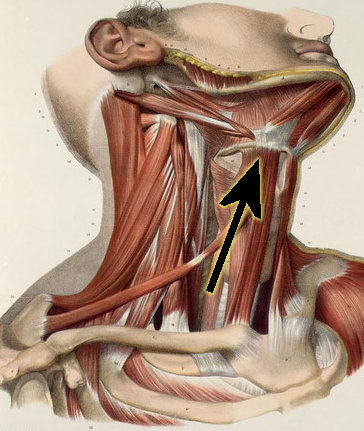
Around 700,000 years ago, the development of a human-like hyoid bone suggests early hominins may have begun transitioning from simple vocalizations to more structured speech.

This period marks a critical evolutionary point for Homo heidelbergensis, whose anatomical adaptations for speech, coupled with advanced tool use and complex social structures, indicate possible use of rudimentary language. Earlier hominins like Homo erectus also showed signs of vocal communication, but whether this included structured language remains uncertain. This era highlights the beginnings of speech, setting the stage for the sophisticated linguistic capabilities of later hominins. 


That History Story, 

was first published on TST 5 years ago.

The end. Refresh for another set.

TST Trainer
(c) 2025-2026 TouchstoneTruth.
Writing and coding by Michael Alan Prestwood.
Scroll to Top