WWB Trainer

3 Random Tidbits

H2-Ancient History.

3 random tidbits in about 5 minutes.

A H2-Ancient History FAQ.

Subject: Ancient History.
A bit. The Roman Empire grew by assimilation.

Stepping back for a moment.

Rome expanded by incorporating conquered peoples, adopting their gods, customs, technologies, and elites into a unified system. Unlike the Borg’s erasure of individuality, Rome often preserved local identity under Roman law, blending diversity with centralized control to sustain a vast empire.

Now, the details…

At first glance, comparing the Roman Empire to the Borg from Star Trek might seem far-fetched, but this analogy can surprisingly shed light on the nature of cultural and military assimilation practiced by Rome. Much like the Borg, who assimilate species to collect their knowledge and enhance the collective, the Roman Empire expanded its borders and influence, often incorporating the customs, technologies, and gods of conquered peoples into its own cultural and administrative frameworks.

Rome’s strategy was based on integration and control, rather than outright eradication. Conquered territories were brought into the fold through a mix of force and incorporation. Just like when Picard was brought into the leadership of the Borg at Wolf 359, Rome’s strategy was to bring local elites into the Roman administrative system. The conquered were assimilated and became Roman citizens. Borg-like assimilation allowed Rome to maintain control over vast territories and diverse populations, enhancing the empire’s stability and richness.

However, unlike the Borg, who erase individuality, the Romans often preserved a degree of local customs and autonomy, using their extensive road network and military might to enforce Roman law and order while still celebrating diverse heritages within the empire’s borders.

This blending of cultures under a single political and legal system contributed to the longevity and success of the Roman Empire, much as the Borg’s assimilation tactics aimed to create a more efficient collective. While the mechanisms and intentions were certainly different, the metaphor highlights how both entities grew stronger by absorbing the strengths of others.


That H2-Ancient History FAQ, 

was first published on TST 2 years ago.

By the way, the flashcard inspired by it is this.

Front: In what key way was the Roman Empire similar to the Borg?
Back: Assimilation


A H2-Ancient History Quote.

Subject: Socratic Method.
Socrates taught skepticism and critical thinking. He taught that a life with the seek truth tenant is required no matter what culture and time you live in.

To clarify.

Socrates taught that self-reflection brought knowledge, which in turn brought meaning. I think he wanted you to uncover the truth, no matter what it is, reconcile it with your beliefs, and make sense of it in a way that is consistent with common knowledge.

Now, the details…

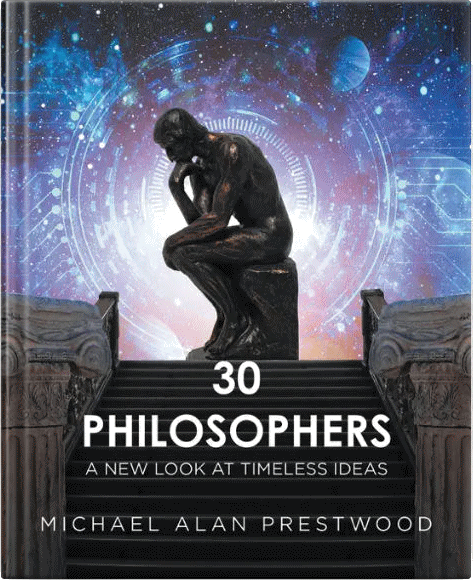
From chapter 1 of 30 Philosophers: A New Look at Timeless Ideas by Mike Prestwood:

…let’s explore the origin of our first translated quote. This will set up an exploration of your personal language later in Chapter 7. The literal translation from long ago, in a much different world, is something like, “But the unexamined life is not lived by man.” Scholars render it today as, “The unexamined life is not worth living,” but it could also translate to, “For a human being, a life without introspection is not truly lived,” or more succinctly, “Life without reflection is not fulfilling.” This underscores that quotes originate from the mind of a specific person in a specific culture with their own contextual background and origin story.

Get the book!

Nothing is better than reading the full story of human thought over the last 5,000 years. This quote was first used in chapter 1 which sets up the story of human thought and first introduces how a healthy skeptical attitude can help you live a better life. A concept explored in depth in chapter 10 on Pyrrho of Elis and his version of skepticism.

30 Philosophers: A New Look at Timeless Ideas

Immerse yourself in knowledge, not snippets. Pure inspiration from cover to cover. Dive deeper than headlines and memes and explore the minds of the greatest thinkers.
The story of
humanity’s
80 BEST IDEAS,
and the
30 GIANTS
behind them!
Uncover the wisdom of our best ideas!

About Socrates

Socrates was a Greek philosopher and is frequently credited as the founder of Western philosophy. He left no writings, but his student Plato documented his philosophy.

Some of my favorite translated sayings attributed to Socrates:

  • Enjoy yourself — it’s later than you think.
  • He who is not content with what they have will not be content with more.
  • Do not praise someone wealthy until you known how they employ it.
  • We should hear and see more than we speak.
  • False words are not only evil in themselves, but they infect the soul with evil.
  • He is rich who is content with the least.
  • Once made equal to man, woman becomes his superior.


That H2-Ancient History Quote, 

was first published on TST 2 years ago.

By the way, the flashcard inspired by it is this.


A H2-Ancient History Story.

From History:
Subject: Apathetic Agnostic.
New Look
Marcus Aurelius reminds us that you can explore the cosmos without claiming to own it — and still live with strength, fairness, and honor inside it.

So, to put it simply.

Marcus Aurelius shows that you do not need metaphysical certainty to live well. You need discipline. You need humility. You need the willingness to act fairly within the reality in front of you. Curiosity without premature commitment creates strength, not weakness. Flourishing grows from responsible action inside uncertainty.

Now, the details…

Marcus Aurelius lived from 121 to 180 CE. He was a Roman emperor, a Stoic philosopher, and the author of Meditations — a private journal never intended for publication. He ruled during war, plague, political strain, and personal loss. And yet, across those pressures, he kept returning to the same disciplined question: What kind of person should I be?

In 30 Philosophers, Chapter 13, Marcus is placed slightly outside the tidy textbook version of Stoicism. Yes, he was Stoic. But he was also something else. An explorative agnostic. He had curiosity without the compulsion to declare final metaphysical answers.

In Meditations, he entertains possibilities. Maybe the universe is guided by divine reason. Maybe it is atoms and randomness. Maybe there is providence. Maybe there isn’t. And what does he do with that uncertainty? He keeps going. He doesn’t demand certainty before acting well. He doesn’t collapse into skepticism. He doesn’t cling to metaphysical comfort. He explores — without marrying the idea.

That posture matters. Because when you understand the Two Layers — the split between the material world and our human interpretations — something humbling becomes clear: your mental story about reality is not reality itself. Marcus lived that distinction intuitively. He did not confuse his thoughts about the cosmos with the cosmos. He treated his beliefs as provisional. He disciplined them. That’s not apathy. That’s intellectual maturity.

Your worldview can leave room for personal belief. You can hold religious commitments and accept that others do too. You can hold philosophical commitments. But when interacting with others, we have to stand on common ground. That’s when applying science, law, journalism, and ethics is important. We share the same material layer. You calibrate there. Marcus did exactly that. He didn’t wait for metaphysical closure before living morally. He governed, judged, and acted within the reality in front of him.

Marcus is a powerful example of tolerance in action. Flourishing does not require omniscience. It requires discipline. It requires asking, given what I know right now, what is the fair, responsible, character-driven action?

Live legal. Live moral. Live fair.

Marcus did not claim to know the ultimate structure of the universe. He committed to acting well within it. That is the posture of an explorative agnostic — curiosity without premature commitment — and it is precisely the posture that allows anyone to integrate humility, science, and ethics into one coherent architecture.


That H2-Ancient History Story, 

was first published on TST 2 years ago.

By the way, the flashcard inspired by it is this.

Front: What do we call someone who says, “I don’t know and I don’t care”?
Back: Apathetic agnostic.


The end. Refresh for another set.

WWB Trainer
(c) 2025-2026 TouchstoneTruth.
Writing and coding by Michael Alan Prestwood.
Scroll to Top