The Age of Early Civilizations: Ancient History begins with the rise of writing systems and overlaps with humanity’s major creation traditions—Christian, Judaic, Zoroastrian, Mayan, and others. The hard start at 4000 BCE provides a neutral anchor near the center of those narratives. It concludes at 500 CE, flattening the traditional European-centric framing and marking the end of world ancient history rather than merely the start of a European “Dark Age.”
World History: Ancient History

If Fuxi existed as one person, that person likely lived sometime between 8000 and 7000 BCE. Fuxi is a legendary figure in Chinese mythology, considered one of the Three Sovereigns. He is credited with creating humanity, inventing writing, and teaching people to fish and hunt. Fuxi’s contributions laid the foundation for early Chinese civilization and culture, embedding the importance of knowledge, survival skills, and societal organization in Chinese thought.

If Nüwa existed as one person, that person likely lived sometime between 8000 and 7000 BCE. Nüwa is a mother goddess in Chinese mythology, often associated with Fuxi. She is credited with creating mankind and repairing the pillar of heaven, symbolizing the restoration of order in the universe. Nüwa’s story highlights themes of creation, nurturing, and the balance between chaos and order, which are integral to early Chinese cosmology and philosophy.

Who drank the first beer? Getting buzzed definitely has very deep historical roots. The earliest evidence of any fermented beverage is fruit-based, aka wine, and comes from the Jiahu site in China and dates back to around 7,000 BCE (9,000 years ago). In addition to fermented beverage residue in China, we have grain-based, aka beer/ale, residue in pottery going back to 5000 BCE in the Middle East, 4000 BCE in Europe, but it’s the Sumerians that wrote down the earliest known beer recipe in 1800 BCE. Go Sumerians! Before all this, it’s a mystery awaiting discovery, but we know chimpanzees pick up rotting fermented fruit on the jungle floor to get drunk, pushing potential roots back 7.5 million years to our common ancestor.

Zoroastrian texts like the Bundahishn describe a cosmology with a timeline involving a 12,000-year long struggle between good and evil. In 2024, we are nearly 3,000 years into the ealiest known history of this religion. If the “Time of Humanity” is 3,000 years, then Earth was created about 7000 BCE and we are close to entering the “Final Renovation.” Lot’s of assumptions, yes, but this gives you an idea for the cyclical nature of Zoroastrianism.
In Zoroastrian cosmology, the universe’s creation is set within a grand temporal framework of 12,000 years, meticulously divided into four 3,000-year epochs. The beginning of the cycle marks a pivotal moment when Ahura Mazda, the wise and benevolent deity, initiates the creation of an immaculate spiritual realm. This era encapsulates the pure conception of existence, untouched by any malign forces, where Ahura Mazda’s divine light and goodness pervade the cosmos.
As the first phase transitions into the subsequent 3,000 years, a cosmic dualism emerges with the introduction of Angra Mainyu (Ahriman), the destructive spirit who introduces chaos and discord into the previously harmonious creation. This marks the beginning of time as it relates to human understanding and sets the stage for the cosmic conflict between good and evil.
Our current age, the “Time of Humanity,” is when humans exist and are actively engaged in the cosmic struggle between good and evil. Human beings have a critical role in this age, as their choices and actions contribute to the ultimate outcome of the cosmic battle.
When our 3,000 years is up, the “Final Renovation” period starts. This future age will culminate in the eventual victory of good over evil. Ahura Mazda will prevail, Angra Mainyu will be destroyed, the restoration of the world, and a new cycle of existence.


Interpreting the date God created the Earth by reading and interpreting the Bible is very difficult. You can put dates on events, time between events, etc. then convert it to the modern Julian calendar. One popular interpretation is Sunday, October 23, 4004 BCE. Generating this date, and similar, rely on the Ussher chronology technique. The Ussher chronology technique comes from the 17th-century Archbishop James Ussher. Ussher created a chronology of the history of the world formulated from a literal reading of the Old Testament. Updates and various interpretations along the same lines are frequently lumped under Ussher chronology.
Others not specified.
- Islam: No creation date implied.
- Chinese mythology: No creation date implied, early time is more symbolic.
- Ancient Egyptian: No creation date implied, early time is more symbolic.


Estimating the date of Earth’s creation according to Judaic tradition involves delving into the Hebrew Bible and rabbinical interpretations. A significant historical calculation places the creation at 3761 BCE, marking the beginning of the Hebrew calendar. This date is derived from the Seder Olam Rabbah, a 2nd-century CE chronology that counts the generations and events as described in the Tanakh (Hebrew Bible). Unlike interpretations that might visualize detailed scenes, Judaic tradition emphasizes an abstract representation of creation, focusing on God’s divine utterance as the world is brought into existence. This reflects the core Jewish belief in an incorporeal and unseen God, where creation is viewed through the lens of spirituality and the mystical qualities of the divine word. The Hebrew calendar, which currently dates back to this creation, is more than just a measure of years; it is a continuum of spiritual history, deeply rooted in the Judaic understanding of time and creation.

The earliest known man made glass dates back to circa 3500 BCE and to Egypt and Eastern Mesopotamia. Discovery of glassblowing around 1st century BC was a major breakthrough in glass making.

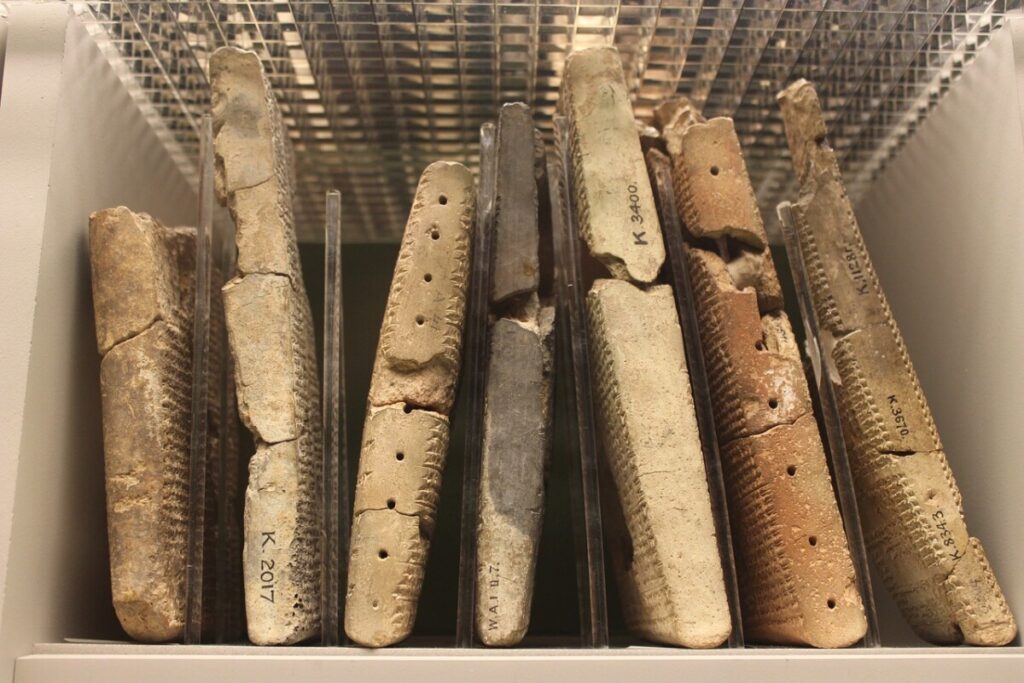
Earliest known writing in Africa/Middle East zone.
Human DNA today is the same as 50,000 BCE. There is no doubt there were many dozens and perhaps thousands of civilizations prior to the Sumer civilization, but Sumer is the earliest known, or at least the earliest well known. The Sumer civilization first established between 6500 and 4100 BCE. We know quite a bit about the Sumerians because they immortalized their writing in clay tablets which will be around long after all the paper books on Earth right now have deteriorated. Sadly, we know almost nothing about prior civilizations because very little evidence survived the test of time. The Sumerians spoke and wrote Sumer and starting several millennia into their civilization they started immortalizing their culture on clay. They had an advanced democracy with elected officials, religion, art, wheel, math, philosophy, and language. The Cuneiform script was in use until 100 CE.
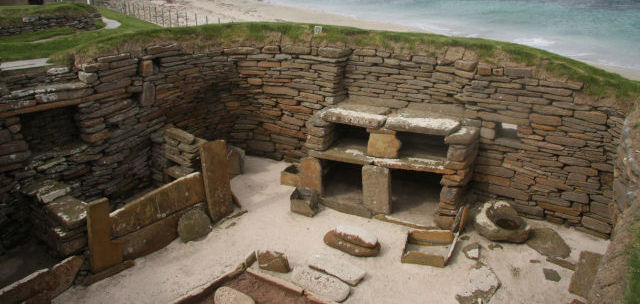
Skara Brae is a stone-built Neolithic settlement, located on the Bay of Skaill on the west coast of the largest island of Scotland. It consists of ten houses made of flagstones within earthen dams that provided support for the walls; the houses included stone hearths, beds, and cupboards. A primitive sewer system, with “toilets” and drains in each house which carried waste to the ocean using water to flush waste into a drain.
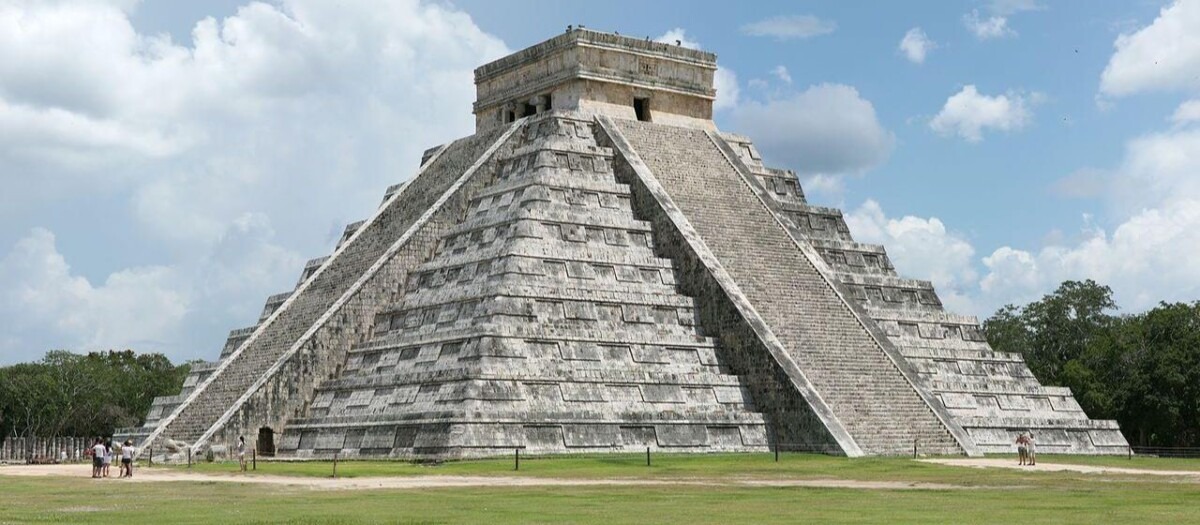
The Maya Long Count calendar is often associated with a creation date, which corresponds to August 11, 3114 BCE in the Gregorian calendar. This represents the start of the current cycle of creation according to Mayan mythology.

The oldest known dice date back to around 3100 BCE in Scotland. While it’s possible the idea of dice was invented many millennia ago, it’s more likely that dice are an example of convergent invention and traveling news. Dice were likely invented and lost to the sands of time many times over at least the last 100,000 years.
The earliest known dice so far were bone dice found at the site of the Neolithic village of Skara Brae in Orkney, Scotland. They were used sometime between 3100 and 2400 BCE. The dice have been decorated with combinations of notches, grooves, and dots (pictured above). This settlement was buried in sand, thus preserving buildings and a range of everyday objects. The inhabitants used bone and antler as a raw material for a range of objects including shovels, awls, pins, knives, and even beads.
In the Mesopotamian region, the oldest known dice date back to around 3000 BCE. They were found in the Burnt City (Shahr-e Sukhteh) in Iran. These ancient dice were made from various materials like bone and stone, and they have been found in association with other early gaming artifacts.
Within four centuries, news of this entertainment traveled east 750 miles to the Indus Valley Civilization, navigating harsh landscapes, political, and social barriers. The Indus Valley dice date back to about 2600 BCE. The evidence suggests that dice were in wide use in multiple areas for at least centuries and likely for millennia. Either way, from here, news of dice would take about two millennia to reach distant places like China. Asian dice date back to about 600 BCE. It’s also possible that dice in China were invented separately as another example of convergent invention.

Stone Copper Age
Chalcolithic Period: 3,000 BCE – 500 BCE.
- Africa-Middle East: 36% or 5 million people
Early civilizations include Egypt and Mesopotamia with a relatively higher population density. - Asia: 36% or 5 million people
Early civilizations include Indus Valley and ancient China. They saw early urban development and agriculture which supported larger populations. - Europe-Mediterranean: 14% or 2 million people
Smaller due to the varied climatic conditions and the later development of agriculture compared to the Middle East. - The Americas: 7% or 1 million people
More sparsely populated with many diverse hunter-gatherer communities and early agricultural societies, particularly in regions like Mesoamerica. - Oceana-Australasia: 7% or 1 million people
These regions were among the least densely populated, with scattered tribal groups primarily leading hunter-gatherer lifestyles.

The Fuente Magna Bowl, discovered in 1950 near Lake Titicaca, Bolivia, is a large stone vessel with intricate carvings. Unearthed by a local farmer, the bowl was later donated to a small local museum and eventually transferred to the Museum of Precious Metals in La Paz. The bowl features engravings that some claim resemble ancient Sumerian cuneiform and other proto-scripts. This artifact’s intricate carvings have sparked significant interest due to their apparent similarity to writing systems used thousands of miles away in ancient Mesopotamia.
It might be a modern forgery, but if not, the Fuente Magna Bowl is significant because it might point to a Sumerian-South America connection or to earlier proto-writing. Experts like Dr. Clyde Ahmed Winters have proposed that the inscriptions are Proto-Sumerian, suggesting possible ancient transoceanic contact. However, many scholars are skeptical, citing inconsistencies in the script and questioning the bowl’s provenance. Some suggest that the markings might hint at an earlier form of writing, indicating a longer and more complex path to the development of written language than currently understood. This possibility could have profound implications, suggesting that the origins of writing might be more widespread and interconnected than previously thought.

If Shennong existed as one person, that person likely lived sometime around 2800 BCE. Shennong, also known as the Divine Farmer, is another of the Three Sovereigns. He is said to have taught the Chinese people agriculture and herbal medicine. Shennong’s contributions emphasize the relationship between humans and nature, the importance of agriculture for societal stability, and the development of early medical knowledge. His legacy underscores the value of practical knowledge and its role in the well-being of society.
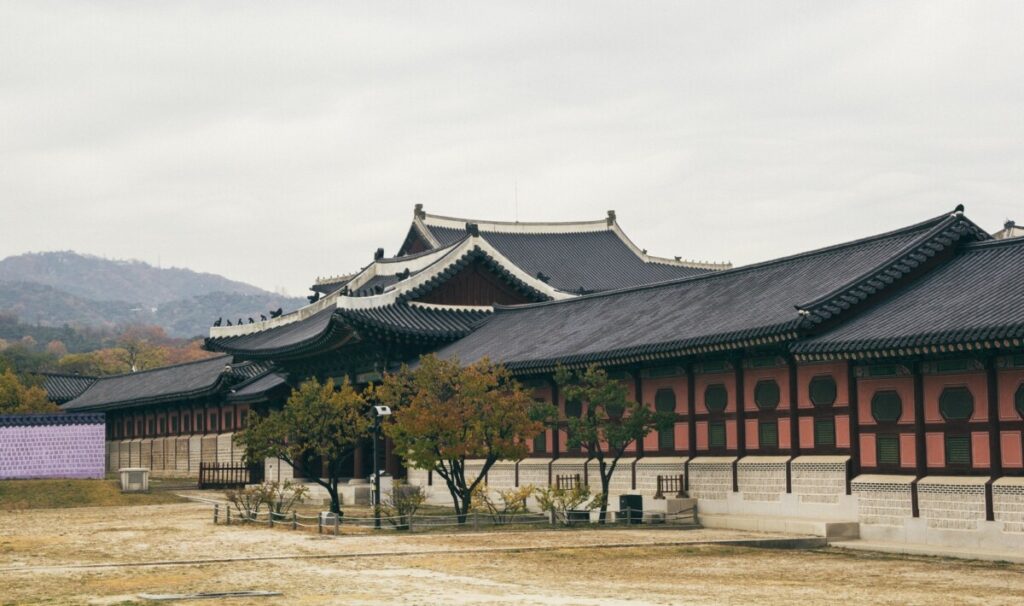
The Xia Dynasty is the first documented government of ancient China. The first to adopt dynastic succession. In modern times, it was regarded as a myth created later by Chinese historians, but 20th-century excavations uncovered sites which corresponded to descriptions in earlier historians’ accounts. This fact is an important lesson on understanding how little survived the test of time. How much we will never know about the true progress of humans over our first 100,000 years.

Gilgamesh is the legendary figure whose exploits are immortalized in the “Epic of Gilgamesh.” Gilgamesh’s reign as king is shrouded in myth and history. The epic describes his journey from a tyrannical ruler to a wise and beloved king, highlighting his quest for immortality and the profound friendship with Enkidu, a wild man created by the gods to temper Gilgamesh’s arrogance. Through his adventures, which include battling monsters and seeking eternal life, Gilgamesh learns about the limits of human power and the inevitability of death. The tale, etched on clay tablets, is one of the earliest known literary works.

The Yellow Emperor, or Huangdi, is a legendary figure in Chinese history, traditionally credited with foundational contributions to Chinese civilization. He is associated with the development of the concept of Yin and Yang, the dualistic nature of reality, and balance, which profoundly influenced Chinese philosophy, medicine, and cosmology. Attributed to his era are the Huangdi Neijing (Yellow Emperor’s Inner Canon), an ancient text exploring these principles, as well as innovations in the Chinese calendar, writing, and agriculture. Though his historical existence is debated, his impact on Chinese thought and culture is enduring.
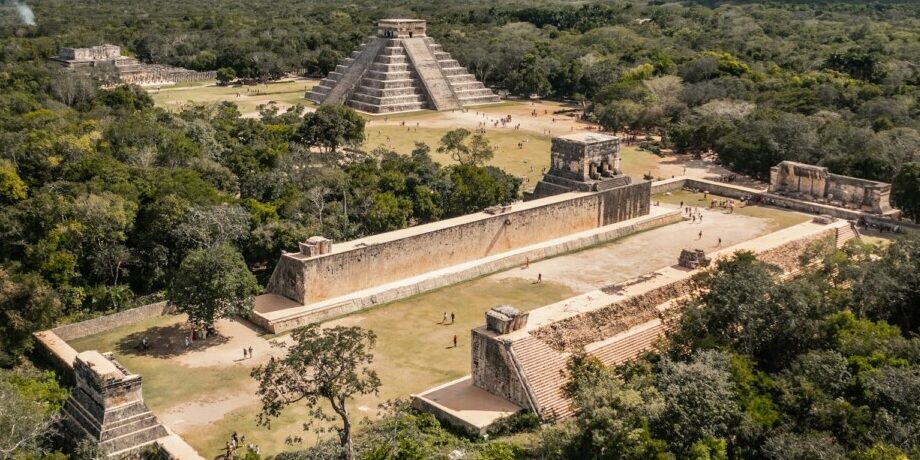
The Maya civilization, emerging around 2600 BCE in what is now Mexico, Belize, Guatemala, and Honduras, represents one of the most complex societies of ancient America. Renowned for their achievements in mathematics, astronomy, art, and architecture, the Maya developed a sophisticated calendar system and constructed towering pyramids and cities that blended harmoniously with the surrounding landscape. The Classic Period (250–900 CE) saw the peak of Maya civilization, with large city-states engaged in intricate political, economic, and military networks. The Maya’s contributions to knowledge, particularly their understanding of the cosmos and time, remain a lasting legacy of indigenous American ingenuity.
30 Phil, Chapter 2: Shuruppak and Paternal Wisdom
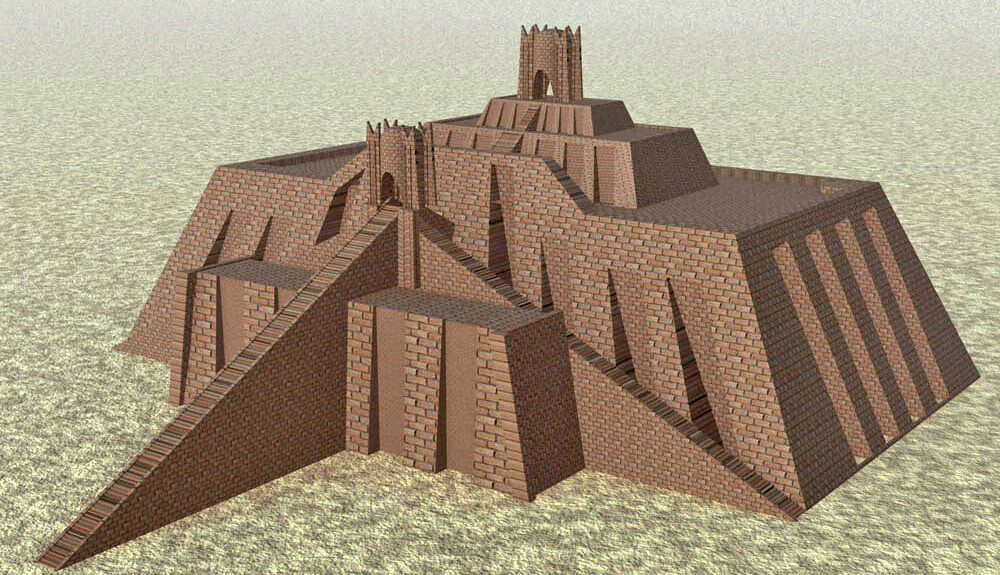
Sumerian civilization consisted of over 30 city-states, among which Ur and Shuruppak were among the more prominent. We know about King Shuruppak from the Sumerian King List, an ancient text where he appears as the last king before a great flood.
Pictured is the Ziggurat of Ur, about 70 miles from Shuruppak. The city of Shuruppak had a similar one.
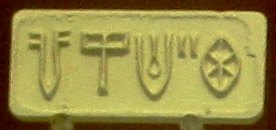
Earliest undeciphered writing in the Asian zone.
The Indus Valley script, emerging around 2600 BCE in one of the world’s earliest urban civilizations, remains one of archaeology’s greatest puzzles. Found across a vast expanse from today’s northeast Afghanistan to Pakistan and northwest India, this script comprises over 400 unique symbols, ranging from geometric shapes to plant-like and animal motifs. Inscribed on a variety of objects including seals, pottery, and metal tools, these markings suggest a sophisticated system of communication used for trade, administration, or ritual purposes.
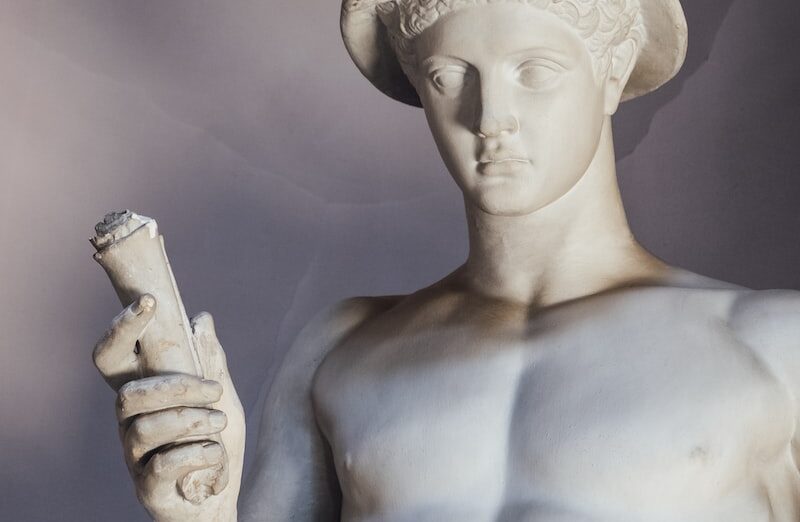
The first known postal system goes back to the Pharoah’s of Egypt circa 2400 BCE. Pharaohs used couriers to send out decrees throughout the Egyptian territory. The earliest surviving piece of mail dates back to 255 BCE and is also Egyptian.
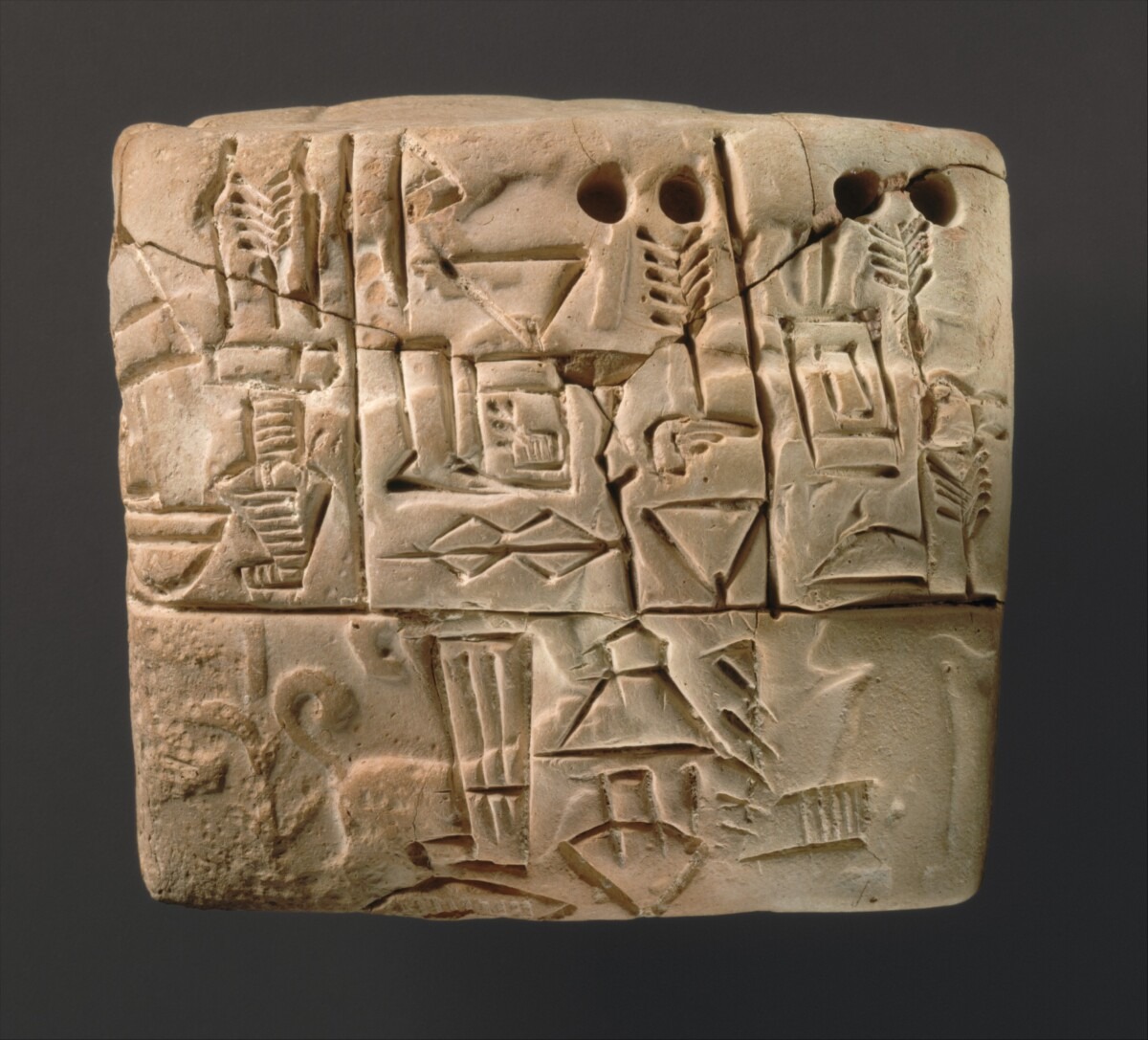
17,000 fragments totally maybe 2,500 tablets, discoved in the 1970s, only a few hundred have been translated.
The library of Ebla, located in the ancient city of the same name was located in modern-day Syria. This library dates back to the 24th century BCE and contained thousands of clay tablets written in Sumerian and Eblaite, providing a wealth of information about the culture, economy, and administration of Ebla. These tablets were discovered in the 1970s and offered significant insights into the early periods of human writing and civilization. The Ebla library predates other famous ancient libraries, such as the library of Ashurbanipal in Nineveh and the Library of Alexandria, showcasing the deep historical roots of library institutions as centers of knowledge and record-keeping.

The legendary story of Noah’s flood occurred in the year 2348 BCE if you believe Ussher’s biblical timeline he made up in 1654. However, this flood myth is clearly based on the Sumerian flood story documented in the Epoch of Gilgamesh circa 2100 BCE.
The Epoch of Gilgamesh is regarded as one of the earliest surviving notable literature. I think it is interesting to note that the first section of the Epoch of Gilgamesh refers to a time span of 241,200 years prior to the great flood. To me, it is interesting that around the proposed date of the great flood, the people authoring it thought the Earth was at least 241,200 years old. The first section of the Epoch of Gilgamesh lists eight kings who ruled over the five cities of Eridu, Bad-tibiru, Larag, Zimbir and Shuruppag. The section ends with the line “Then the flood swept over.”

The Mayan civilization lasted nearly 3 millennia. It began to take shape in the Yucatan region of Mexico, Guatemala, Belize, and Honduras around 2000 BCE, with evidence of early agricultural communities. However, prior to embracing farming, this community was in the area for at least a few centuries. By 250 CE, they had established major cities like Tikal and Copán, featuring impressive pyramids, palaces, and advanced astronomical systems. The Mayans developed a complex writing system and made significant contributions to mathematics and calendar-making. The civilization experienced a decline starting in the 9th century CE, with many cities abandoned. The Mayan culture persisted, however, through smaller communities and continues to influence descendants today.
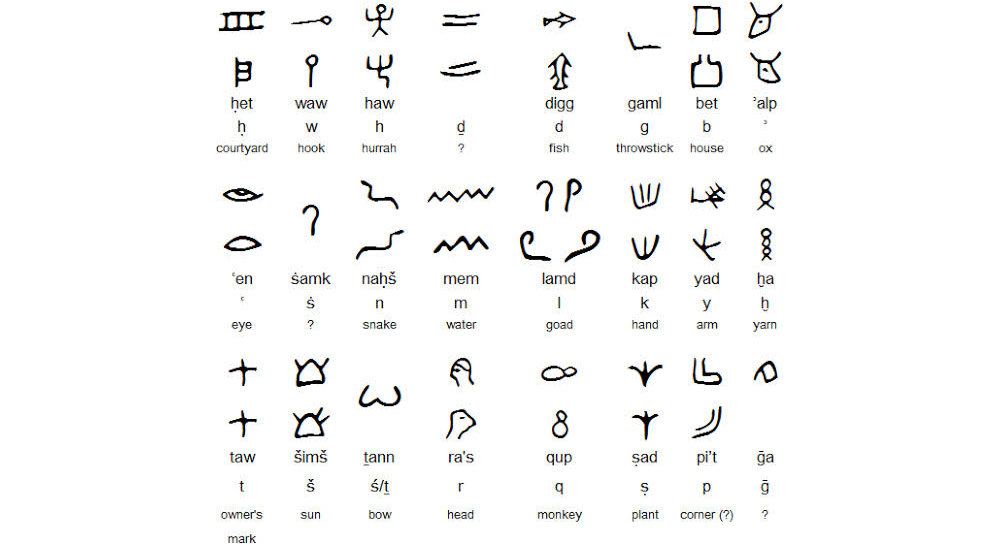
The Proto-Sinaitic alphabet is considered the earliest trace of alphabetic writing and the common ancestor of both Ancient South Arabian script and the Phoenician alphabet. The ancient South Arabian script evolved about 1900 BCE which continued to evolve into today’s Modern South Arabian languages. The Phoenician alphabet evolved into the Greek alphabet and all of today’s Western alphabets.

In the tropical rainforests of Mesoamerica, the ancient Olmecs unlock the secrets of the cacao pod. By fermenting, roasting, and grinding the seeds, they create the bitter beverage chocolate. This divine elixir lays the foundation for chocolate’s enduring legacy, cherished by the Mayans and Aztecs as a ceremonial drink, a currency, and a medicine.
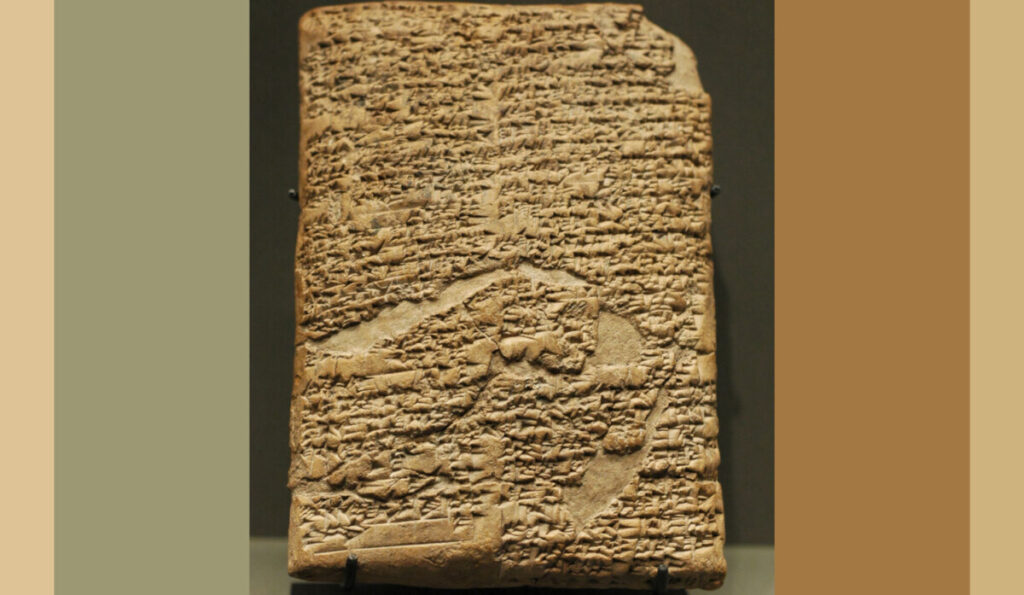
A set of about 300 legal laws written in stone from ancient Near East that withstood the test of time. Hammurabi, the sixth king of the First Dynasty of Babylonian, wrote it in cuneiform in the Old Babylonion dialect of Akkadian. The text itself was copied and studied by Mesopotamian scribes for over a millennium.
Translated examples:
- If a man should blind the eye of another man, they shall blind his eye.
- If a man bears false witness in a case, or does not establish the testimony that he has given, if that case is case involving life, that man shall be put to death.
- If a man bears false witness concerning grain or money, he shall himself bear the penalty imposed in the case.

The Rigveda, Sanskrit for “praise knowledge”, is a collection of sacred texts of Hinduism first written down between 1700 and 1100 BCE. The sounds and texts of Rigveda have been orally transmitted since at least circa 2000 BCE. It discusses cosmology, praises deities, and covers philosophical questions including…
- 1.164.34: “What is the ultimate limit of the earth?”, “What is the center of the universe?”, “What is the semen of the cosmic horse?”, “What is the ultimate source of human speech?”;
- 1.164.34: “Who gave blood, soul, spirit to the earth?”, “How could the unstructured universe give origin to this structured world?”;
- 1.164.5: “Where does the sun hide in the night?”, “Where do gods live?”;
- 1.164.6: “What, where is the unborn support for the born universe?”;
- 1.164.20 is a parable of the Body and the Soul.
The other three books of the Veda were written centuries later:
- Yajurveda, circa 1000 BCE
- Samaveda, circa 1000 BCE
- Atharvaveda, circa 700 BCE

Fossil discoveries have brought wonder to humanity from the very beginning. The discovery of fossils from prehistoric animals like sauropods and mammoths inspired ancient people to create stories about massive, powerful creatures. Dragon-like and other creatures appear in myths across the world from our earliest writings.
For example, in China, the discovery of fossils from giant prehistoric animals like mammoths and sauropods dates back to the Shang Dynasty (around 1600-1046 BCE). These finds likely influenced the development of dragon legends, which were present in Chinese culture by the Zhou Dynasty (1046-256 BCE). As early as the 4th century BCE, Chinese scholars documented the discovery of “dragon bones.” These bones, often large and unexplained, were likely dinosaur fossils. The Chinese ground them into powder for use in traditional medicine, believing them to possess healing properties.
Greco-Roman authors, such as Herodotus and Pliny the Elder, mentioned large bones being discovered and attributed them to mythical creatures or ancient giants. While early thinkers like Xenophanes of Colophon recognized some fossils as remnants of once-living creatures as early as 600 BCE, it wouldn’t be until the 1600s that humanity would start to accept this empirical evidence as once living creatures.

The Olmec civilization, often considered the “mother culture” of Mesoamerica, formally emerged around 1600 BCE based on when they embraced farming. They primarily emerged in the tropical lowlands of present-day southern Mexico. Known for their colossal stone heads and sophisticated art, the Olmecs developed early forms of writing and urban organization. Their major centers, such as San Lorenzo and La Venta, thrived as political and religious hubs. The Olmec influence waned around 400 BCE, but their cultural and technological innovations profoundly impacted subsequent Mesoamerican civilizations.
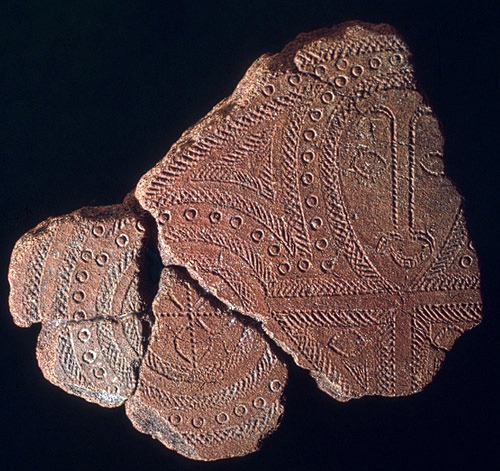
The Lapita culture, named after a site in New Caledonia, was an Austronesian people known for their intricate pottery and advanced navigation skills. Around 1500 BCE, they began spreading eastwards across the vast Pacific, reaching as far as Tonga and Samoa. The Lapita are considered the ancestors of many modern Pacific Islanders, including Polynesians, Micronesians, and some coastal Melanesian populations. Their remarkable journey across the ocean, covering thousands of kilometers in outrigger canoes, stands as a monumental achievement in human exploration and settlement, laying the foundations for the rich cultural tapestry of the Pacific Islands.
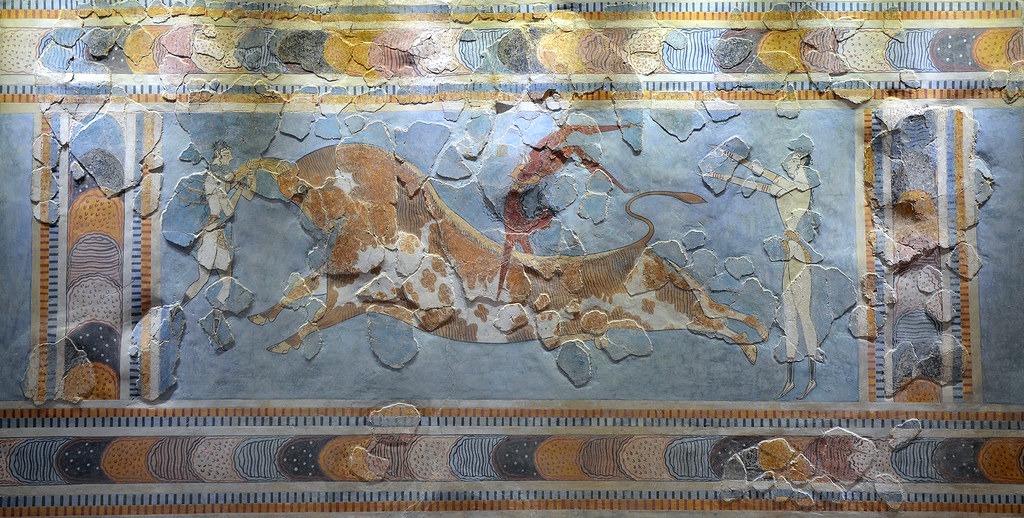
(Crete, ) – The Palace of Knossos, the largest Bronze Age archaeological site on Crete, is famous for its sophisticated and colorful frescoes. These paintings depict a variety of subjects, including processions, animals, and scenes of daily life, characterized by naturalistic figures and a vibrant palette. One of the most iconic images is of the bull-leaping ceremony, showcasing the importance of bulls within Minoan culture and religion. The frescoes reflect the Minoan civilization’s artistic prowess, with a keen eye for naturalism, movement, and the depiction of textiles and patterns, setting them apart from the more stylized art of contemporaneous cultures.
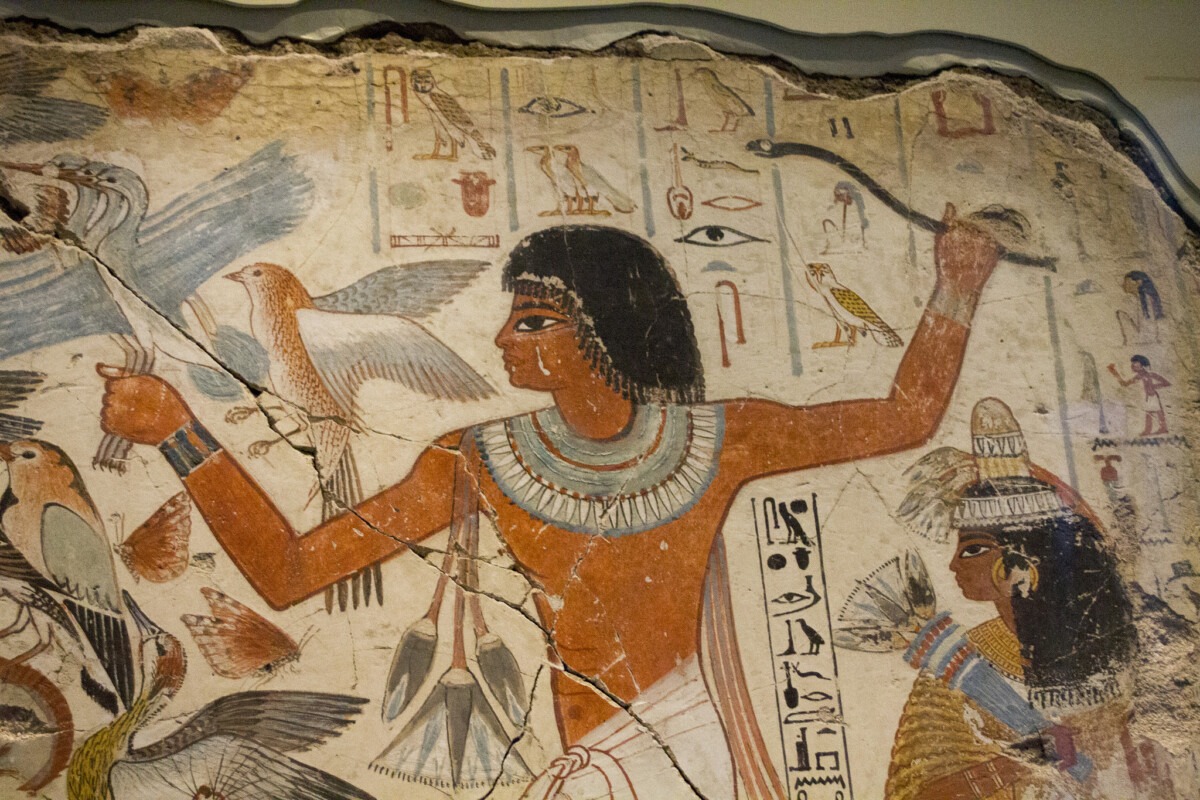
The Tomb of Nebamun, located in Thebes, Egypt, contains some of the most famous and vibrant frescoes from the 18th Dynasty of the New Kingdom period. The paintings depict Nebamun, an Egyptian official, engaging in various activities, including hunting in the marshes and enjoying banquets with his family. The frescoes are celebrated for their dynamic compositions, detailed portrayal of figures and animals, and the use of color, which brings the scenes to life with remarkable vitality. These works not only exemplify the artistic skills of ancient Egyptian painters but also offer a glimpse into the values, leisure activities, and beliefs of the period.
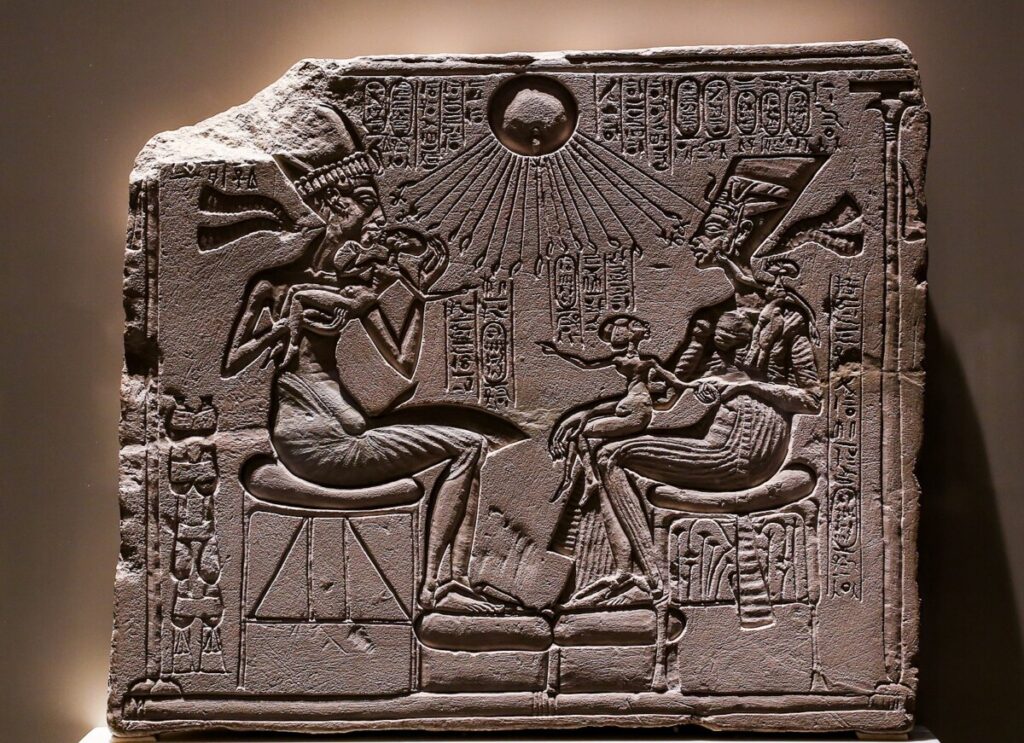
In the ninth year of the reign of Akhenaten, he declared the traditional supreme God Aten to be the only God of Egypt with himself as the sole communicator to Aten, kind of like an early Pope. This early attempt at monotheism failed after about 20 years and Egypt returned to their traditional polytheistic religion.
About the image: Akhenaton and Nefertiti seated, holding 3 of their daughters, under the rays of the sun god Aten giving Ankh-symbols to them (Picture provided by ArchaiOptix).
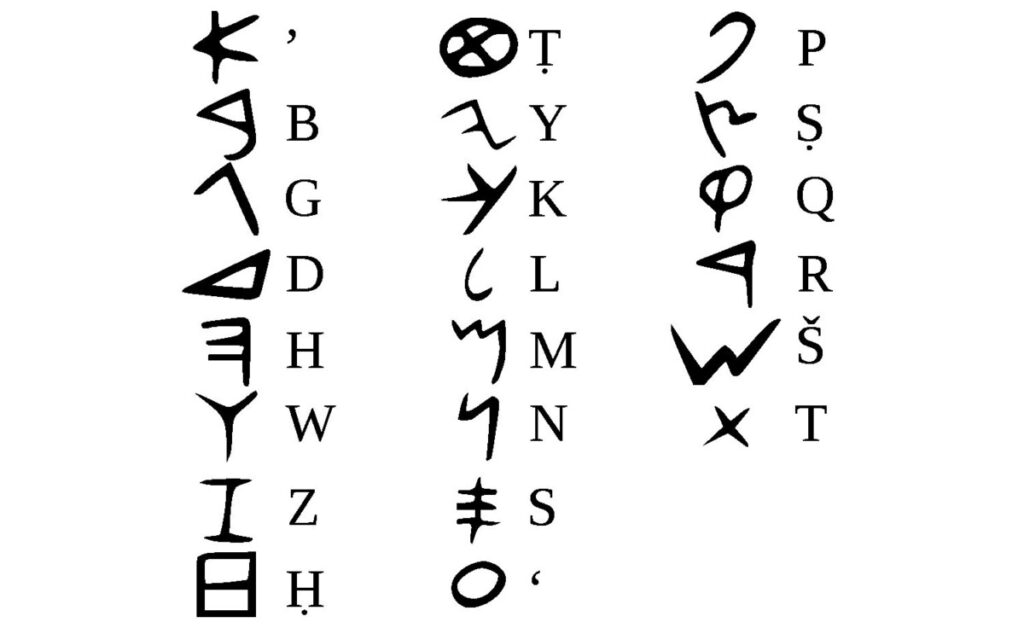
The Phoenician alphabet is a direct continuation of the Proto-Canaanite script circa 1300 BCE. Starting about 900 BCE, the Phoenician alphabet thrived and was adapted by others. It evolved into use by many languages including Greek, Old Italic and Anatolian scripts. These early uses of the alphabet evolved into the alphanumeric alphabet.

Earliest deciphered writing in Asian zone: Indus Valley writing, undeciphered, predates this to circa 2600 BCE.
The earliest known writing system in Asia is typically considered to be the Oracle Bone Script from ancient China. This script was used during the Shang Dynasty around 1200 BCE, but evidence suggests it may have developed as early as 1250 BCE or earlier. Oracle Bone Script was primarily used for divination purposes and was carved on animal bones or turtle shells. These artifacts, known as oracle bones, were used to communicate with ancestors and gods to ask about weather, crop planting, the fortune of the kingdom, and other issues of state and religious importance. The script is a direct precursor to modern Chinese characters, making it not only one of the oldest forms of writing in Asia but also a foundational element of one of the world’s continuously used writing systems.

Hinduism, one of the world’s oldest religions, emerged around 1100 BCE, several centuries after the Indus Valley Civilization collapsed. Hinduism has no known roots in the IVC, but it’s a topic to follow as we uncover clues. There was a several century gap from the collapse of the IVC to the rise of the early Vedic tradition, which might have adopted or been influenced by some imagery and cultural elements from the previous civilization in the area, but the writing skills were lost. Early Vedic tradition was based on oral traditions that predate the earliest known Vedic writings, which date back to around 550 BCE. The religion does not have a single founder and is a synthesis of various traditions. Today, Hinduism is centered around the Vedas, ancient sacred texts. As with all religions, it evolved through various phases, including the early Vedic period (circa 900-500 BCE) and was solidified to today’s Hinduism much later.
Creation date: 155 Trillion Years ago.
Hindu cosmology presents a cyclic model of the universe that undergoes periodic creation and destruction. Texts like the Puranas describe cycles of creation that span billions of years. According to some interpretations of Hindu scriptures, the current universe is about 155.52 trillion years old, and we are in the 51st year of the present Brahma, making it roughly 155.52 trillion years since the creation of the cosmos.
Some of my favorite Hindu sayings:
- Every day you should sit quietly and affirm, with deep conviction.
- You become that which you believe you can become.
- The entire universe is to be looked upon as the Lord.

30 Phil, Chapter 3: Gargi and the Concept of Holism
Gargi lived in India around 800 BCE, give or take a century, but we do not know her lifespan. We know about her from early Vedic Tradition, specifically from the early Vedas. Gargi is one of the earliest known female philosophers. Although the specifics of her timeline are unclear, she emerged around 800 BCE. Gargi’s life unfolded in the kingdom of Videha, present-day Bihar in eastern India. Her family belonged to the Brahmin caste, who have historically been the custodians of knowledge in Indian society. In this capacity, they played a vital role in the cultural transmission of knowledge.
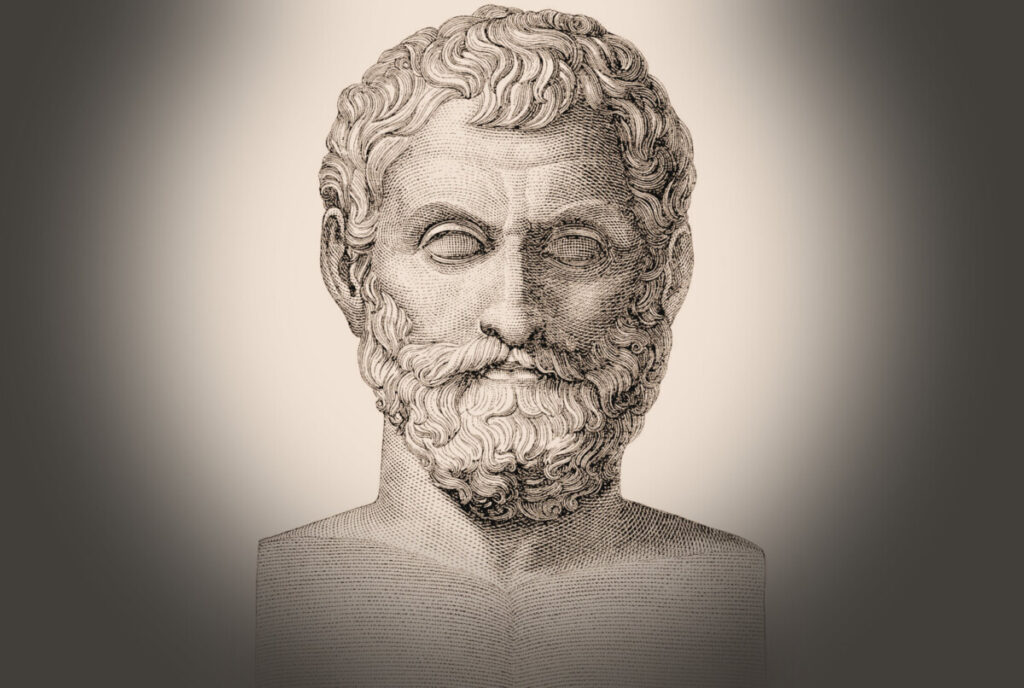
Thales of Miletus was a Greek philosopher, mathematician, and astronomer. Considered by many including Aristotle to be the first philosopher in the Greek tradition. He is also considered the father of science by many.
Some of my favorite translated sayings are:
- Know thyself.
- A multitude of words is no proof of a prudent mind.

In the vibrant intellectual climate of Ancient Greece, the 6th century BCE marks the embryonic stage of formal logic, attributed to the philosopher Thales of Miletus (around 624-546 BCE). Thales, recognized as the first of the Seven Sages of Greece, embarked on a quest that laid the foundational stones of logical thought. He shifted the explanation of natural phenomena away from mythological interpretations towards rational principles.

The Library of Ashurbanipal, established during the reign of Ashurbanipal (668–627 BCE), the last great king of the Neo-Assyrian Empire, is one of the most significant collections of ancient texts. Located in Nineveh, the capital of Assyria, this library housed thousands of clay tablets inscribed with cuneiform script, covering a wide range of subjects including literature, history, science, and law. The most famous work found in this collection is the “Epic of Gilgamesh.” Ashurbanipal, a scholar-king, collected texts from across his empire and beyond, aiming to preserve the knowledge and culture of Mesopotamia. The library’s discovery in the mid-19th century provided invaluable insights into the civilization of ancient Mesopotamia, making it a cornerstone in the study of ancient Near Eastern history.

30 Phil, Chapter 4: Laozi and Daoist Philosophy
The life of Laozi is shrouded in mystery, but he is the first philosopher in “30 Philosophers” that attempts to construct a precise biography. The Spring and Autumn Period of China spanned nearly three centuries starting in 770 BCE, and Laozi lived about in the middle of that era. He was born about 604 BCE . His native language was Old Chinese, he authored the Dao De Jing, and founded the Daoist philosophy. Some stories indicate he was married and had at least one son.
Pictured is the statue of Laozi at the base of mount Qingyuan in China.

The Greeks knew the Earth is spherical. For example, Pythagoras (570-495 BCE), Aristotle (384-322 BCE), and Euclid (circa 450 BCE) wrote about the Earth as a sphere. Eratosthenes (276-194 BCE) even calculated the circumference of the Earth to within 1%. He also wrote about the idea that India could be reached by sailing westward from Spain.
Nearly 2,000 years later during the time Columbus sailed the ocean blue, most religious nuts believed the Earth was flat and he would fall off. What happened to truth? Although many educated people knew all along, the dogma of the brainwashed religious nuts over the centuries suppressed and terrorized the masses into believing things like the Earth is flat, the Earth is only a few thousand years old, women are property, and other such nonsense. The harm caused by formal religions over the eons is incalculable.

30 Phil, Chapter 1: The Great Flood Myths.
An examination of the Great Flood myths, comparing the flood stories in the Epic of Gilgamesh and the Bible. Discovered in 1853, the Epic of Gilgamesh’s flood story was lost for millennia and it predates the earliest written version of the biblical story by at least 400 years and likely by more than a millennium. They both tell the same story with different character names, minor differences, and a change from multiple gods to a single god. Noah’s Ark, set before 600 BCE, is a retelling of a Sumerian story dating back to about 2550 BCE featuring the character Ziusudra.
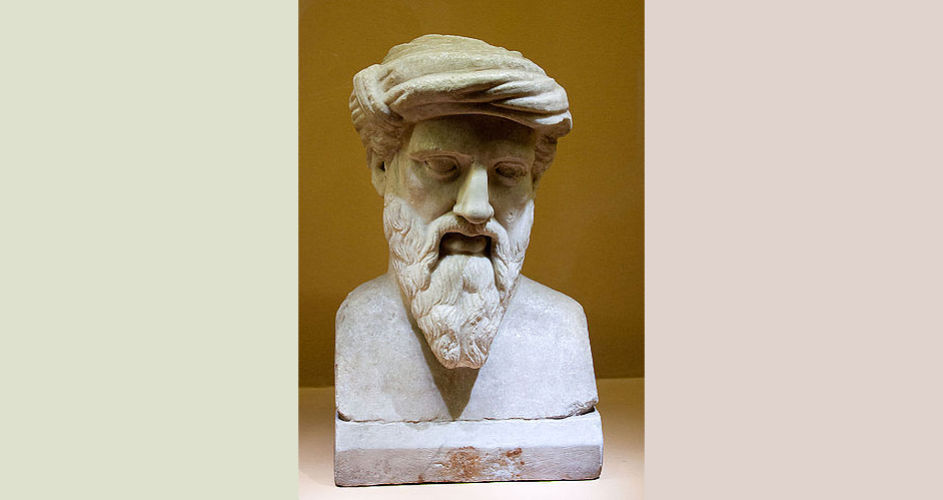
The Greek philosopher and mathematician Pythagoras was born in Ancient Greece on the island Samos which is about a mile off the coast of modern Turkey. History looks at Pythagoras as an educator and philosopher as well as a cult leader. He discovered the musical octave, used deductive reasoning, and embraced an early version of forms which was a stepping stone to Plato’s forms. His early theories on math as the answer to the universe are elementary and off course, but these first attempts led the path for future mathematicians to explore. He is most remembered for his Pythagorean theorem which states the square of the length of the hypotenuse of a right triangle equals the sum of the squares of the lengths of the other two sides
As a cult leader, he spent his life brainwashing anyone who would follow him. Like Jesus, he said he was the son of God. His cult had strange rules including that you had to be silent for five years before you could join. A clever trick that meant only true believers who would not tell others of the crazy could get in. The crazy ran deep. You must spit on your finger clippings. You cannot urinate toward the sun. They sacrificed an ox whenever they proved a mathematical formula.
Pythagoras never wrote anything down or at least none of his writings survived so we have to rely on what others say he said and did, but we’re likely never to know what was Pythagoras’ pure ideas from the evolved or altered ideas of later writers.
Some of my favorite translated sayings attributed to Pythagoras:
- Reason is immortal, all else mortal.
- There is geometry in the humming of the strings, there is music in the spacing of the spheres.
- As soon as laws are necessary for men, they are no longer fit for freedom.
- Do not say a little in many words but a great deal in a few.

30 Phil, Chapter 5: Confucius and Confucianism
Confucius is remembered for his practical applied philosophy. His sayings are a reflection of many centuries of common sense sayings making his philosophy deeply Chinese.
My favorite sayings:
- The man who knows he can, and the man who knows he cannot, are both correct.
- Real knowledge is to know the extent of one’s ignorance.
- The man who asks a question is a fool for a minute, the man who does not ask is a fool for life.
- You are what you think.
- All people are the same; only their habits differ.
- Roads were made for journeys, not destinations.
-
Respect yourself, and others will respect you.

30 Phil, Chapter 6: Gautama Buddha and Buddhism
In a much simpler time, the royal family of the Shakya dynasty lived in a palace located at the capital of the Shakya kingdom in present-day Nepal. Around 563 BCE, a boy named Siddhartha Gautama was born in the palace. At the age of 29, he left the luxury of his palace, and became one of the many wandering ascetics. After six years of wandering, in a flash, he suddenly attained enlightenment at the age of 35 under a Bodhi tree. Over the centuries, Buddhist Councils reorganized and revised the Canon, eventually adding the third text containing philosophical and psychological analysis. The degree to which these revisions deviated from the Buddha’s original words remains unknown. It was not until the 1st century BCE that the orally transmitted Pali Canon was finally committed to writing.
Pictured: Gautama Buddha statue in Buddha Park of Ravangla, Sikkim. Showing after Confucius just to group Laozi & Confucius together.
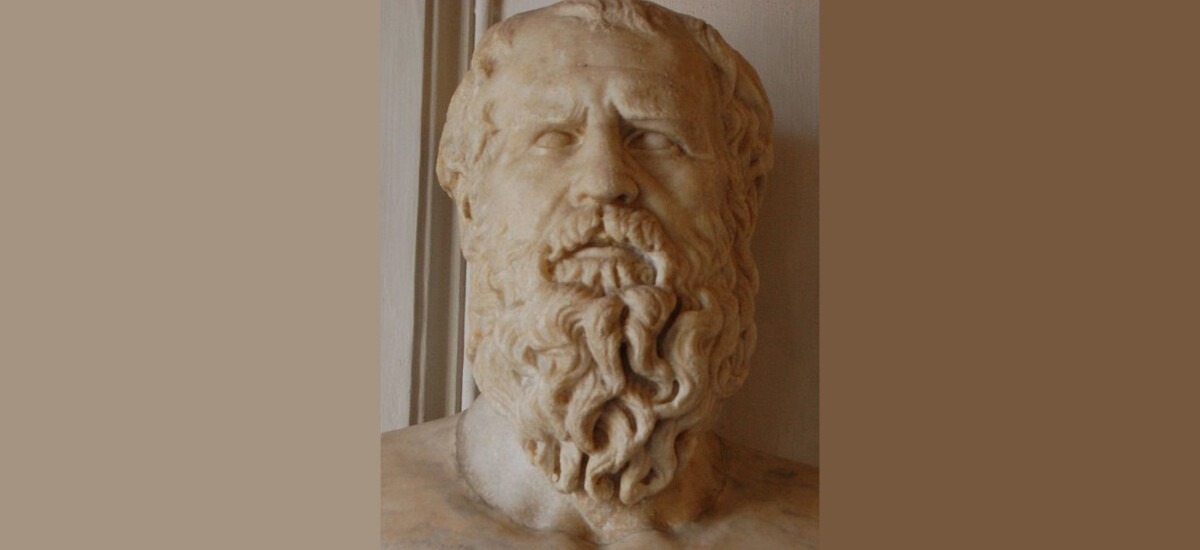
30 Phil, Chapter 7: Heraclitus and Your Worldview
Chapter 7 in part one transitions from Eastern luminaries to their counterparts in the West. The pre-Socratic philosophers, guided by a new rational perspective, challenged the stronghold of mythology, and propelled human thought onto a trajectory marked by reason. Little is known for sure about Heraclitus. Born around 535 BCE, stories indicated he lived about 60 years.
- Everything is in Flux.
- No man ever steps in the same river twice.
Pictured: Bust of an unknown philosopher. Some believe this might be Heraclitus. This bust is in the Capitoline Museum in Rome, but the museum makes no such identity assumption.

Before microscopes, before laboratories, before equations filled blackboards, there were only minds asking bold questions. Democritus lived in a world where atoms could not be seen, measured, or tested. His idea began as rational speculation — a daring attempt to explain the material world without appealing to myth. Centuries later, empirical science would catch up.
Democritus, known as the “Laughing Philosopher” for his emphasis on cheerfulness, lived from around 460 BCE to 370 BCE. Hailing from Abdera in Thrace, he was a pre-Socratic Greek philosopher and a central figure in the development of atomic theory. Democritus proposed that everything in the universe is composed of tiny, indivisible particles called atoms, moving through the void. His materialist philosophy challenged the prevailing views of his time, offering a mechanistic explanation of the natural world. Despite his significant contributions, much of his work survives only through the writings of later philosophers, yet his ideas laid the groundwork for modern science.
In TST terms, Democritus reminds us of something powerful: today’s empirical truths often begin as yesterday’s rational risks. Not every bold idea survives testing — but without bold ideas, nothing new ever becomes testable.
Image Note: No known image of Democratus exists.
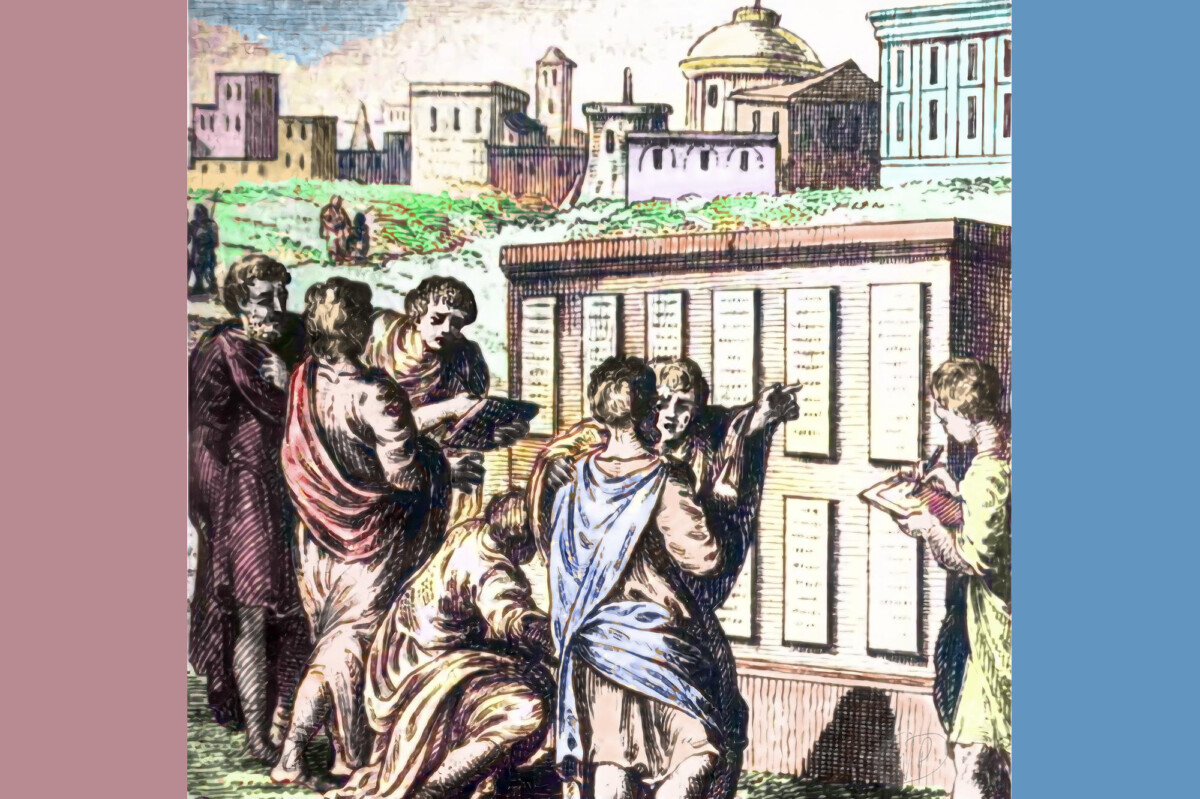
The Twelve Tables were rules citizens had to follow, and limits on the powers of the government. This idea was used several times during Roman history to force the Patricians, aristocrats, to consider the views of the plebeian citizens, commoners. In 451 BCE, plebeians went on strike to protest the tyranny of magistrates. The Twelve Tables came out of that strike. These bronze tablets were set up in the Forum of Rome for all citizens to see and students to study.
Content examples:
- Table I – when a person is accused of something, both accused and accuser must be present at a trial. If only one party shows up, the judge is free to rule in their favor.
- Table III – debtors have 30 days to pay off a debt. After that, a creditor is free to imprison them.
- Table IV – approval to put to death a dreadfully deformed child.
- Table V – all women, except Vestals (virgin priestesses), must have a guardian regardless of age. The guardian had no say in her private matters, but did guide her public matters especially matters of money.
- Table VI – a man’s will is binding.
- Table VIII – lists specific punishments for specific crimes. And, a person who fails to show up as a trial witness, can never again be a witness. And, a person shown to have lied in court will be put to death.
- Table IX – judges who have taken a bribe as well as anyone committed of treason will be put to death.
- Table XI – prohibits marriages between plebeian (aristocrats) and patrician (commoners).
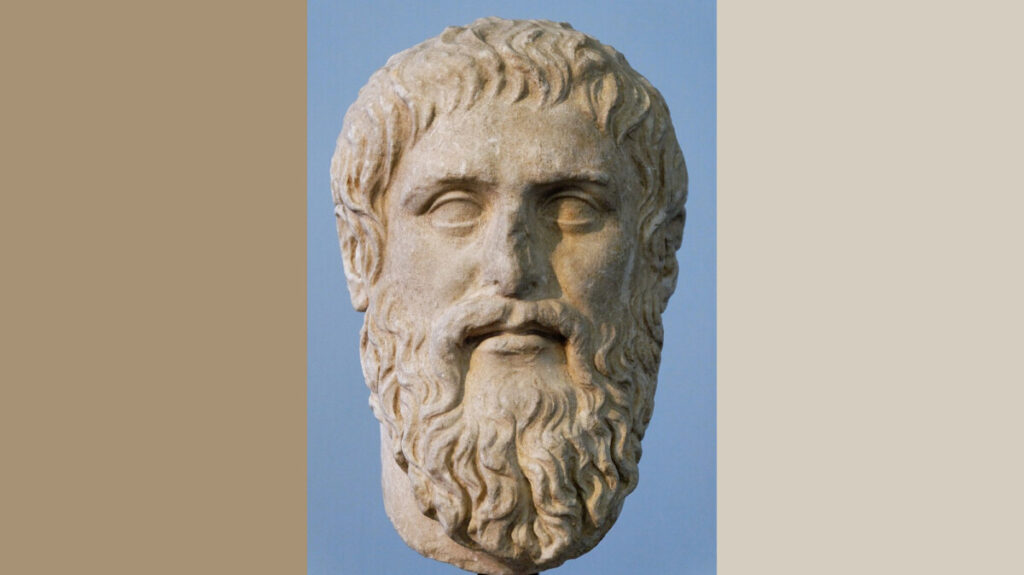
30 Phil, Chapter 8: Plato and Rationalism
Plato was a Greek philosopher born in Athens. He was a student of Socrates and a teacher of Aristotle. Plato’s Theory of Forms asserts that the reality is only a shadow, or image, of the true reality of the Realm of Forms — abstract, perfect, unchanging concepts or ideals that transcend time and space.
My favorite sayings:
- Excellence is not a gift, but a skill that takes practice.
- If women are expected to do the same work as men, we must teach them the same things.
- If you do not take an interest in the affairs of your government, then you are doomed to live under the rule of fools.
- Beauty lies in the eyes of the beholder.
- Reality is created by the mind, we can change our reality by changing our mind.
- Music gives a soul to the universe, wings to the mind, flight to the imagination and life to everything.
- If a man neglects education, he walks lame to the end of his life.
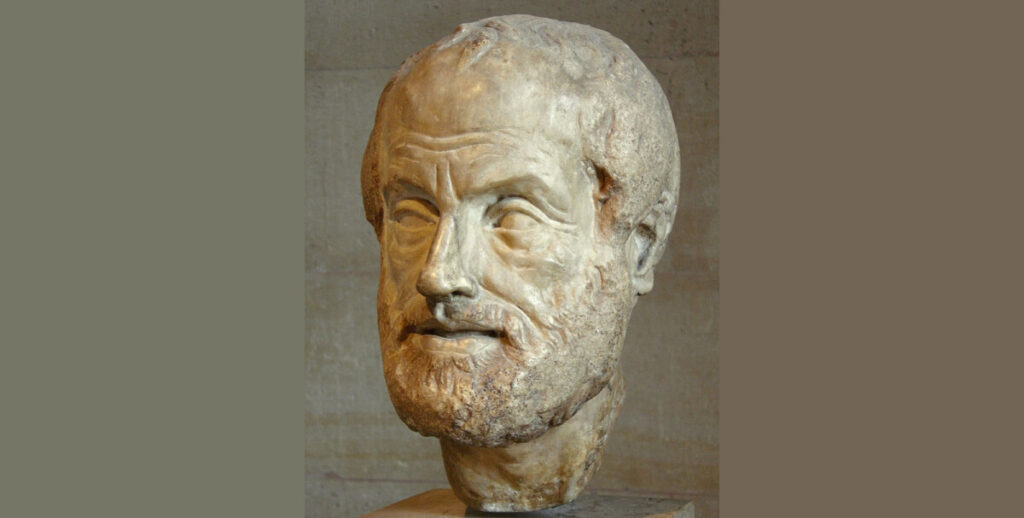
30 Phil, Chapter 9: Aristotle and Empiricism
Aristotle was the greatest Greek philosopher and covered nearly all subjects including physics, biology, zoology, metaphysics, logic, ethics, aesthetics, poetry, theatre, music, rhetoric, psychology, linguistics, economics, politics, meteorology, geology, and government. His Aristotelian philosophy characterized by deductive logic and an analytic inductive method.
Some of my favorite translated sayings are:
- The more you know, the more you know you don’t know.
- It is the mark of an educated mind to be able to entertain a thought without accepting it.
- Happiness depends upon ourselves.
- Happiness is the meaning and the purpose of life, the whole aim and end of human existence.
- The educated differ from the uneducated as much as the living differ from the dead.
- Quality is not an act, it is a habit.

Chuang Tzu, or in modern pinyin, “Zhuangzi,” is a cornerstone of Daoist philosophy. His collection of essays and stories delves into themes of spontaneity, relativity, and the natural order. The famous Butterfly Dream, which questions the boundaries between dreaming and waking states, epitomizes his exploration of transformation and reality.
Chuang Tzu championed the principle of “wu wei” (effortless action), advocating for living in harmony with the natural world and one’s true nature. His writings highlight the limitations of human knowledge and the relativity of perceptions, encouraging a flexible and open-minded approach to understanding life.
His influence extends far beyond his era, impacting both Eastern and Western thought. By emphasizing naturalness, simplicity, and non-conformity, Chuang Tzu inspires countless generations of thinkers and spiritual seekers. His teachings remain relevant, urging us to embrace change, question our assumptions, and find harmony in the flow of life.
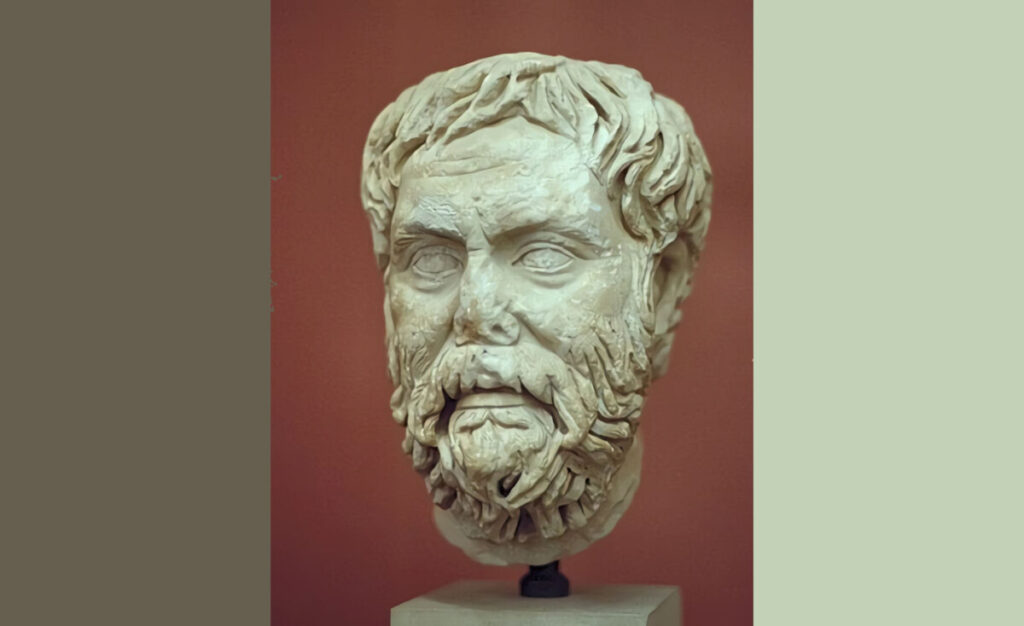
30 Phil, Chapter 10: Pyrrho of Elis and Skepticism
Pyrrho, the skeptic, believed no one knows anything. Everything can be questioned. The best approach is to keep an open mind. Like Socrates, Pyrrho himself left no writings. We know of his teachings through his students and later writers.
Phrases that best represent skeptics:
- Question everything.
- Do not trust your senses.
- What difference does it make if you are alive or dead?
There’s a big difference between a pure skeptic questioning literally everything, and a moderate skeptic who evaluates everything with an open mind. Pyrrho is reported to have been a pure skeptic, I’m more of a moderate skeptic.
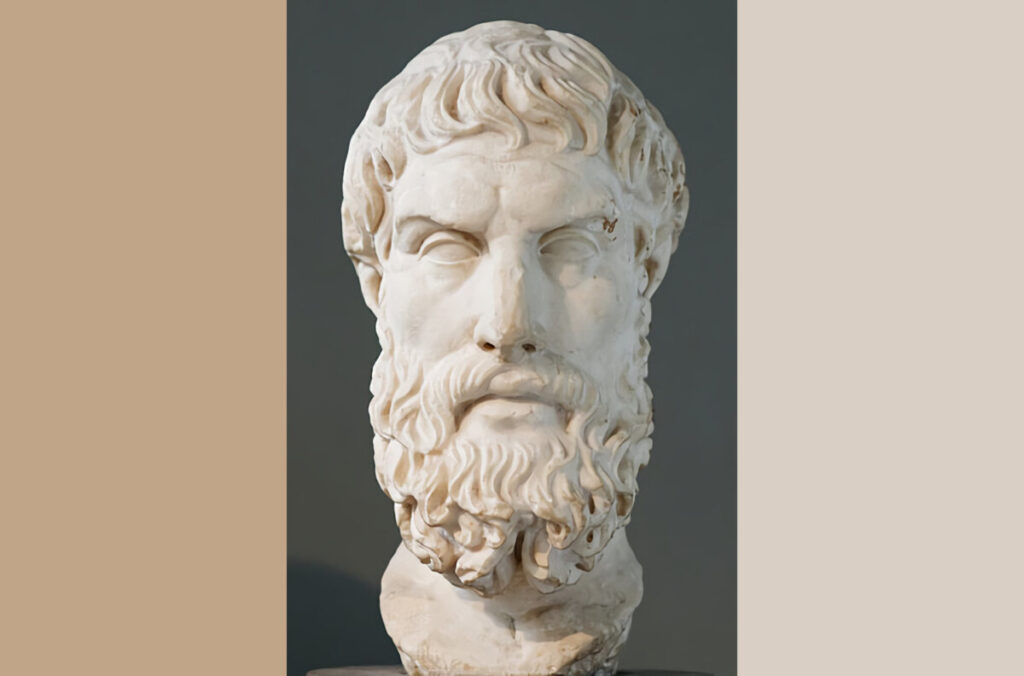
30 Phil, Chapter 11: Epicurus and Epicureanism
Epicurus founded Epicureanism in 307 BCE. The goal of Epicureanism is to help people attain a happy (eudaimonic), tranquil life characterized by ataraxia (free from fear) and aponia (free from pain). He authored over 300 books, scrolls, none of which survived the test of time.
Some of my favorite translated sayings attributed to him:
- Do not spoil what you have by desiring what you have not
- Death is not something experienced in life.
- Fear of death is a waste of time.
My favorite saying is the Epicurean epitaph “Non fui, fui, non sum, non curo.”
- I was not; I was; I am not; I do not mind.
I sometimes refer to myself as an epicurean stoic. A balance between enjoy the journey, and duty to yourself and others. Enjoying the complimentary yin and yang of my journey on Earth.
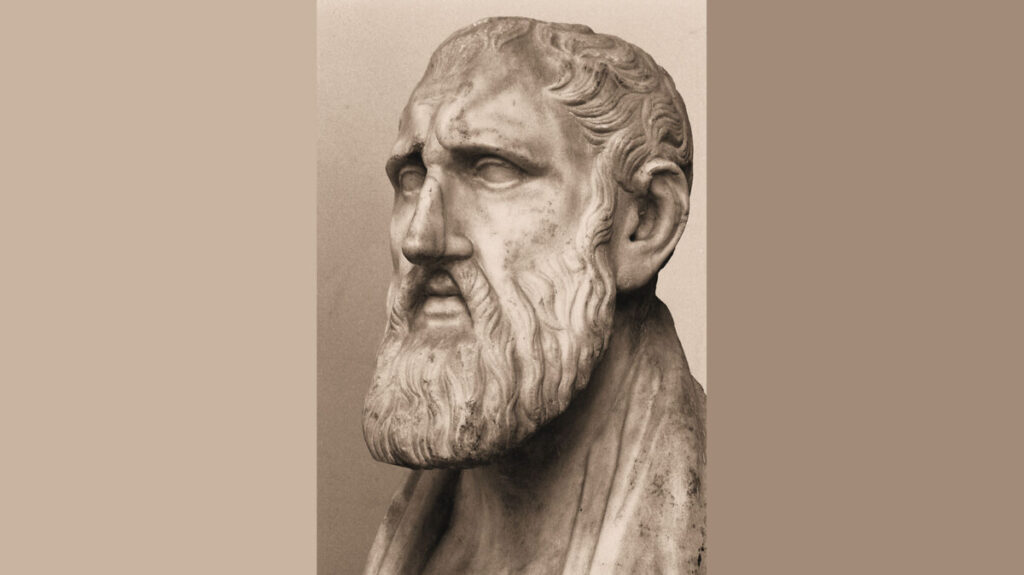
Zeno is considered the founder of the Stoic school of philosophy. When events occur in life, people react. Life is a series of events and immediate reactions. A stoic introduces a third middle step, a judge step. On their life journey, a stoic strives for a series of event-judge-react experiences. When you introduce a judge step, you can frequently change your reaction to a healthier reaction.
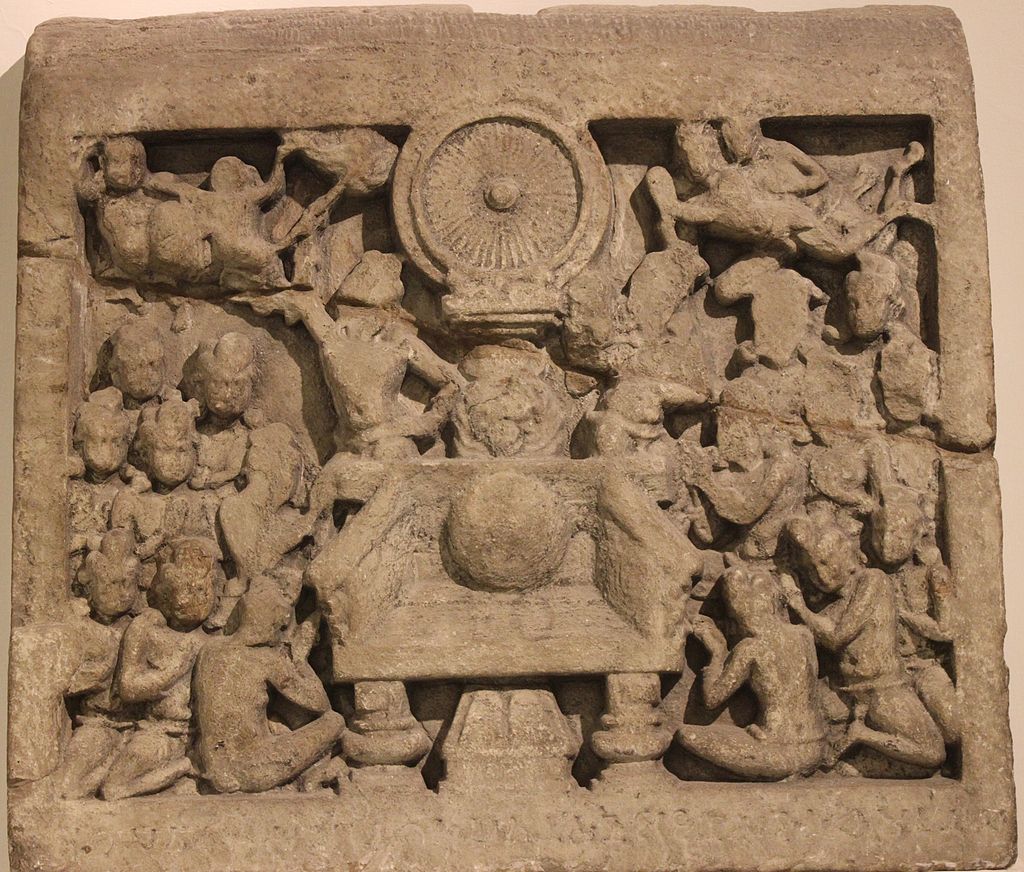
In 322 BCE, following the disruption left in the wake of Alexander the Great’s incursions into the Indian subcontinent, Chandragupta Maurya founded the Maurya Empire. This marked the beginning of one of India’s largest and most powerful empires, stretching at its zenith from the Himalayas to the Deccan Plateau. The reign of Chandragupta and his successors, most notably Ashoka the Great, was characterized by significant advancements in political organization, economic development, and the spread of Buddhism both within the empire and beyond its borders. The Maurya Empire’s legacy of unification, administration, and cultural proliferation left an indelible mark on the history of South Asia.
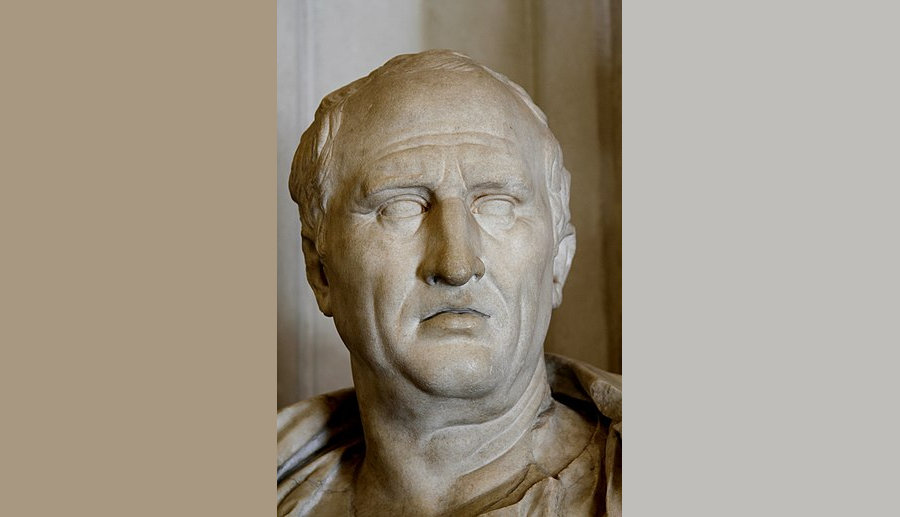
The stoic philosopher Marcus Tullius Cicero was one of Rome’s greatest orators and had an immense influence on the Latin language.
Some of my favorite translated Cicero quotes:
- If you have a garden and a library, you have everything you need.
- Friendship improves happiness and abates misery, by the doubling of our joy and the dividing of our grief.
- Any man can make mistakes, but only an idiot persists in his error.
- Silence is one of the great arts of conversation.
- Cultivation to the mind is as necessary as food to the body.
- Love is the attempt to form a friendship inspired by beauty.
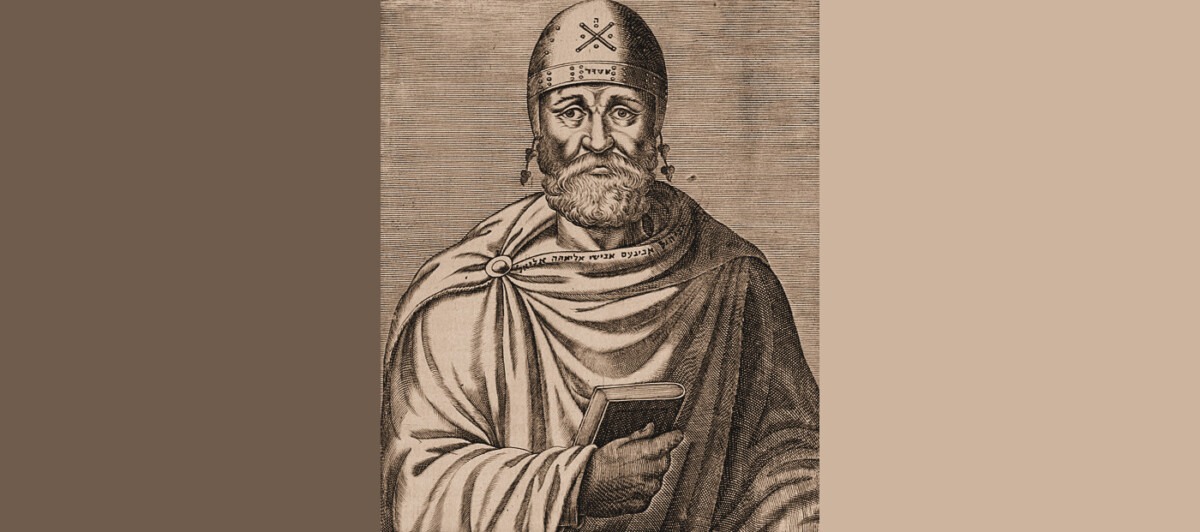
30 Phil, Chapter 12: Philo and Abrahamic Philosophy
Philo of Alexandria, was born in the dynamic environment before the split of Judaism and Christianity. He was born around the year 20 BCE and became an important Jewish leader delving into the enigmatic world of Hellenistic Jewish religion.
Pictured: Portrait from 1500s. He likely did not look like this.
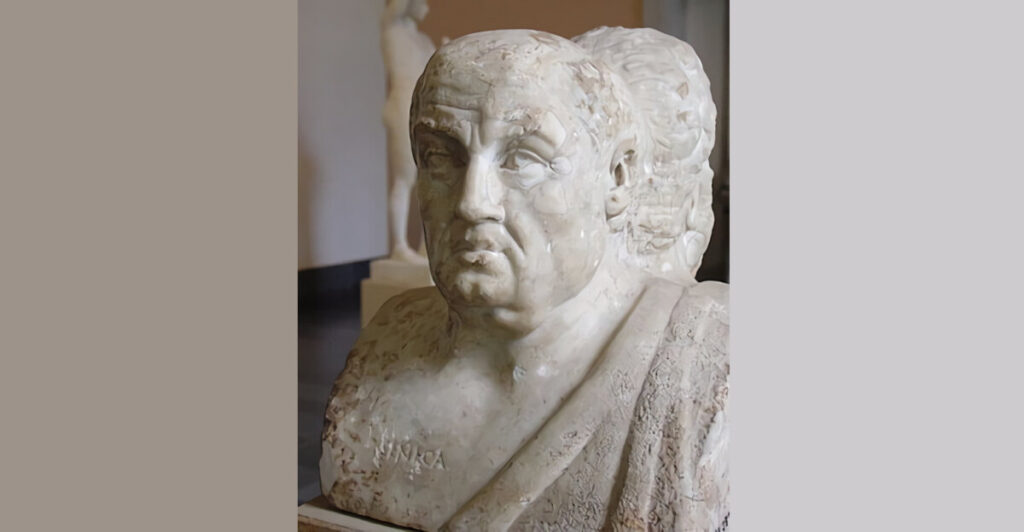
The stoic philosopher Lucius Annaeus Seneca the Younger has the distinction that more of his writings survived the test of time and is therefore a valuable primary source for stoic philosophy.
Some of my favorite translated Seneca quotes:
- Luck is what happens when preparation meets opportunity.
- All cruelty springs from weakness.
- Religion is regarded by the common people as true, by the wise as false, and by rulers as useful.
- We suffer more often in imagination than in reality.
- If a man knows not to which port he sails, no wind is favorable.
- No man was ever wise by chance.
- Only time can heal what reason cannot.

The earliest known magnification dates back to the first century. These simple early magnification devices consisted of using natural crystals or a glass globe filled with water. It is reasonable to assume the use of natural crystals for magnification was around for many thousands of years. One possible specimen is the Nimrud lens dating back to 750 BCE.
Although man-made glass was in common use about 3500 BCE, eye glasses would have to wait about 4,500 years later. Eye glasses were invented in the 13th century. A few centuries earlier, a reading glass was in common use. A piece of glass you set on a page of text to magnify the letters well enough to read easily.
These early devices provided a max of about 2x, or perhaps 3x, magnification. The microworld of cells and large bacteria would have to wait for the invention of good quality microscopes about 1630. The nanoworld of smaller bacteria, viruses, proteins, and molecules would have to wait for the invention of the electron microscope in 1931.
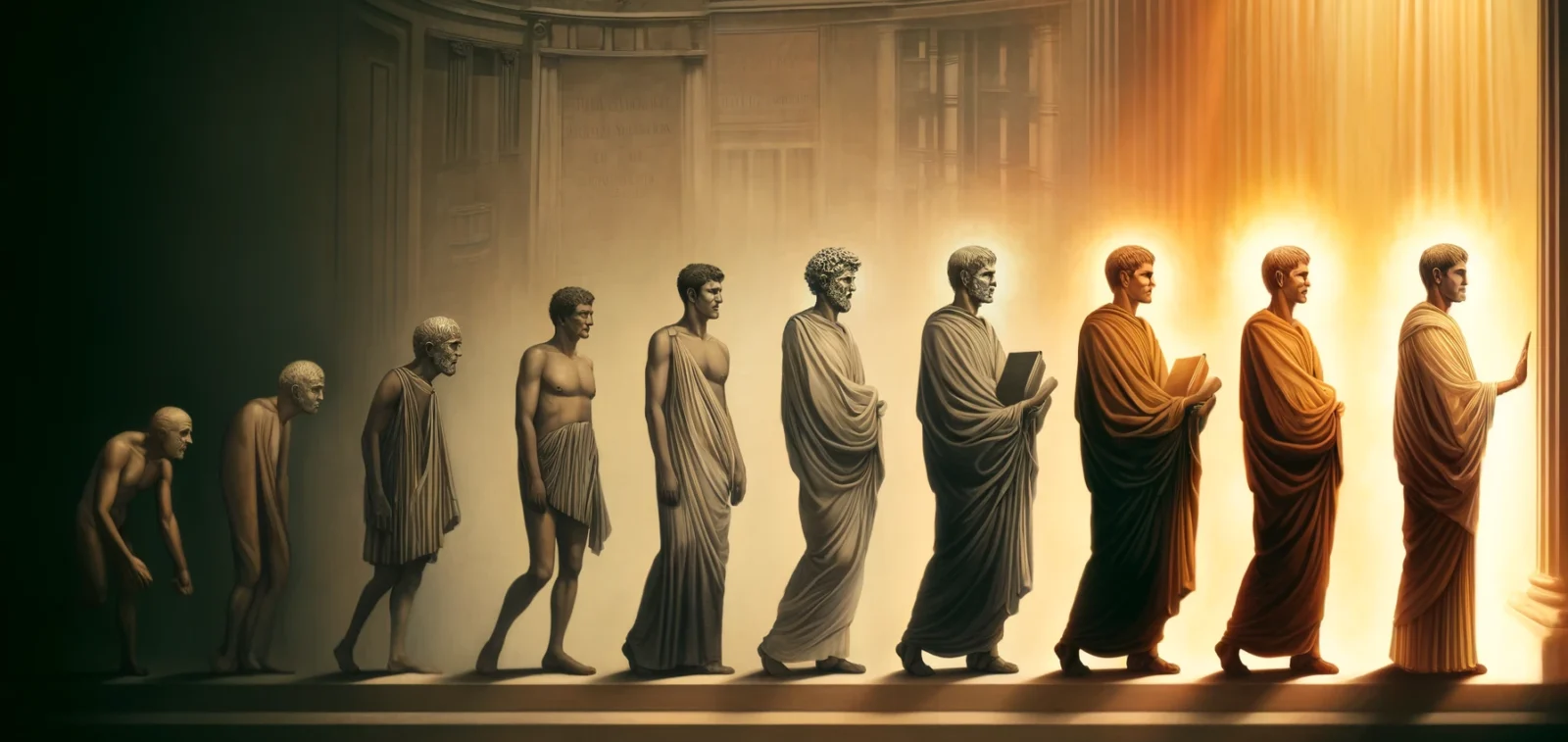
Epictetus stressed that philosophy is a way of life and not simply analytical. The stoic philosopher Epictetus was cited by Marcus Aurelius in his Meditations. Epictetus was one of the future emperor’s teacher’s during childhood up to the age of 14. Although no writings by Epictetus are known, his students documented his beliefs and sayings well. Epictetus is my favorite philosopher. I like nearly all the quotes attributed to him.
Some of my favorite translated sayings attributed to him:
- It’s not what happens to you, but how you react to it that matters.
- The key is to keep company only with people who uplift you.
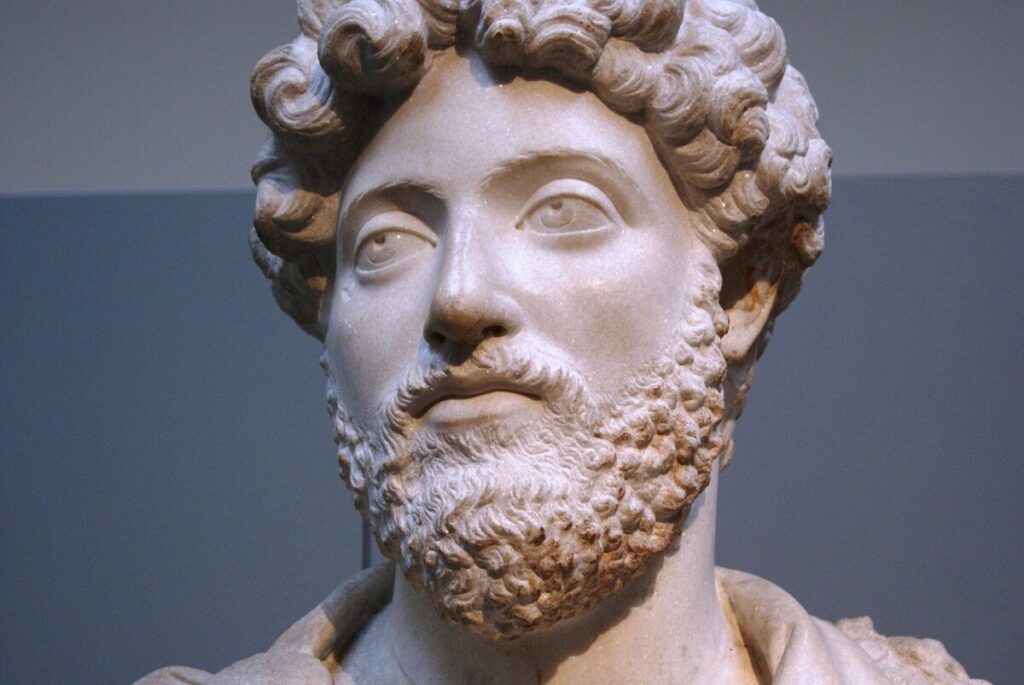
30 Phil, Chapter 13: Marcus Aurelius and Stoicism
Some of my favorite translated meditations include:
- Learn to be indifferent to what makes no difference.
- The happiness of your life depends upon the quality of your thoughts.

This supernova was observed by Chinese astronomers in 185 CE. The Chinese kept meticulous astronomical records for centuries, including observations of what modern scientists interpret as supernovae. Chinese astronomical records from 185 AD describe the appearance of a “guest star” in the constellation now known as Circinus. This guest star matches the expected location and timing for a supernova that would leave behind RCW 86.
30 Phil, Chapter 14: Badarayana and Karma
Badarayana is the sage who wrote the Brahma Sutras. Badarayana is placed at circa 200 CE, but the truth is, we don’t know when he lived. In my research, I found dates ranging from the 4th century BCE to the 4th century CE . While scholarly consensus leans towards an earlier date, I chose a reference year of 200 CE so I could group the Greco-Roman philosophers together on our mostly chronological journey.
Badarayana composed the “Brahma Sutras” as a guide to the Upanishads, a foundational text in Vedanta philosophy. The text was written in Classical Sanskrit and in an aphoristic style: short sentences expressing an idea. This style, popular between 500 BCE and 500 CE , gives me a modicum of comfort with the 200 CE date I’ve chosen.
Unfortunately, little is known about Badarayana’s personal life and background.
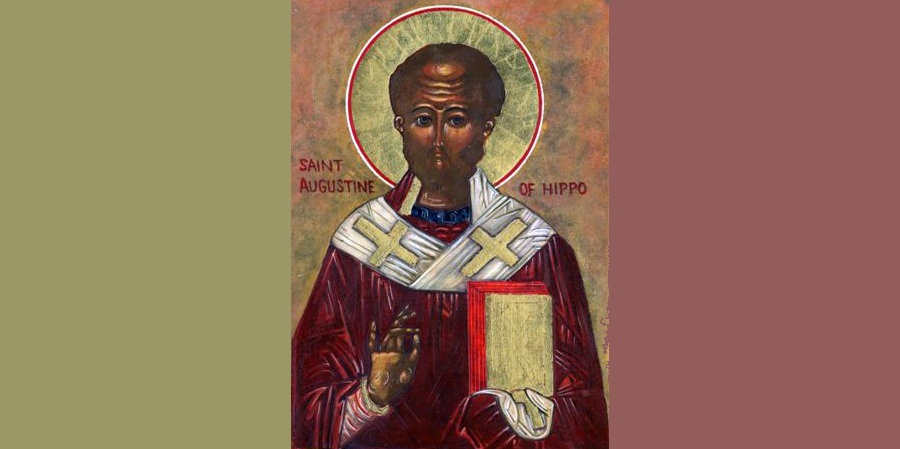
30 Phil, Chapter 15: Augustine, Time, and War
Augustine is known as the father of Western religious scholarship. He reconciled the science and philosophy of Aristotle with church beliefs.
- The world is a book and those who do not travel read only one page.
- Right is right even if no one is doing it; wrong is wrong even if everyone is doing it.
- There is no saint without a past, no sinner without a future.