
Weekly Insights for Thinkers

STORY

Cuneiform Writing

By PrestwoodIT

Sun 13 Feb 2022
Published 4 years ago.
Updated 2 years ago.
Related Stories
Share :

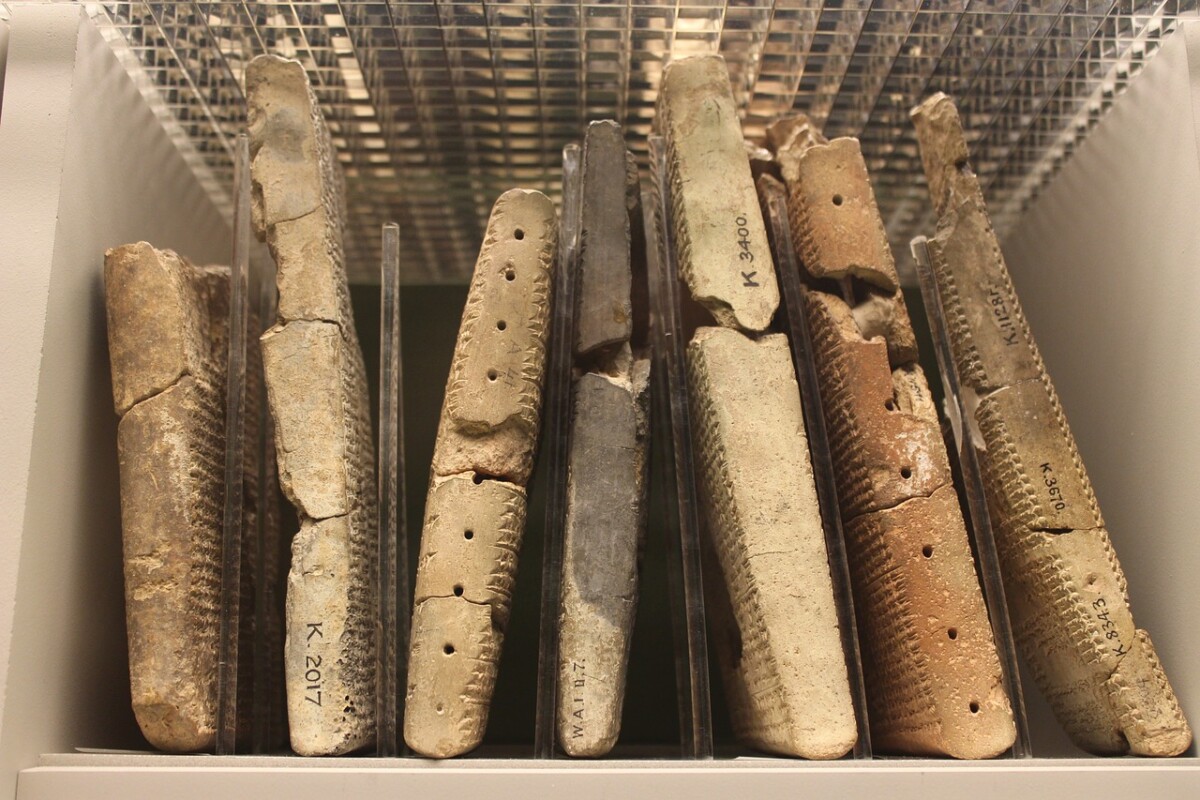
Cuneiform Writing

3400 BCE
3400 BCE to 100 CE (end of use for scholarly work)

Earliest known writing in Africa/Middle East zone.

Human DNA today is the same as 50,000 BCE. There is no doubt there were many dozens and perhaps thousands of civilizations prior to the Sumer civilization, but Sumer is the earliest known, or at least the earliest well known. The Sumer civilization first established between 6500 and 4100 BCE. We know quite a bit about the Sumerians because they immortalized their writing in clay tablets which will be around long after all the paper books on Earth right now have deteriorated. Sadly, we know almost nothing about prior civilizations because very little evidence survived the test of time. The Sumerians spoke and wrote Sumer and starting several millennia into their civilization they started immortalizing their culture on clay. They had an advanced democracy with elected officials, religion, art, wheel, math, philosophy, and language. The Cuneiform script was in use until 100 CE.

— map / TST —

Michael Alan Prestwood
Author & Natural Philosopher
Prestwood writes on science-first philosophy, with particular attention to the convergence of disciplines. Drawing on his TST Framework, his work emphasizes rational inquiry grounded in empirical observation while engaging questions at the edges of established knowledge. With TouchstoneTruth positioned as a living touchstone, this work aims to contribute reliable, evolving analysis in an emerging AI era where the credibility of information is increasingly contested.
This Week @ TST
March 4, 2026
»Edition Archive
WWB Research….
1. Story of the Week
Marcus Aurelius: An Explorative Agnostic
2. Quote of the Week
“Our knowledge is finite, while our ignorance is infinite.”
3. Science FAQ »
Do we experience reality directly?
4. Philosophy FAQ »
What is TST Ethics?
5. Critical Thinking FAQ »
What is confirmation bias, and why does it matter?
6. History FAQ!
What historical ideas shaped TST Philosophy?
Bonus Deep-Dive Article
1-2-3-4-5: TST Philosophy Overview
Scroll to Top