
Explore Science-first Philosophy

STORY

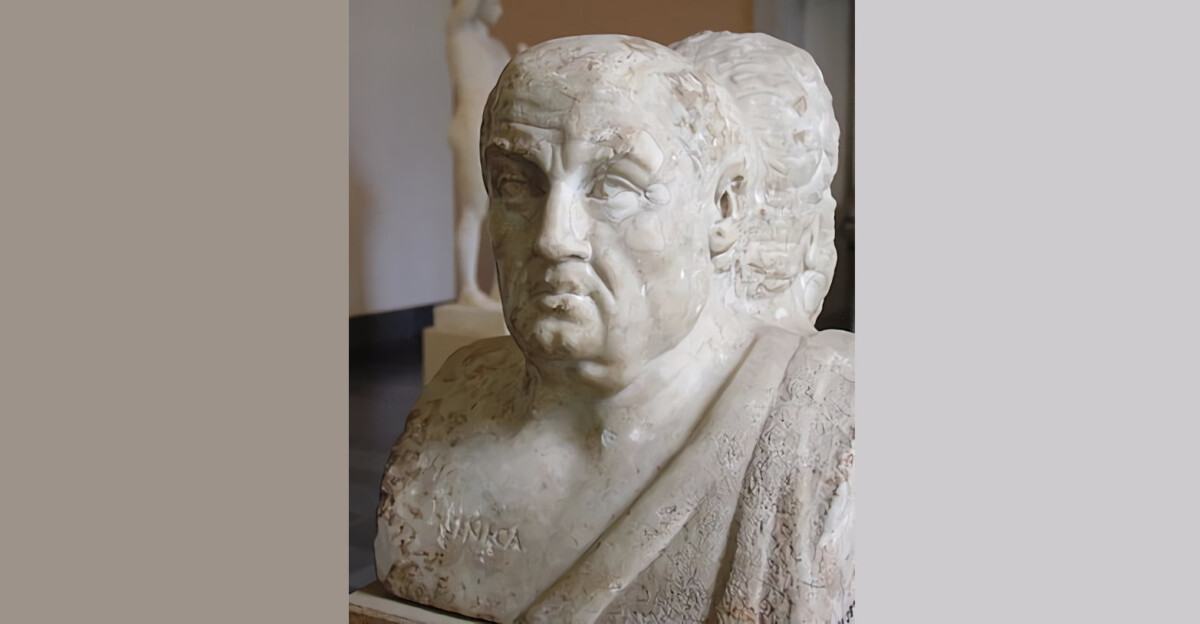
Seneca the Younger (4 BCE – 65 CE)

By PrestwoodIT

Sun 27 Feb 2022
Published 4 years ago.
Updated 2 years ago.
Related Stories
Share :

Seneca the Younger (4 BCE – 65 CE)

Stoic Tradition
Roman Stoic Statesman
81 Generations Ago

The stoic philosopher Lucius Annaeus Seneca the Younger has the distinction that more of his writings survived the test of time and is therefore a valuable primary source for stoic philosophy. 

Some of my favorite translated Seneca quotes:

  • Luck is what happens when preparation meets opportunity.
  • All cruelty springs from weakness.
  • Religion is regarded by the common people as true, by the wise as false, and by rulers as useful.
  • We suffer more often in imagination than in reality.
  • If a man knows not to which port he sails, no wind is favorable.
  • No man was ever wise by chance.
  • Only time can heal what reason cannot.

— map / TST —

Michael Alan Prestwood
Author & Natural Philosopher
Prestwood writes on science-first philosophy, with particular attention to the convergence of disciplines. Drawing on his TST Framework, his work emphasizes rational inquiry grounded in empirical observation while engaging questions at the edges of established knowledge. With TouchstoneTruth positioned as a living touchstone, this work aims to contribute reliable, evolving analysis in an emerging AI era where the credibility of information is increasingly contested.
Email
Print
This Week @ TST
April 8, 2026
»Column Archive
WWB Research….
1. Story of the Week
Pragmatism
2. Quote of the Week
“Our statements about the external world face the tribunal of sense experience not individually, but only as a corporate body.”
3. Science FAQ »
Why do scientific models work if they aren’t literally true?
4. Philosophy FAQ »
Is agnosticism a ludicrous position to occupy?
5. Critical Thinking FAQ »
Do my people and culture help or harm my critical thinking?
6. History FAQ!
Did Berger and Luckmann really say reality is just made up?
Bonus Deep-Dive Article
TST Doxastic Formation: Public Belief, Tribe, and Worldview
Scroll to Top