

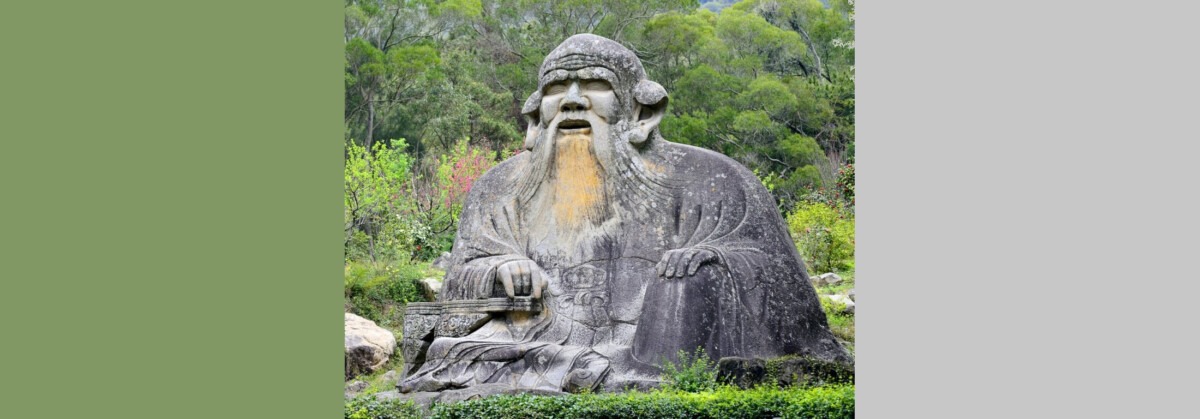
30 Philosophers, Chapter 4: Laozi and Daoist Philosophy.
The life of Laozi is shrouded in mystery, but he is the first philosopher in “30 Philosophers” I attempt to construct a precise biography for. The Spring and Autumn Period of China spanned nearly three centuries starting in 770 BCE, and Laozi lived about in the middle of that era. That’s really about all we know of when he lived. By tradition only, he was born in 604 BCE.
He authored the Dao De Jing and founded the Daoist philosophy. At the core of Daoism is the Dao, wu-wei, and ziran.
Laozi did not present the Dao as a god. The Dao is “the Way.” The natural order of reality; the path beneath all things; the source our words can never fully capture. The unknowable Dao supports the TST split. It asks us to stand humbly before reality and admit that our ideas are always smaller than what is.
Laozi’s idea of wu-wei is often translated as “non-action,” but it is not laziness or withdrawal. It is effortless action like the flow of water. Move with the flux of life, not against it. In relationships, it means less forcing, less grasping, less domination. You guide, speak, teach, and disagree, but you do so without trying to bend others to your will.
His idea of ziran is often translated as “naturalness” or “of itself,” and it points toward living in alliance with nature. In my writing it also aligns with modern existential authenticity. Things have their own unfolding, their own pattern, their own way. To live well is not to conquer the world, but to harmonize with it. Daoism reflects a reverence for reality, a trust in natural flow, and a call to live simply, humbly, and in balance.

