

The Tomb of Nebamun, located in Thebes, Egypt, contains some of the most famous and vibrant frescoes from the 18th Dynasty of the New Kingdom period. The paintings depict Nebamun, an Egyptian official, engaging in various activities, including hunting in the marshes and enjoying banquets with his family. The frescoes are celebrated for their dynamic compositions, detailed portrayal of figures and animals, and the use of color, which brings the scenes to life with remarkable vitality. These works not only exemplify the artistic skills of ancient Egyptian painters but also offer a glimpse into the values, leisure activities, and beliefs of the period.
STORY
Frescoes of the Tomb of Nebamun
☐ Read
☑ Read
You’ve read this 0 times.
You’ve listened to this 0 times.
By Michael Alan Prestwood
Thu 4 Apr 2024
Published 3 years ago.
Updated 5 months ago.
Related Stories
- Related Categories: Ancient History
Share :
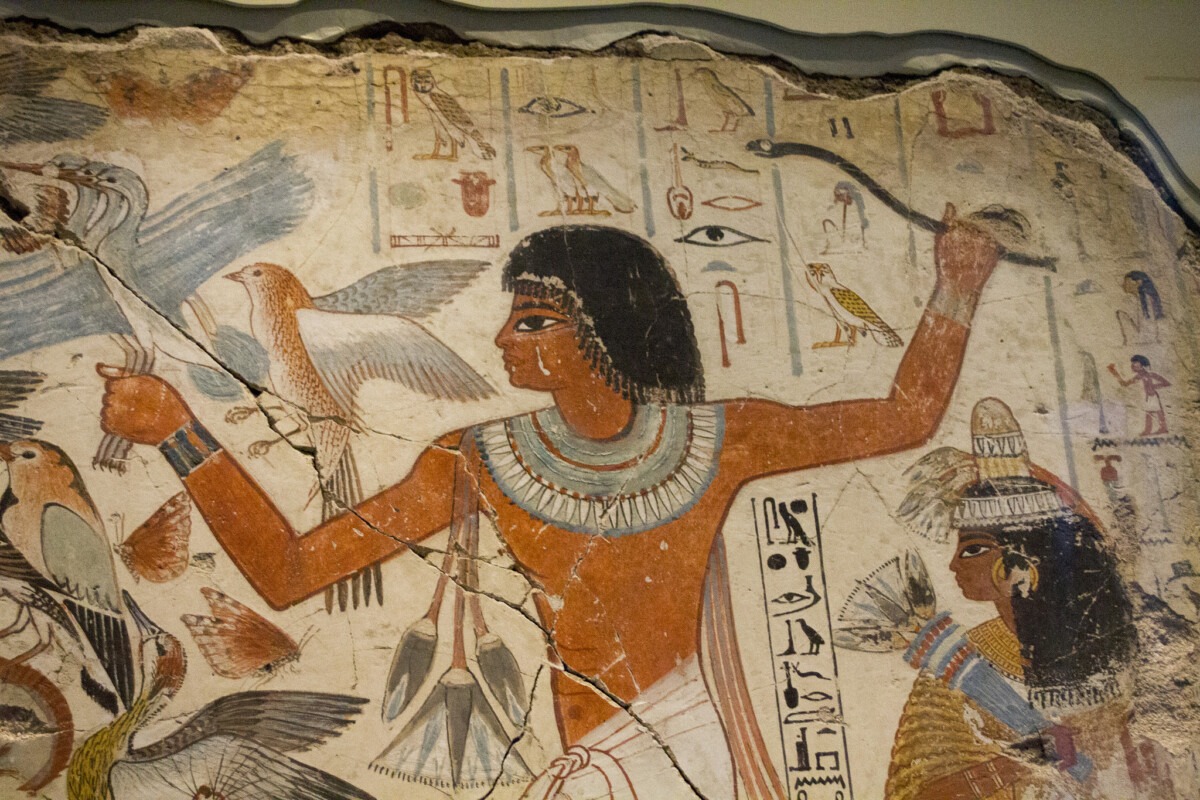
Tomb Of Nebamun Painting 1
" by George Lodge is licensed under CC BY 3.0Frescoes of the Tomb of Nebamun
circa 1350 BCE
- < 1 minute read

Michael Alan Prestwood
Author & Natural Philosopher
Author & Natural Philosopher
Prestwood writes on science-first philosophy, with particular attention to the convergence of disciplines. Drawing on his TST Framework, his work emphasizes rational inquiry grounded in empirical observation while engaging questions at the edges of established knowledge. With TouchstoneTruth positioned as a living touchstone, this work aims to contribute reliable, evolving analysis in an emerging AI era where the credibility of information is increasingly contested.
Email
Print
The Prestwood Column
Menu
October 2026
»COLUMN ARCHIVE
--COLUMN--
Column Research….
NEW BOOK! NOW AVAILABLE!!
30 Philosophers: A New Look at Timeless Ideas
by Michael Alan Prestwood
