A World in Transition: Medieval History spans a millennium of global transformation. Empires rise and fall, religions consolidate, trade networks expand, and intellectual traditions cross continents. It is not merely Europe’s Middle Ages, but a worldwide period of structural reorganization and cultural exchange.
World History: Medieval
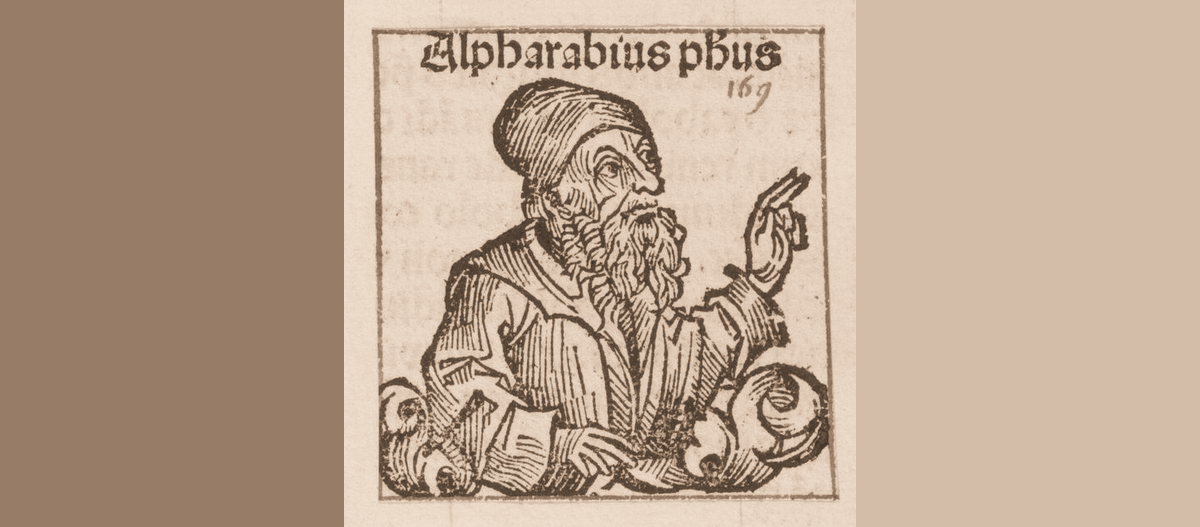
30 Phil, Chapter 16: Al-Farabi and Intellect
Al-Farabi was born along the Silk Road circa 872 CE in the city of Farab, in present-day Kazakhstan. Al-Farabi’ thought was rooted in Platonic and Aristotelian frameworks, yet it seamlessly wove in elements of Islamic thinking. He imagined an ideal society, steered by virtuous leaders akin to Plato’s philosopher-kings, guiding them towards a virtuous existence. In his vision, true wisdom was the foundation of an intellectual civilization.
Pictured: Artist impression.
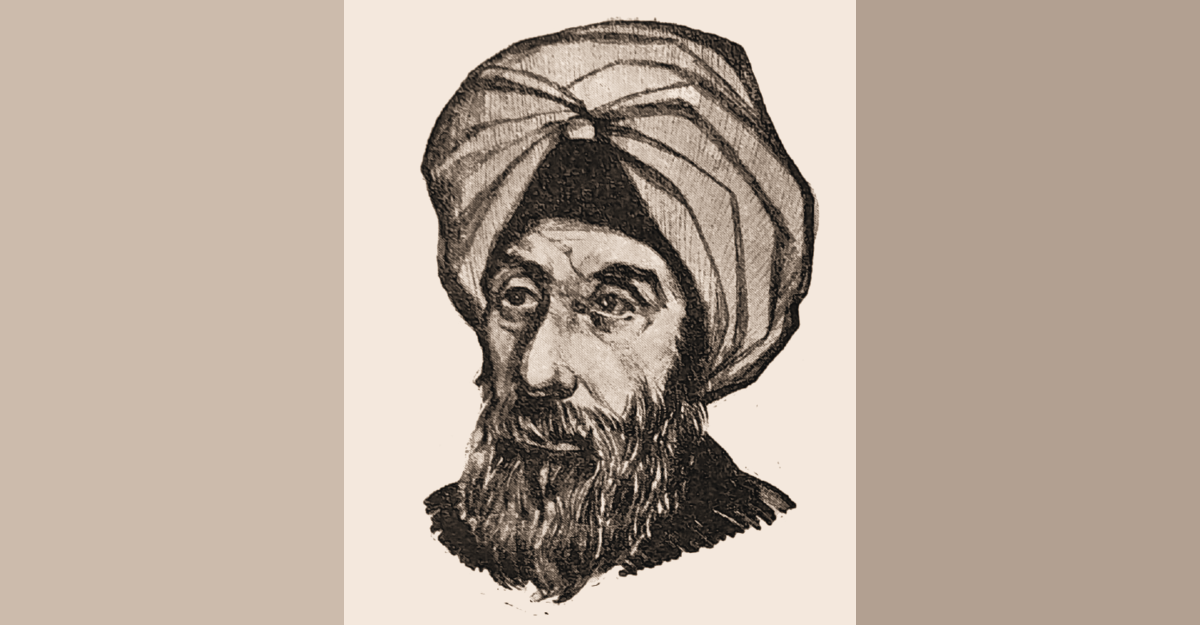
30 Phil, Chapter 17: Alhazen and the Senses
Alhazen was born in Basra around 965 CE, a city located in present-day Iraq. In his 30s, Alhazen faced the challenge of his life. He was “commissioned” to produce a solution for regulating the unpredictable and deadly flooding of the Nile. As he delved into the problem, it became clear the task was impossible. The “emission theory,” the prevalent theory before Alhazen, asserted that light originates from your eyes, hits objects, and is then reflected back. In “Book of Optics,” he explored aspects of vision and light, including reflection and refraction. He disproved the emission theory and proved the intromission theory.
Pictured: Artist impression.
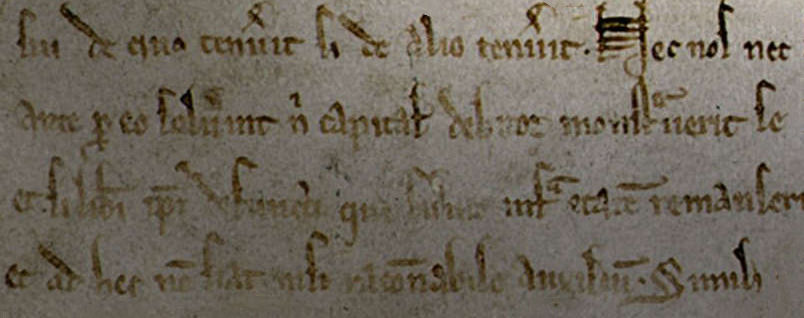
Spaces between words started circa 1000 CE because those copying texts found it easier and faster to copy if they introduced spaces between words. The 1215 Magna Carta is a good example of this quality of writing which included word-spacing, uppercase, and lowercase, but no punctuation, nor paragraphs.

30 Phil, Chapter 17, Alhazen, Touchstone 42: Senses.
How we perceive an external world starts to become clear about 1020 CE. Since Alhazen and his pioneering work around 1020 CE, we have made significant advancements in understanding our senses. Our direct impressions of the world. Prior to Alhazen, most people on Earth believed in strange things like magical light-emitting-flashlight eyes. This new look integrates modern science, genetic variations, and future possibilities, offering a holistic and forward-looking perspective on human sensory experiences.

Bernard of Chartres, a prominent 12th-century French philosopher, lived around 1070 to 1130. He is best known for his influential teaching that emphasized the continuity of knowledge through the ages. Bernard is famously credited with the phrase,
“We are like dwarfs on the shoulders of giants,”
highlighting the idea that contemporary scholars build upon the knowledge of their predecessors. Bernard’s contributions significantly promoted a “dark” medieval intellectual life, known as scholasticism, that oppressed rational ideas about our empirical world.
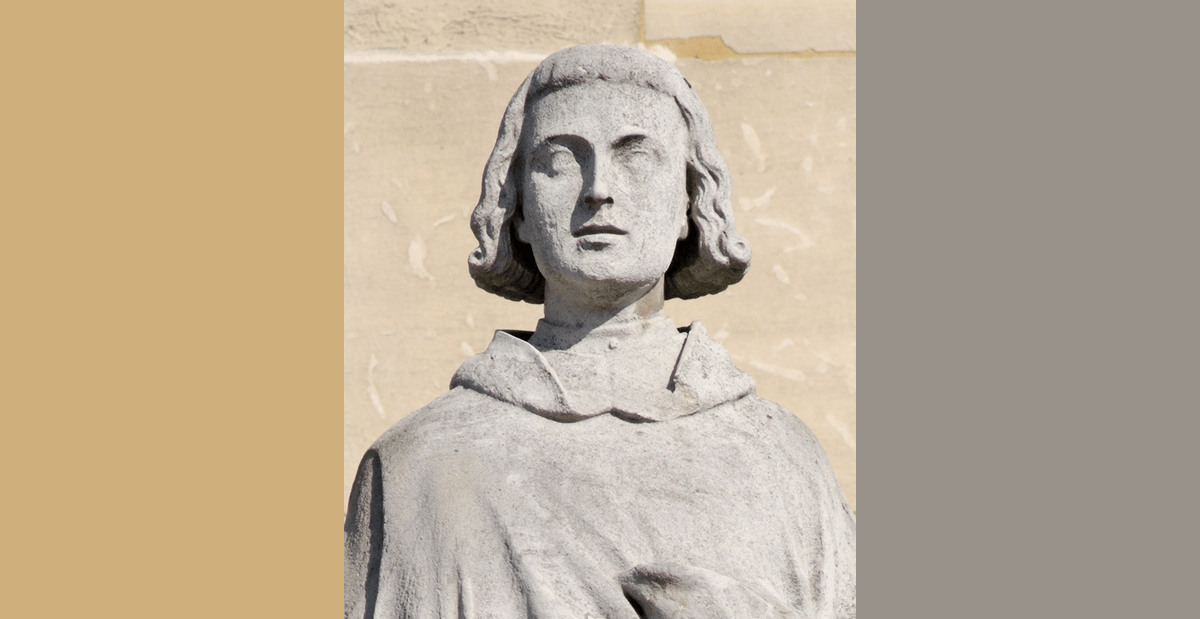
30 Phil, Chapter 18: Peter Abelard and Universals
Born in 1079 in Le Pallet, a small village in France, Peter Abelard hailed from a noble lineage. His father, a knight of the local lord, intended for his son to follow in his footsteps. Instead, Peter chose a path of knowledge. His brilliance propelled him to the forefront of the intellectual circles in Paris, where he challenged established ideas. Early philosophers, like Plato and Aristotle, noticed patterns in nature including things in common between objects. Remember schemas? The categories, groups, and patterns we notice in life. In the realm of philosophy, these patterns are “universals.” Abelard’s conceptualism is a middle ground.

In the early 12th century, the Khmer Empire, located in what is today Cambodia, undertook one of the most ambitious architectural projects in the history of Southeast Asia: the construction of Angkor Wat. Originally dedicated to the Hindu god Vishnu, this temple complex reflects the height of Khmer architectural, artistic, and spiritual achievement. Angkor Wat is distinguished not only by its vast scale and ornate design but also by its significance as a symbol of Cambodian national pride and identity. Its transition from a Hindu to a Buddhist temple mirrors the wider religious and cultural shifts in the region over the centuries. Today, Angkor Wat stands as a testament to the ingenuity and devotion of the Khmer people, attracting scholars and tourists from around the globe.

The Inca civilization only lasted a few centuries from about 1200 CE. In that short period it became the largest empire in pre-Columbian America. It emerged in the Andean region of present-day Peru. The early Incas established the city of Cusco as their capital. They expanded rapidly, by the 15th century they developed an extensive network of roads, sophisticated agricultural terraces, and monumental architecture, such as Machu Picchu. They developed a system of record-keeping using quipus (knotted strings) and a calendar based on the movements of the sun and moon. The Inca Empire fell to Spanish conquistadors in 1533, leading to its dissolution, but the cultural legacy endures among Andean communities.
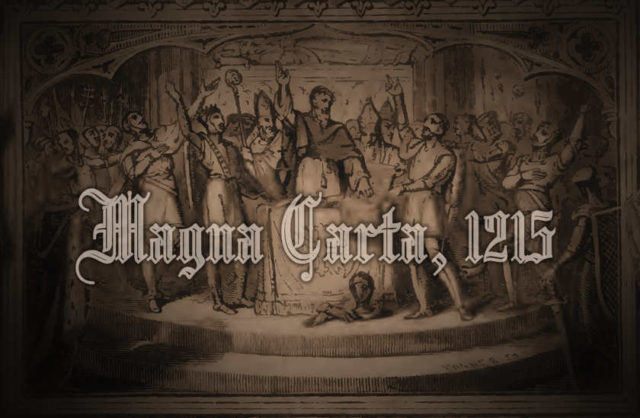
The Magna Carta in 1215 established the following principles:
- everyone is subject to the law, even the King,
- individuals have rights,
- everyone has the right to justice,
- and everyone has the right to a fair trial.
The Magna Carta recognized individual responsibility in all, including the King, and it established that the law “should” be applied to everyone equally. Although King John got the pope to void the Magna Carta only 10 weeks after signing it, it was reissued several times over the next century and became a seminal legal document when Sir Edward Coke used it extensively in the 17th century. (Sir Edward Coke was a mentor to Roger Williams.)
More Info

Spaces between words started circa 800 CE. Over the next few centuries, writing evolved. By the invention of the printing press in 1440, we had punctuation pretty similar to today’s standard. About halfway, at the time of the Magna Carta in 1215, we still had mostly uppercase with spaces between words and an occasional period. Punctuation and spelling mostly standardized starting in the 1300s for the next century, just in time for the printing press.
Image: First page of “On the Revolutions of the Celestial Spheres” by Nicolaus Copernicus, 1543.

The Māori, Polynesian navigators and explorers, reached the shores of Aotearoa, now known as New Zealand, around 1300 CE. Braving the vast Pacific aboard large, ocean-going waka (canoes), they established communities that would flourish into a distinctive culture deeply connected to the land and sea. The Māori developed a rich oral tradition, weaving tales of their ancestors and the spirits that inhabit the natural world. Their arrival and settlement mark a significant chapter in the human history of Oceania, as they created intricate societal structures, advanced agricultural practices, and formidable fortifications known as pā, showcasing a profound understanding of their new environment and a resilient spirit that continues to define Māori culture today.

Hourglasses, also known as sandglasses or sand timers, were first used in the 14th century, although it is unclear exactly when they were invented. The earliest written reference to an hourglass dates back to the early 14th century in Europe, but they may have been used earlier in other parts of the world. Hourglasses were used as a reliable way to measure time, especially for tasks that required precise timing such as navigation at sea, cooking, and scientific experiments.
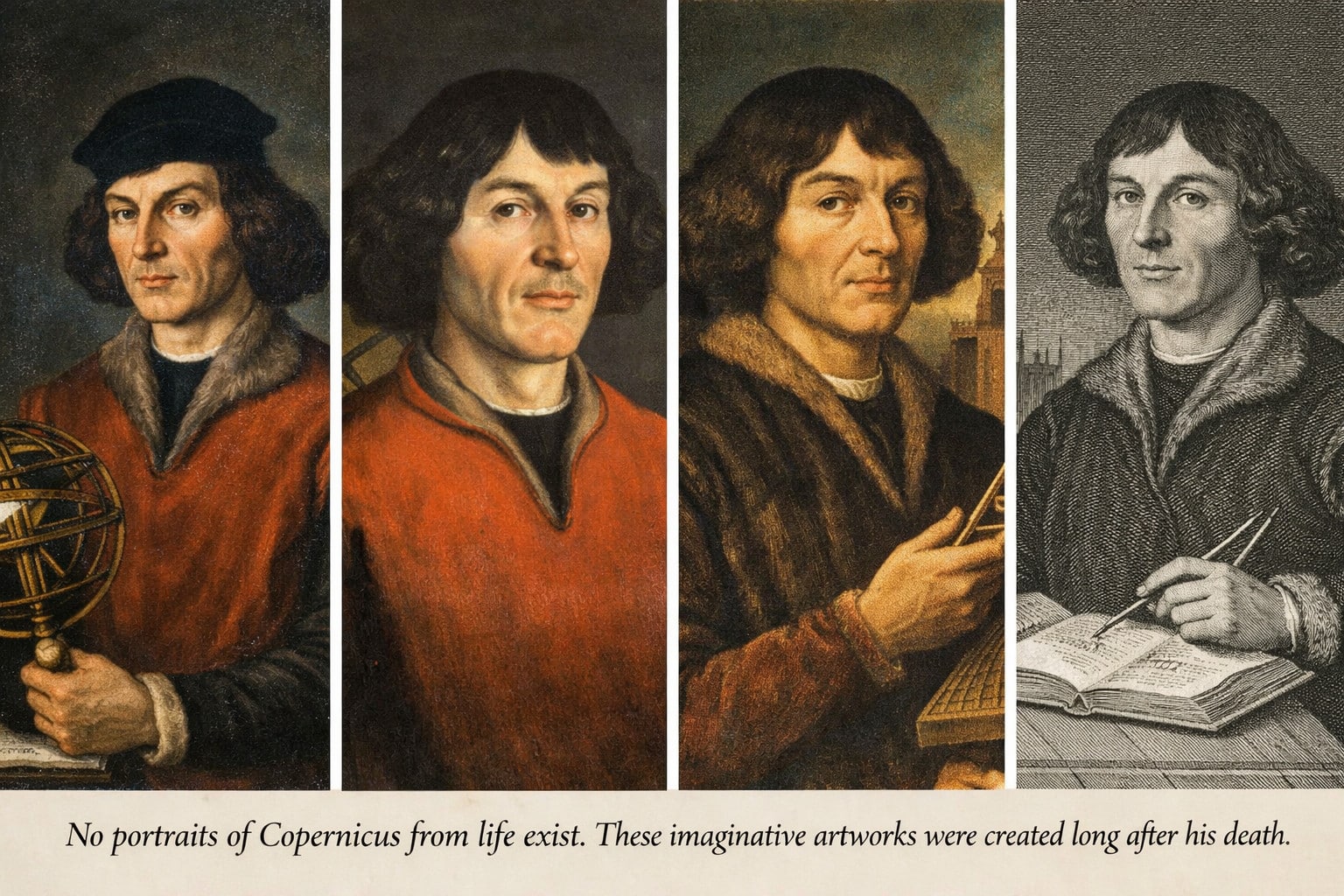
Nicolaus Copernicus was born in 1473 in Toruń, in what is now Poland. He was born on Wednesday, February 19, 1473. Trained in law, medicine, mathematics, and astronomy, he spent most of his life working as a church canon—an administrator, not a professional scientist. Astronomy was his private passion, pursued quietly alongside his official duties.
Over decades, Copernicus wrestled with a problem inherited from antiquity: the messy complexity of planetary motion in the Earth-centered universe. The more he worked, the clearer it became that placing the Sun at the center simplified everything. Yet he hesitated. Publishing such an idea challenged centuries of accepted thought, and Copernicus was cautious by nature.
Near the end of his life, encouraged by younger scholars, he finally allowed his work to be published. De revolutionibus orbium coelestium appeared in 1543—the year of his death. He died on Monday, May 24, 1543 in Frombork, a cathedral town in Warmia, Poland, where he had lived and worked for many years as a church canon. Copernicus never witnessed the storm his idea would unleash, but his quiet insistence on mathematical coherence reshaped how humanity understands its place in the cosmos.

Roger was about 4 when in 1606 King James I gave orders for a British flag to be created which bore the combined crosses of St George and of St Andrew. The result was the Union Jack flag created to celebrate the coming together of the Scotland and England crowns. The previous Cross of Saint George flag was exhibited for four centuries!
Roger was about 9 years old when the King James Bible was published in 1611 under the auspices of King James I of England. The King James Bible was the accepted standard from about 1650 through the early 1900s.
This interpretation of the Bible was evolved from earlier versions but is a reflection of its times. It was still created during a very primitive time in human understanding. Albert Einstein summed it up this way, “…the Bible a collection of honourable, but still primitive legends which are nevertheless pretty childish.” Although the telescope was invented in 1609, nearly all believed the Earth was the center of the universe. Blood circulating in our bodies was discovered 17 years later in 1628. One has to wonder how different this version of the bible would have been if the authors knew what we know now.
Change continues to influence Roger. Changes to religious doctrine is difficult even when dictated by a King. While Roger was growing up, there was much debate and interpretation of the Bible as well as the role of government in dictating religious doctrine. This debate likely leads to his openness to various viewpoints on religion.
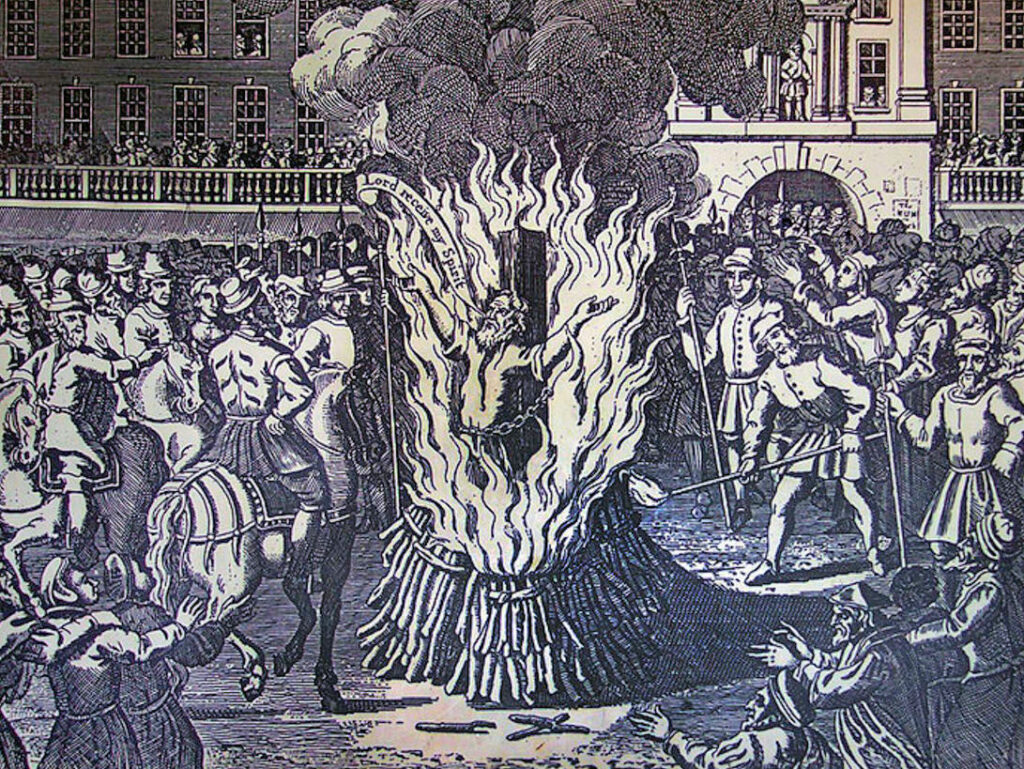
Bartholomew Legate was the last man burned at the stake in Smithfield where Roger Williams grew up. Just like Roger’s father, Bartholomew was in the clothing industry and may have interacted with Roger’s father at his shop. Either way, Roger Williams was about ten years old when Bartholomew was burned at the stake for simply discussing and debating some of the details of his own Christian faith. Bartholomew was an early “Seeker”, someone seeking truth about his own religion while still believing in the religion generally.
Roger grew up in the Smithfield area where heretics were burned at the stake. This fact may have shaped his eventual decision to leave England for America and his views on the separation of church and state as well as his belief that religion and the lack of religion, is an individual right. Like Bartholomew, Roger Williams would eventually become a “Seeker” sometime in the 1640s.