
Explore Science-first Philosophy

STORY

Badarayana

By Michael Alan Prestwood

Wed 10 Apr 2024
Published 2 years ago.
Updated 3 months ago.
Vedanta / Hinduism
Related Stories
Share :
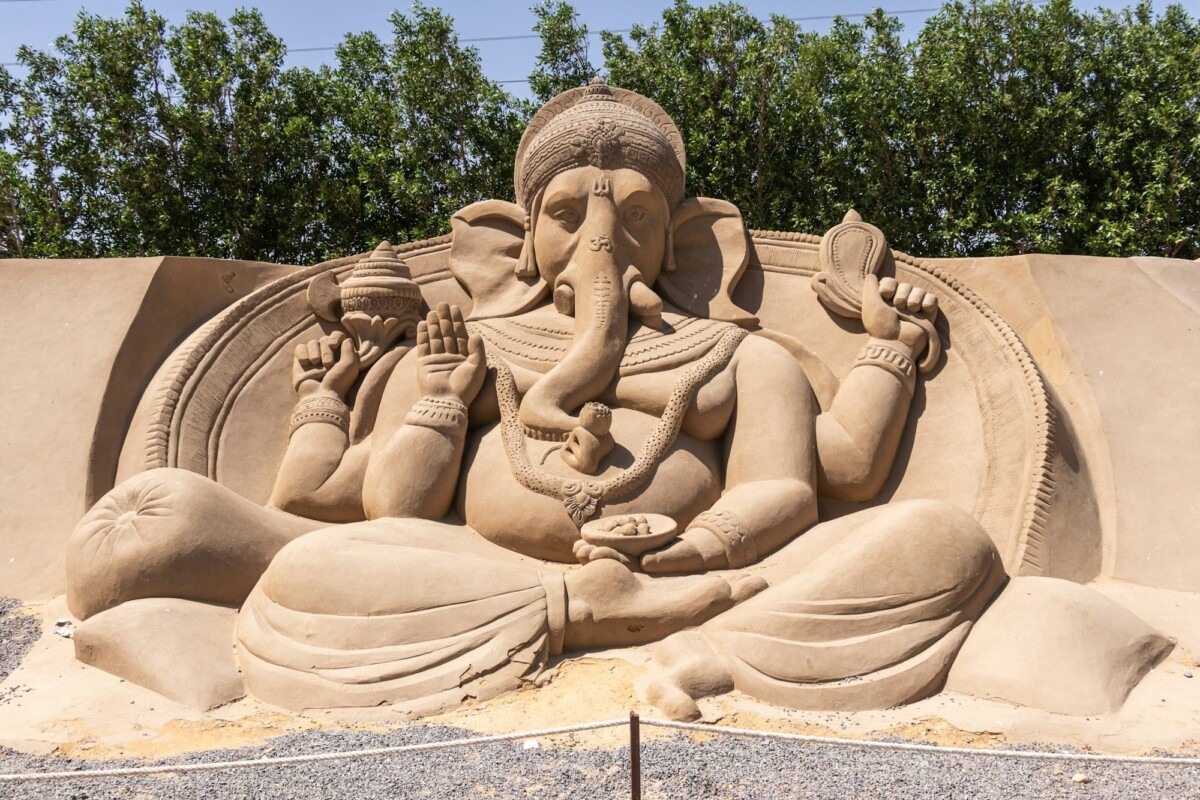
sand sculpture of Ganesha in Hinduism, the god of wisdom and well-being with the head of an elephant

Badarayana

circa 300 BCE to 200 CE
73 Generations Ago

30 Phil, Chapter 14: Badarayana and Karma
Badarayana is the sage who wrote the Brahma Sutras. Badarayana is placed at circa 200 CE, but the truth is, we don’t know when he lived. In my research, I found dates ranging from the 4th century BCE to the 4th century CE . While scholarly consensus leans towards an earlier date, I chose a reference year of 200 CE so I could group the Greco-Roman philosophers together on our mostly chronological journey.

Badarayana composed the “Brahma Sutras” as a guide to the Upanishads, a foundational text in Vedanta philosophy. The text was written in Classical Sanskrit and in an aphoristic style: short sentences expressing an idea. This style, popular between 500 BCE and 500 CE , gives me a modicum of comfort with the 200 CE date I’ve chosen.

Unfortunately, little is known about Badarayana’s personal life and background. 

— map / TST —

Michael Alan Prestwood
Author & Natural Philosopher
Prestwood writes on science-first philosophy, with particular attention to the convergence of disciplines. Drawing on his TST Framework, his work emphasizes rational inquiry grounded in empirical observation while engaging questions at the edges of established knowledge. With TouchstoneTruth positioned as a living touchstone, this work aims to contribute reliable, evolving analysis in an emerging AI era where the credibility of information is increasingly contested.
Email
Print
This Week @ TST
April 8, 2026
»Column Archive
WWB Research….
1. Story of the Week
Pragmatism
2. Quote of the Week
“Our statements about the external world face the tribunal of sense experience not individually, but only as a corporate body.”
3. Science FAQ »
Why do scientific models work if they aren’t literally true?
4. Philosophy FAQ »
Is agnosticism a ludicrous position to occupy?
5. Critical Thinking FAQ »
Do my people and culture help or harm my critical thinking?
6. History FAQ!
Did Berger and Luckmann really say reality is just made up?
Bonus Deep-Dive Article
TST Doxastic Formation: Public Belief, Tribe, and Worldview
Scroll to Top