

The Ain Ghazal statues, dating back to around 7200 BCE, are among the earliest known examples of human figures crafted from plaster, highlighting an advanced use of materials in the Neolithic period. This technique involved applying plaster, made from lime and powdered limestone, over a core of reeds and twine to create lifelike statues with detailed facial features and expressive eyes made from bitumen. The use of plaster for such artistic and possibly ritualistic purposes at Ain Ghazal predates many other known uses of the material in sculpture. While plaster had been used in simple construction and repair tasks even earlier, the sophisticated application at Ain Ghazal marks a significant development in the artistic capabilities of Neolithic societies.
STORY
Ain Ghazal Statues: Early Plaster Art
☐ Read
☑ Read
You’ve read this 0 times.
You’ve listened to this 0 times.
By Michael Alan Prestwood
Thu 11 Apr 2024
Published 2 years ago.
Updated 4 months ago.
Related Stories
Share :
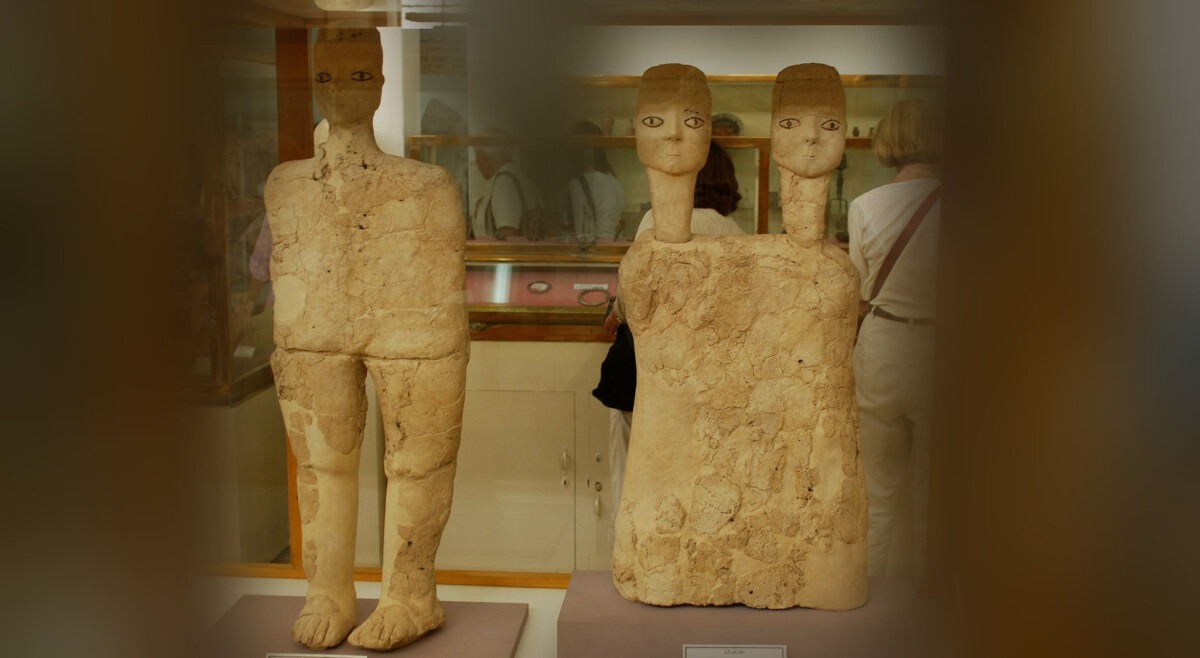
Ain Ghazal Statues: Early Plaster Art
circa 7200 BCE
Jordan
- < 1 minute read

Michael Alan Prestwood
Author & Natural Philosopher
Author & Natural Philosopher
Prestwood writes on science-first philosophy, with particular attention to the convergence of disciplines. Drawing on his TST Framework, his work emphasizes rational inquiry grounded in empirical observation while engaging questions at the edges of established knowledge. With TouchstoneTruth positioned as a living touchstone, this work aims to contribute reliable, evolving analysis in an emerging AI era where the credibility of information is increasingly contested.
Email
Print
The Prestwood Column
Menu
August 2026
»COLUMN ARCHIVE
--COLUMN--
Column Research….
NEW BOOK! NOW AVAILABLE!!
30 Philosophers: A New Look at Timeless Ideas
by Michael Alan Prestwood
