

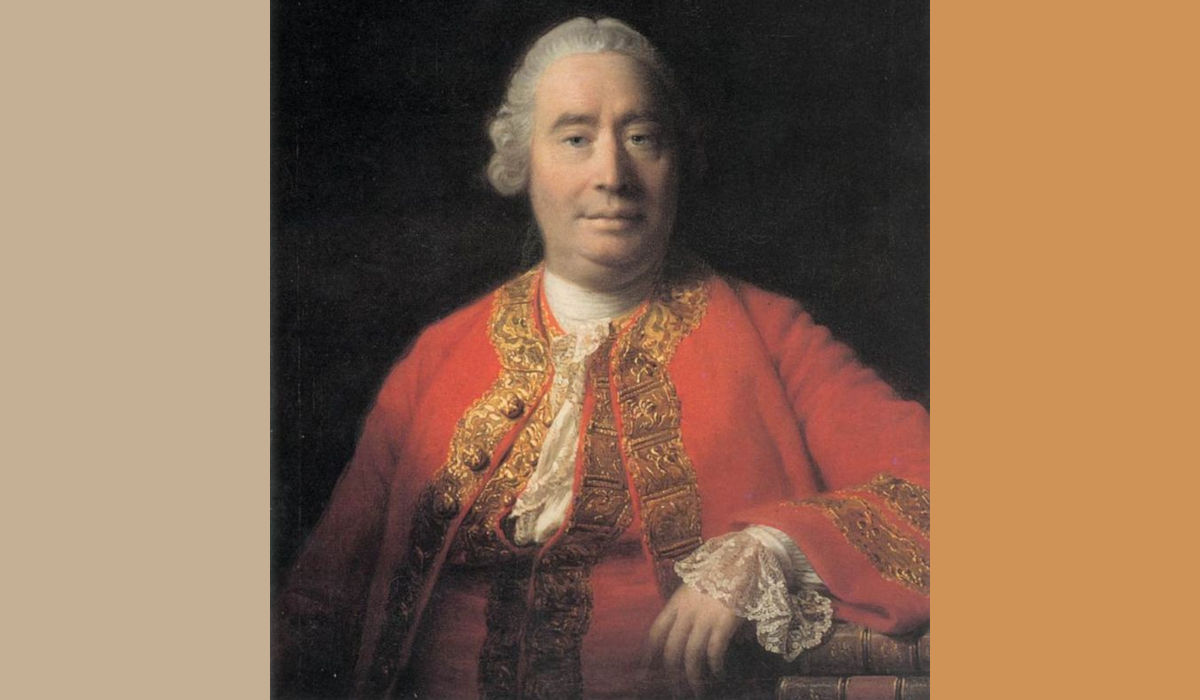
30 Philosophers, Chapter 27: Hume and Skeptical Empiricism.
David Hume was a Scottish Enlightenment philosopher, historian, and one of the great voices of empiricism. Empiricism is the view that human knowledge begins in experience. He did not ask us to believe nothing. He asked us to believe carefully. For Hume, confidence should rise only as evidence rises.
Hume’s skepticism was disciplined humility. Although he would likely just say “the Sun will rise tomorrow” in everyday conversation, when it mattered, he would be more precise. If it mattered, he would say, “Yes, the Sun has risen everyday of my life, and long before that, so it will almost for sure rise tomorrow.” See the difference? Concluding the Sun will rise tomorrow is too strong. A more accurate statement is to conclude the Sun will almost for sure rise tomorrow. That little doubt, that better nuance, is what he was after.
This means miracle, religious, metaphysical, and everyday claims all deserve different levels of confidence depending on the support behind them. When Hume said human life is of no greater importance to the universe than an oyster, he was not making life meaningless. He was stripping away cosmic ego. Meaning is not handed to us by the universe. It is something we build through experience.
That makes Hume a powerful guide for secular spirituality. He helps us keep awe without surrendering judgment. Meditation may bring peace; and grief may reshape identity. Those claims fit ordinary experience and can be explored with evidence. But when a spiritual claim leaps into miracles, hidden realms, or supernatural certainty, Hume tells us to slow down. The stronger the claim, the stronger the support must be.

