
Phil • Cr. Think • Science • Hist • …
TST PRACTICE

By Philosopher Michael Alan Prestwood

STORY

The Idea of Ideas

☐ Read
☑ Read
You’ve read this 0 times.
You’ve listened to this 0 times.

By Michael Alan Prestwood

Sun 2 Jun 2024
Published 2 years ago.
Updated 3 months ago.
Related Stories
24th Amendment
Word-Spacing
All States “allow” Native Americans to Vote
Oracle Bone Script: China
Reflective Inquiry
Mayflower Compact
Share :
A personal spiritual experience may be real as an experience, meaningful as a belief, and still fall short of public proof about the material world.

The Idea of Ideas

New Look

30 Philosophers, Chapter 18, Peter Abelard, Touchstone 47: The Idea of Ideas.

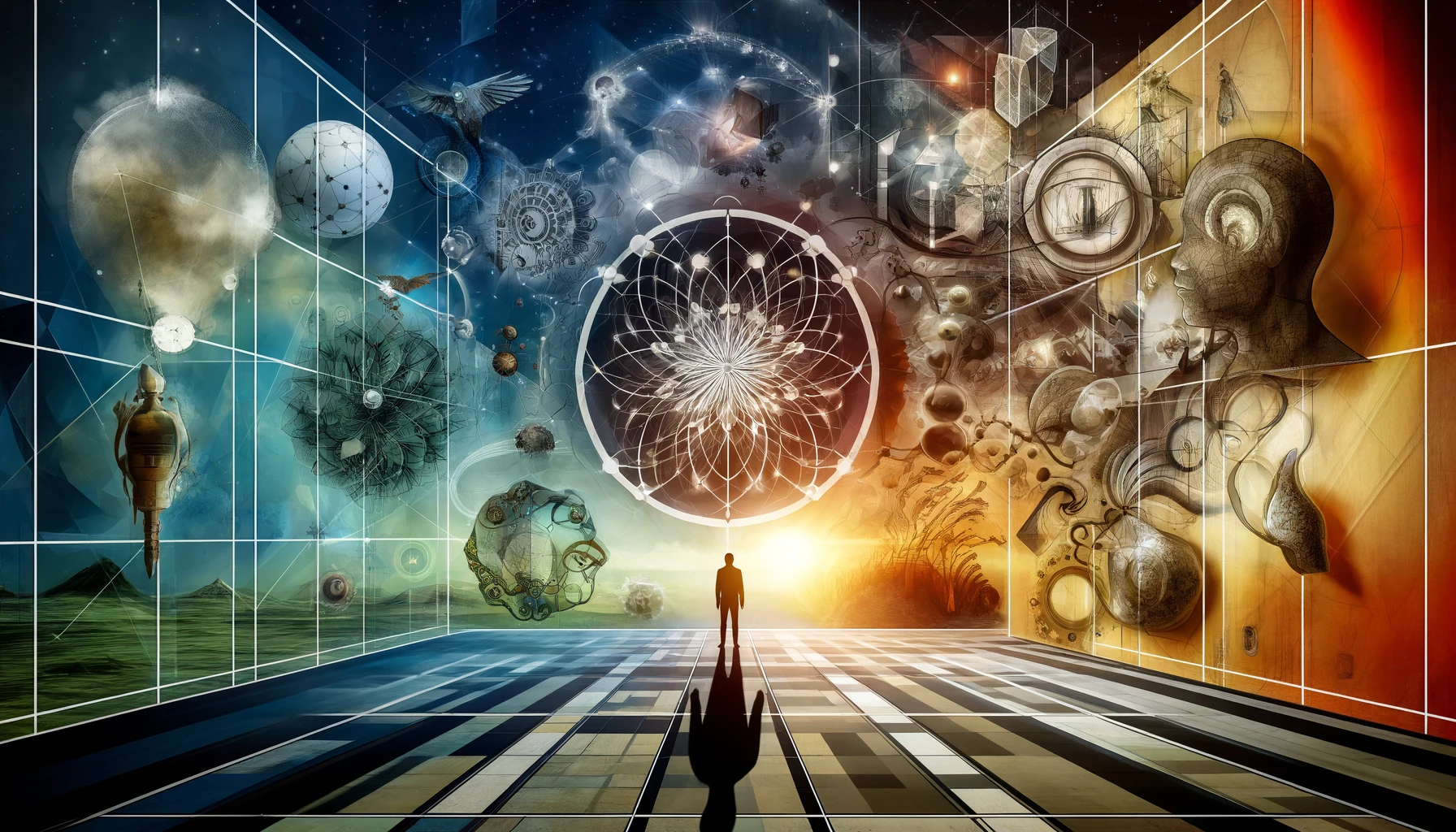
The Idea of Ideas is a new look at epistemology. It is a secular epistemology: a reality-guided system for classifying ideas as empirical, rational, or irrational. Furthermore, truth is calibrated to alignment with reality. All ideas including words, phrases, statements, and questions are more true the more they align with reality.

The Idea of Ideas asserts empirical, rational, and irrational entities exist in the Material World, independent of the minds of beings who can discover, label, and use them as ideas. When this theory refers to “beings,” it’s referring to any entity with advanced cognitive abilities or with the capacity for abstract thinking, whether here on Earth or not, as well as certain advanced AI systems. In this framework, the terms “ideas” and “mental constructs” are interchangeable. Both serve as the cognitive tools that beings use to make sense of the Material World. Both are mental models used to build representations and understanding whether empirical, rational, or speculative.

It implies many metaphysical things that help bridge science, philosophy, and fiction. Ideas represent entities like physical matter and energy, things on Earth like dirt, the color red, gravity, and even things we detect with tools like radio waves. Ideas can be rational like logic, justice, and beauty, or irrational like Valhalla, or a fictional realm like the Forbidden Forest in Harry Potter. The best part is that this framework allows you to easily determine if something is empirically true, rationally true, or falls into the irrational category.

— map / TST —

TST Tracker
✓ Reading recorded.
Michael Alan Prestwood
Author & Natural Philosopher
Prestwood writes on science-first philosophy, with particular attention to the convergence of disciplines. Drawing on his TST Framework, his work emphasizes rational inquiry grounded in empirical observation while engaging questions at the edges of established knowledge. With TouchstoneTruth positioned as a living touchstone, this work aims to contribute reliable, evolving analysis in an emerging AI era where the credibility of information is increasingly contested.
Email
Print
The Prestwood Column
Menu
October 2026
Column Research….
1. Timeline Story
The Great Quaker Debates!
2. Linked Quote
“All men are prone to differ. It is no new thing in all former ages, in all parts. Each party is most right in his own eyes.”
3. Science FAQ »
Do facts actually change minds?
4. Philosophy FAQ »
When does persuasion become manipulation?
5. Critical Thinking FAQ »
How can you tell when a debate has stopped being productive?
6. History FAQ!
What is the history of debate?
Bonus Deep-Dive Article
Roger Williams Biography and Dedication to the Freedom of Conscience

Comments

Join the Conversation! Currently logged out.

Leave a Reply

NEW BOOK! NOW AVAILABLE!!

30 Philosophers: A New Look at Timeless Ideas

by Michael Alan Prestwood
The story of the history of our best ideas!
Scroll to Top