
Explore Natural Philosophy

Science • Phil • Cr. Think • Hist •

STORY

Touch: Life Learns to Feel Force

By Michael Alan Prestwood

Wed 3 Apr 2024
Published 2 years ago.
Updated 4 weeks ago.
Related Stories
Genus: Sahelanthropus (Walking Upright)
World Population: 1.5 Million
Modern Human Looks and Brains
Ukraine: Mezhyrich Community
Hyoid Bone: Speach Emerges
Human Laughter Emerges
Share :
About 3.72 billion years ago, right after LUCA, when cells emerged, touch became the most ancient form of biological sensing: required to physically navigate reality.

Touch: Life Learns to Feel Force

~3.72 Billion Years Ago (after prokaryotes)
Mechanical sensitivity to pressure and membrane stretch

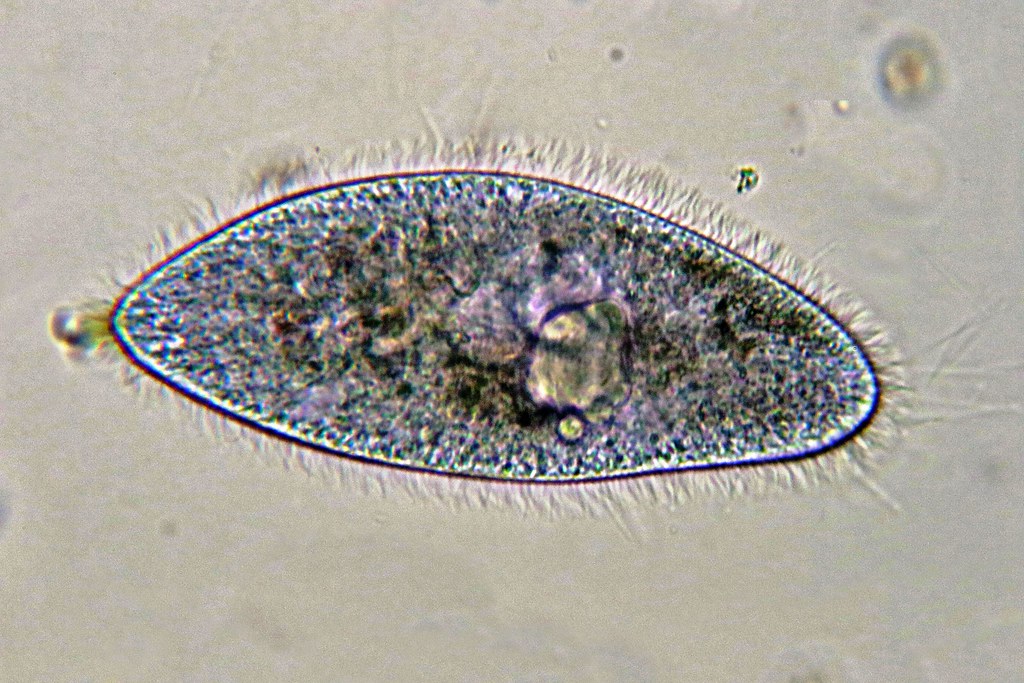
Long before the complexity of full-fledged nervous systems, elaborate senses, and brains, life on Earth developed the basic ability to perceive and react to mechanical stimuli—a process known as cellular mechanosensitivity.

Touch is the most fundamental form of information. Physical contact—pressure, vibration, movement—directly affects survival. Being able to respond to it required no complex processing, making it evolutionarily accessible very early in life’s history. Stretch-activated ion channels in bacteria and early eukaryotes allowed cells to respond to osmotic pressure and environmental contact. In this sense, touch is not just a sense — it is a physical necessity of living matter.

Plants use mechanosensitivity extensively. 

  • Roots detect soil resistance.
  • Stems respond to wind.
  • Venus flytraps snap shut when trigger hairs are bent.
  • Vines coil when they contact support structures (thigmotropism).

Plants do not have nerves, but they transmit mechanical signals chemically and electrically through tissues. Touch guides growth, structure, and defense.

Fungi rely heavily on mechanical sensing.

  • Hyphae detect surface texture.
  • Pathogenic fungi sense host tissue stiffness.
  • Fungal networks adjust growth in response to physical barriers.

Mechanosensitivity guides where fungi grow, penetrate, and form symbiotic relationships. For fungi, touch is directional intelligence.

In animals, mechanosensitivity became centralized and amplified. Early animals like sponges coordinated whole-body contractions in response to disturbance. Later, nerve nets evolved. Eventually, specialized mechanoreceptors appeared:

  • Skin pressure receptors
  • Hair cell sensors
  • Vibration-sensitive organs

Animal touch became fast, localized, and integrated with nervous systems. It evolved from membrane physics into sensation and perception.

A contemporary manifestation of this can be observed in the movement of some plants today, such as the Venus flytrap, which responds to touch by snapping shut to capture prey. This early form of proto-sensing, relying on signal transduction pathways within single-celled organisms, represents the precursor to the sophisticated sensory and nervous systems found in later multicellular life. Through mechanisms like ion channel activation and signal transduction cascades, these primitive organisms could respond to touch and pressure, paving the way for the evolutionary journey towards more advanced forms of perception. This foundational stage of sensory evolution, occurring as early as 800 million years ago, underscores the deep biological roots of our ability to sense and interact with the world around us.

— map / TST —

Michael Alan Prestwood
Author & Natural Philosopher
Prestwood writes on science-first philosophy, with particular attention to the convergence of disciplines. Drawing on his TST Framework, his work emphasizes rational inquiry grounded in empirical observation while engaging questions at the edges of established knowledge. With TouchstoneTruth positioned as a living touchstone, this work aims to contribute reliable, evolving analysis in an emerging AI era where the credibility of information is increasingly contested.
Email
Print
This month @ TST
Column Menu
June 2026
»COLUMN ARCHIVE
Column Research….
1. Timeline Story
Secular Spirituality Settles
2. Linked Quote
“Extraordinary claims require extraordinary evidence.”
3. Science FAQ »
What is the difference between a spiritual and empirical belief?
4. Philosophy FAQ »
What is secular spirituality?
5. Critical Thinking FAQ »
How does spirituality relate to public belief?
6. History FAQ!
Is secular spirituality supported in history and science?
Bonus Deep-Dive Article
The Material-Spiritual Framework: A Philosophy of Spirituality

Comments

Join the Conversation! Currently logged out.

Leave a Reply

NEW BOOK! NOW AVAILABLE!!

30 Philosophers: A New Look at Timeless Ideas

by Michael Alan Prestwood
The story of the history of our best ideas!
Scroll to Top