
Explore Science-first Philosophy

STORY

Presentient Animals Emerge: The Ediacaran Prelude

By Michael Alan Prestwood

Thu 28 Mar 2024
Published 2 years ago.
Updated 1 day ago.
Related Stories
Stegosaurus
Neoaves Birds Emerge (from Neognathae)
Avialae: The Bird Line Diverges (Theropoda)
Bird-line Archosaurs: Asilisaurus kongwe (within Ornithodira)
Stem Selachians: Modern Sharks LCA
LECA: Likely Sexual Reproduction
Share :
Before the Cambrian Explosion, early animal body shapes were already experimenting. Some evolved into larger, more complex forms, from frond-like patterns to disks and tubes. In this strange world, nerve nets and proto-nervous systems were beginning to appear.

Presentient Animals Emerge: The Ediacaran Prelude

635 to 590 Million Years Ago
Proto-brain; Pre-brain memory; Presentient.

In the deep waters of the late Precambrian, the long road to consciousness took an early step forward. This was a world of strange early animals and other complex multicellular life, a world where the roots of sensing, responding, and primitive biological memory may already have been taking shape. These primordial creatures were far removed from later brains, but they were part of the long path toward animals that could better register and react to their surroundings.

Some of these early species may have possessed no nervous system at all, while others may have been part of the broader evolutionary prelude to later animals with primitive nerve nets and centralized processing. In my broader sense, this was a presentient world: life sensing, reacting, and perhaps retaining simple body-level forms of response before the rise of true brains. In that sense, pre-brain memory was already on the table, even if only in its earliest biological forms.

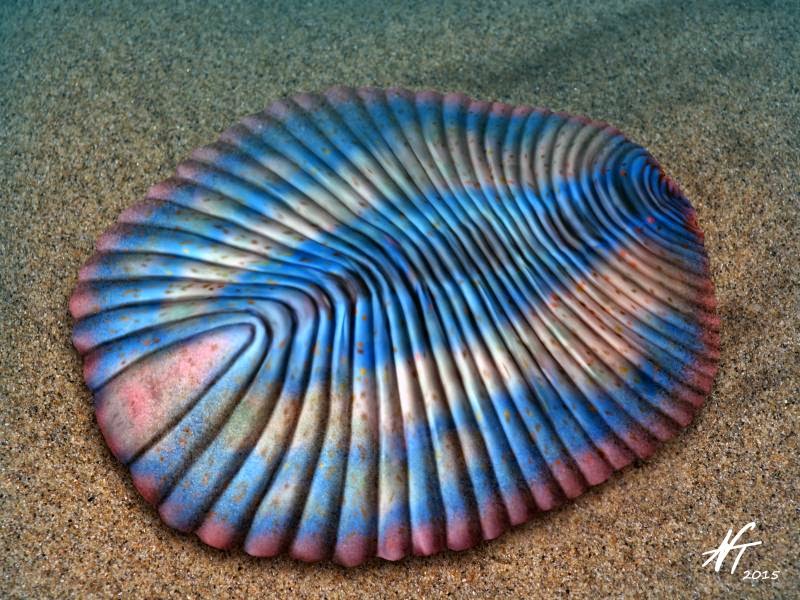
Pictured: Ediacaran biota (a later Ediacaran organism, about 572 to 541 million years ago). 

The Ediacaran biota was one of the body shapes of the time. It matters not just because it was ancient, but because it represents life experimenting with larger, more complex bodies before the Cambrian Explosion. Their unusual forms, from frond-like patterns to disks and tubes, do not map neatly onto modern animals, yet they help mark the transition from a mostly microbial Earth to one preparing for the rise of nervous systems, mobility, and later consciousness. Whether the pictured organism itself had anything like a proto-nervous system remains unknown, but its world helped set the stage for the richer animal sensing that followed.

— map / TST —

Michael Alan Prestwood
Author & Natural Philosopher
Prestwood writes on science-first philosophy, with particular attention to the convergence of disciplines. Drawing on his TST Framework, his work emphasizes rational inquiry grounded in empirical observation while engaging questions at the edges of established knowledge. With TouchstoneTruth positioned as a living touchstone, this work aims to contribute reliable, evolving analysis in an emerging AI era where the credibility of information is increasingly contested.
Email
Print
This Week @ TST
April 8, 2026
»Column Archive
WWB Research….
1. Story of the Week
Pragmatism
2. Quote of the Week
“Our statements about the external world face the tribunal of sense experience not individually, but only as a corporate body.”
3. Science FAQ »
Why do scientific models work if they aren’t literally true?
4. Philosophy FAQ »
Is agnosticism a ludicrous position to occupy?
5. Critical Thinking FAQ »
Do my people and culture help or harm my critical thinking?
6. History FAQ!
Did Berger and Luckmann really say reality is just made up?
Bonus Deep-Dive Article
TST Doxastic Formation: Public Belief, Tribe, and Worldview
Scroll to Top