
Explore Science-first Philosophy

STORY

Earliest Known Hunter

By Michael Alan Prestwood

Thu 28 Mar 2024
Published 2 years ago.
Updated 4 weeks ago.
Related Stories
Share :

Earliest Known Hunter

520 Million Years Ago
First Simple Brains; Proto-Short-Term Memory; Simple Sentience.

First Brains: By about 520 million years ago, hunters roamed the seas. In the Cambrian explosion, a period of rapid evolutionary development that began around 541 million years ago, the earliest known animals with structures recognizable as brains made their debut in the Earth’s oceans. They possessed rudimentary beginnings central nervous systems, including a brain. This allowed for advanced sensory processing, decision-making, and coordinated movement.

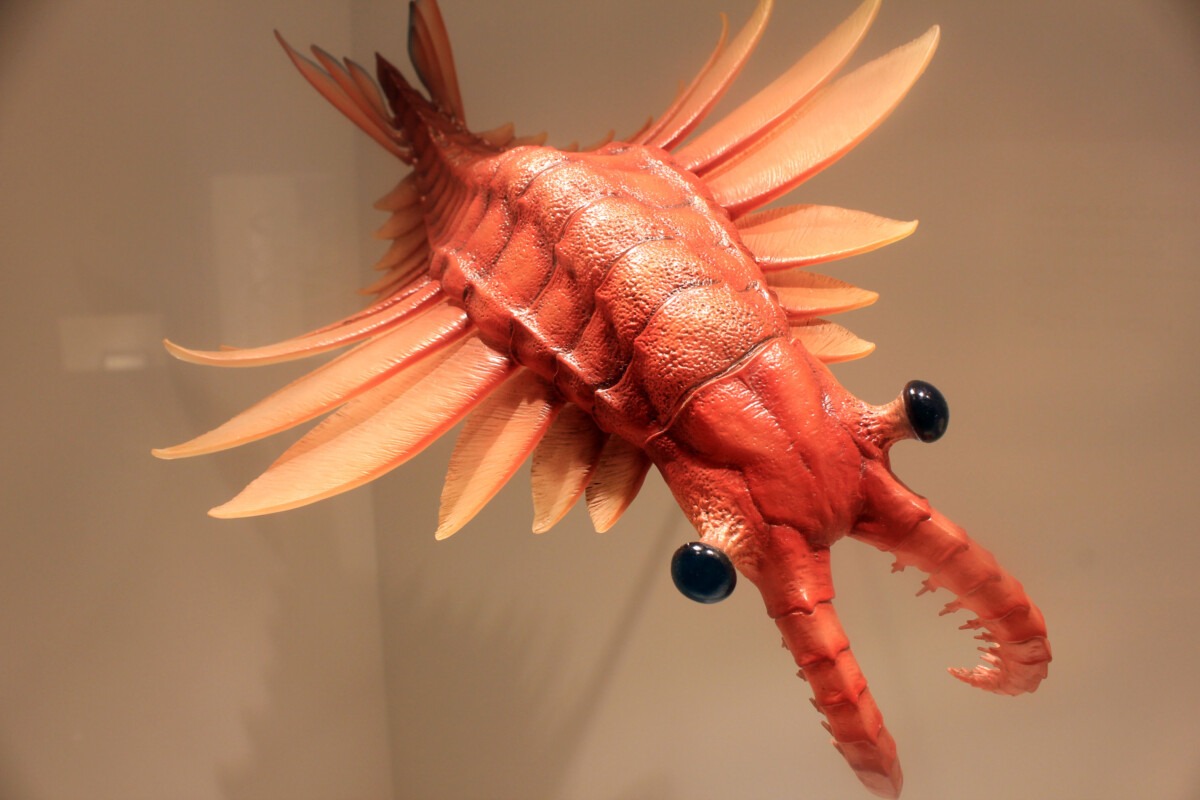
Anomalocaris (518 to 500 Million Years Ago): Among these early pioneers, creatures like Anomalocaris canadensis stand out. During the Cambrian Period, the Anomalocaris was a formidable predator of the seas. It reached lengths of up to three feet. With its large, compound eyes, flexible, segmented body, and a pair of grasping appendages in front of its mouth, it was perfectly adapted to detect and capture prey. Anomalocaris swam the ancient oceans with undulating movements, using its circular mouth lined with serrated plates to consume trilobites and other early marine animals.

  • Kingdom: Animalia > Phylum: Arthropoda > Class: Dinocaridida

— map / TST —

Michael Alan Prestwood
Author & Natural Philosopher
Prestwood writes on science-first philosophy, with particular attention to the convergence of disciplines. Drawing on his TST Framework, his work emphasizes rational inquiry grounded in empirical observation while engaging questions at the edges of established knowledge. With TouchstoneTruth positioned as a living touchstone, this work aims to contribute reliable, evolving analysis in an emerging AI era where the credibility of information is increasingly contested.
Email
Print
This Week @ TST
April 8, 2026
»Column Archive
WWB Research….
1. Story of the Week
Pragmatism
2. Quote of the Week
“Our statements about the external world face the tribunal of sense experience not individually, but only as a corporate body.”
3. Science FAQ »
Why do scientific models work if they aren’t literally true?
4. Philosophy FAQ »
Is agnosticism a ludicrous position to occupy?
5. Critical Thinking FAQ »
Do my people and culture help or harm my critical thinking?
6. History FAQ!
Did Berger and Luckmann really say reality is just made up?
Bonus Deep-Dive Article
TST Doxastic Formation: Public Belief, Tribe, and Worldview
Scroll to Top