

These early scales provided a vital protective layer, acting like underwater armor against predators, abrasions, and environmental threats. The keratin genes that led to scales are an interesting part of our story. When amphibians evolved onto land, scales near the tips of their evolving toes transformed into thicker protection and traction, eventually giving rise to claws, nails, and hooves. Meanwhile, cold temperatures and sun exposure led to the development of warming and protective traits like feathers, fur, and hair. Specialized “scales” evolved into horns in various species, such as triceratops and rhinos, despite their unrelated lineage. Additionally, keratin genes influenced the formation of beaks in birds. All these diverse traits originated from the same keratin genes.
STORY
Keratin Genes & the Rise of Scales in Fish
☐ Read
☑ Read
You’ve read this 0 times.
You’ve listened to this 0 times.
By Michael Alan Prestwood
Mon 22 Apr 2024
Published 2 years ago.
Updated 6 months ago.
Related Stories
Share :
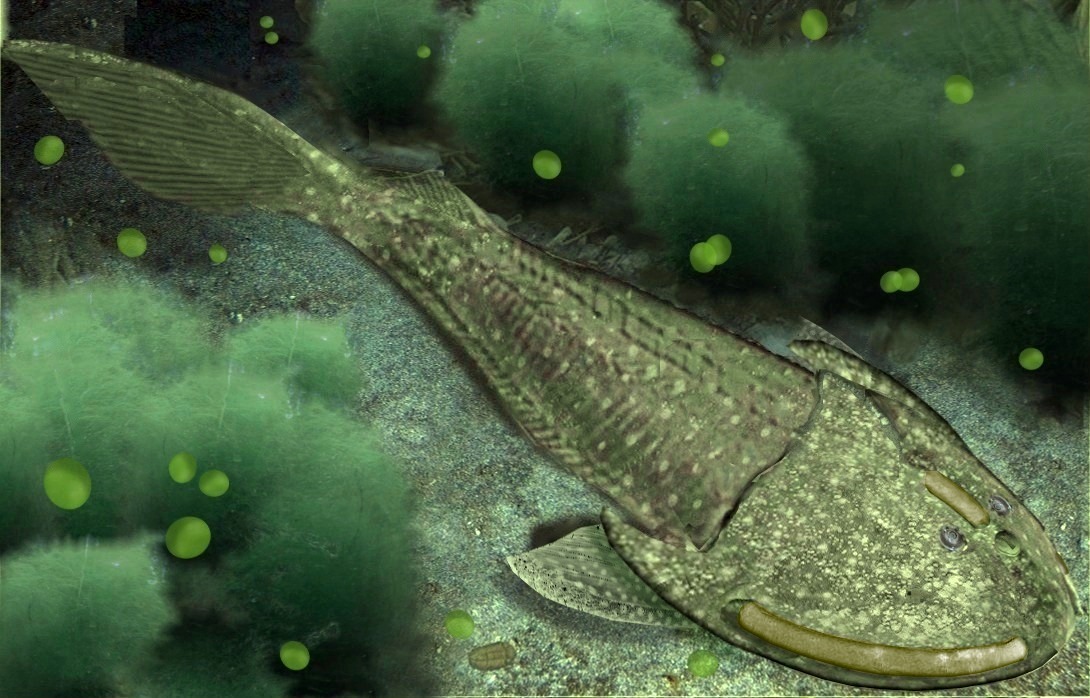
Keratin Genes & the Rise of Scales in Fish
425 Million Years Ago
425 MYA (+/- 15 Million Years)
- < 1 minute read

Michael Alan Prestwood
Natural Philosopher & Author
Natural Philosopher & Author
Prestwood explores science-first philosophy, with particular attention to the convergence of disciplines. Drawing on his TST Philosophy, his work emphasizes rational inquiry grounded in empirical observation while engaging questions at the edges of established knowledge. With TouchstoneTruth positioned as a living touchstone, this work aims to contribute reliable, evolving analysis in an emerging AI era where the credibility of information is increasingly contested.
Email
Print
The Prestwood Column
Menu
October 2026
»COLUMN ARCHIVE
--COLUMN--
Column Research….
NEW BOOK! NOW AVAILABLE!!
30 Philosophers: A New Look at Timeless Ideas
by Michael Alan Prestwood
