
Explore Science-first Philosophy

STORY

Purgatorius — Earliest known proto-primate.

By Michael Alan Prestwood

Sat 3 Jul 2021
Published 5 years ago.
Updated 2 months ago.
Related Stories
Share :
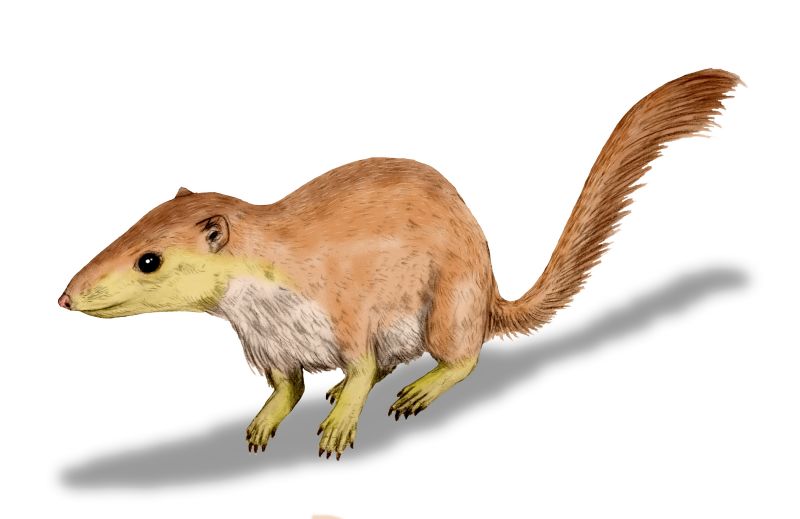
© N. Tamura (CC BY-SA)
Purgatorius unio, from the Late Paleocene of North America, believed to be the earliest primate, pencil drawing, digital coloring. © N. Tamura (CC BY-SA)

Purgatorius — Earliest known proto-primate.

66 Million BCE
Grasping hand and flexible ankles

Within mammals, only primates have binocular vision, grasping hands, and flat nails–instead of claws. Purgatorius might have had all three earning it the earliest known proto-primate label. It lived in Eastern Montana about 66 million years ago during the very last years of the Cretaceous period. It lived through the K-T extinction event and the extinction of dinosaurs.

Class: Mammal; Early Proto-Primate
Time Period: Late Cretaceous to the early Paleocene
Diet: Likely Frugivorous (fruits) / Insectivorous (insects)

— map / TST —

Michael Alan Prestwood
Author & Natural Philosopher
Prestwood writes on science-first philosophy, with particular attention to the convergence of disciplines. Drawing on his TST Framework, his work emphasizes rational inquiry grounded in empirical observation while engaging questions at the edges of established knowledge. With TouchstoneTruth positioned as a living touchstone, this work aims to contribute reliable, evolving analysis in an emerging AI era where the credibility of information is increasingly contested.
Email
Print
This Week @ TST
April 15, 2026
»Column Archive
WWB Research….
1. Story of the Week
John Snow and the Broad Street Pump
2. Quote of the Week
“A wise man proportions his belief to the evidence.”
3. Science FAQ »
Were dinosaurs Jurassic movie smart?
4. Philosophy FAQ »
How does the idea of Identity in Christ fit within TST?
5. Critical Thinking FAQ »
What is the difference between Public Truth and Public Belief?
6. History FAQ!
Did Einstein’s driver really give one of his early talks?
Bonus Deep-Dive Article
TST Epistemic Calibration: Credence and Degrees of Belief
Scroll to Top