
Explore Science-first Philosophy

STORY

“The” Human DNA

By Michael Alan Prestwood

Sun 27 Jun 2021
Published 5 years ago.
Updated 10 months ago.
Related Stories
Share :
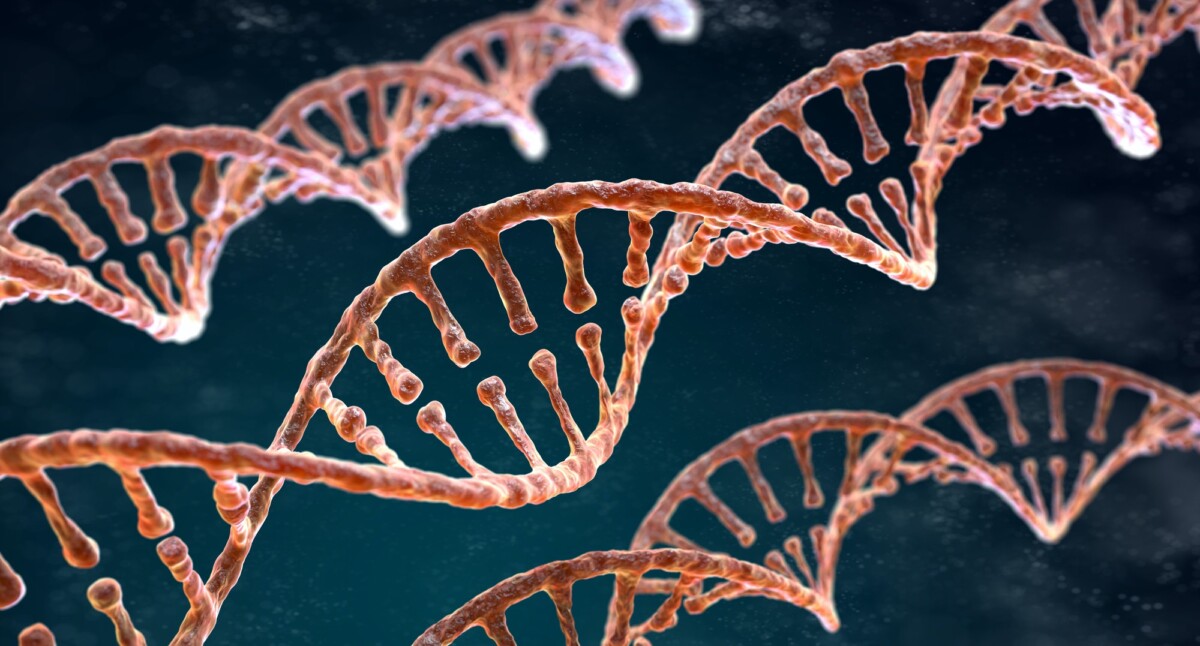
Spiral strands of DNA on the dark background

“The” Human DNA

70,000 BCE
2,800 Generations Ago
2,400 Generations Ago

The modern human DNA evolved sometime between 71,000 and 51,000 BCE. Imagine that. A human baby born today, and a human baby born in 60,000 BCE have nearly indistinguishable DNA. There are differences but essentially humans are the same now as they were then. The popular website 23andme.com focuses on 23 changes in DNA that signify your ancestors recent migration. 23andMe.com, ancestry.com, and many others identify differences for their customers. Finally, the medical community is currently in an intense wave of identifying genetic differences that lead to medical problems with the idea of early diagnosis, prevention, and through the use of mRNA correction.

Through mtDNA sequencing, we currently believe the most recent common ancestor of all the Eurasian, American, Australian, Papua New Guinean, and African lineages dates to between 73,000 and 57,000 years ago.
— map / TST —

Michael Alan Prestwood
Author & Natural Philosopher
Prestwood writes on science-first philosophy, with particular attention to the convergence of disciplines. Drawing on his TST Framework, his work emphasizes rational inquiry grounded in empirical observation while engaging questions at the edges of established knowledge. With TouchstoneTruth positioned as a living touchstone, this work aims to contribute reliable, evolving analysis in an emerging AI era where the credibility of information is increasingly contested.
Email
Print
This Week @ TST
April 8, 2026
»Column Archive
WWB Research….
1. Story of the Week
Pragmatism
2. Quote of the Week
“Our statements about the external world face the tribunal of sense experience not individually, but only as a corporate body.”
3. Science FAQ »
Why do scientific models work if they aren’t literally true?
4. Philosophy FAQ »
Is agnosticism a ludicrous position to occupy?
5. Critical Thinking FAQ »
Do my people and culture help or harm my critical thinking?
6. History FAQ!
Did Berger and Luckmann really say reality is just made up?
Bonus Deep-Dive Article
TST Doxastic Formation: Public Belief, Tribe, and Worldview
Scroll to Top