
Phil • Cr. Think • Science • Hist •

The Philosophy Website

STORY

Oogamy: Early Gamete Specialization Before Animals

☐ Read
☑ Read
You’ve read this 0 times.
You’ve listened to this 0 times.

By Michael Alan Prestwood

Sun 31 Mar 2024
Published 2 years ago.
Updated 4 months ago.
Related Stories
Theropod Line Diverges Within Dinosaria (from Saurischia)
Eoraptor lunensis.
Genus Orangutans
Triassic–Jurassic Extinction: Volcanoes Open the Age of Dinosaurs
Sauropodomorph Line Diverges Within Dinosaria (from Saurischia)
Early Self-Awareness: Miacis
Share :
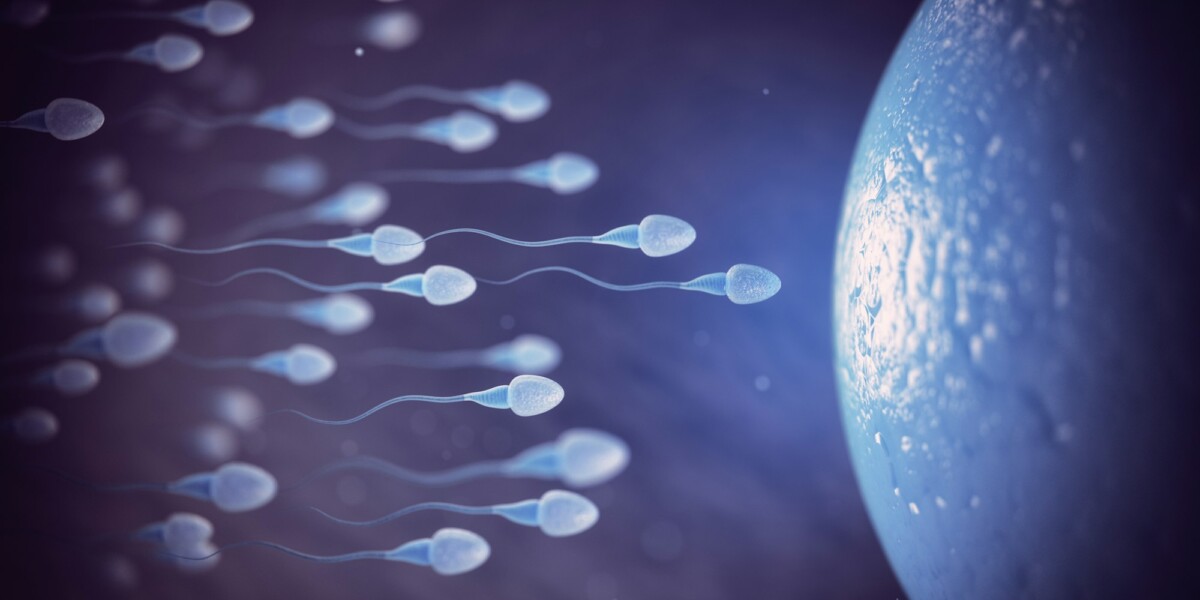
Sperm and egg cell on microscope. Scientific background.
Sexual reproduction predates animals, and differentiated sperm–egg systems evolved in single-celled eukaryotic lineages long before animals emerged.

Oogamy: Early Gamete Specialization Before Animals

~1.1 Billion Years Ago (inferred, +/- 100 million)
Small motile gamete and larger nutrient-rich gamete

In evolutionary order, reproduction systems came first; bodies came later.

Around 1.1 billion years ago, some single-celled eukaryotes evolved gamete specialization. Instead of two similar cells fusing, one became small and motile (sperm-like) while the other became larger and nutrient-rich (egg-like). These were not separate organisms but reproductive forms of single-celled life. Hundreds of millions of years later, in certain lineages, cells began remaining attached after division. Multicellular bodies emerged — and they inherited this ancient gamete system.

Sexual reproduction (the mixing of DNA from two parents) emerged early in eukaryotic evolution, long before animals. This required core eukaryotic innovations: a nucleus containing chromosomes, and meiosis — a specialized cell division that halves chromosome number and reshuffles genetic material. These innovations likely date back to the last eukaryotic common ancestor (LECA), over 1.5 billion years ago.

Later, in several lineages, gametes became specialized. A smaller, typically motile cell delivered DNA, while a larger cell retained resources. This form of sexual reproduction — oogamy — likely evolved independently multiple times. Similar sperm–egg differentiation appears in plants and some protists, suggesting strong evolutionary pressure toward size asymmetry in gametes.

— map / TST —

TST Tracker
✓ Reading recorded.
Michael Alan Prestwood
Author & Natural Philosopher
Prestwood writes on science-first philosophy, with particular attention to the convergence of disciplines. Drawing on his TST Framework, his work emphasizes rational inquiry grounded in empirical observation while engaging questions at the edges of established knowledge. With TouchstoneTruth positioned as a living touchstone, this work aims to contribute reliable, evolving analysis in an emerging AI era where the credibility of information is increasingly contested.
Email
Print
The Prestwood Column
Menu
August 2026
»COLUMN ARCHIVE
--COLUMN--
Column Research….
1. Timeline Story
Ethical Roadmap
2. Linked Quote
“The greatest weapon against stress is our ability to choose one thought over another.”
3. Science FAQ »
Did morality evolve?
4. Philosophy FAQ »
Is the Me Too movement consistent with TST Ethics?
5. Critical Thinking FAQ »
When should you stop following the crowd?
6. History FAQ!
What did the Nuremberg Trials clarify about moral agents?
Bonus Deep-Dive Article
TST Ethical Roadmap: A Process Model for Ethical Guidance and Moral Choice

Comments

Join the Conversation! Currently logged out.

Leave a Reply

NEW BOOK! NOW AVAILABLE!!

30 Philosophers: A New Look at Timeless Ideas

by Michael Alan Prestwood
The story of the history of our best ideas!
Scroll to Top