
Explore Science-first Philosophy

STORY

Genus: Sahelanthropus (Walking Upright)

By Michael Alan Prestwood

Thu 8 Jul 2021
Published 5 years ago.
Updated 2 months ago.
Related Stories
Share :

Genus: Sahelanthropus (Walking Upright)

7 Million BCE
Partial bipedal posture + visual reorientation
260,000 Generations Ago

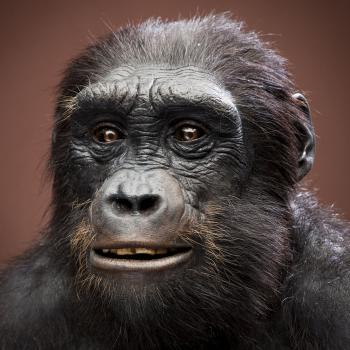
CHLCA candidate: Often considered one of the earliest potential hominins, Sahelanthropus tchadensis, best known from the “Toumai” skull found in Chad, exhibits features that suggest bipedalism but remains debated due to limited fossil evidence. With two human anatomical traits, small canine teeth, and a spinal cord hole in the cranium further forward (on the underside of the cranium), it is possible that they are the fist of our ancestors to walk upright. If not, they likely had an intermediate stride.

Survival: From about 7 to 6 MYA in Central Africa (a densely wooded rain forest at the time)
Size:
4′ to 4’6″ (a little taller than modern chimpanzees)
Brain Size
: around 320 to 380 cm³ (speculative)

Brain to Body EQ: Unknown, but like similar to chimpanzees at 2.2 to 2.5 (humans=7.4 to 7.8)
Primary Timeline…

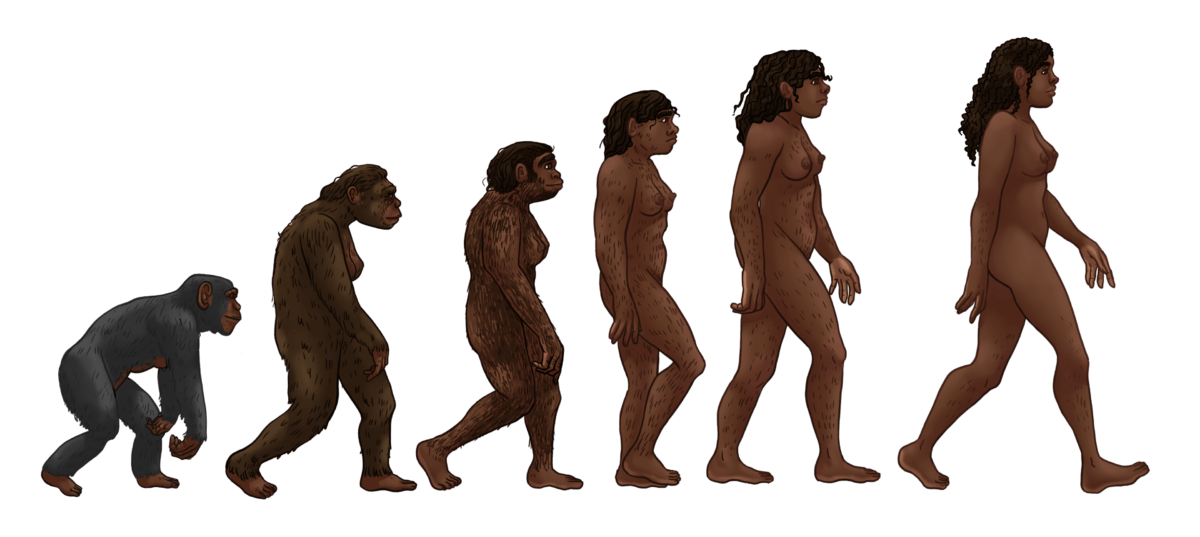
Perhaps the first species below represents Sahelanthropus tchadensis:

The female human evolution.

— map / TST —

Michael Alan Prestwood
Author & Natural Philosopher
Prestwood writes on science-first philosophy, with particular attention to the convergence of disciplines. Drawing on his TST Framework, his work emphasizes rational inquiry grounded in empirical observation while engaging questions at the edges of established knowledge. With TouchstoneTruth positioned as a living touchstone, this work aims to contribute reliable, evolving analysis in an emerging AI era where the credibility of information is increasingly contested.
Email
Print
This Week @ TST
April 8, 2026
»Column Archive
WWB Research….
1. Story of the Week
Pragmatism
2. Quote of the Week
“Our statements about the external world face the tribunal of sense experience not individually, but only as a corporate body.”
3. Science FAQ »
Why do scientific models work if they aren’t literally true?
4. Philosophy FAQ »
Is agnosticism a ludicrous position to occupy?
5. Critical Thinking FAQ »
Do my people and culture help or harm my critical thinking?
6. History FAQ!
Did Berger and Luckmann really say reality is just made up?
Bonus Deep-Dive Article
TST Doxastic Formation: Public Belief, Tribe, and Worldview
Scroll to Top