Weekly Insights for Thinkers

Science  Philosophy  Critical Thinking  History  Politics RW  AI  Physics  •  Evolution  Astronomy 30 Phil Book More…
Science  Phil  Cr. Think  Hist 

Americas

Cuban Underwater City: More Research Needed

The sea offers tremendous resources and stability. The rising and receding oceans continue to destroy the homes of many. How many unknown cultures in our vast history thrived on the coast for millennia?   The site discovered off the coast of Cuba, also known as the “Cuban Underwater Pyramids,” includes pyramid-like structures and other geometric formations […]

Cuban Underwater City: More Research Needed Read More »

Proto-Inca People

The Proto-Inca people likely lived in the Andean region of Peru as far back as 4500 BCE. It’s reasonable to assume they were hunter-gatherers, adapted to the challenging mountain environment. They may have had a nomadic lifestyle, following the seasonal migration of animals and plants. The Proto-Inca people likely developed early forms of textiles, ceramics,

Proto-Inca People Read More »

Inca Society Emerges

The Inca civilization only lasted a few centuries from about 1200 CE. In that short period it became the largest empire in pre-Columbian America. It emerged in the Andean region of present-day Peru. The early Incas established the city of Cusco as their capital. They expanded rapidly, by the 15th century they developed an extensive

Inca Society Emerges Read More »

Proto-Maya People

The Proto-Maya people likely inhabited the Yucatan region of Mexico, Guatemala, Belize, and Honduras around 3500 BCE. It’s reasonable to assume they were also hunter-gatherers, taking advantage of the area’s diverse wildlife and plant resources. They may have had a more settled lifestyle, with early evidence of ceramics and permanent settlements. The Proto-Maya people likely

Proto-Maya People Read More »

Mayans Emerge

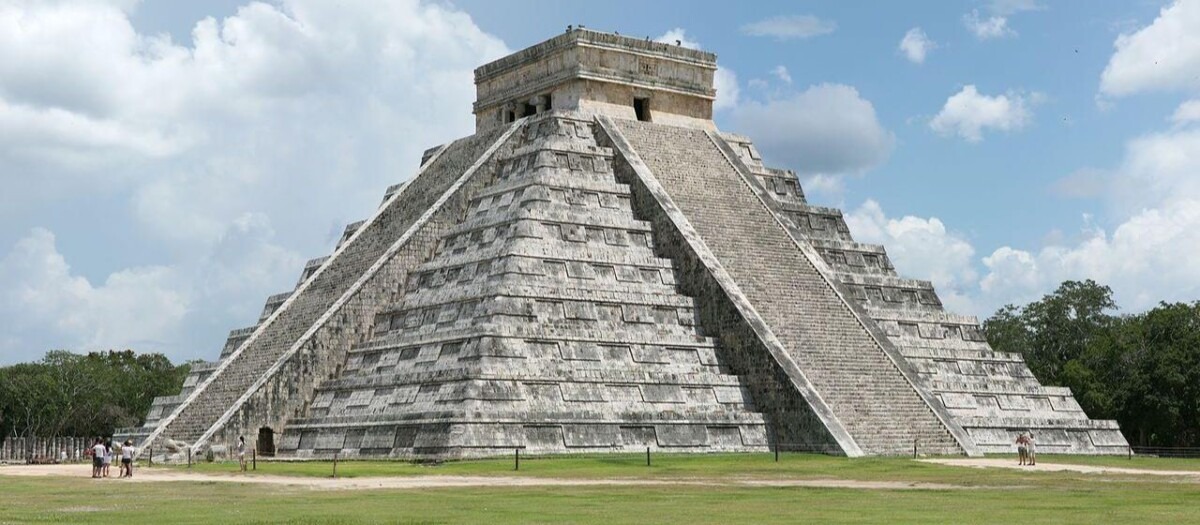
The Mayan civilization lasted nearly 3 millennia. It began to take shape in the Yucatan region of Mexico, Guatemala, Belize, and Honduras around 2000 BCE, with evidence of early agricultural communities. However, prior to embracing farming, this community was in the area for at least a few centuries. By 250 CE, they had established major

Mayans Emerge Read More »

Proto-Olmec People

It’s reasonable to assume that the Proto-Olmec people lived in the region of modern-day Mexico as far back as 4000 BCE. Likely, they were hunter-gatherers, exploiting the abundant resources of the tropical forests and coastal areas. They may have had a nomadic or semi-nomadic lifestyle, following game and seasonal food sources. It’s possible that they

Proto-Olmec People Read More »

Olmec Society Emerges

The Olmec civilization, often considered the “mother culture” of Mesoamerica, formally emerged around 1600 BCE based on when they embraced farming. They primarily emerged in the tropical lowlands of present-day southern Mexico. Known for their colossal stone heads and sophisticated art, the Olmecs developed early forms of writing and urban organization. Their major centers, such

Olmec Society Emerges Read More »

Olmec Hieroglyphs: Mexico

Earliest known writing in the Americas zone.  The Olmec civilization flourished in what is now the southeastern part of Mexico from around 1500 BC to about 400 BC. The Olmecs are often referred to as the “Mother Culture” of Mesoamerica, influencing later civilizations like the Maya and the Aztecs. The Cascajal Block artifact, dated to

Olmec Hieroglyphs: Mexico Read More »

World Population: 15 Million

Stone Copper Age Chalcolithic Period: 3,000 BCE – 500 BCE. Africa-Middle East: 36% or 5 million people Early civilizations include Egypt and Mesopotamia with a relatively higher population density. Asia: 36% or 5 million people Early civilizations include Indus Valley and ancient China. They saw early urban development and agriculture which supported larger populations. Europe-Mediterranean:

World Population: 15 Million Read More »

Seasonal Settlements at Monte Verde

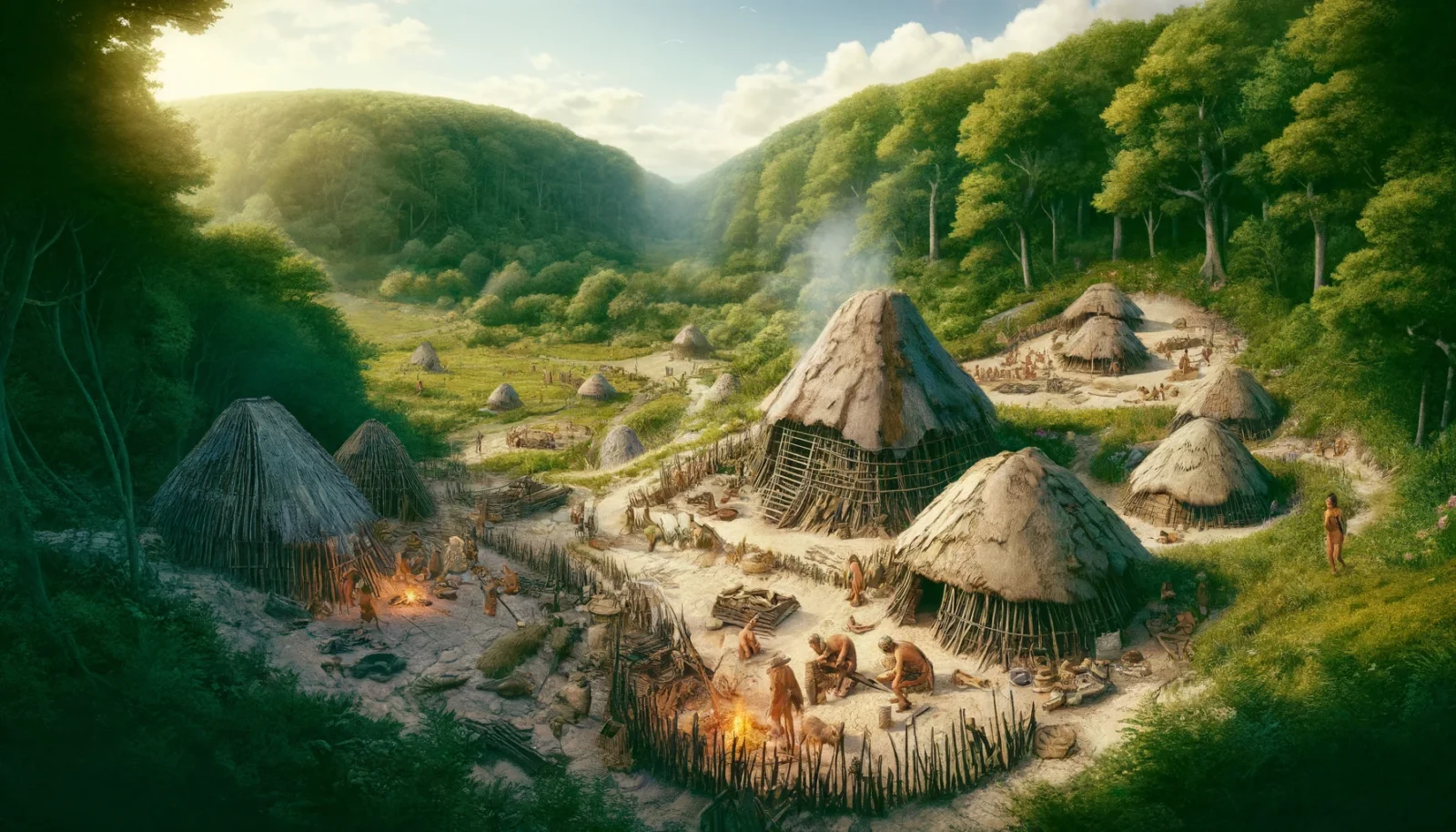
Earliest Known Semi-Permanent Settlement in the Americas: Located in the lush landscapes of southern Chile, Monte Verde marks one of the earliest known human settlements in the Americas. Dating back to around 14,800 years ago, this site provides compelling evidence of early human ingenuity and adaptability far from the commonly accepted Eurasian cradles of civilization. The

Seasonal Settlements at Monte Verde Read More »

Mexico: Guilá Naquitz (Agrarian)

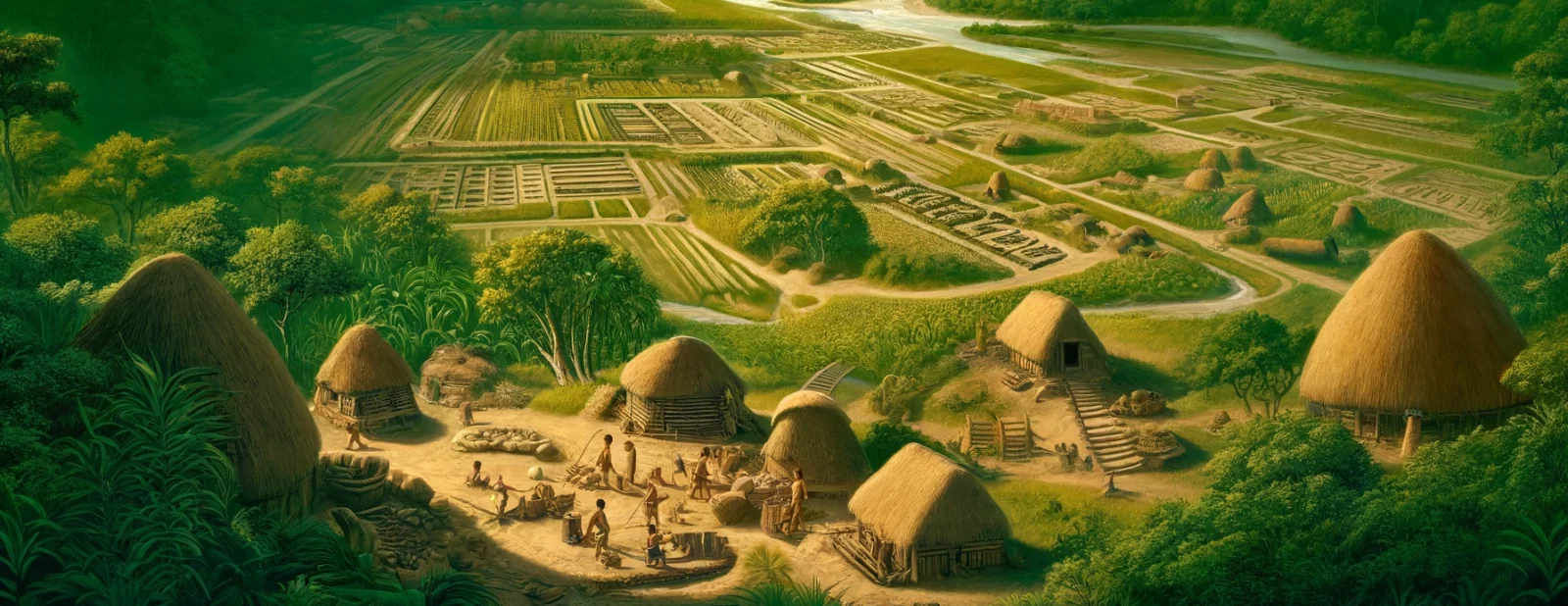
Earliest known agrarian society in the Americas zone: In Oaxaca, Mexico, the site of Guilá Naquitz provides evidence of early plant domestication, particularly of squash, around 8000 BCE, with subsequent developments including maize and beans. Imagined Image: An early agrarian society of Oaxaca, Mexico, circa 7900 BCE. It showcases small, temporary shelters, with indigenous people

Mexico: Guilá Naquitz (Agrarian) Read More »

Scroll to Top