


Do facts actually change minds?
Take control of debate by correcting the claim without turning the person into the target. Focus attention on what is true, not on proving the ...

Is TST Philosophy monistic?
TST Philosophy is monistic about established reality but explorative agnostic about reality beyond what has been established.

Can AI have a normative aim?
AI agents can pursue normative aims at different levels. Higher-level directives can guide and constrain the smaller aims they pursue.

Does AI already possess physical agency?
Direct physical agency is the ability of an agent to act directly on the material world through a body or other physical system.

When is an idea a direct or indirect description of reality?
Empirical ideas point directly at the material world. Rational ideas reach it indirectly through abstraction, relationships, and layers of thought.

Is math always rational?
Math itself is rational, but a statement using math can be empirical, rational, or irrational depending on what the full claim is describing.

How does the Idea of Ideas handle dreams?
A dream is an empirical event, but the story inside it must be evaluated like any other story.

Are robots the real security risk with AI?
Robots make AI risk physical by giving software independent physical agency in the material world. But the deeper threat is still the software.

Can AI kill switches save humanity?
For AI systems to be safe, we cannot rely on one emergency switch. We need as many layers of containment as possible.
How is TST Theory of Truth different than verisimilitude?
A model can be true without being complete. Wisdom means trusting what reality supports while remembering that every idea is still only a representation.

What does the TST Roadmap tell us about AI superintelligence?
Superintelligence may emerge less from one all-knowing machine and more from coordinated intelligence that can choose, act, observe reality, preserve what works, and continually adjust.

What is the difference between a normative aim and a normative directive?
A normative aim is the goal; a normative directive is the rule. The rule helps you act in a way that supports the goal.
Can science prove flourishing should be our goal?
Science can test what supports flourishing, but it cannot by itself prove that flourishing ought to be our goal. Philosophy states the value; science tests ...
Is flourishing for all just utilitarianism?
Similarity is not identity. Flourishing for all cares about consequences and human well-being, but unlike utilitarianism, it does not reduce morality to maximizing total welfare.

What is the history of the idea of flourishing in philosophy?
From Aristotle through modern virtue ethics and capabilities theory, philosophers have repeatedly returned to the idea that a good life means more than pleasure—it means ...
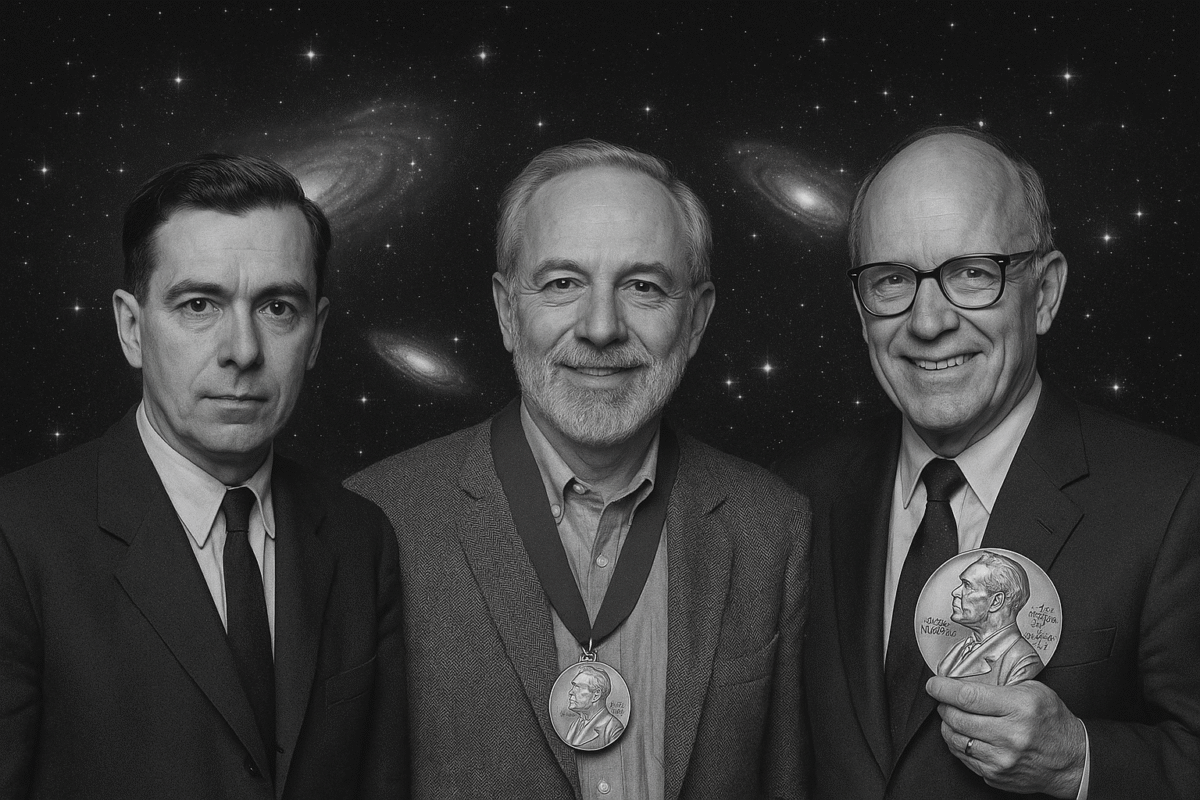
Did a Canadian discover the Big Bang’s afterglow 25 years early?
Science advances when bold ideas and strange observations finally connect.

Can anything travel faster than light?
Nothing can travel through spacetime faster than light, but our expanding universe is carrying nearly all galaxies away faster than light.
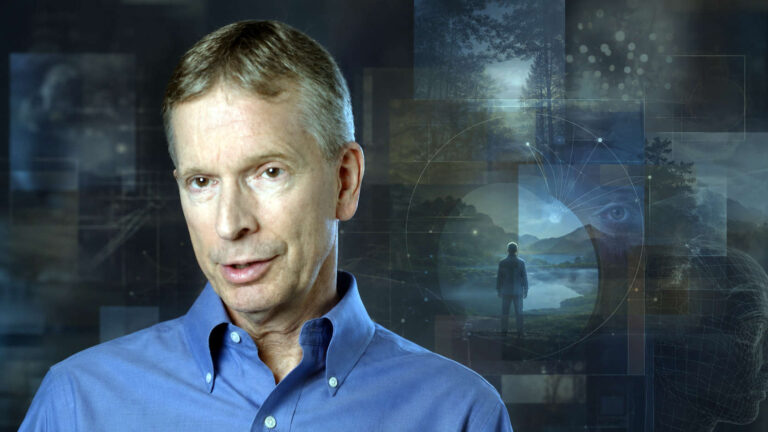
What does the Idea of Ideas say about Hoffman’s evolutionary simulations?
Hoffman is right that perception evolved, but that does not mean perception is disconnected from reality or that consciousness creates it.

When should you stop following the crowd?
The crowd can carry wisdom, but agreement is not proof. Conformity bias can make group beliefs feel true, while confirmation bias helps keep them that ...

What did the Nuremberg Trials clarify about moral agents?
The Nuremberg Trials clarified a worldwide principle: following orders does not automatically erase personal responsibility.