
Explore Science-first Philosophy

STORY

Orangutans Branch Off: Genus Sivapithecus

By Michael Alan Prestwood

Tue 2 Apr 2024
Published 2 years ago.
Updated 3 days ago.
Related Stories
Mesozoic Era: Age of Dinosaurs
The K-Pg Extinction
Plesiadapis: First fruit-insect eaters.
Platypus–Ape Common Ancestor
The P-T Extinction
Early Intelligence Emerges: Aegyptopithecus zeuxis
Share :
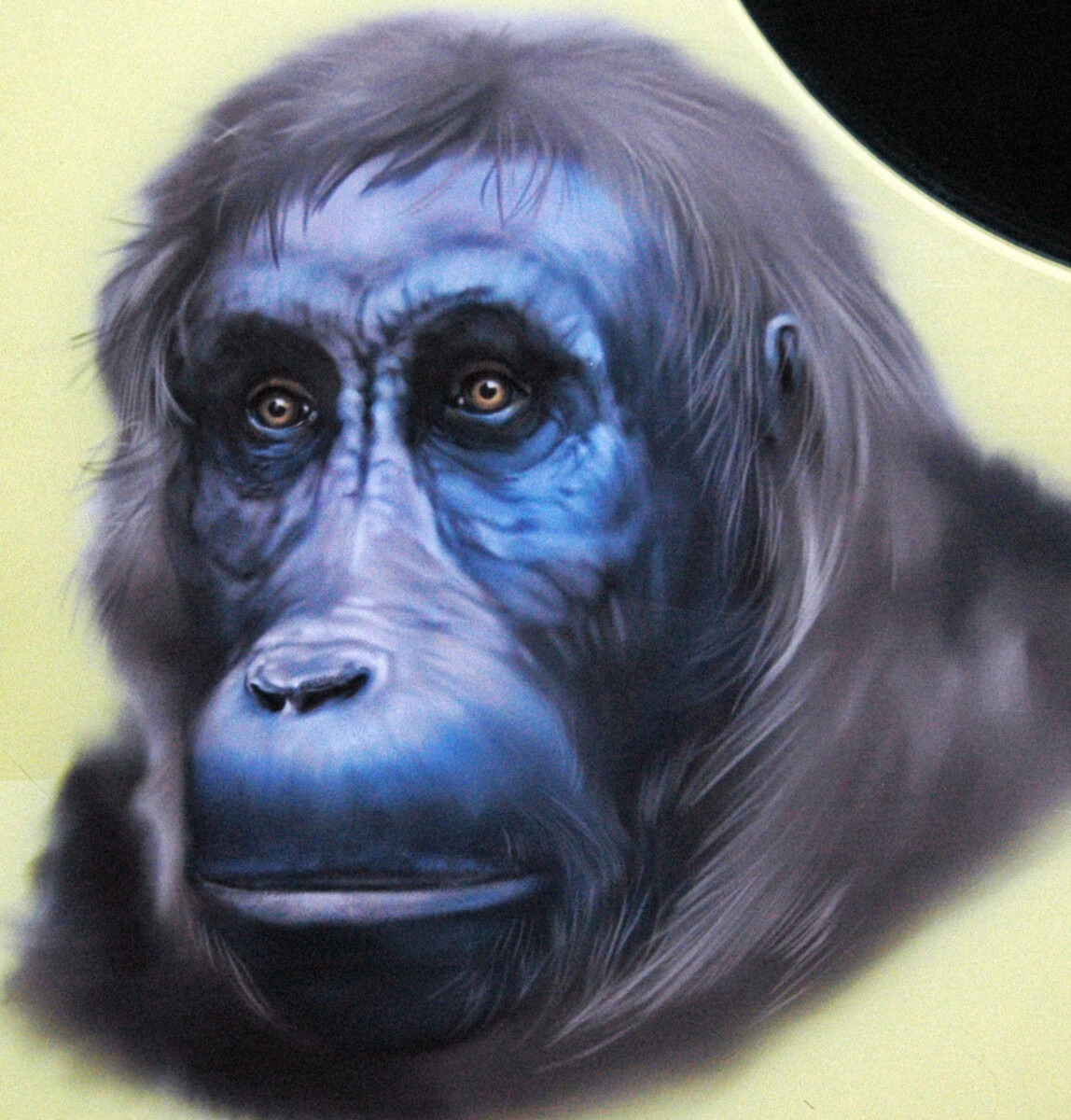
Orangutan ancestor: After the Great Apes LCA, orangutans evolved in Asia. The genus Sivapithecus represents early orangutans. An extinct species of the great apes, they  lived in the Indian subcontinent from around 12 to about 8 million years ago.

Orangutans Branch Off: Genus Sivapithecus

Emerged 12.5 to 12 mya, extinct 8.5 to 7 mya.
Complex Brains; Long-Term Memory; Complex Sentience; Self-aware; Complex EI.

As various great ape species fill niche areas around the globe, branches emerge. The last common ancestor of all known great apes, including humans, lived about 16.5 mya. That branch leads to modern orangatans, which split off again about 12.5 mya. The last known split of the modern orangatan was about 400,000 years ago.

Orangutan ancestor: After the Great Apes LCA, orangutans evolved in Asia. The genus Sivapithecus represents early orangutans. An extinct species of the great apes, they  lived in the Indian subcontinent from around 12 to about 8 million years ago. It is considered a close relative of the orangutan lineage and shares many similarities with modern orangutans, including a similar skull shape and dental structure. Sivapithecus indicus had a more advanced brain than earlier great apes, and its face was likely more protruding and snout-like, similar to modern orangutans. Its discovery in the Siwalik Hills of India and Pakistan has provided important insights into the evolution of the great ape lineage in Asia, and it is thought to have played a key role in the origins of the orangutan genus, Pongo.

— map / TST —

Michael Alan Prestwood
Author & Natural Philosopher
Prestwood writes on science-first philosophy, with particular attention to the convergence of disciplines. Drawing on his TST Framework, his work emphasizes rational inquiry grounded in empirical observation while engaging questions at the edges of established knowledge. With TouchstoneTruth positioned as a living touchstone, this work aims to contribute reliable, evolving analysis in an emerging AI era where the credibility of information is increasingly contested.
Email
Print
This Week @ TST
April 8, 2026
»Column Archive
WWB Research….
1. Story of the Week
Pragmatism
2. Quote of the Week
“Our statements about the external world face the tribunal of sense experience not individually, but only as a corporate body.”
3. Science FAQ »
Why do scientific models work if they aren’t literally true?
4. Philosophy FAQ »
Is agnosticism a ludicrous position to occupy?
5. Critical Thinking FAQ »
Do my people and culture help or harm my critical thinking?
6. History FAQ!
Did Berger and Luckmann really say reality is just made up?
Bonus Deep-Dive Article
TST Doxastic Formation: Public Belief, Tribe, and Worldview
Scroll to Top