
Explore Science-first Philosophy

STORY

Roger Williams

By Michael Alan Prestwood

Wed 10 Apr 2024
Published 2 years ago.
Updated 3 months ago.
Related Stories
Share :
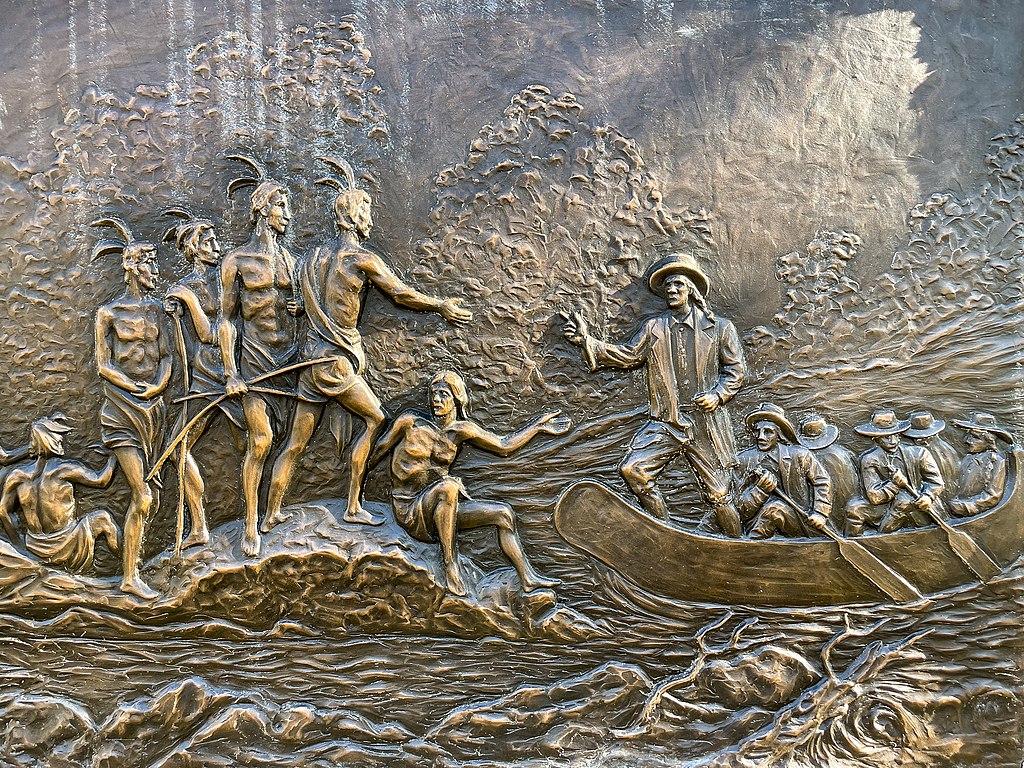
Detail of Roger Williams Landing Place monument in Slate Rock Park aka Roger Williams Square, Providence Rhode Island.

Roger Williams

born circa 1602
circa 1602 to Mar 1683
17 Generations Ago

30 Phil, Chapter 23: Roger Williams and Liberalism
Roger Williams was born in England around 1602, in Smithfield, situated at the heart of London. Williams officially founded Providence Plantations in 1636 with an informal agreement with the local Native American leaders. It became the fifth American colony and the second in the New England region. In 1644, he published a series of pamphlets, the more contentious ones anonymously, leading up to penning what would become his magnum opus: “The Bloudy Tenent of Persecution,” or “Bloody Tenet.” More than a historical or religious treatise, the Bloody Tenet is a seminal work. It launched a full-throttle assault on the prevailing norms of religious and political intolerance that plagued both Old and New England. Williams passionately argued for the separation of church and state.

Pictured: No images exist of Roger Williams. This artist impression represents his fond relations with Native Americans.

— map / TST —

Michael Alan Prestwood
Author & Natural Philosopher
Prestwood writes on science-first philosophy, with particular attention to the convergence of disciplines. Drawing on his TST Framework, his work emphasizes rational inquiry grounded in empirical observation while engaging questions at the edges of established knowledge. With TouchstoneTruth positioned as a living touchstone, this work aims to contribute reliable, evolving analysis in an emerging AI era where the credibility of information is increasingly contested.
Email
Print
This Week @ TST
April 8, 2026
»Column Archive
WWB Research….
1. Story of the Week
Pragmatism
2. Quote of the Week
“Our statements about the external world face the tribunal of sense experience not individually, but only as a corporate body.”
3. Science FAQ »
Why do scientific models work if they aren’t literally true?
4. Philosophy FAQ »
Is agnosticism a ludicrous position to occupy?
5. Critical Thinking FAQ »
Do my people and culture help or harm my critical thinking?
6. History FAQ!
Did Berger and Luckmann really say reality is just made up?
Bonus Deep-Dive Article
TST Doxastic Formation: Public Belief, Tribe, and Worldview
Scroll to Top