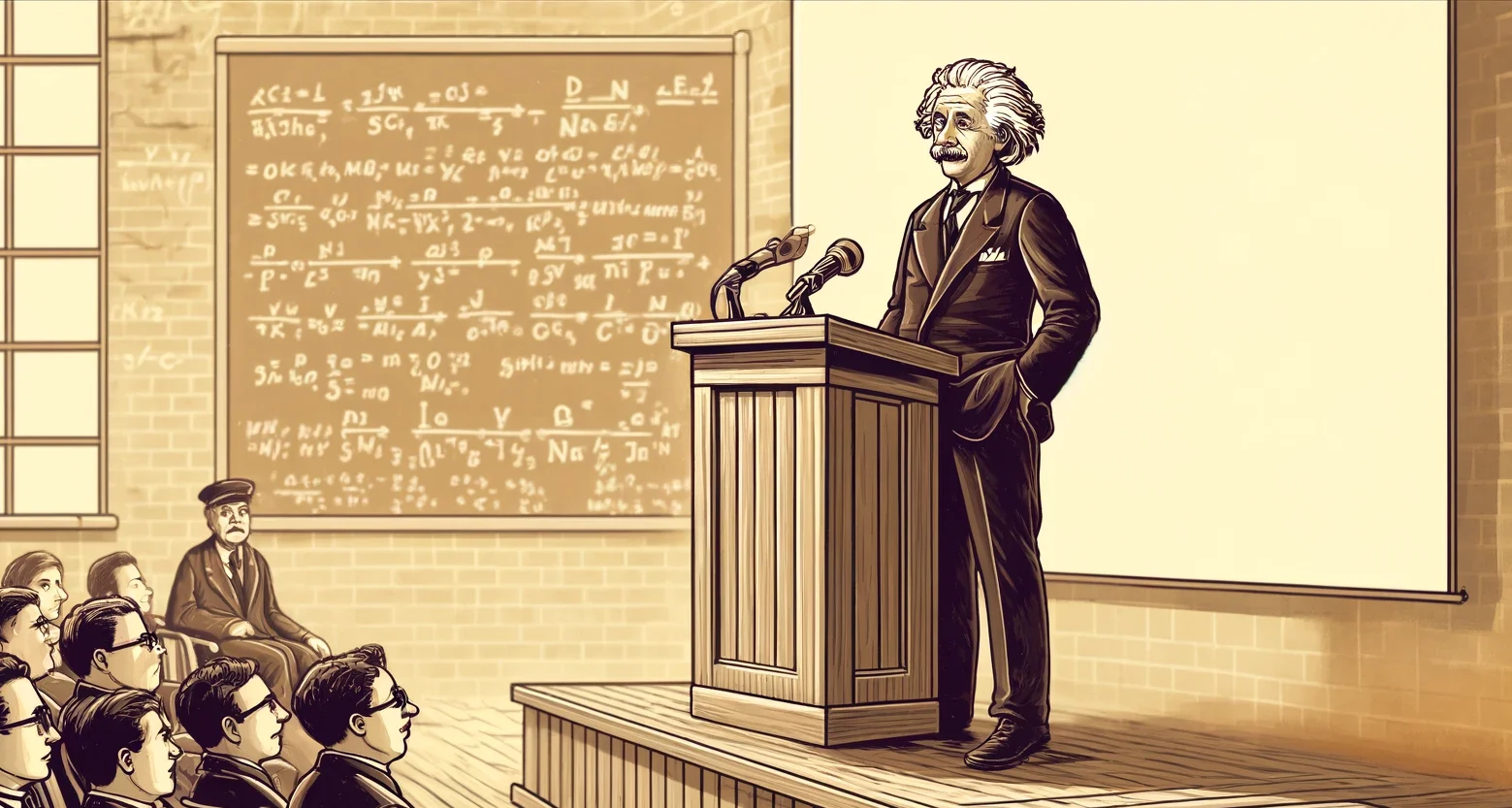
No — sorry. I really wish I could say this wonderful tale is true, but it’s not. Let’s use it to demonstrate the historical category of ideas.
First, the story.
Early in Einstein’s career, after giving the same lecture many times, he complained to his driver about how repetitive it had become. The driver, having heard it over and over, joked that he could give the lecture himself. Einstein, amused, took him up on it. For one event, they switched places. The driver delivered the talk beautifully while Einstein sat in the audience. Then someone asked a difficult question. Without missing a beat, the driver replied that the answer was so simple even his driver could explain it. Einstein then stood up and answered.
I love that story. It makes Einstein humble, playful, and brilliant. It also supports a wonderful idea: if you understand something well enough, you can explain it simply. And others can too. No wonder the story spread.
But stories can have charm and life lessons, and still not be true. Historical stories are true only when they align with reality. In this case, the support is missing. Einstein nor his driver left us this story. No one in their families or in the audience either. No friend or reliable third-party source either. As history, that matters. A lot.
So the calibrated answer is simple: it is probably fiction. Not useless fiction. Not bad fiction. Just fiction. Fiction can still teach real lesson, but they cannot be treated as public truth.
Some stories feel true because they fit what we want to believe. They carry meaning. But confidence must rise only as high as the evidence allows. For now, unless something turns up, Einstein’s driver story belongs in the charming legend category.