
155 Generations Ago
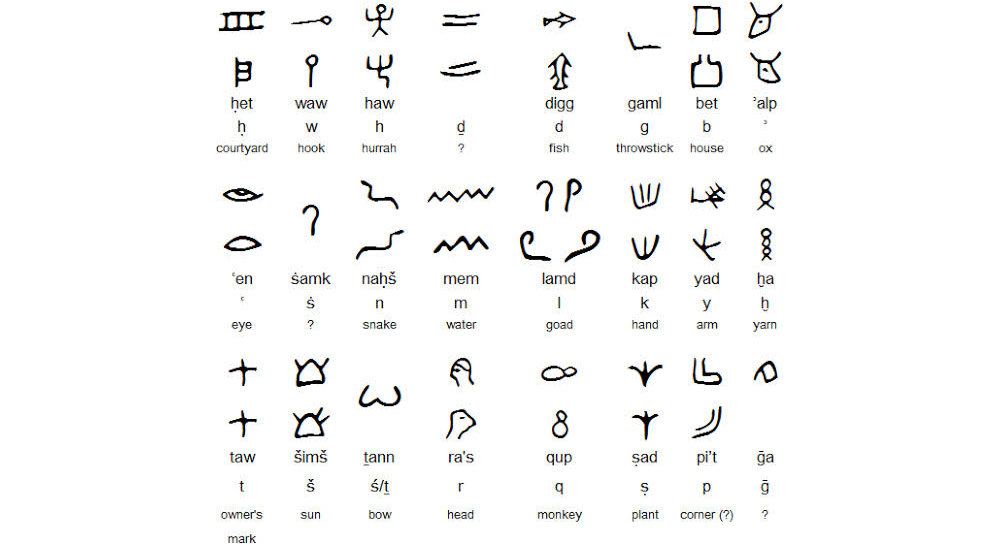
The Proto-Sinaitic alphabet is considered the earliest trace of alphabetic writing and the common ancestor of both Ancient South Arabian script and the Phoenician alphabet. The ancient South Arabian script evolved about 1900 BCE which continued to evolve into today’s Modern South Arabian languages. The Phoenician alphabet evolved into the Greek alphabet and all of today’s Western alphabets.
This writing system matured around the Sinai Peninsula from about 1900 to 1700 BCE and remained in common use until roughly 1500 BCE. It likely developed by Canaanite or Semitic workers familiar with Egyptian hieroglyphs. It simplified complex hieroglyphic symbols into a small set of phonetic signs—roughly one symbol per sound—making written language accessible to ordinary people rather than the exclusive domain of scribes and priests.
The innovation of sound-based writing marks one of humanity’s greatest cognitive leaps. It transformed communication from a pictorial and contextual art into a reproducible and teachable code of thought. This democratization of writing enabled the spread of trade, religion, philosophy, and law across cultures, eventually laying the groundwork for literacy as we know it today.
Archaeological finds at Serabit el-Khadim and Wadi el-Hol remain the key evidence for this script, showing inscriptions that bridge the gap between hieroglyphic writing and true alphabets. Though the precise origins are still debated, the Proto-Sinaitic script represents the dawn of phonetic abstraction—the moment humans learned not just to draw what they saw, but to write what they heard.