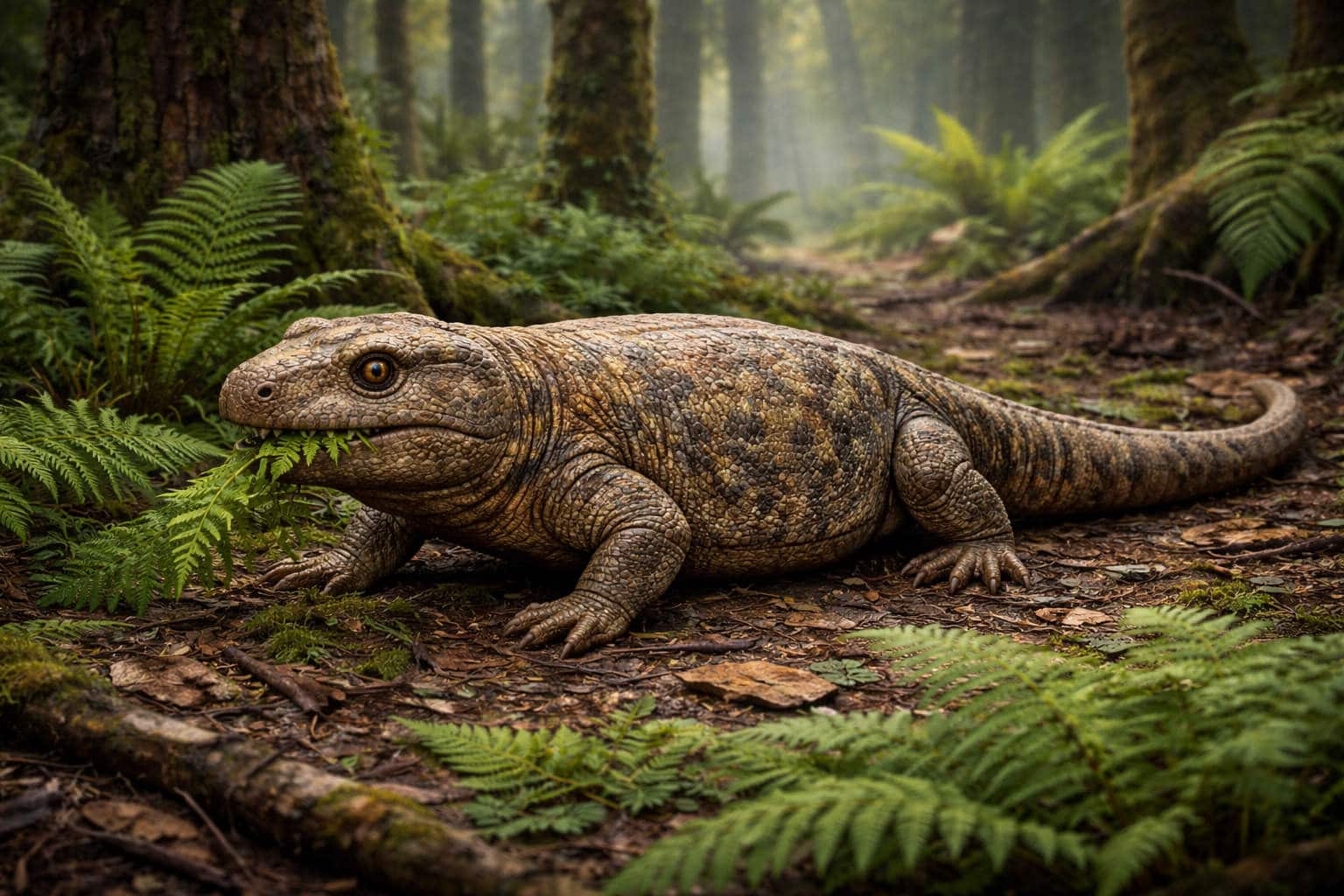
First Land Herbivore: Tyrannoroter heberti
By 307 million years ago, land herbivory had already begun in early reptiles known as microsaurs.
First Land Herbivore: Tyrannoroter heberti Read More »


Reptiles evolved from amphibians roughly 320 million years ago. Their shelled eggs allowed them to fully transition to land, giving them an advantage over amphibians.
By 307 million years ago, land herbivory had already begun in early reptiles known as microsaurs.
First Land Herbivore: Tyrannoroter heberti Read More »

In the shadowed forests of the Late Carboniferous, long before mammals, birds, or even dinosaurs, a few small, lizard-like amniotes began to do something remarkable — they started to move not just for need, but for pleasure. Between the still instincts of amphibians and the lively games of future mammals, something new flickered: proto-play. These
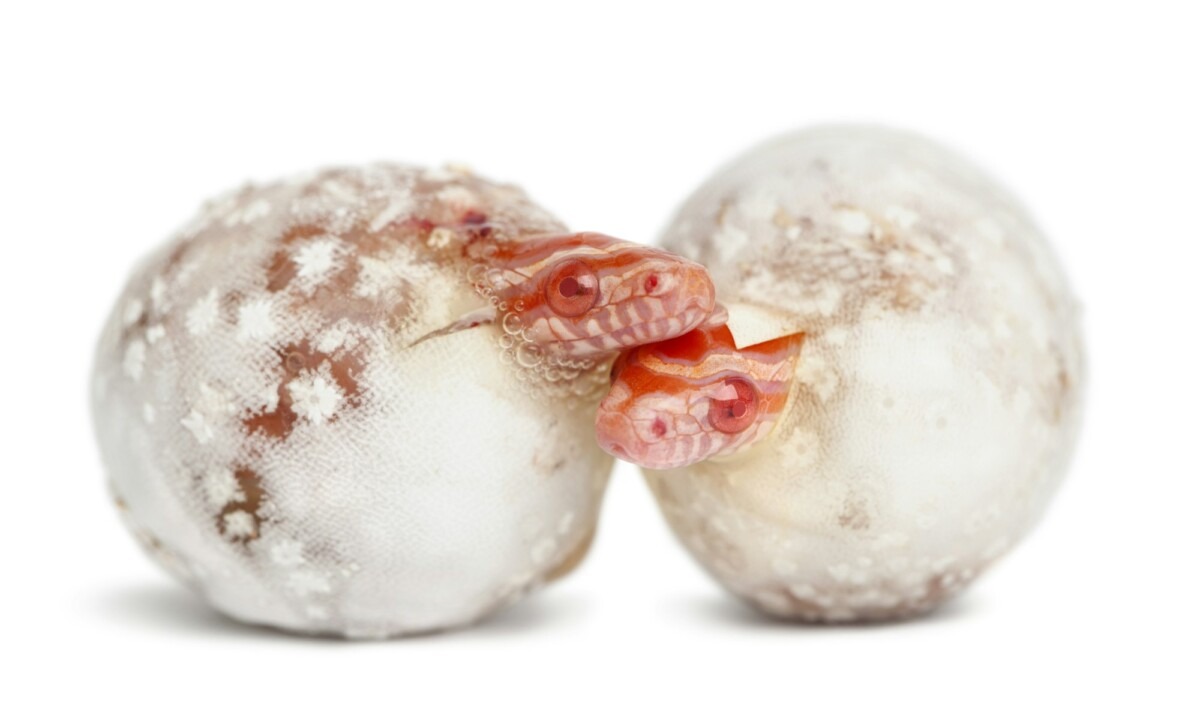
After about 320 million years, the next significant leap in egg evolution came with reptiles, which developed amniotic eggs. These eggs have a protective shell and specialized membranes to support development outside of water, enabling reptiles to lay eggs in terrestrial environments.
Reptile Amniotic Eggs Read More »