Marcus Aurelius, the Roman Emperor and Stoic philosopher, wrote this around 160 CE in his Meditations (Book 5, Section 16). Although he spoke Latin, Marcus chose Greek—the scholarly language of his day—for his private reflections. He recognized his words and thoughts shaped his mood and character.
In chapter 13 of 30 Philosophers, I recount the story of Zeno and Stoicism to illustrate a similar point:
“He realized it was his mind, and only his mind, that put value on the things he just lost. He realized it was his thoughts of the future, and only his thoughts, that colored his soul dark. He realized it was within his power to reshape his thoughts.”
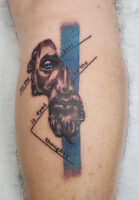
I love this Marcus Aurelius quote so much, I have it tattooed on my right calf.
This idea lies at the heart of Stoicism: rather than ignoring our feelings, we should understand and reframe them in the context of reality—a sentiment not unlike “fake it until you make it.”
Premium content addition.
Your thoughts color your inner life. By examining and reframing them in light of reality, you can change your mood, strengthen your character, and regain control.
Subject: Mental Agency.
Attentional control is a mental agency tool. Attentional control is your ability to focus on one thought over another. Your inner life is molded by your mindset. When we choose to perceive experiences positively or negatively, those thoughts eventually define and manifest in our character, profoundly influencing how we react and live. You cannot control every event, but you can shape the meaning you give it. Notice the thought darkening your inner life, test it against reality, and choose a steadier one.
Which modern therapy most directly teaches people to examine and reframe unhelpful thoughts?.
Answer. Cognitive behavioral therapy, or CBT..
was first published on TST 2 years ago.

