

The Plank Era occurred in the first part of the first millisecond after the singularity. Current estimated put it at up to 10−43 seconds after the Big Bang. The term “era” is used for this micro-duration as a sort of tip of the hat to Einstein’s Relativity. It reflects a conceptual approach to time that differs from our everyday experience. This speculative era represents the very beginning of the universe, immediately following the singularity. The physics of this period is still not fully understood, as it requires a theory that unifies general relativity and quantum mechanics (quantum gravity). Temperatures and energies were so high that the four fundamental forces (gravity, electromagnetism, the weak nuclear force, and the strong nuclear force) are thought to have been unified.
STORY
Planck Era
☐ Read
☑ Read
You’ve read this 0 times.
You’ve listened to this 0 times.
By Michael Alan Prestwood
Wed 27 Mar 2024
Published 2 years ago.
Updated 4 months ago.
Related Stories
- Related Categories: Unification
Share :
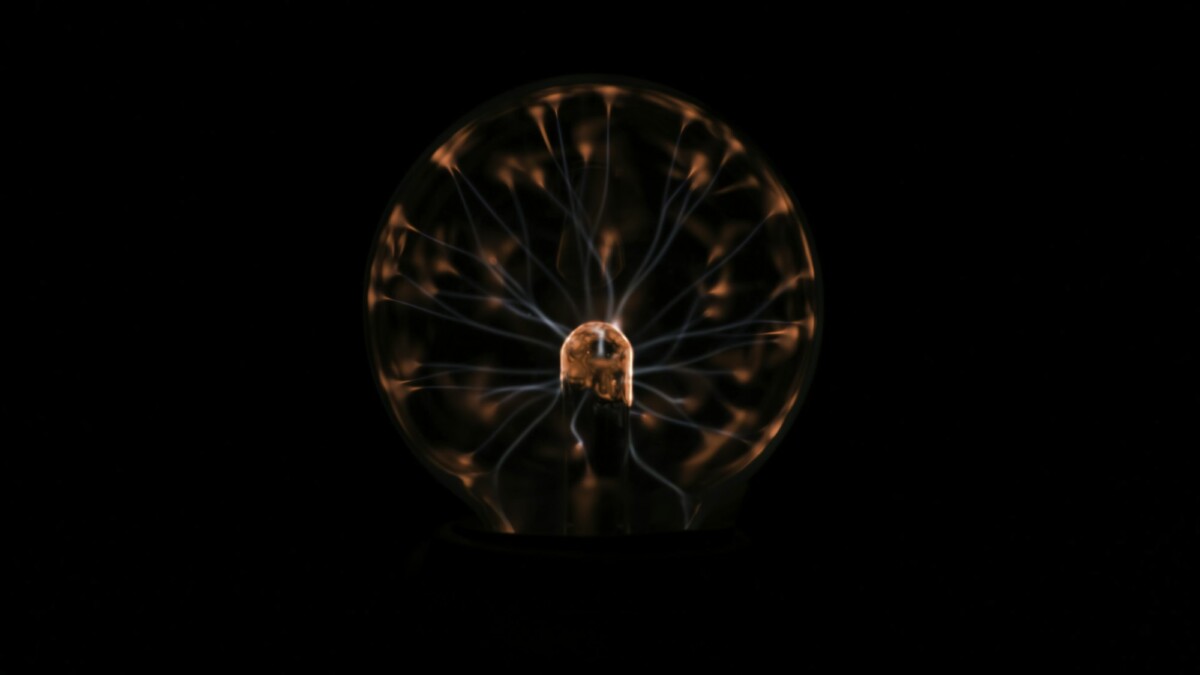
Planck Era
13.8 Billion Years Ago: First Millisecond
Highly Speculative. An irrational idea rationally deduced.
- < 1 minute read

Michael Alan Prestwood
Author & Natural Philosopher
Author & Natural Philosopher
Prestwood writes on science-first philosophy, with particular attention to the convergence of disciplines. Drawing on his TST Framework, his work emphasizes rational inquiry grounded in empirical observation while engaging questions at the edges of established knowledge. With TouchstoneTruth positioned as a living touchstone, this work aims to contribute reliable, evolving analysis in an emerging AI era where the credibility of information is increasingly contested.
Email
Print
The Prestwood Column
Menu
August 2026
»COLUMN ARCHIVE
--COLUMN--
Column Research….
NEW BOOK! NOW AVAILABLE!!
30 Philosophers: A New Look at Timeless Ideas
by Michael Alan Prestwood
