
Weekly Insights for Thinkers

Science  Philosophy  Critical Thinking  History  Politics RW  AI  Physics  •  Evolution  Astronomy 30 Phil Book More…
Science  Phil  Cr. Think  Hist 

STORY

Aristotle

By PrestwoodIT

Sun 20 Feb 2022
Published 4 years ago.
Updated 2 months ago.
Aristotelianism
Share :
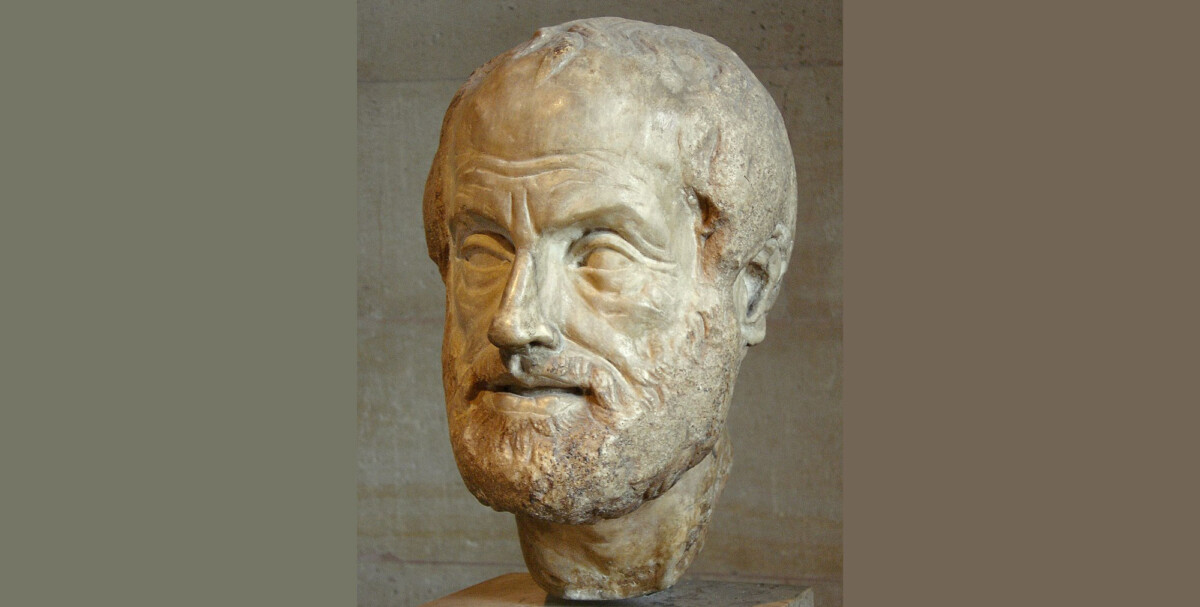
Portrait of Aristoteles. Copy of the Imperial era (1st or 2nd century) of a lost bronze sculpture made by Lysippos

Aristotle

b. 384 BCE
384 to 322 BCE
96 Generations Ago

30 Phil, Chapter 9: Aristotle and Empiricism
Aristotle was the greatest Greek philosopher and covered nearly all subjects including physics, biology, zoology, metaphysics, logic, ethics, aesthetics, poetry, theatre, music, rhetoric, psychology, linguistics, economics, politics, meteorology, geology, and government. His Aristotelian philosophy characterized by deductive logic and an analytic inductive method.

Some of my favorite translated sayings are:

  • The more you know, the more you know you don’t know.
  • It is the mark of an educated mind to be able to entertain a thought without accepting it.
  • Happiness depends upon ourselves.
  • Happiness is the meaning and the purpose of life, the whole aim and end of human existence.
  • The educated differ from the uneducated as much as the living differ from the dead.
  • Quality is not an act, it is a habit.

— map / TST —

Michael Alan Prestwood
Author & Natural Philosopher
Prestwood writes on science-first philosophy, with particular attention to the convergence of disciplines. Drawing on his TST Framework, his work emphasizes rational inquiry grounded in empirical observation while engaging questions at the edges of established knowledge. With TouchstoneTruth positioned as a living touchstone, this work aims to contribute reliable, evolving analysis in an emerging AI era where the credibility of information is increasingly contested.
This Week @ TST
February 18, 2026
»Edition Archive
WWB Research….
1. Story of the Week
Alfred Korzybski
2. Quote of the Week
“We are all tattooed in our cradles with the beliefs of our tribe.”
4. Philosophy FAQ »
Why do people confuse explanations with reality?
5. Critical Thinking FAQ »
Is the Split in the Idea of Ideas the Same as Kant’s?
6. History FAQ!
How did Copernicus show both the power and limits of models?
Bonus Deep-Dive Article
The Material World Split
Scroll to Top