

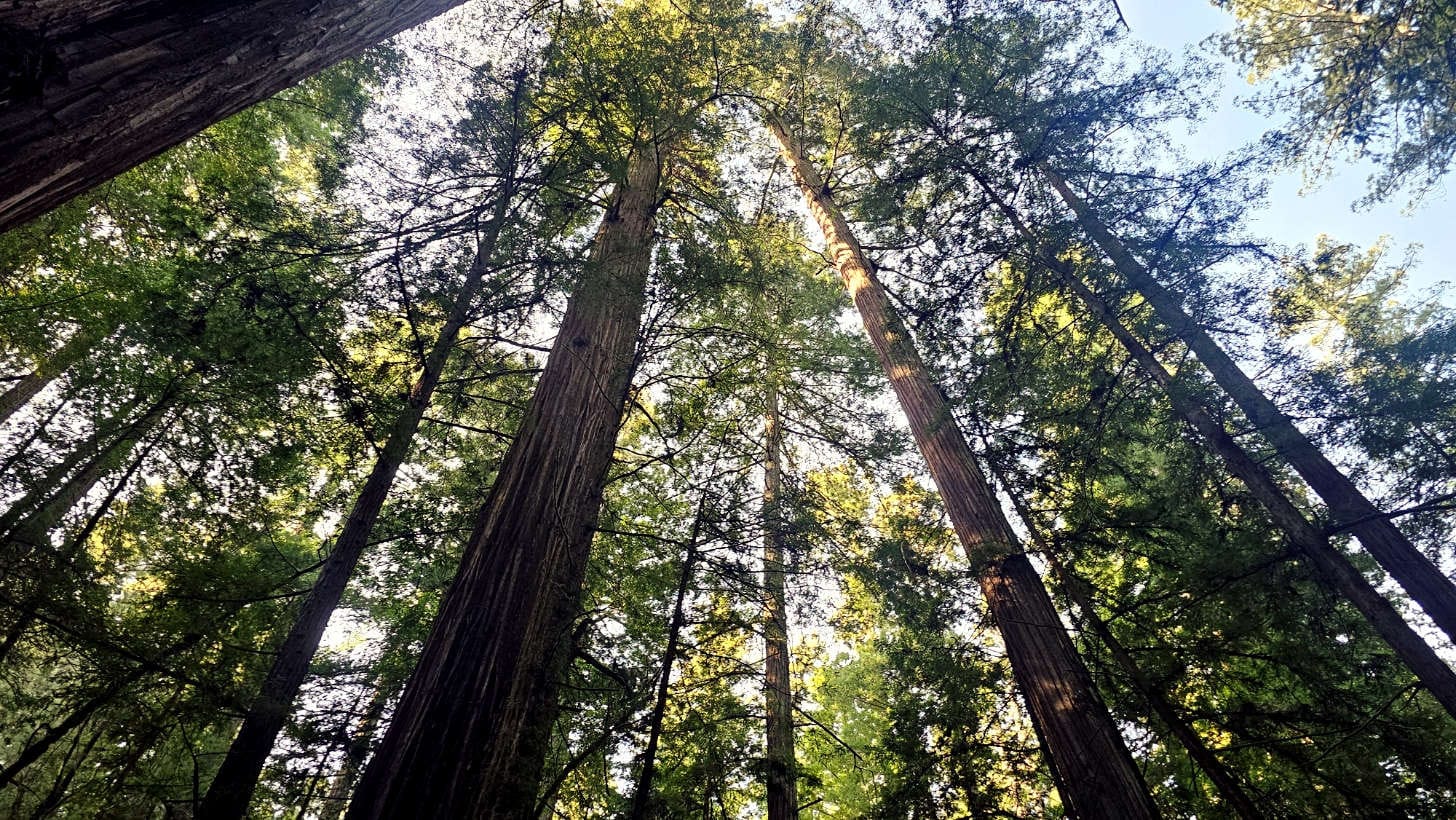
These trees descend from a line that was already ancient when dinosaurs dominated the land. During the age of dinosaurs, the lineage that would become modern coast redwoods separated from other conifers.
Redwoods belong to Cupressaceae (defined by scale-like leaves and fused woody cones). Within that family, they evolved exceptional height through efficient vascular transport, thick tannin-rich bark resistant to fire and insects, and the ability to sprout clonally. Coastal redwoods, in particular, also take advantage of fog-assisted water uptake.
Pictured: Sequoia sempervirens. This coastal redwood species emerged about 25 million years ago during the Miocene era. This picture was taken in Armstrong Redwoods State Natural Reserve near Guerneville, California.
