

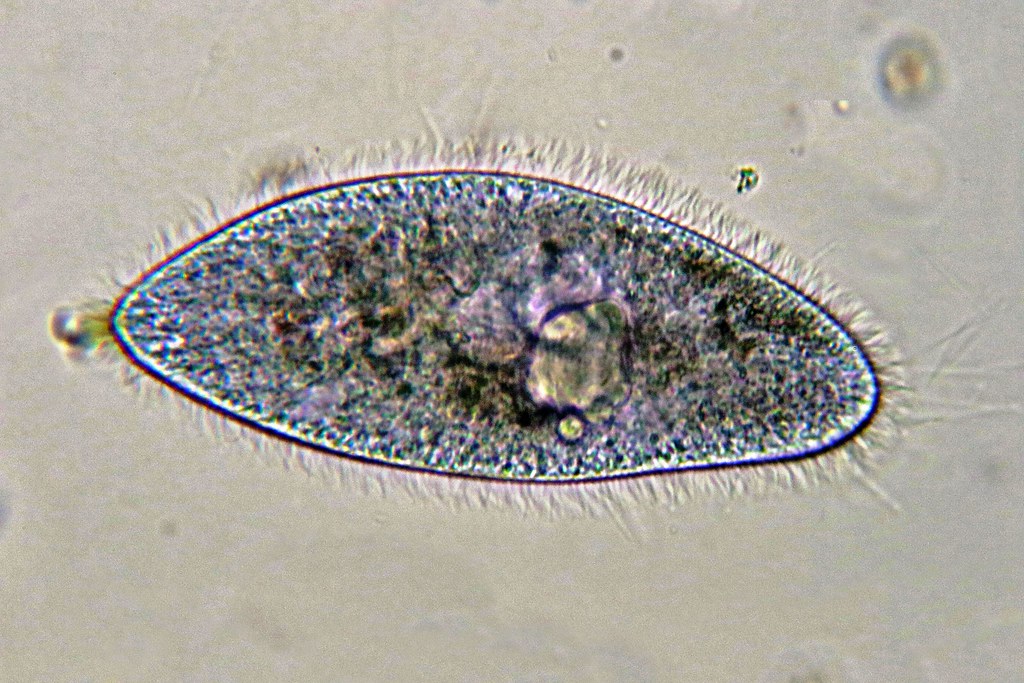
Long before the complexity of full-fledged nervous systems, elaborate senses, and brains, life on Earth developed the basic ability to perceive and react to mechanical stimuli—a process known as cellular mechanosensitivity.
Touch is the most fundamental form of information. Physical contact—pressure, vibration, movement—directly affects survival. Being able to respond to it required no complex processing, making it evolutionarily accessible very early in life’s history. Stretch-activated ion channels in bacteria and early eukaryotes allowed cells to respond to osmotic pressure and environmental contact. In this sense, touch is not just a sense — it is a physical necessity of living matter.
Plants use mechanosensitivity extensively.
- Roots detect soil resistance.
- Stems respond to wind.
- Venus flytraps snap shut when trigger hairs are bent.
- Vines coil when they contact support structures (thigmotropism).
Plants do not have nerves, but they transmit mechanical signals chemically and electrically through tissues. Touch guides growth, structure, and defense.
Fungi rely heavily on mechanical sensing.
- Hyphae detect surface texture.
- Pathogenic fungi sense host tissue stiffness.
- Fungal networks adjust growth in response to physical barriers.
Mechanosensitivity guides where fungi grow, penetrate, and form symbiotic relationships. For fungi, touch is directional intelligence.
In animals, mechanosensitivity became centralized and amplified. Early animals like sponges coordinated whole-body contractions in response to disturbance. Later, nerve nets evolved. Eventually, specialized mechanoreceptors appeared:
- Skin pressure receptors
- Hair cell sensors
- Vibration-sensitive organs
Animal touch became fast, localized, and integrated with nervous systems. It evolved from membrane physics into sensation and perception.
