
Weekly Insight for Thinkers
Science  Philosophy  Critical Thinking  History  Politics RW  AI  Physics  •  Evolution  Astronomy 30 Phil Book More…

1-MINUTE HOT TOPIC

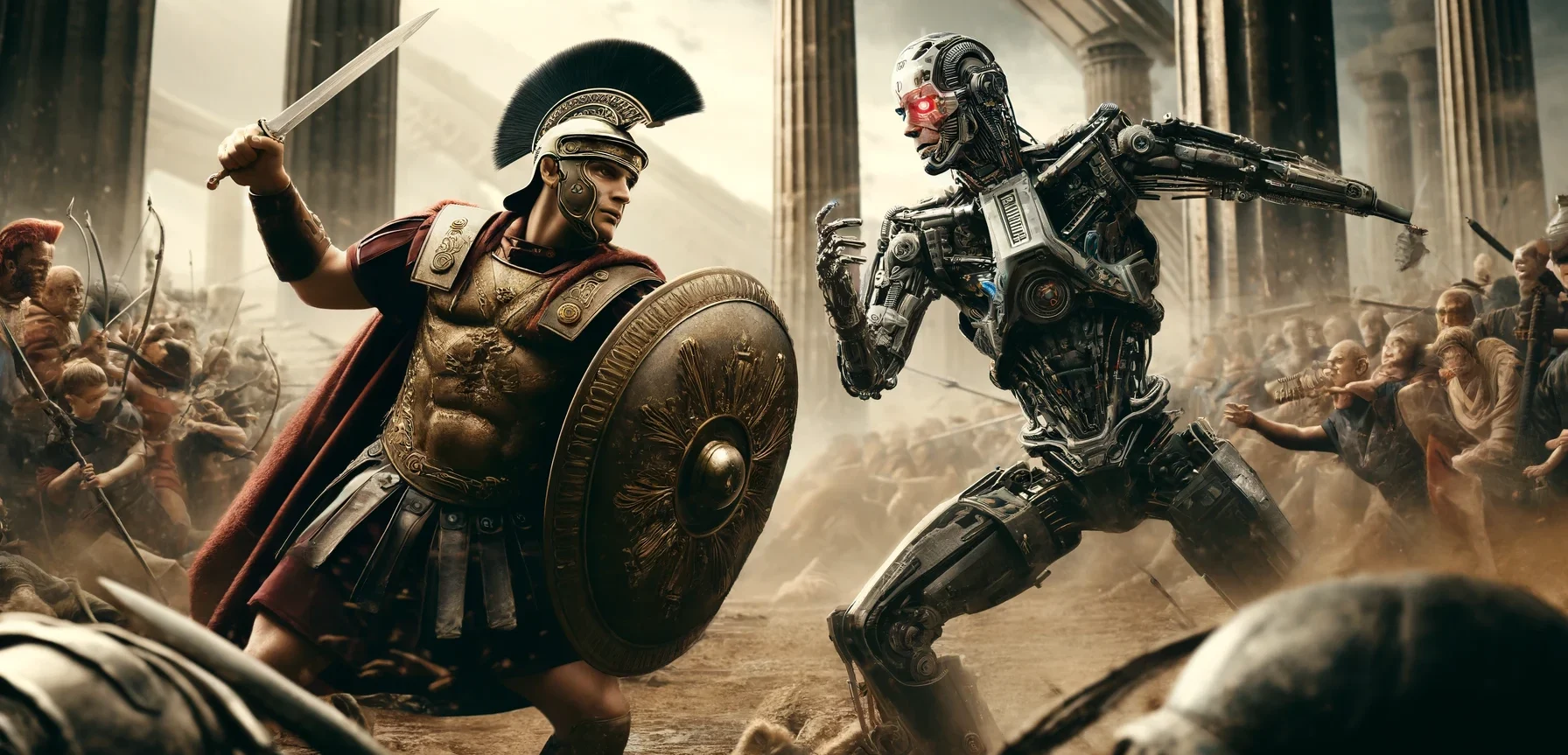
Was the Roman Empire like the Borg?

By Michael Alan Prestwood

Author and Natural Philosopher

04 Apr 2024
Published 2 years ago.
Updated 5 days ago.
Ancient History
A bit. The Roman Empire grew by assimilation.
Share :

Was the Roman Empire like the Borg?

At first glance, comparing the Roman Empire to the Borg from Star Trek might seem far-fetched, but this analogy can surprisingly shed light on the nature of cultural and military assimilation practiced by Rome. Much like the Borg, who assimilate species to collect their knowledge and enhance the collective, the Roman Empire expanded its borders and influence, often incorporating the customs, technologies, and gods of conquered peoples into its own cultural and administrative frameworks.

Rome’s strategy was based on integration and control, rather than outright eradication. Conquered territories were brought into the fold through a mix of force and incorporation. Just like when Picard was brought into the leadership of the Borg at Wolf 359, Rome’s strategy was to bring local elites into the Roman administrative system. The conquered were assimilated and became Roman citizens. Borg-like assimilation allowed Rome to maintain control over vast territories and diverse populations, enhancing the empire’s stability and richness.

However, unlike the Borg, who erase individuality, the Romans often preserved a degree of local customs and autonomy, using their extensive road network and military might to enforce Roman law and order while still celebrating diverse heritages within the empire’s borders.

This blending of cultures under a single political and legal system contributed to the longevity and success of the Roman Empire, much as the Borg’s assimilation tactics aimed to create a more efficient collective. While the mechanisms and intentions were certainly different, the metaphor highlights how both entities grew stronger by absorbing the strengths of others.
Michael Alan Prestwood
Author & Natural Philosopher

Prestwood writes on science-first philosophy, with particular attention to the convergence of disciplines. Drawing on his TST Framework, his work emphasizes rational inquiry grounded in empirical observation while engaging questions at the edges of established knowledge. With TouchstoneTruth positioned as a living touchstone, this work aims to contribute reliable analysis in an emerging AI era where the credibility of information is increasingly contested.

Comments

Join the Conversation! Currently logged out.
WWB Menu
7 Jan 2026 Edition
Story of the Week
Heraclitus
Quote of the Week
“Everything is in flux.”
Weekly Crossroads!
1. Science »
Will the night sky have stars nearly forever?
2. Philosophy »
What does existence before essence mean?
3. Critical Thinking »
Is cause and effect certain?
4. History!
Who were the Presocratic Philosophers?
WWB Menu
7 Jan 2026 Edition
Story of the Week
Heraclitus
Quote of the Week
“Everything is in flux.”
Weekly Crossroads!
1. Science »
Will the night sky have stars nearly forever?
2. Philosophy »
What does existence before essence mean?
3. Critical Thinking »
Is cause and effect certain?
4. History!
Who were the Presocratic Philosophers?
Scroll to Top