
Weekly Insights for Thinkers

Science  Philosophy  Critical Thinking  History  Politics RW  AI  Physics  •  Evolution  Astronomy 30 Phil Book More…
Science  Phil  Cr. Thinking  History 

FAQ

What is the difference between volume and mass?

By Michael Alan Prestwood

Author and Natural Philosopher

Wed 6 Nov 2024
Published 1 year ago.
Updated 1 month ago.
Mass and Volume
Share :

What is the difference between volume and mass?

At first glance, this seems like a straightforward question, but let’s dig deeper—where science meets perception, and reality shows its illusory nature.

Volume is the space an object occupies, while mass measures how much matter it contains. A bowling ball, though smaller than a basketball, is denser and therefore heavier. But here’s where things get interesting: if you increase a basketball’s diameter by 30%, you might expect the volume to increase by the same amount. In reality, it grows 3.4 times bigger. Surprising, right? That’s the trick of the universe!

On a cosmic scale, these differences matter even more. Earth’s collision with a planet-sized body created the Moon, which is lighter because it’s made of less dense material. Pluto, hailing from the distant Kuiper Belt, is even less dense, largely composed of icy and rocky material. Despite the Moon being 3.4 times Pluto’s volume, it’s also much denser, making it 5.6 times more massive.

Here’s your take-away: Volume is size, and mass is weight. Earth is both larger and denser than the Moon. The Moon, made of lighter material, is 1/4 the size but only 1/5 the weight. These quirks of the universe remind us that reality often plays tricks on our perceptions.
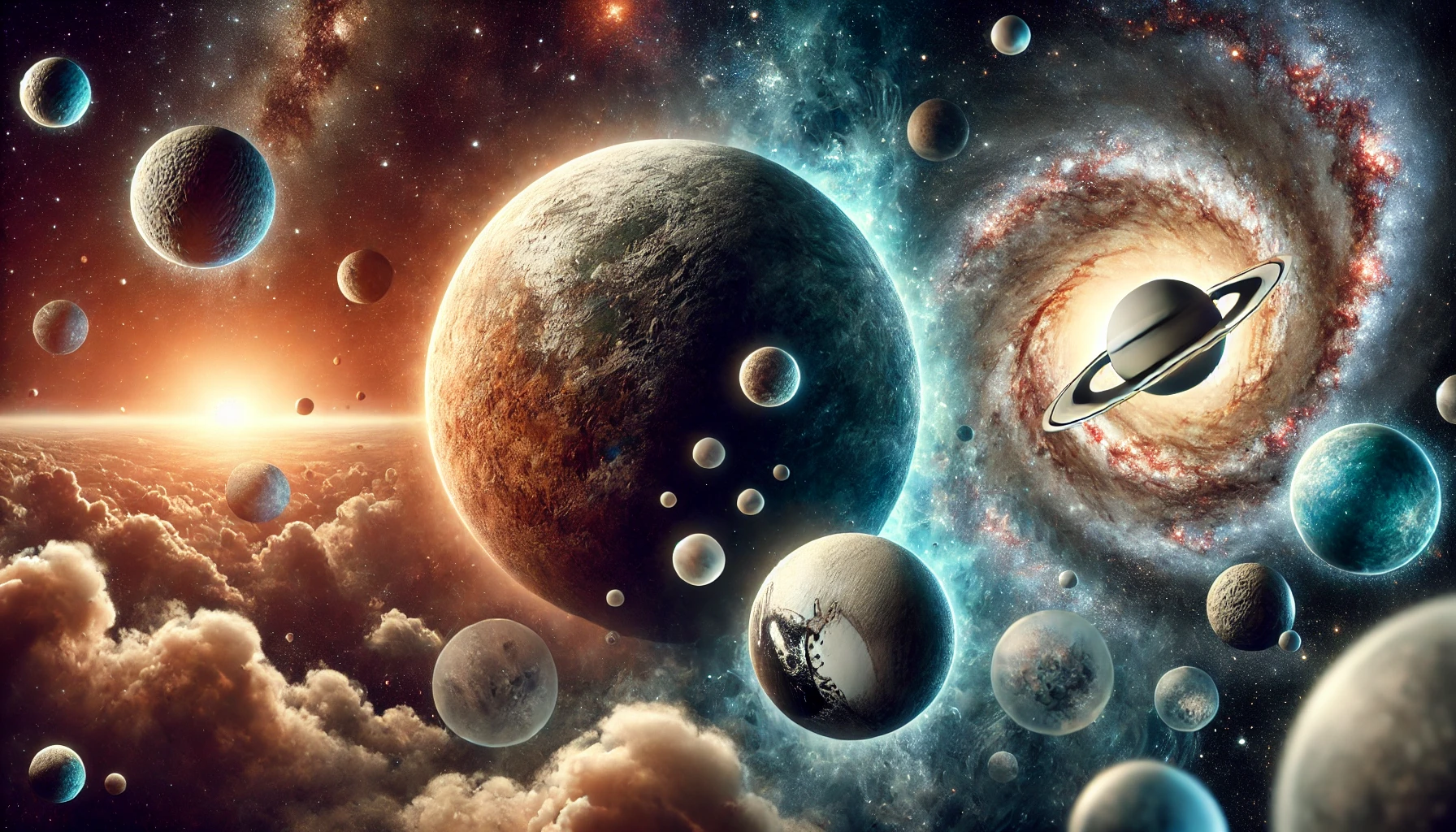
Our minds misjudge the universe, and this part of our illusory nature shows up in comparisons that involve size, volume, and weight—smarter beings might see it as it truly is.
Michael Alan Prestwood
Author & Natural Philosopher

Prestwood writes on science-first philosophy, with particular attention to the convergence of disciplines. Drawing on his TST Framework, his work emphasizes rational inquiry grounded in empirical observation while engaging questions at the edges of established knowledge. With TouchstoneTruth positioned as a living touchstone, this work aims to contribute reliable analysis in an emerging AI era where the credibility of information is increasingly contested.

WWB Menu
7 Jan 2026
Essay of the Week
The Architecture of Change: Finding Stability in Flux
Story of the Week
Heraclitus
Quote of the Week
“Everything is in flux.”
Weekly Crossroads!
1. Science »
Will the night sky have stars nearly forever?
2. Philosophy »
What does existence before essence mean?
3. Critical Thinking »
Is cause and effect certain?
4. History!
Who were the Presocratic Philosophers?

Comments

Join the Conversation! Currently logged out.
NEW BOOK! NOW AVAILABLE!!

30 Philosophers: A New Look at Timeless Ideas

by Michael Alan Prestwood
The story of the history of our best ideas!
WWB Menu
7 Jan 2026
Essay of the Week
The Architecture of Change: Finding Stability in Flux
Story of the Week
Heraclitus
Quote of the Week
“Everything is in flux.”
Weekly Crossroads!
1. Science »
Will the night sky have stars nearly forever?
2. Philosophy »
What does existence before essence mean?
3. Critical Thinking »
Is cause and effect certain?
4. History!
Who were the Presocratic Philosophers?
Scroll to Top