

Understanding Particle Physics explores the strange but evidence-based world beneath everyday reality. This series begins with a simple but powerful idea: what looks empty is not truly empty. Space contains fields, particles, forces, radiation, and interactions that shape everything from atoms to galaxies. From the four fundamental forces and the known particles of the Standard Model to the mysteries of the double-slit experiment, quantum entanglement, and speculative ideas at the edge of physics, this series separates what we observe clearly from how we interpret it. The goal is not just to explain particle physics, but to make its weirdness understandable without losing sight of the difference between solid evidence and bold speculation.
Article Thread
Particle Physics
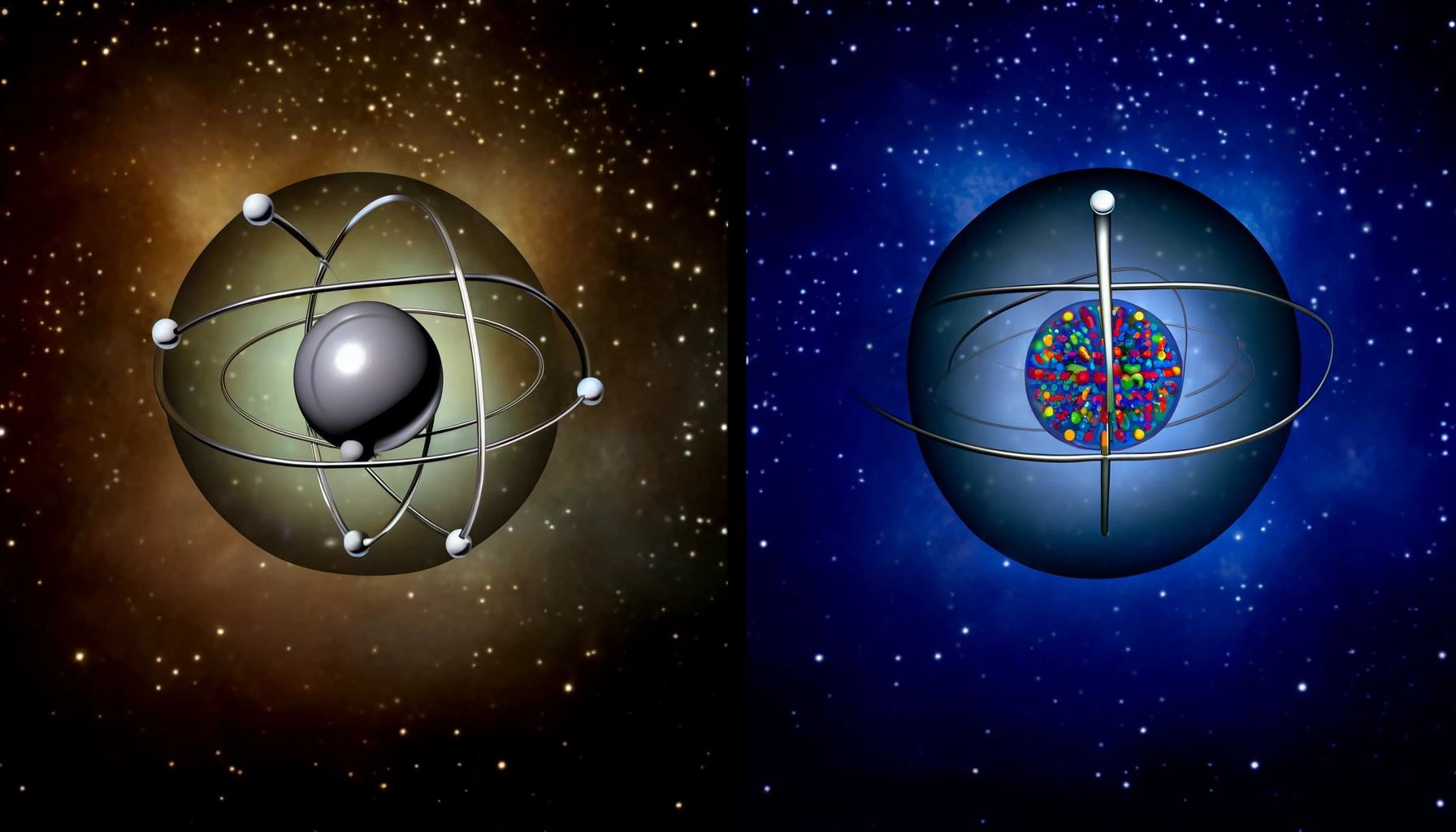
Particle physics explores the hidden structure of reality, showing that “empty” space is not truly empty and that the smallest parts of nature behave in ways that challenge common sense.
By Michael Alan Prestwood
Author and Natural Philosopher
Sat 2 May 2026
Published 7 months ago.
Updated 5 months ago.
Particle Physics
By Michael Alan Prestwood
1 of 3
Particle Physics
What we casually call “empty space” is anything but empty. Even the quietest regions of the universe are shaped by particles passing through, forces acting at a distance, and fields extending everywhere. Our idea of emptiness reflects the limits of perception, not the absence of reality.
2 of 3
3 of 3
Science
Article
Missing Mass Problem
Quantum entanglement, perhaps along with dark matter, might contribute to the universe’s missing mass. When one side of an entangled particle falls into a black hole, one theory says the other particle collapses. Could this be some of the missing mass?