


The more I build this timeline, the more I feel the wonder of how much life there must have been. Fossils are rare, but living worlds were not. Across land, sea, and sky, life was everywhere—competing, adapting, multiplying, and filling nearly every corner it could reach. What we find are only scattered bones and traces. What once existed was abundance.
Dinosaur & Bird Evolution
Snowball Earth: When Ice Reached the Equator
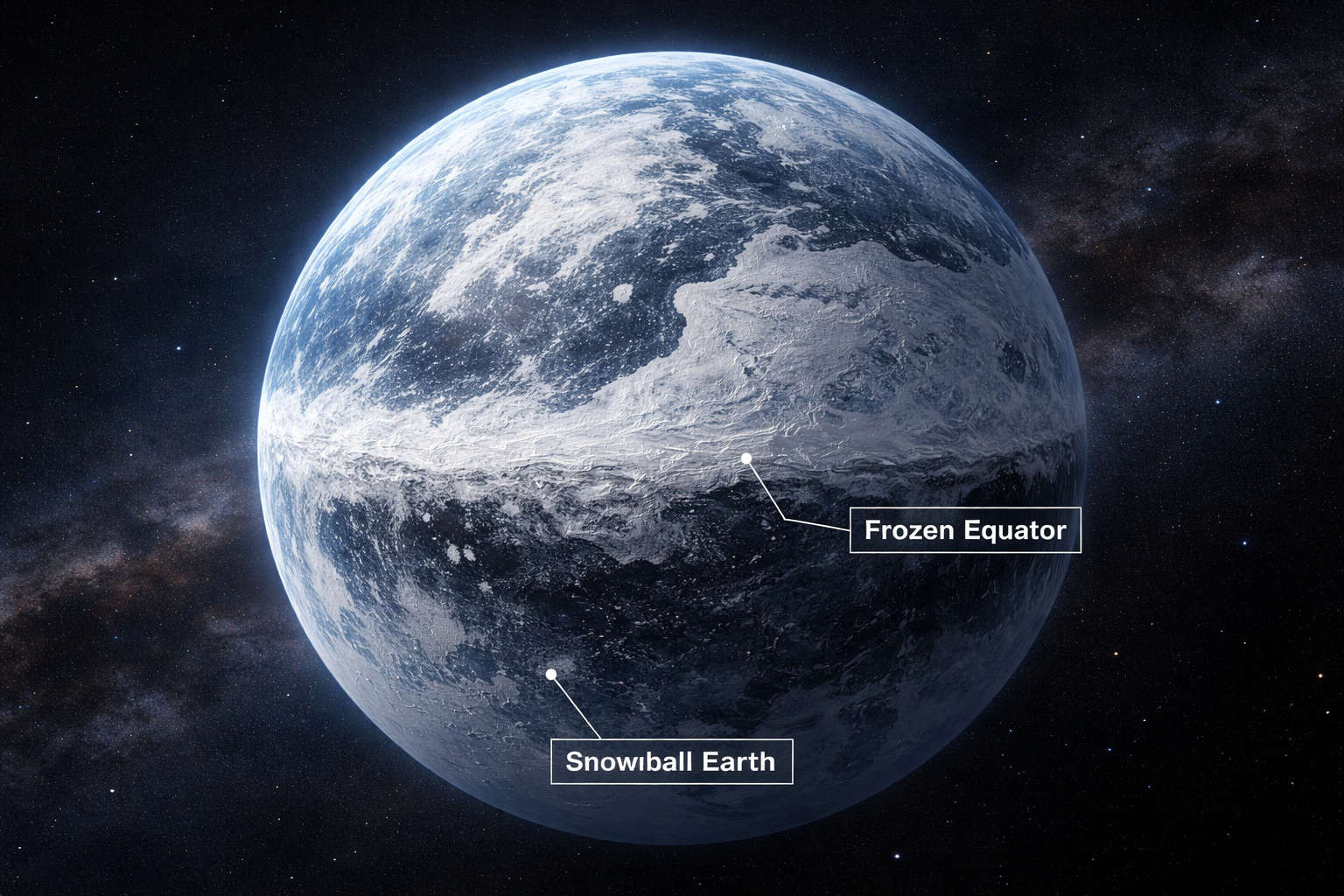
For tens of millions of years, Earth plunged into its deepest known freeze. Ice sheets reached sea level at low latitudes, perhaps even the equator, turning the planet into a near-global ice world and reshaping the path toward complex life.
From 717 million years ago through 635.
Cause: Continental Drift, Falling CO₂
Bilaterian Split: The Origin of Agency
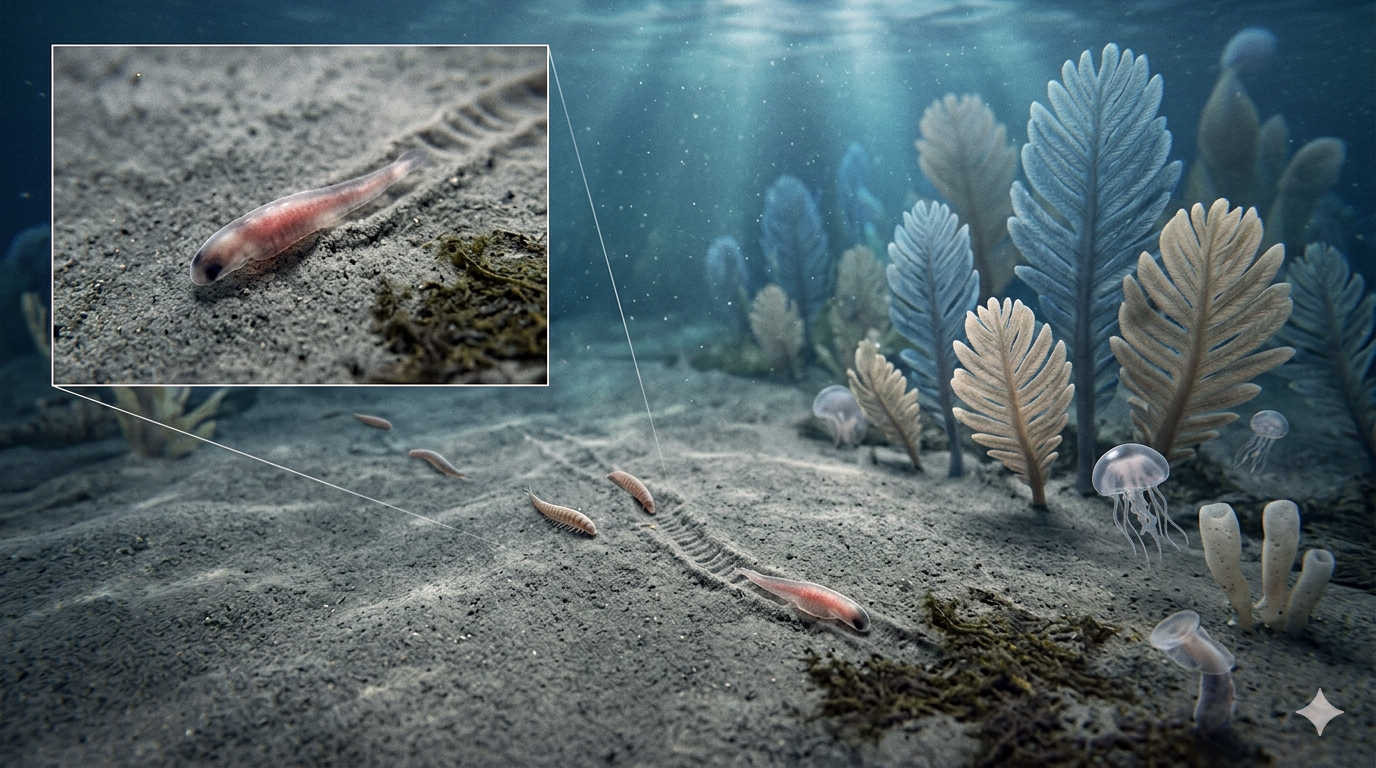
The bilaterian branch gave rise to today's arthropods, mollusks, fish, amphibians, reptiles, birds, and mammals. The significant idea is directionality. From a radial (circle) to a bilateral (line) symmetry, life transitioned from a passive "being" to an active "doing."
590 Million Years Ago (± 10 million)
Agency and directional action with intent.
Paleozoic Era: The Age of Synapsids
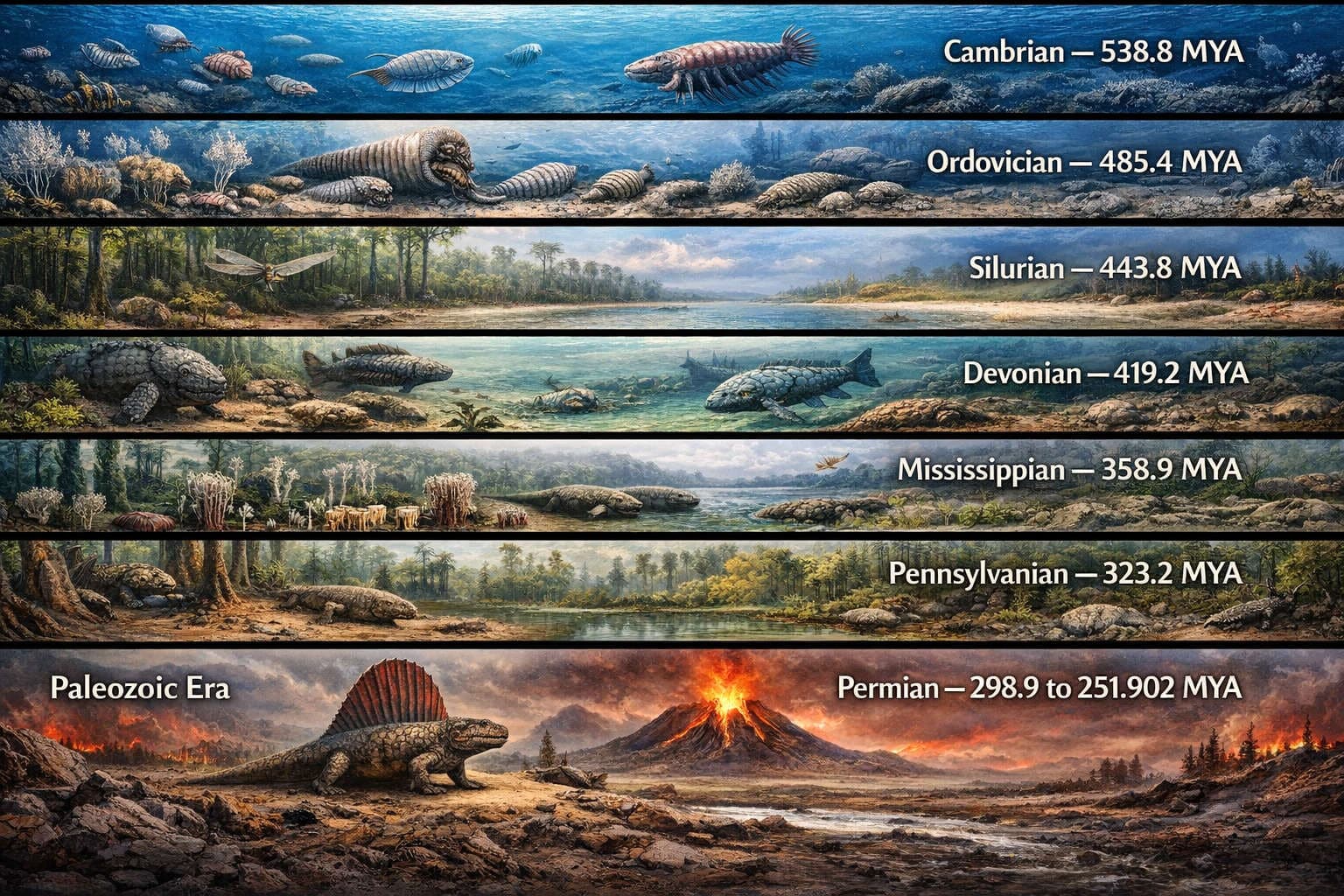
The Paleozoic era is marked by the rise of complex animal life 538.8 million years ago. It ends with the end-Permian mass extinction 252 million years ago. A volcanic cascade global warming event.
From 538.8 to 251.902 million years ago.
287 Million years: From burrowing to extinction.
Ordovician–Silurian Extinction: Ice Strikes the Seas
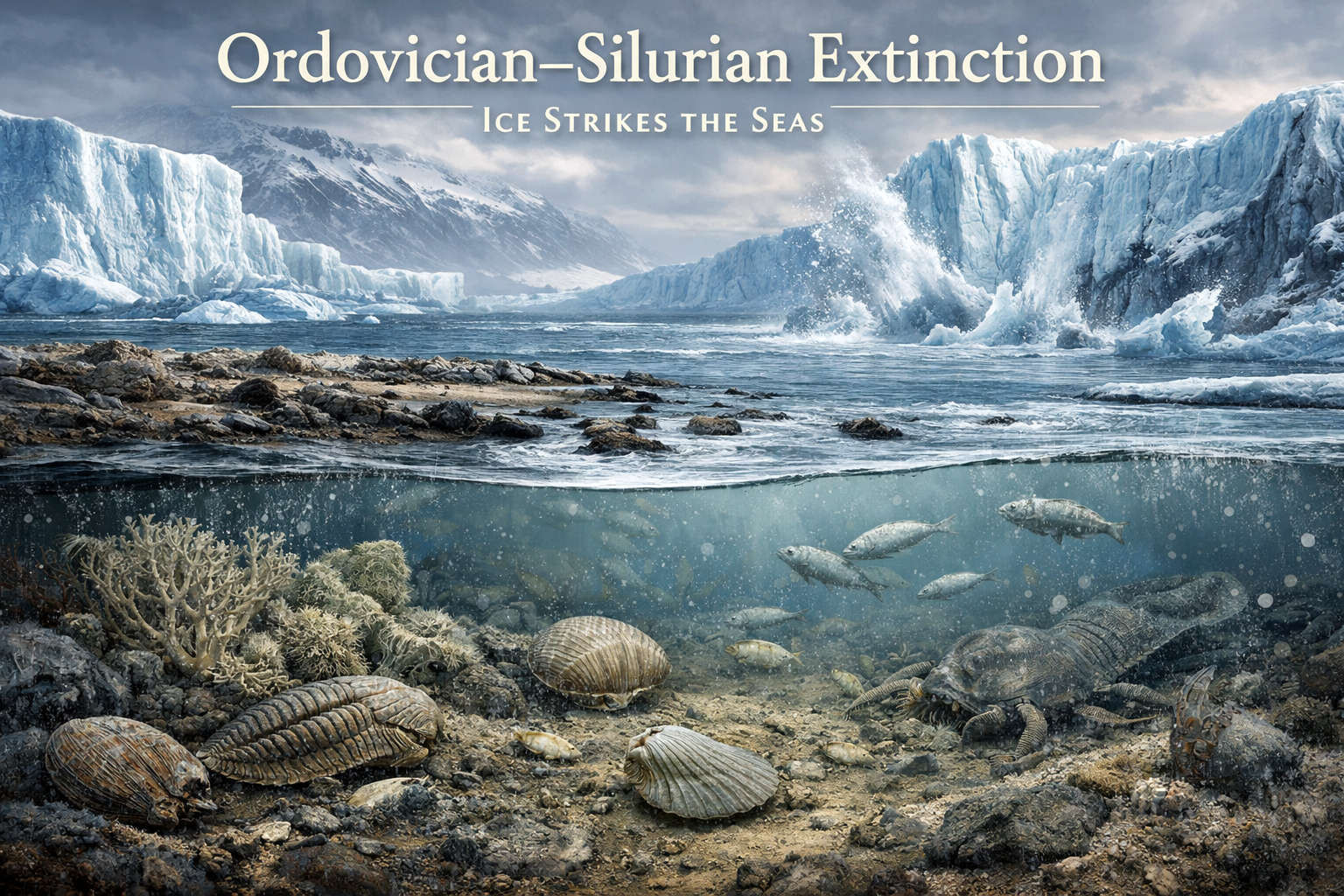
The Ordovician–Silurian extinction shows how climate change can reshape evolution by collapsing old ecosystems and opening space for new life.
~444 Million Years Ago
Cause: Global Cooling and Falling Seas
Oceans Lose Their Breath
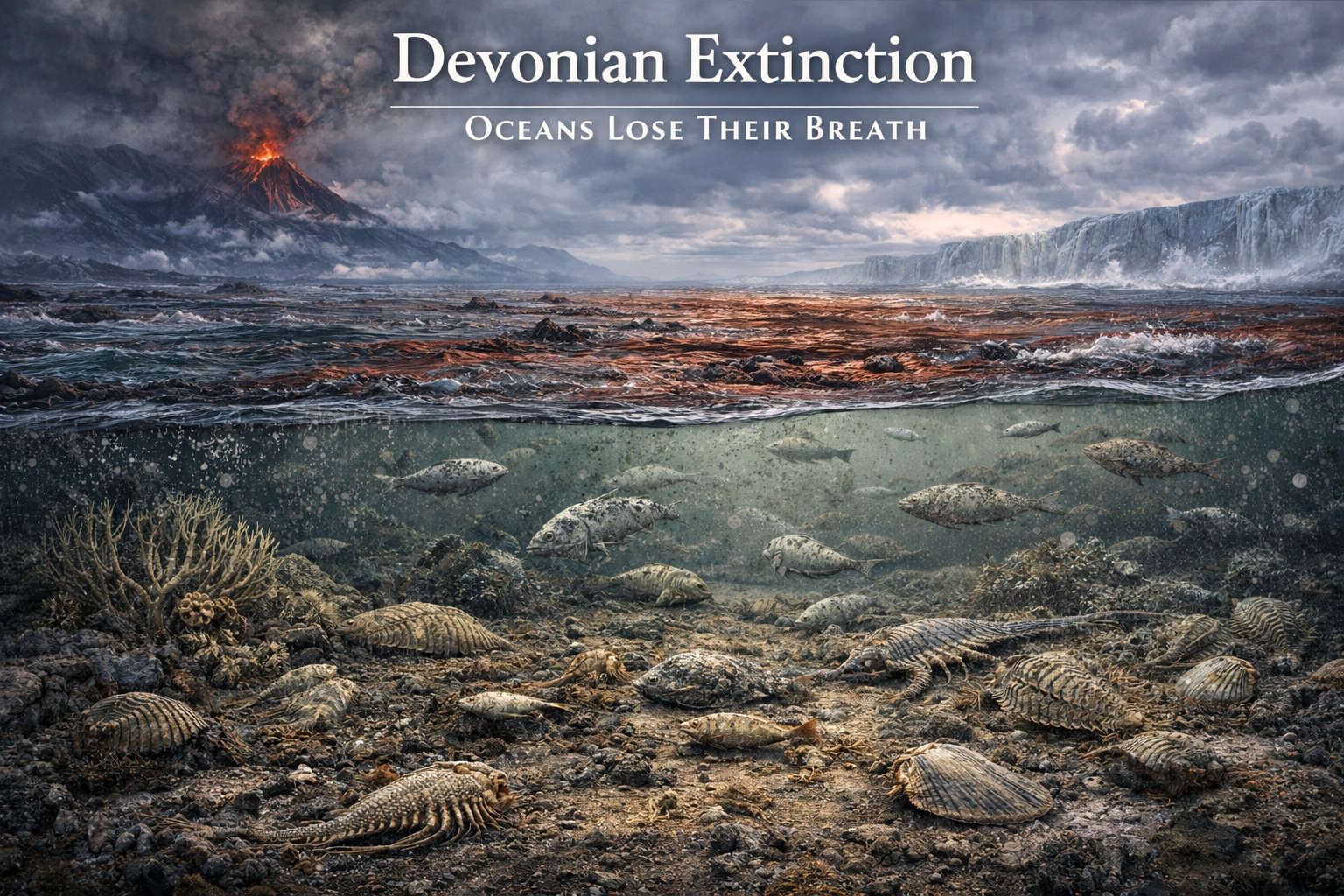
The Devonian extinction shows that evolution can be reshaped not by one sudden blow, but by a long collapse in ocean health.
~372–359 Million Years Ago
Cause: Ocean Anoxia
Amniotes Emerge: Amniotic Eggs
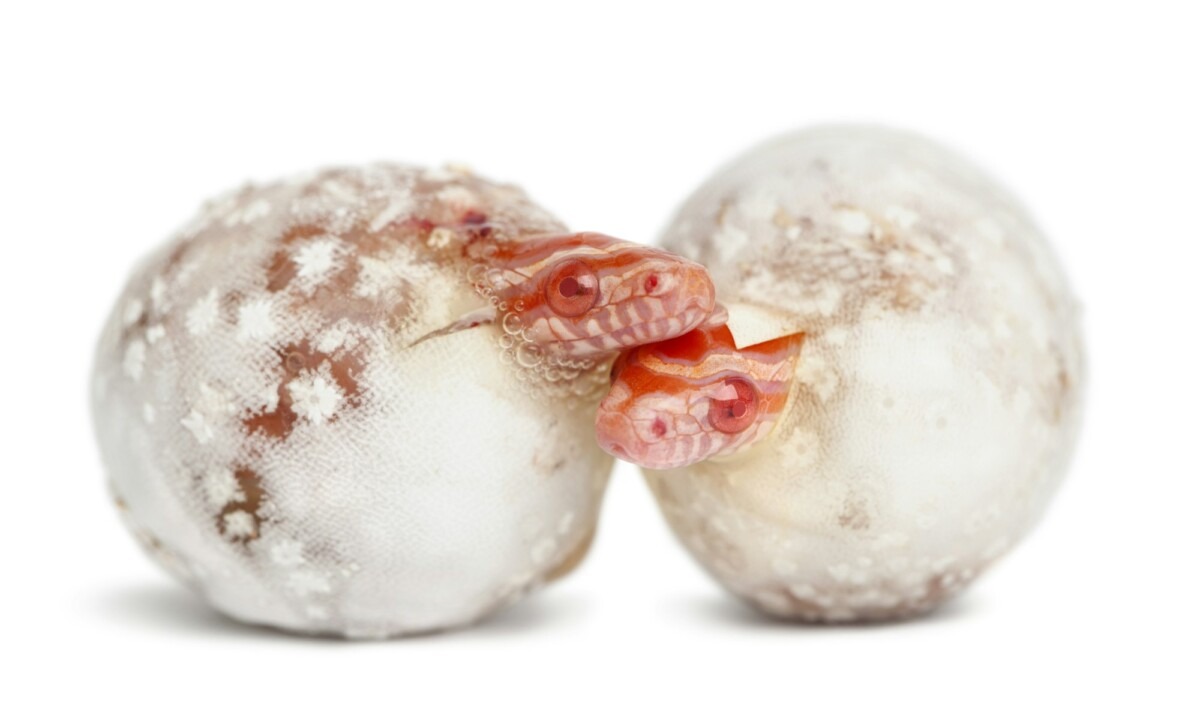
The amniotic egg evolved in the first amniotes, which evolved into today's reptiles, birds, and mammals.
340 Million years ago (+/- 10 million)
Ancestor or reptiles, birds, and mammals.
The P-T Extinction
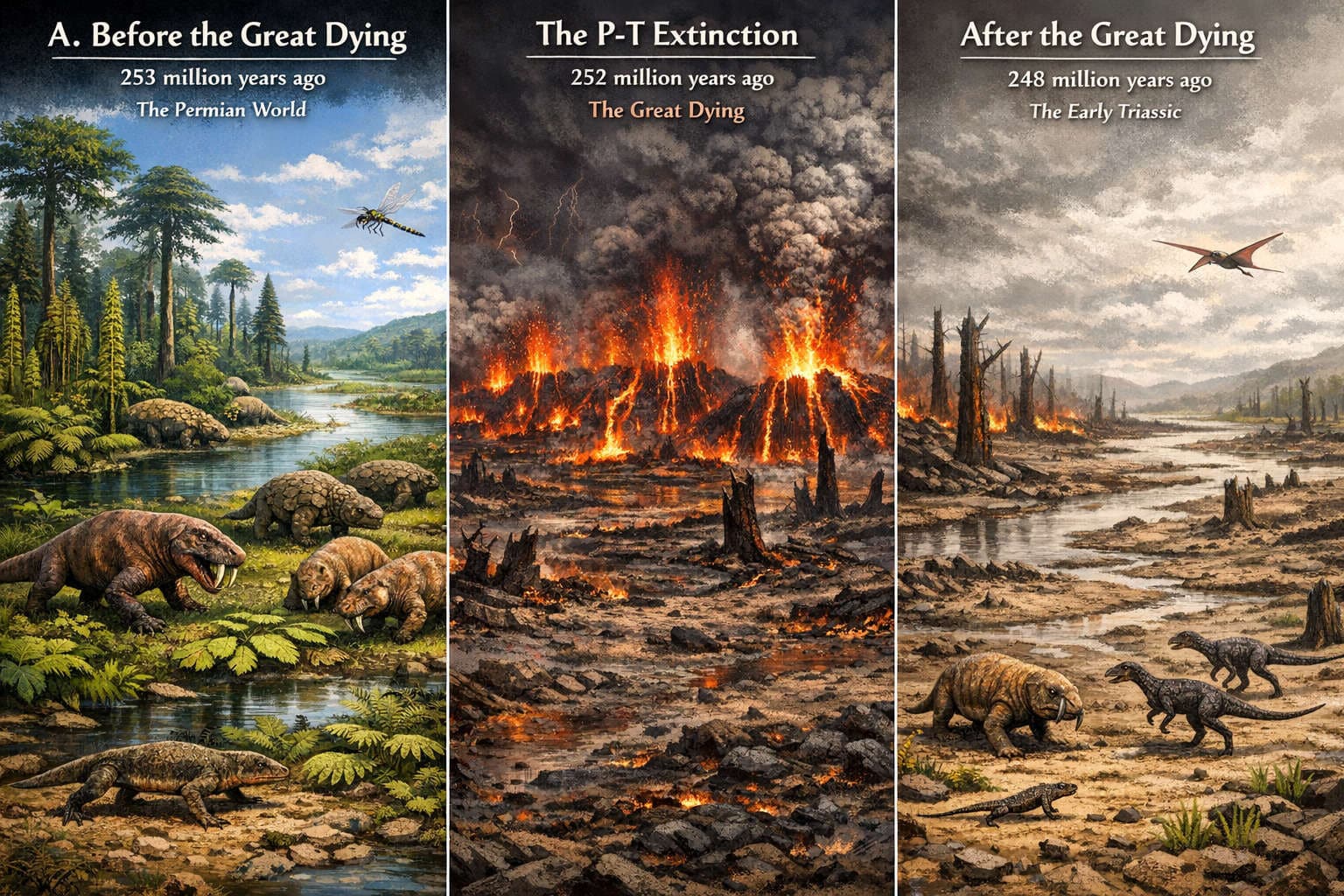
The Permian-Triassic extinction was not just the end of many species. It was a planetary reset that destroyed the old synapsid-dominated world and opened the door for the archosaur line that would later give rise to dinosaurs.
251,902,000 years ago (+/- 900 years).
Cause: Massive Volcanic Eruptions in Siberia
Mesozoic Era: Age of Dinosaurs
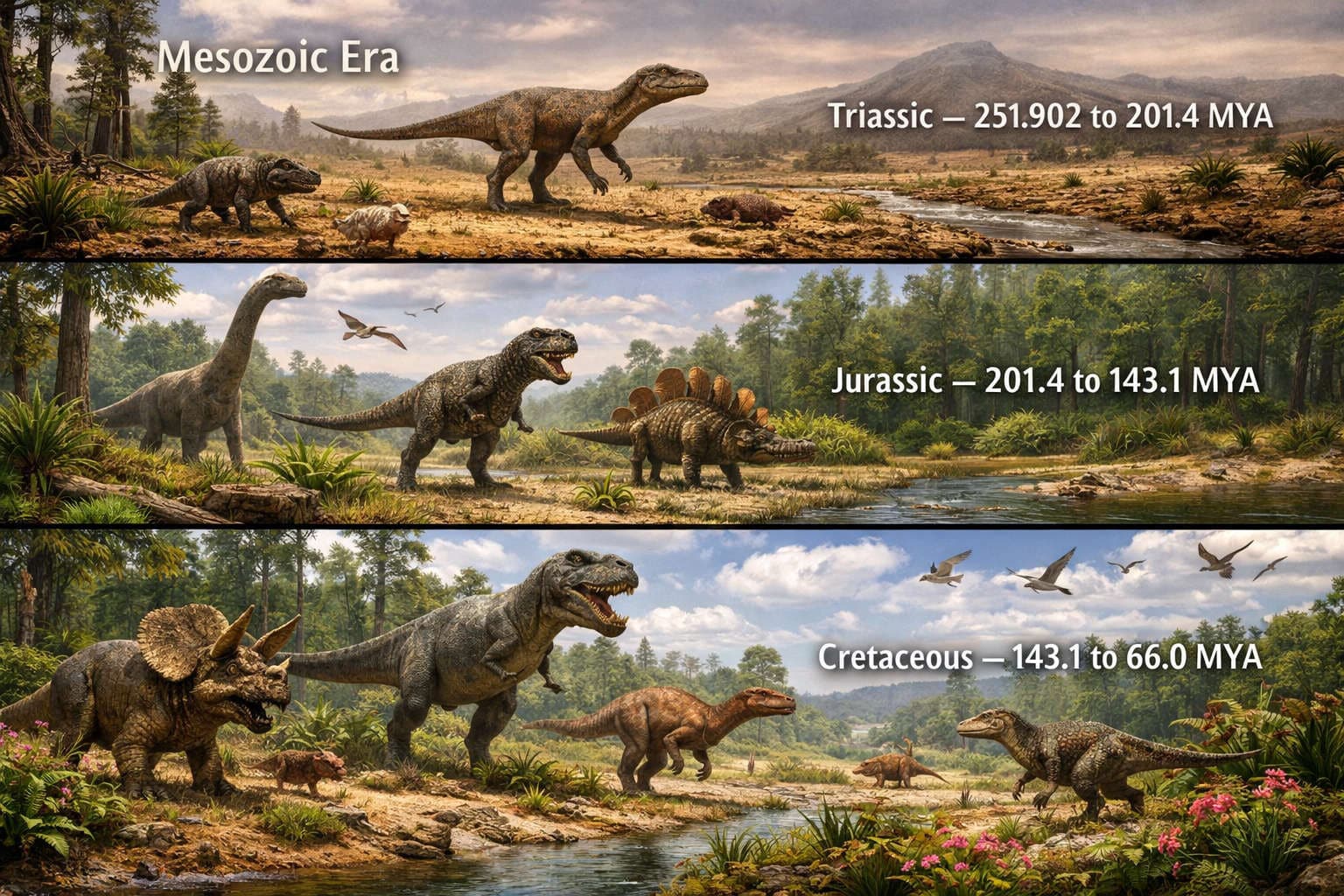
The Mesozoic era starts with the end-Permian mass extinction 252 million years ago. It ends the reign of dinosaurs with the K–Pg extinction 66 million years ago.
From 251.902 to 66.0 million years ago.
186 Million years: Dinosauria reigned from extinction to extinction.
Archosauria Diverge Within Reptiles
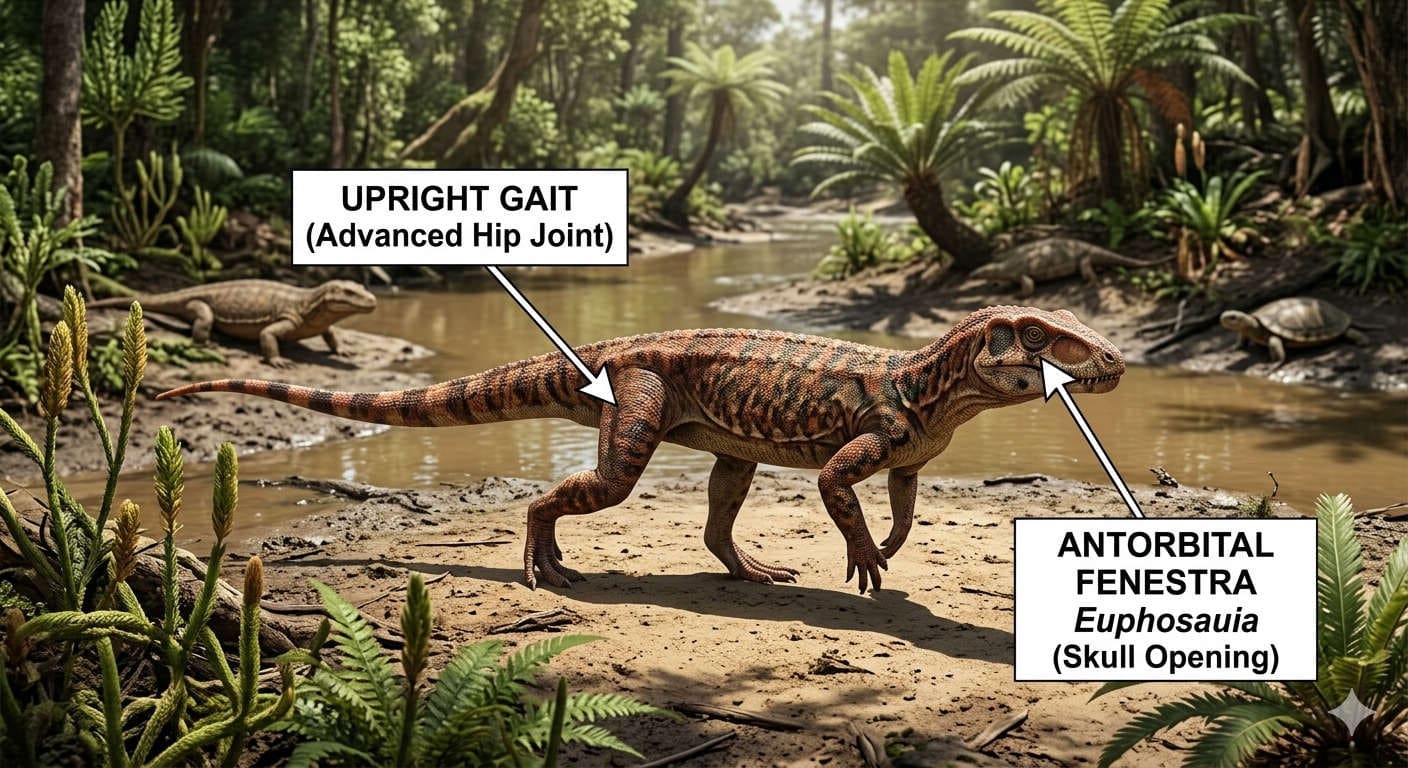
LCA of crocodiles and birds — the larger archosaur branch that later gave rise to crocodilians, pterosaurs, dinosaurs, and birds.
~250 million years ago (+/- 10 million)
LCA of crocodilians and birds (pterosaurs & dinosauria)
Bird-line Archosaurs: Asilisaurus kongwe (within Ornithodira)

Asilisaurus shows that the bird-line archosaurs were already evolving dinosaur-like bodies before true dinosaurs appeared.
245 Million Years Ago
Dinosauromorphs Emerge: Erect hind-limb posture leads to birds and dinosaurs.
Bird-line Archosaur: Nyasasaurus parringtoni

Nyasasaurus is a late bird-line archosaur from just before Dinosauria clearly emerge. It sits on the dinosaur side of Ornithodira, but its exact placement remains uncertain: some analyses place it within Dinosauria, while others place it just outside the group, near other bird-line archosaurs.
243 Million Years Ago
Strengthened hip and shoulder architecture
Dinosauria Emerge: True Dinosaurs!
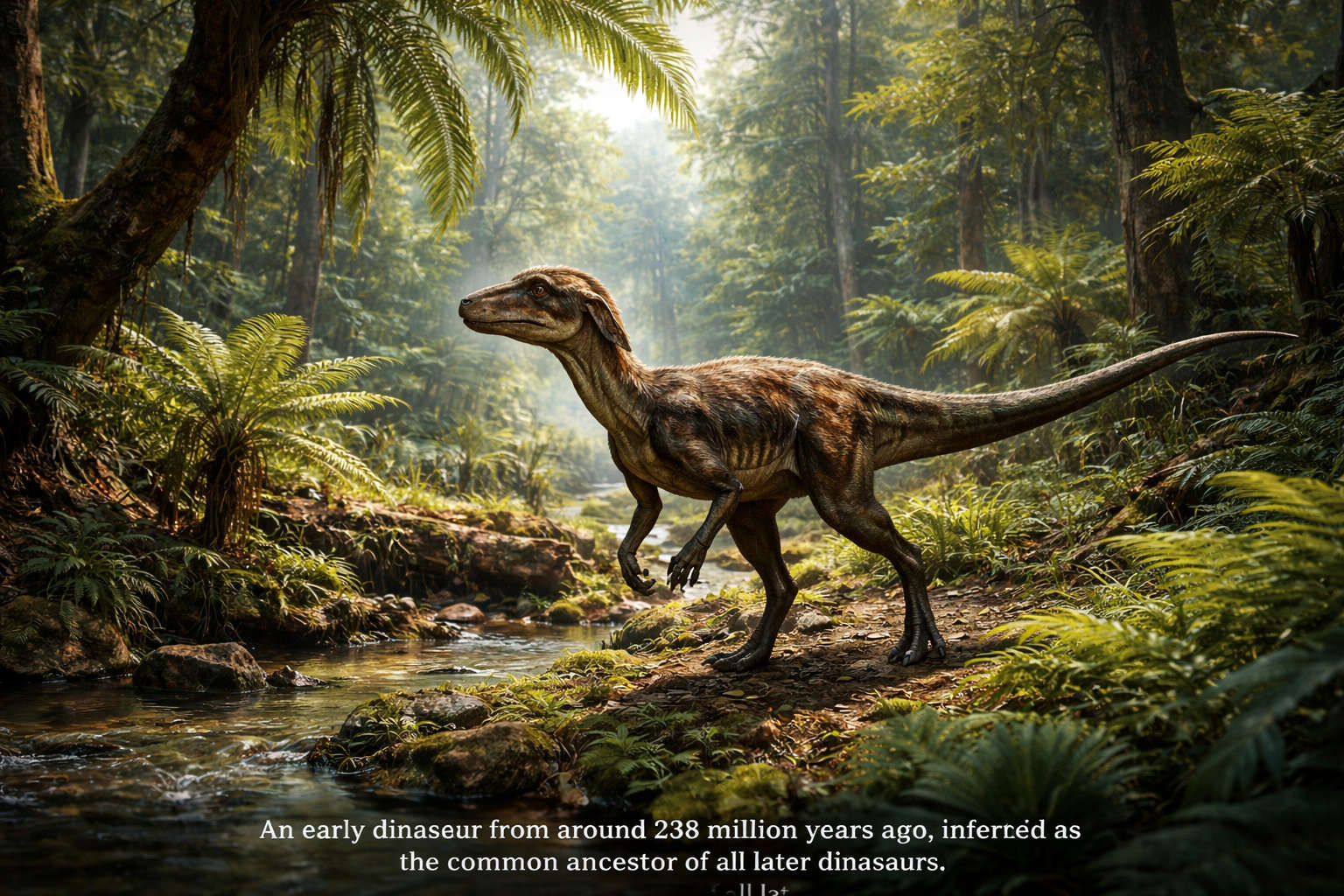
Dinosauria emerge from a single population of a species about 238 million years ago. This population will lead to all dinosaurs and birds including T.Rex, Brontosaurus, and Triceratops.
238 Million years ago (+/- 5 million)
Fully open hip socket (perforated acetabulum)
Pterosaurs Diverge From Dinosaur Ancestors (within Ornithodira)
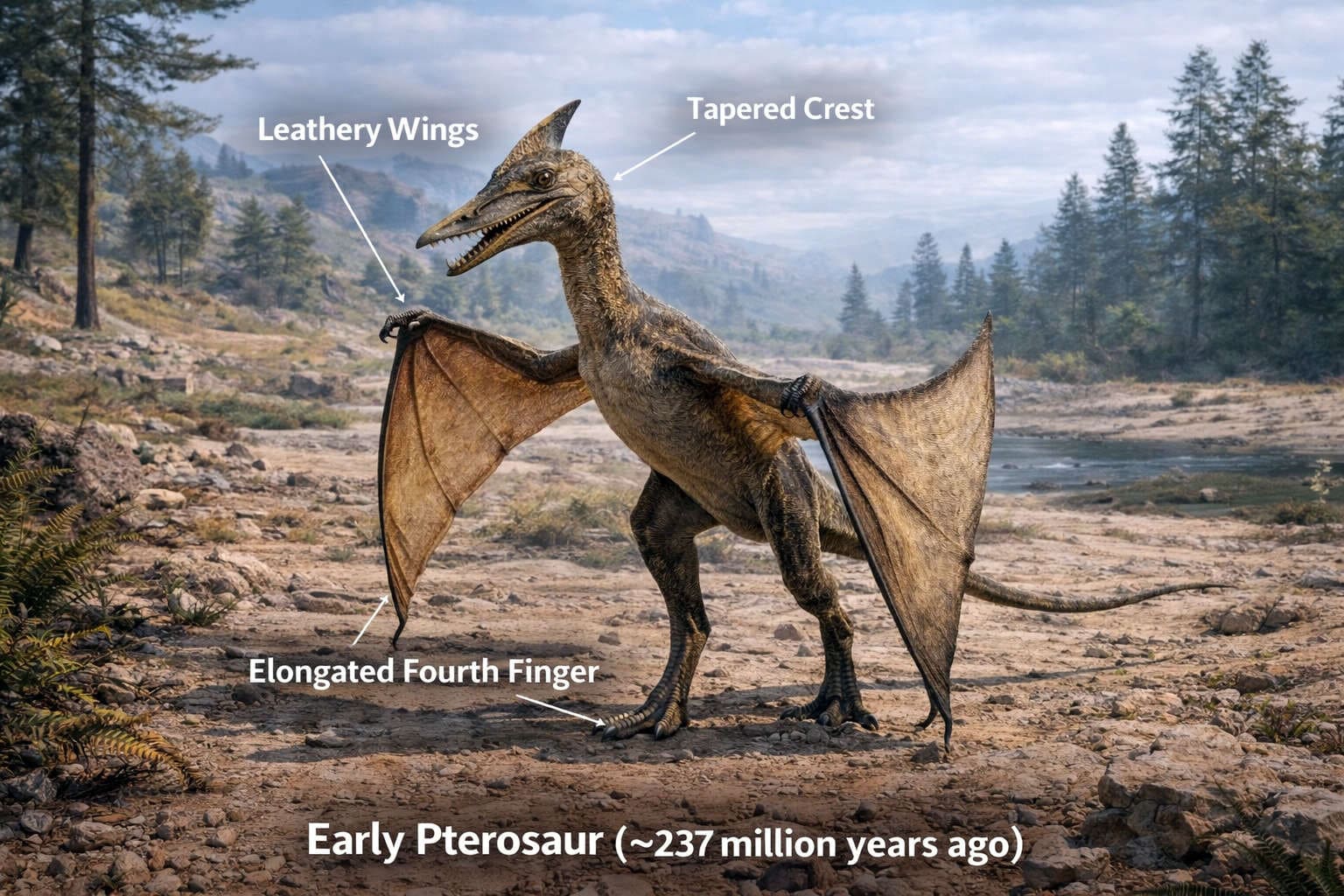
Pterosaurs were the first vertebrates to conquer the air, evolving a unique "finger-wing" anatomy that allowed them to dominate the skies for 160 million years.
~237 million years ago (+/- 2 million)
Pterosauria line: Not in dinosauria (split first).
Theropod Line Diverges Within Dinosaria (from Saurischia)
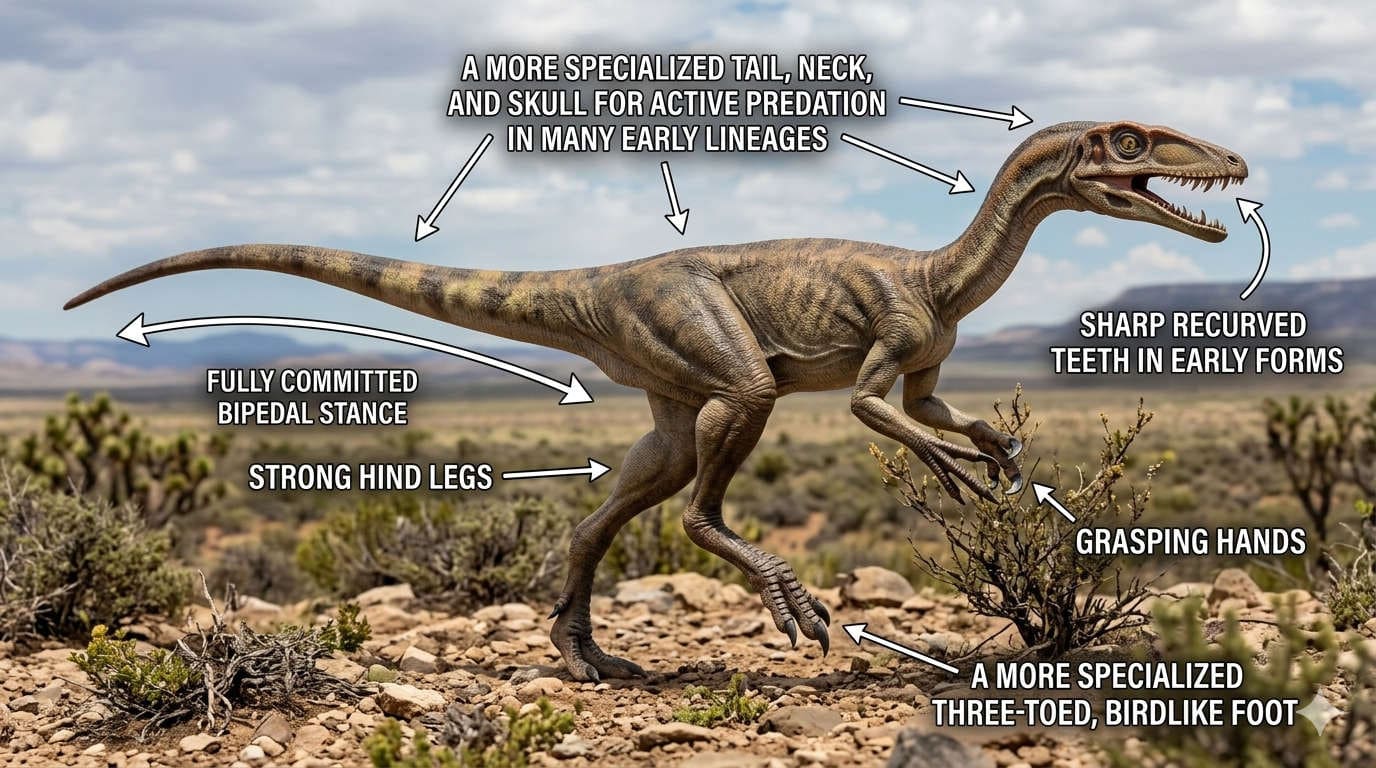
Theropods were the agile, sharp-toothed dinosaur branch that refined the classic predator body plan. They stood fully upright on two legs, balanced with long tails, used grasping hands, and carried specialized skulls and recurved teeth built for active hunting. Over time, this branch produced everything from small early predators to giant hunters—and eventually birds.
~233 million years ago (±2 million years)
Ancestor of T.Rex and bird-line.
Sauropodomorph Line Diverges Within Dinosaria (from Saurischia)
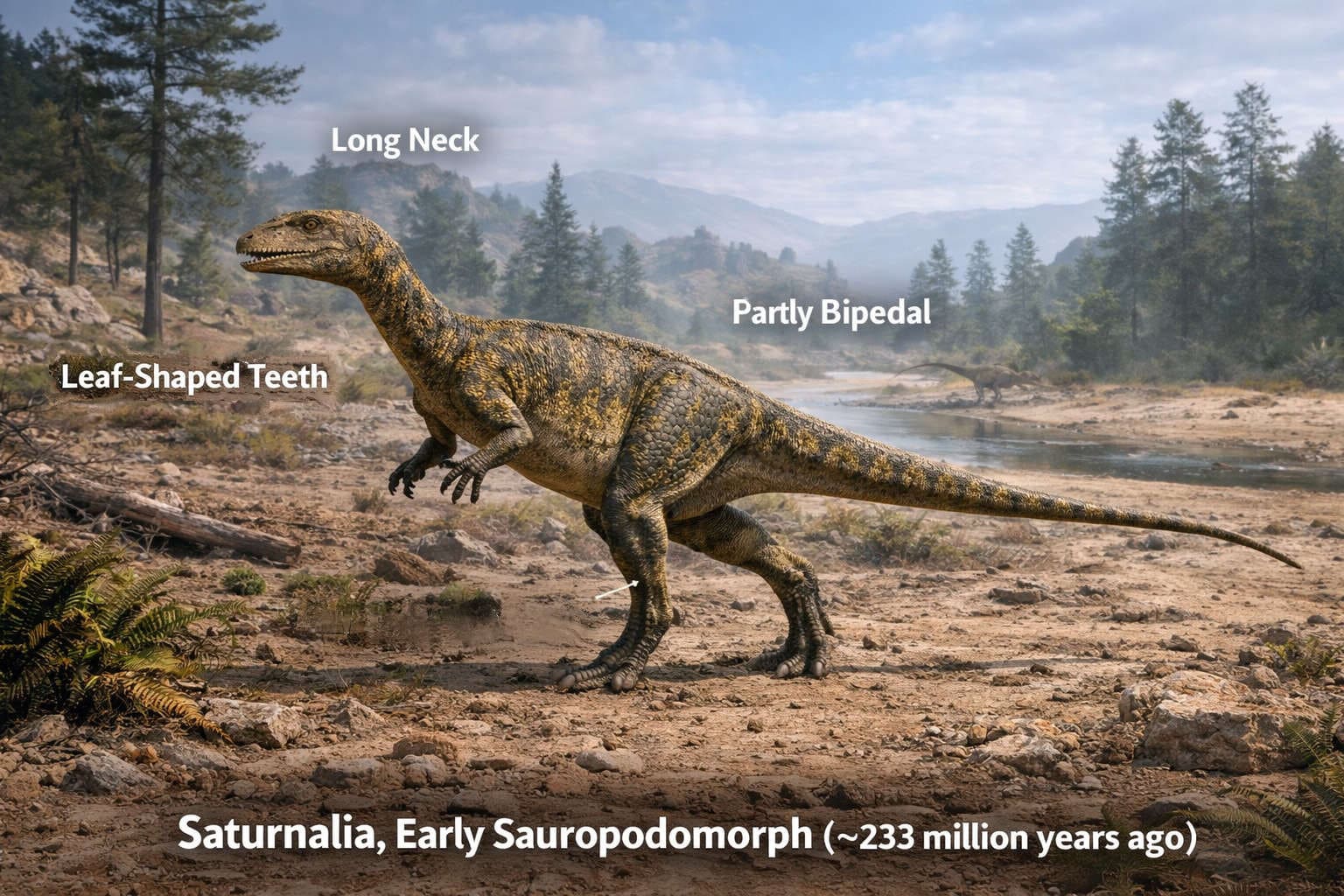
Sauropodomorphs, in their early forms, were lightly built, often partly bipedal, with long necks, small heads, leaf-shaped teeth, and grasping hands.
~232 million years ago (±2 million years)
Ancestor to the sauropods like brontosaurus.
Eoraptor lunensis.

A speculative reconstruction of Eoraptor lunensis. Eoraptor reminds us that classification is not always neat at the beginning of a lineage. Early dinosaurs can be hard to classify because of a mix of traits.
229 Million Years Ago (± 1.5 million)
Ornithischians Diverge Within Dinosauria “Bird Hipped”
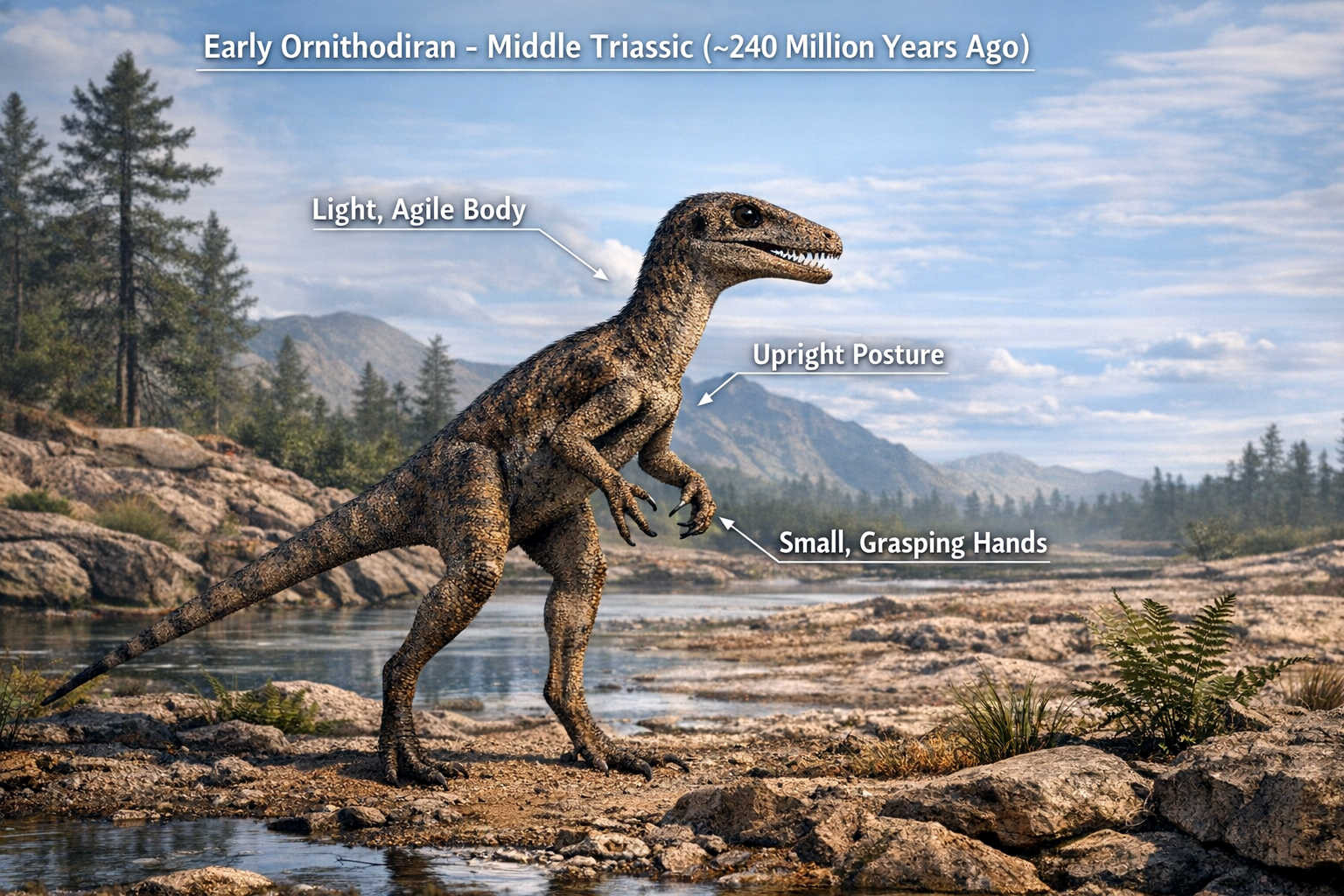
Ornithodira is the broader branch that includes dinosaurs, birds, and pterosaurs.
~229 million years ago (±4 million years)
LCA of Pterosaurs and Birds (pterosaurs & dinosauria).
Pterosaurs Emerge
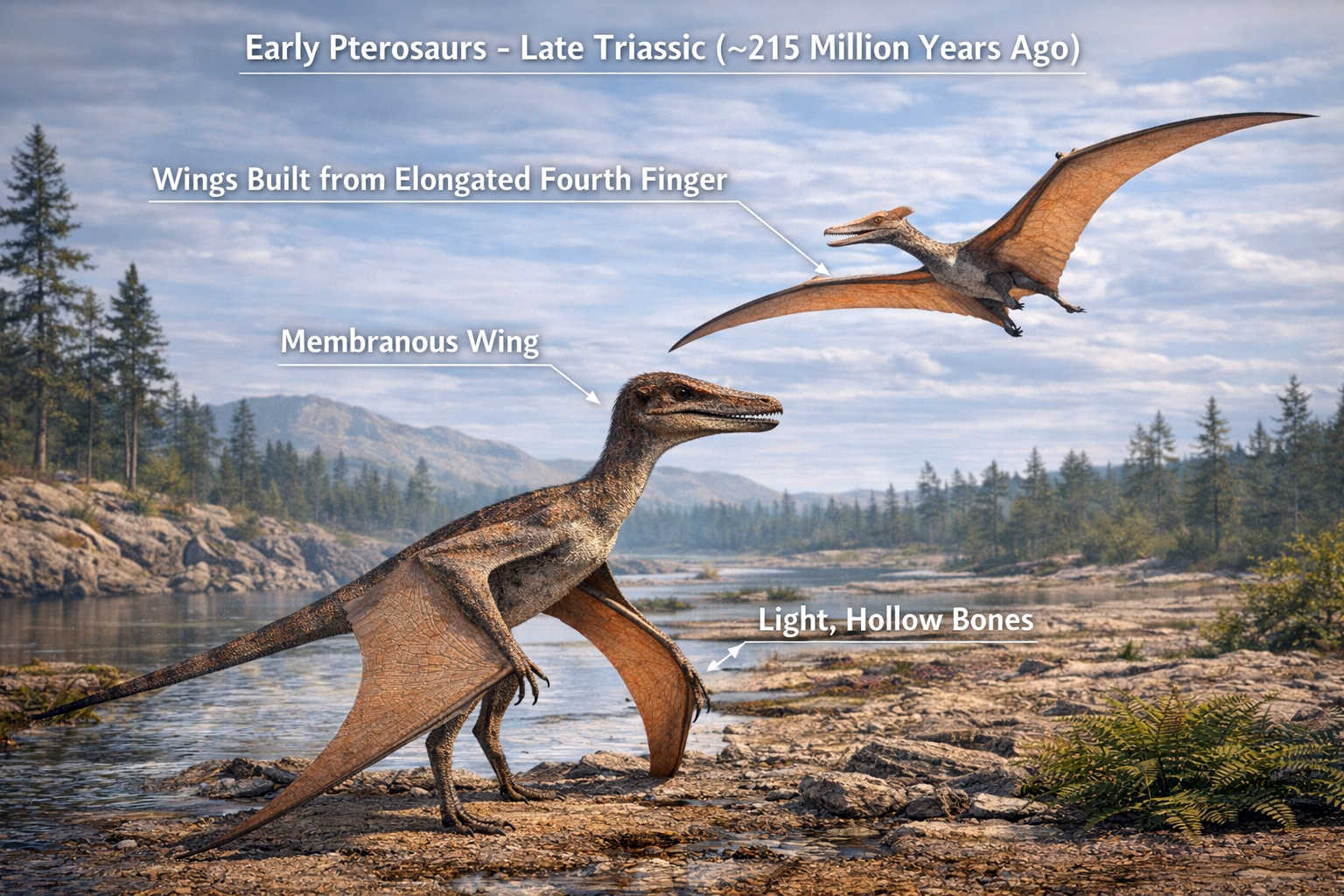
Pterosaurs were not dinosaurs but do share a common ancestor. They are a distinct group of flying reptiles that emerged in the Late Triassic.
215 Million years ago (+/- 5 million)
Triassic–Jurassic Extinction: Volcanoes Open the Age of Dinosaurs
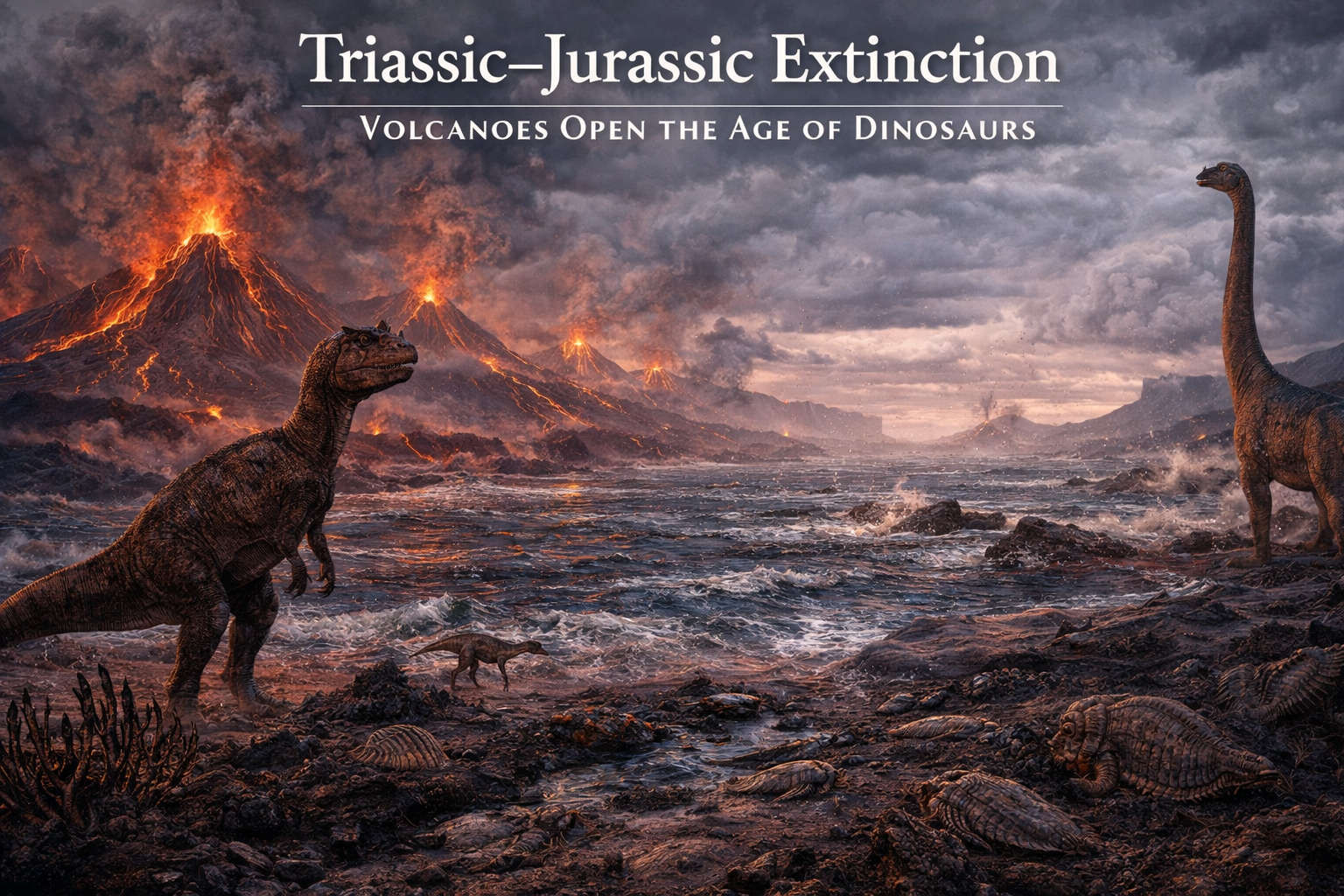
As Pangea cracked apart, massive volcanic eruptions poisoned air and oceans. This image includes early dinosaurs as foreshadowing: survivors waiting in the smoke before their Jurassic rise.
~201 Million Years Ago
Cause: Massive Volcanic Eruptions
Diplodocid LCA: The Age of Giant Necked Sauropods
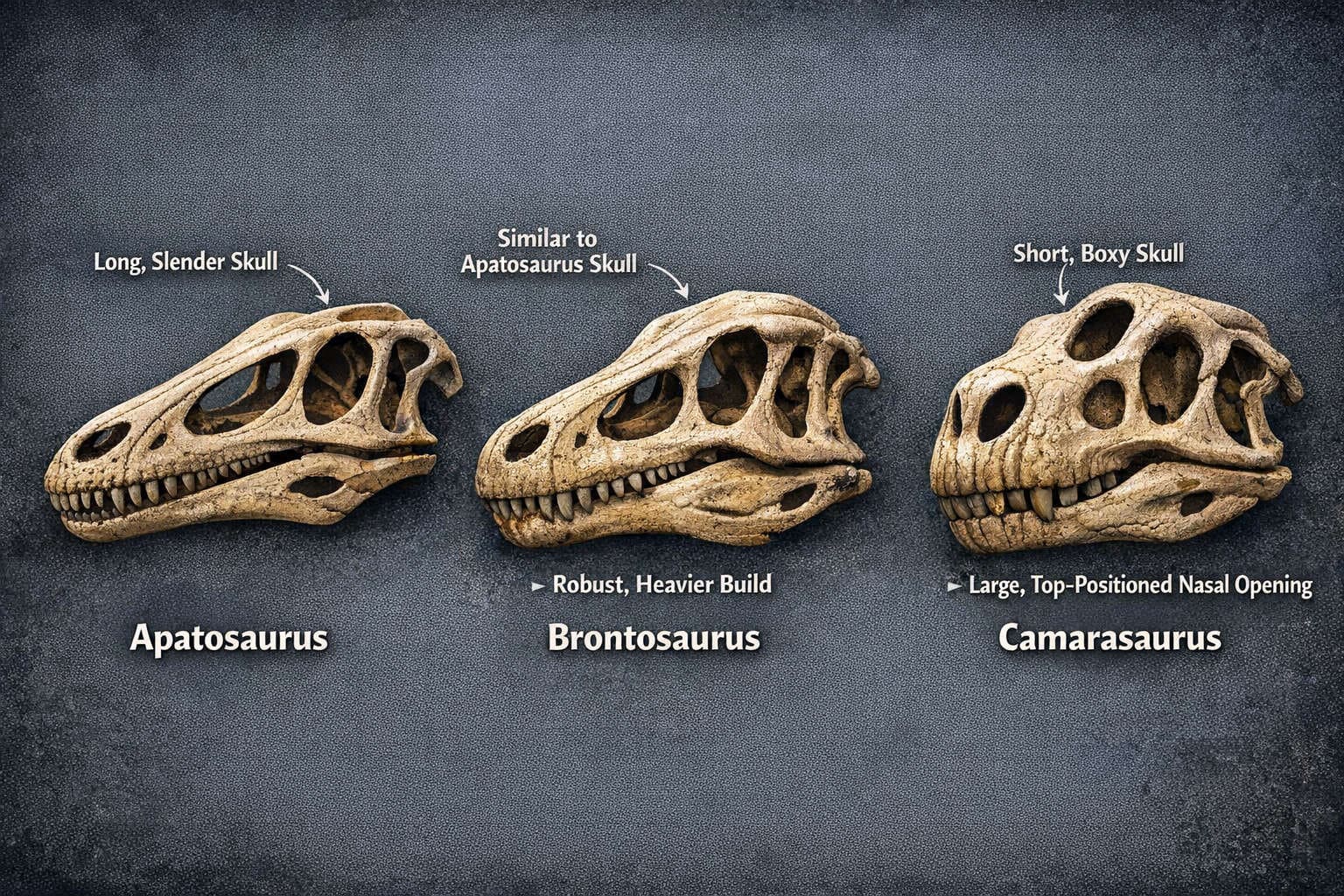
The common ancestor of the diplodocids is still unknown, but it gave rise to several distinct giant-necked forms. In Diplodocus, notice the long, narrow skull. In Apatosaurus, note the deeper, more robust skull and heavier build. Finally, in the slimmer Brontosaurus, notice the similar shape but somewhat lighter, less massive form.
~178 Million Years Ago (+/- 5 million)
Proceratosaurus (T.Rex ancestor)
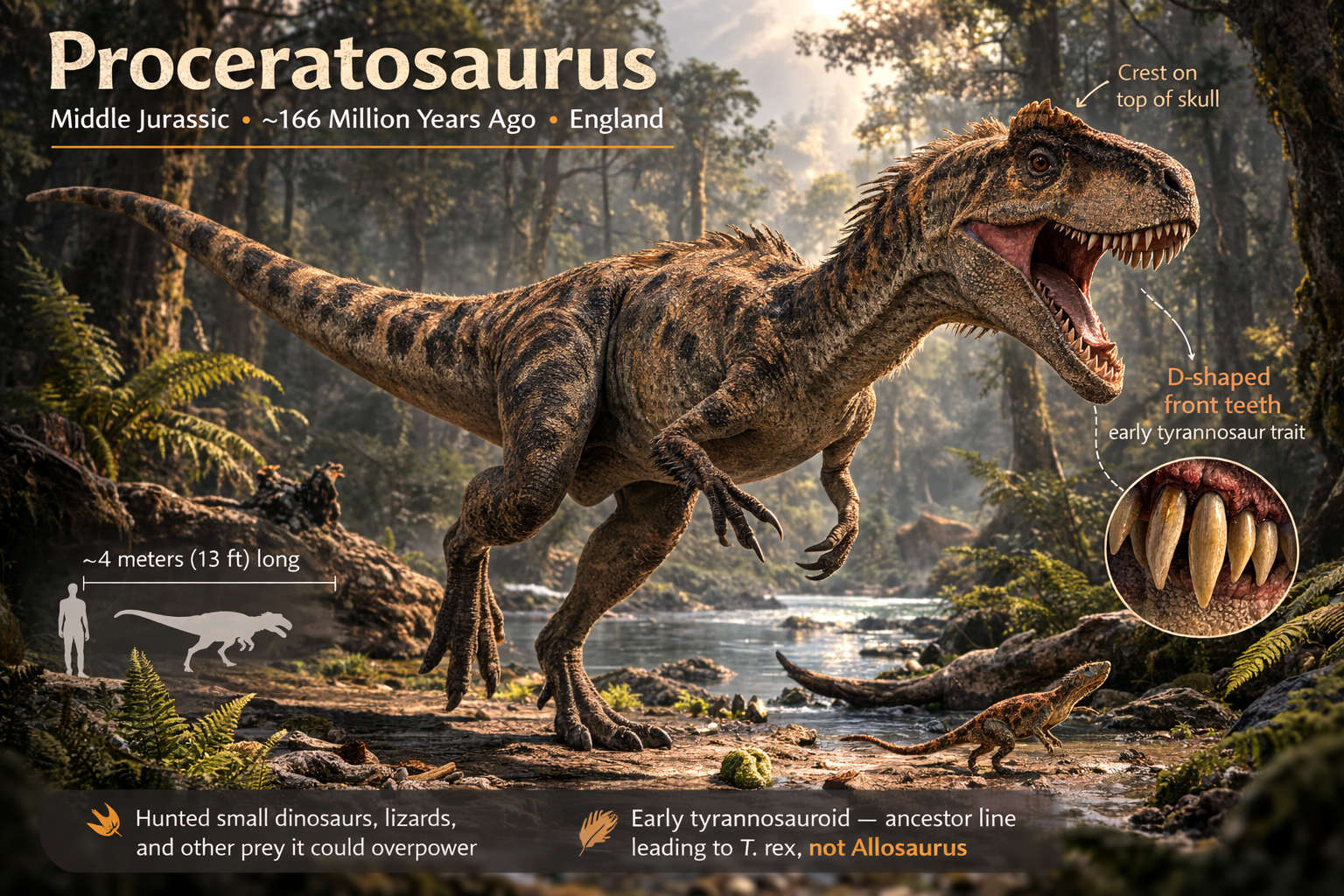
Proceratosaurus had the same general tyrannosaur-style look: a big head, long tail, strong hind legs, short forelimbs, and a built-for-biting predator shape: D-shaped front teeth and a crest on top of the skull.
Lived from 169 to 164 million years ago.
Not a bird ancestor, but part of the theropod mix.
Bashanosaurus primitivus
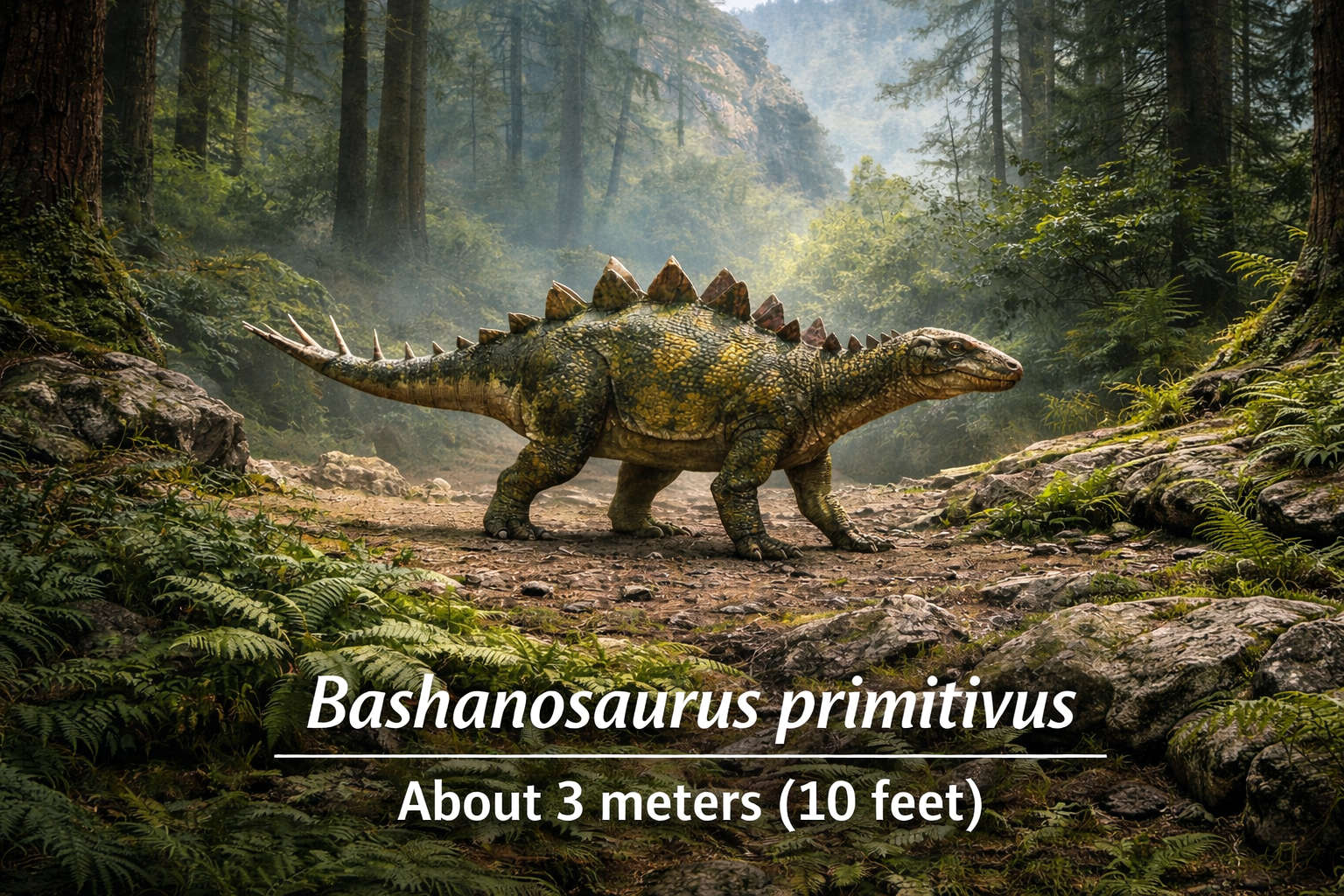
Bashanosaurus primitivus is one of the earliest known stegosaurs and a strong candidate for representing an early form close to the ancestry of later plated dinosaurs like Stegosaurus.
~168 million years ago.
Stegosaurus ancestor
Diplodocus
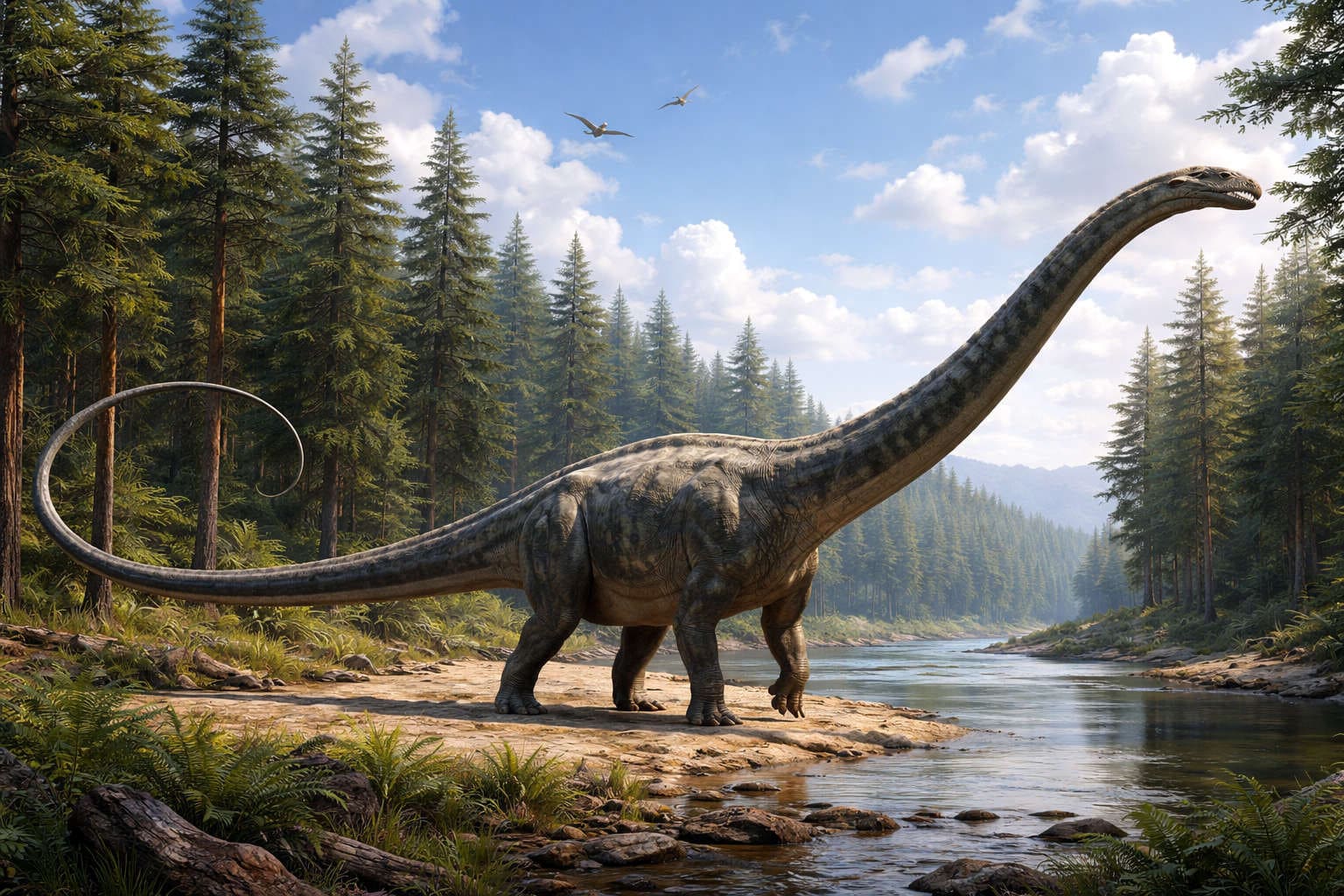
Diplodocus was the longer, slimmer, more stretched-out sauropod, famous for its especially long neck and whiplike tail. It is one of the longest land animals and generally more slender in build.
Lived ~161 to 146 million years ago.
28–33.5 m long: longer, whiplike, slimmer.
Brontosaurus
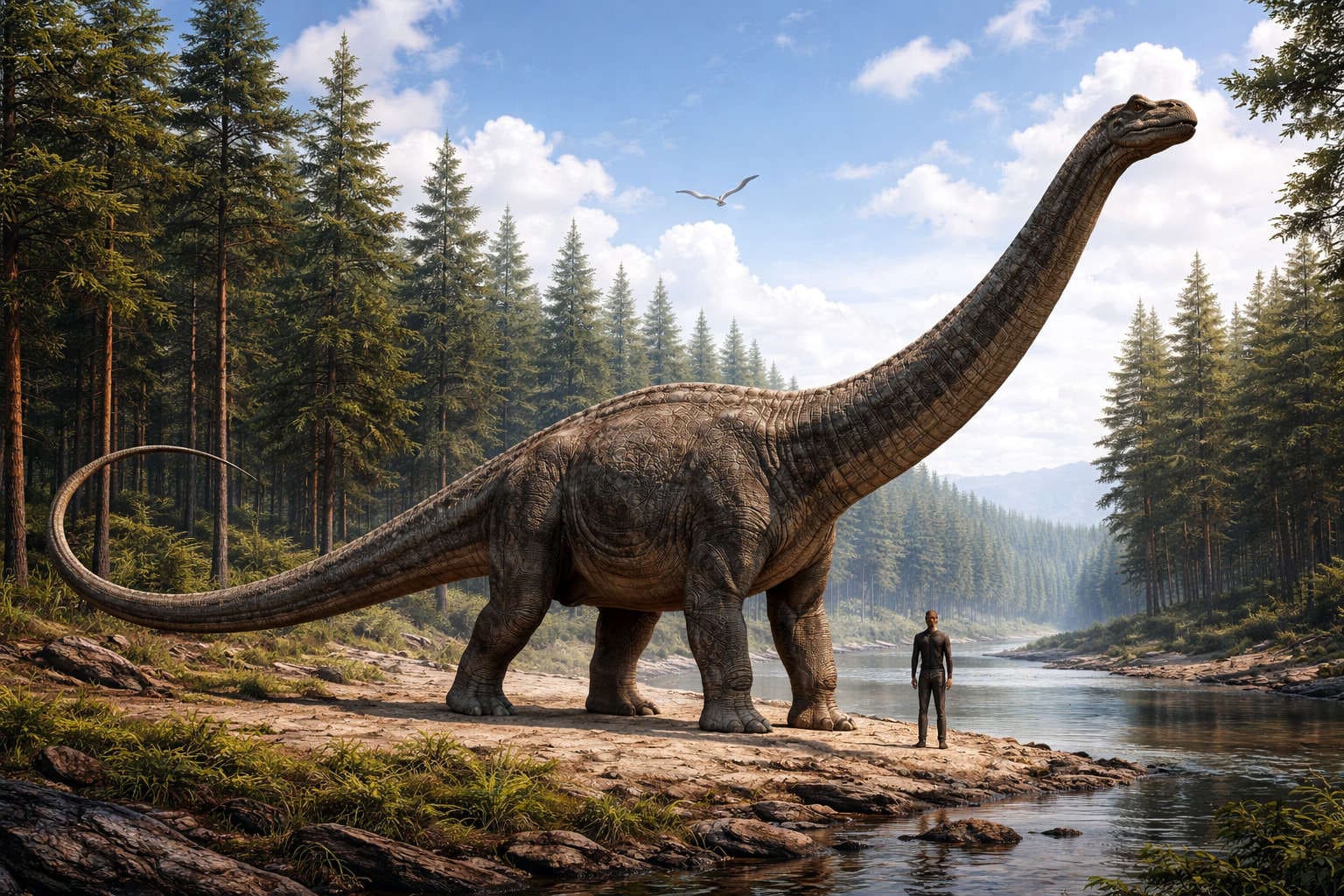
Brontosaurus, in the revived interpretation, looks broadly similar to Apatosaurus but is argued to be less massive and less robust. A bit lighter-built overall.
Lived ~156 to 145 million years ago.
20 to 22 meters (65 to 72 feet).
Apatosaurus
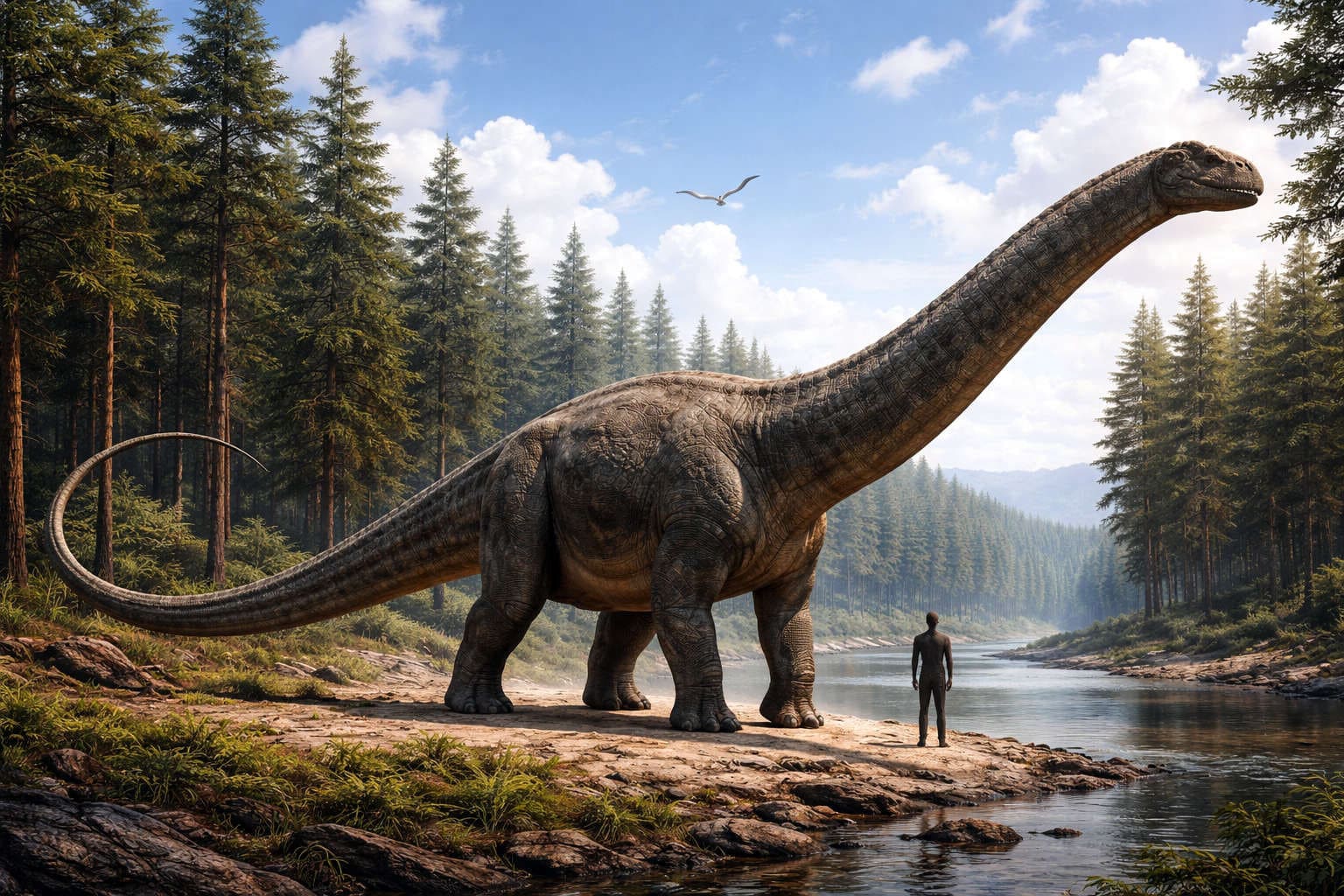
Apatosaurus was the heavier, more robust sauropod — more muscular-looking, with a thicker, lower-set neck and a bulkier frame.
Lived ~156 to 151 million years ago.
21 to 23 meters (69 to 75 feet): Heavier, more muscular.
Avialae: Bird Line Diverges
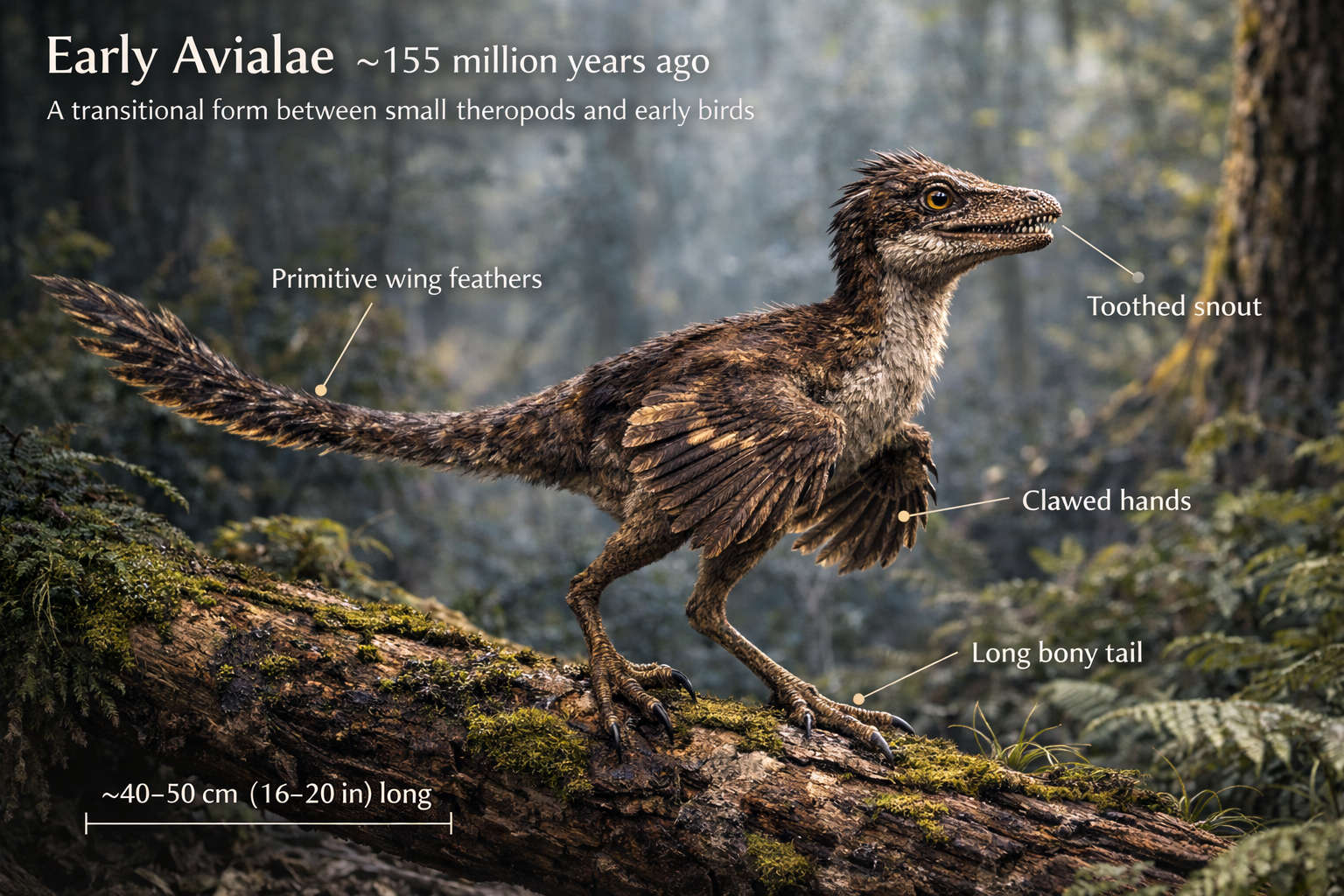
Around 155 million years ago, an early avialan was probably already broadly Archaeopteryx-like, yet still unmistakably dinosaurian: small feathered theropod with teeth, claws, and a long bony tail.
155 Million years ago (+/- 5 million)
Stegosaurus
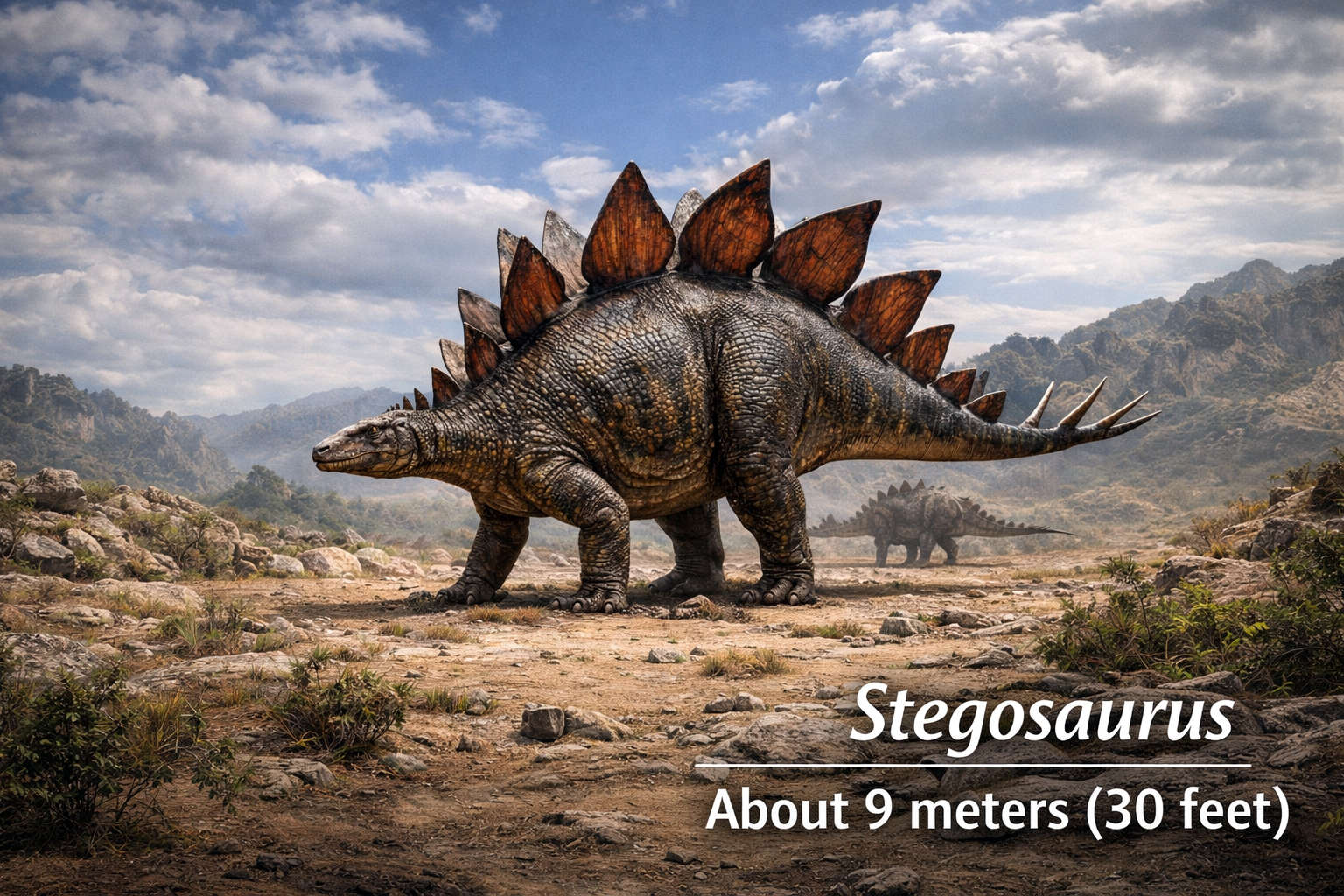
Stegosaurus is the classic plated dinosaur most people picture: large back plates, a small head, and a spiked tail used for defense. It lived late in the Jurassic
Lived 152 to 145 million years ago.
First True Bird: Archaeopteryx
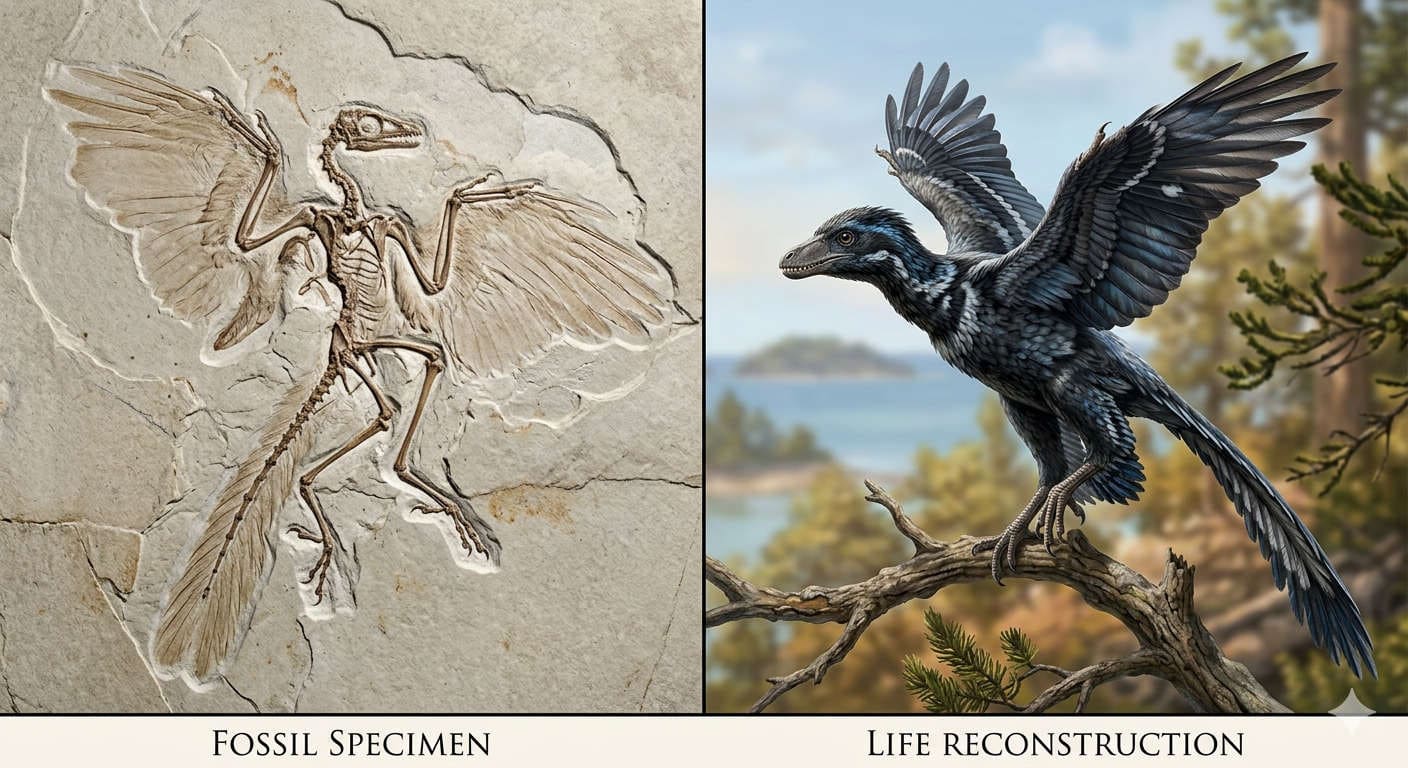
Archaeopteryx reminds us that major transformations often happen gradually, with old traits and new traits living side by side for a long time. The story of birds began with their dinosaur past.
149 Million years ago (+/- 1 million)
Enantiornithes Birds Emerge (Now Extinct)
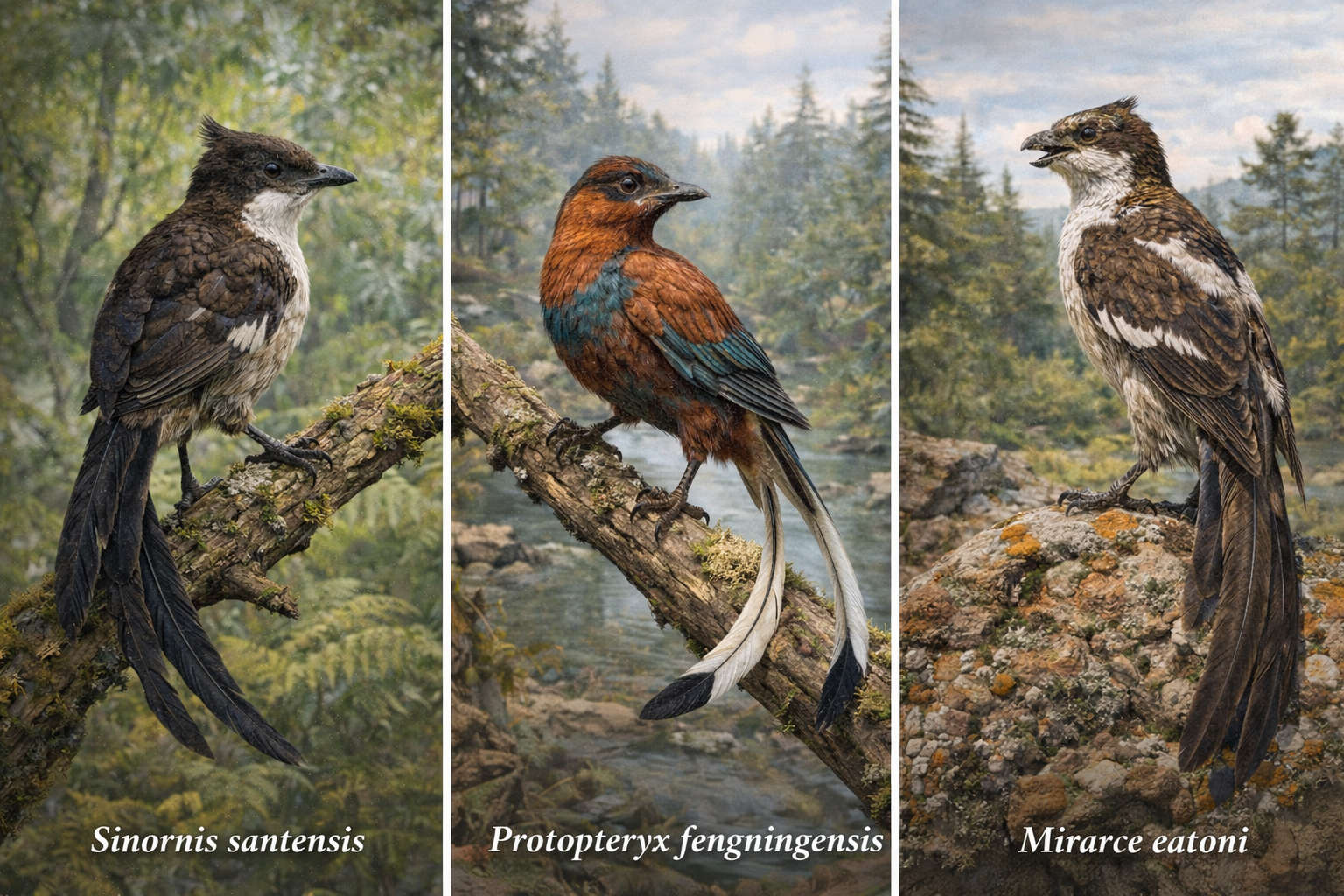
Enantiornithes were one of the most successful early bird branches of the Cretaceous, but unlike Confuciusornithiformes, they generally kept their teeth and often looked a bit more like small, sharp-faced bird-dinosaurs than beaked proto-birds.
~131 Million years ago.
Extinct bird line (clawed wings, teeth)
Confuciusornithiformes Birds Emerge (Now Extinct)

Weird carryovers and side experiments: clawed wings, elaborate ribbon-like tail feathers, and a mix of advanced beak features with a still primitive dinosaurian body.
~131 Million years ago.
Extinct bird line (clawed wings, elaborate ribbon-like tail feathers)
The Last Stegosaurus: Wuerhosaurus
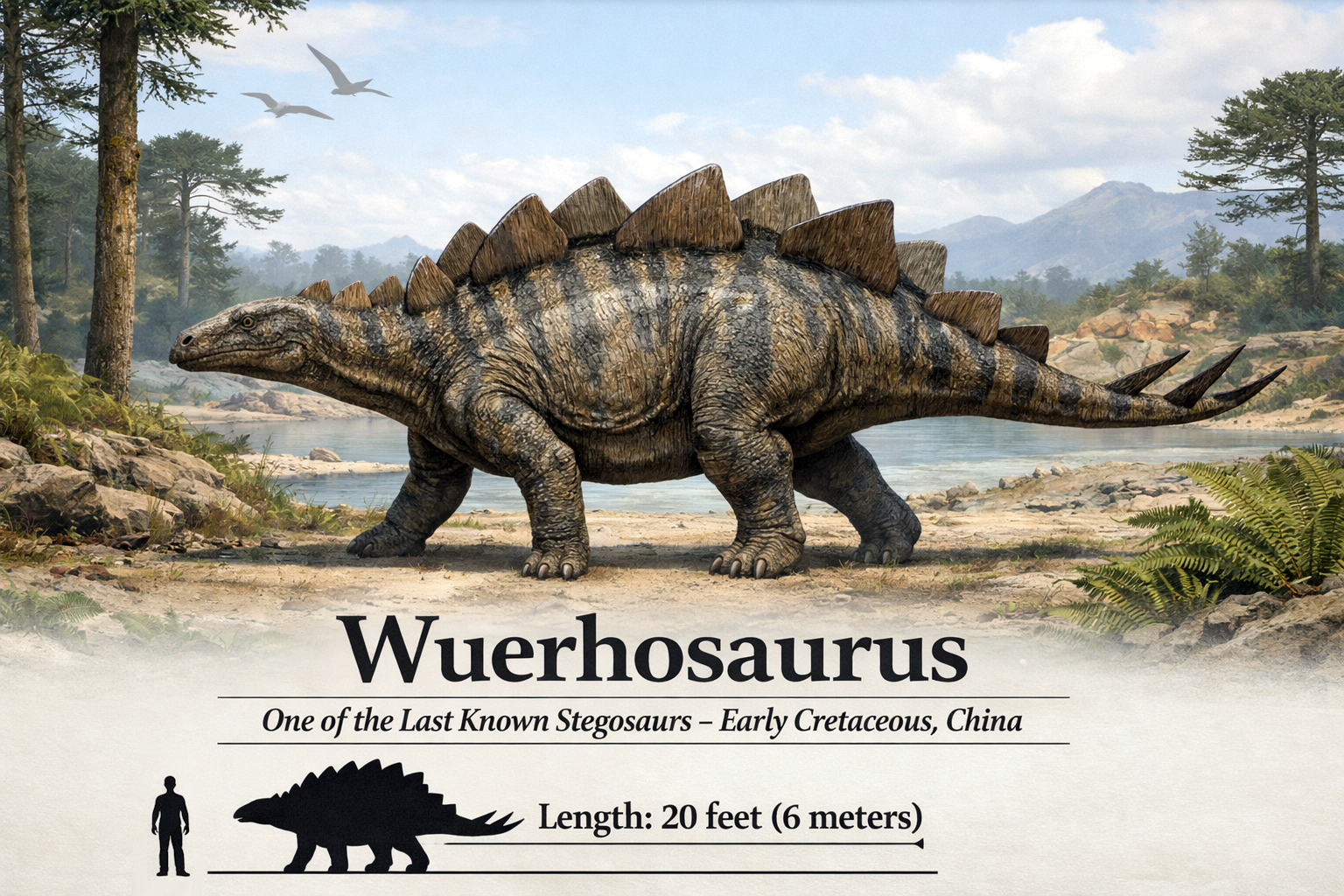
Wuerhosaurus was one of the last known stegosaurs, carrying the classic plated-and-spiked body plan into the Early Cretaceous of what is now China.
110 Million years ago (+/- 10 million)
Argentinosaurus
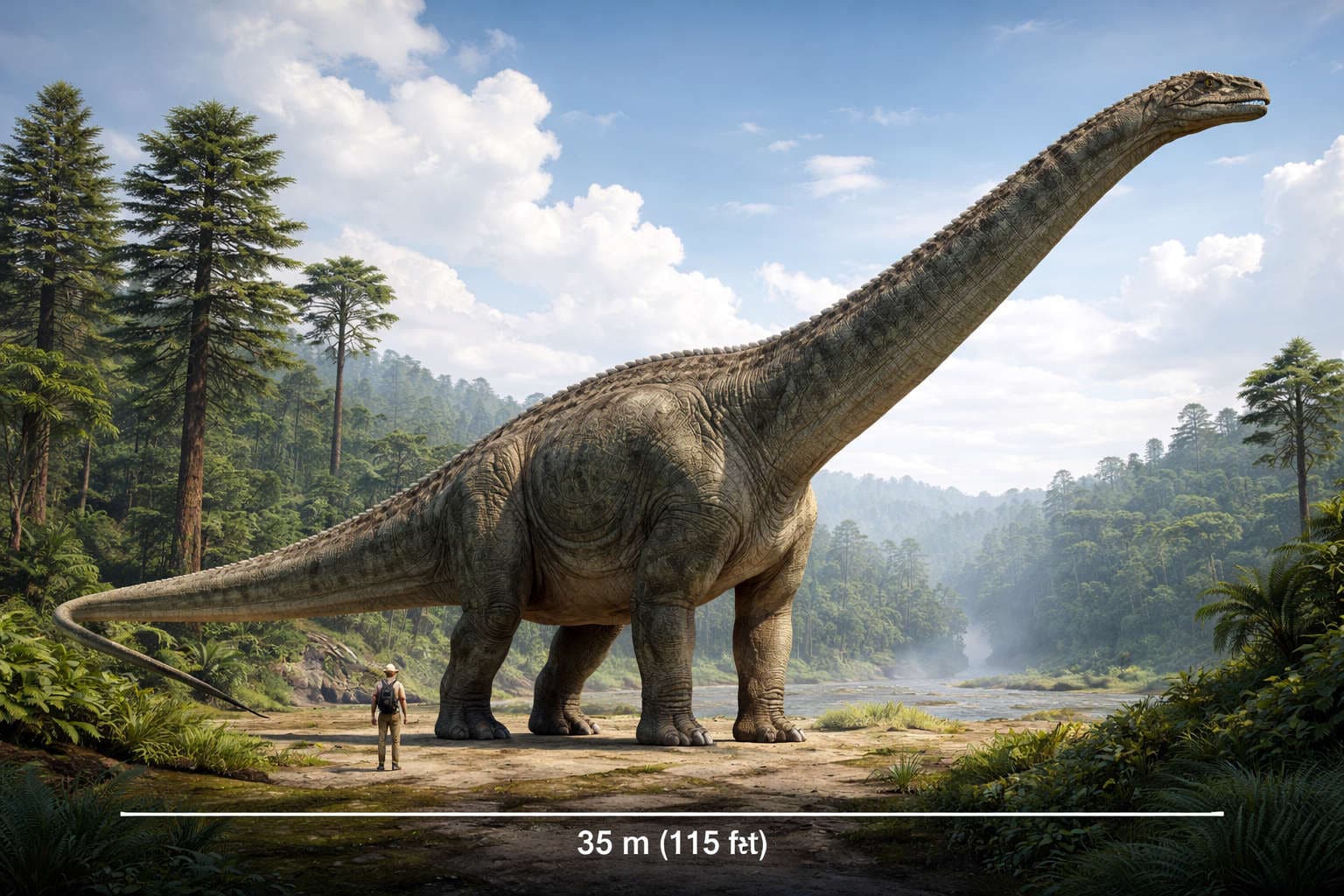
Argentinosaurus shows how far the sauropod body plan could go. By the Late Cretaceous, some titanosaurs had become the largest land animals known, turning the long-necked dinosaur design into one of evolution’s most extreme achievements.
Lived from 97 to 93.5 million years ago.
Hesperornithiformes Birds Emerge (Now Extinct)
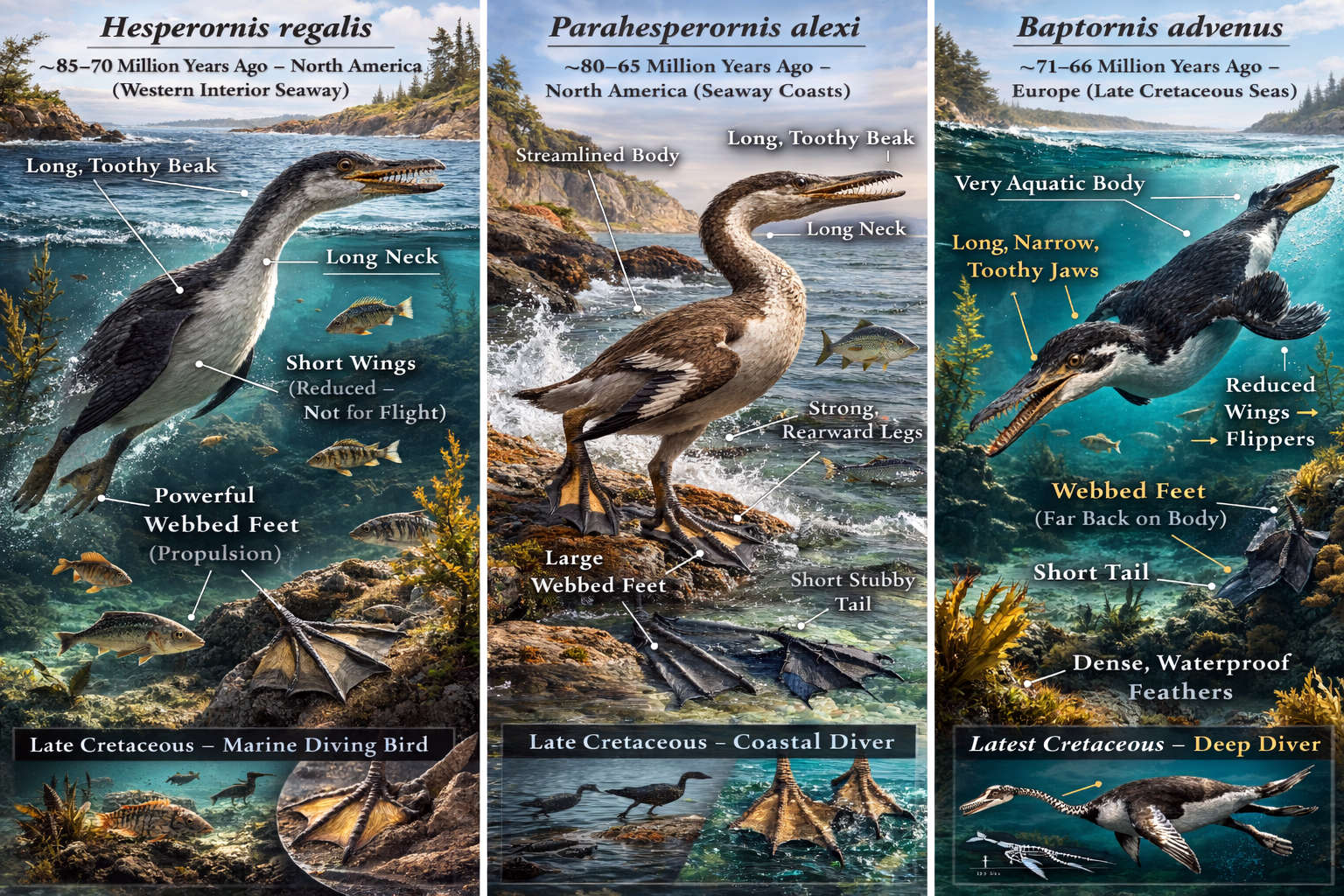
Hesperornithiformes were extinct Cretaceous diving birds that lived outside modern bird crown-group Neornithes. They show that highly specialized aquatic birds had already evolved by about 90 million years ago.
~90 Million years ago.
Neornithes (Crown Birds) emerge
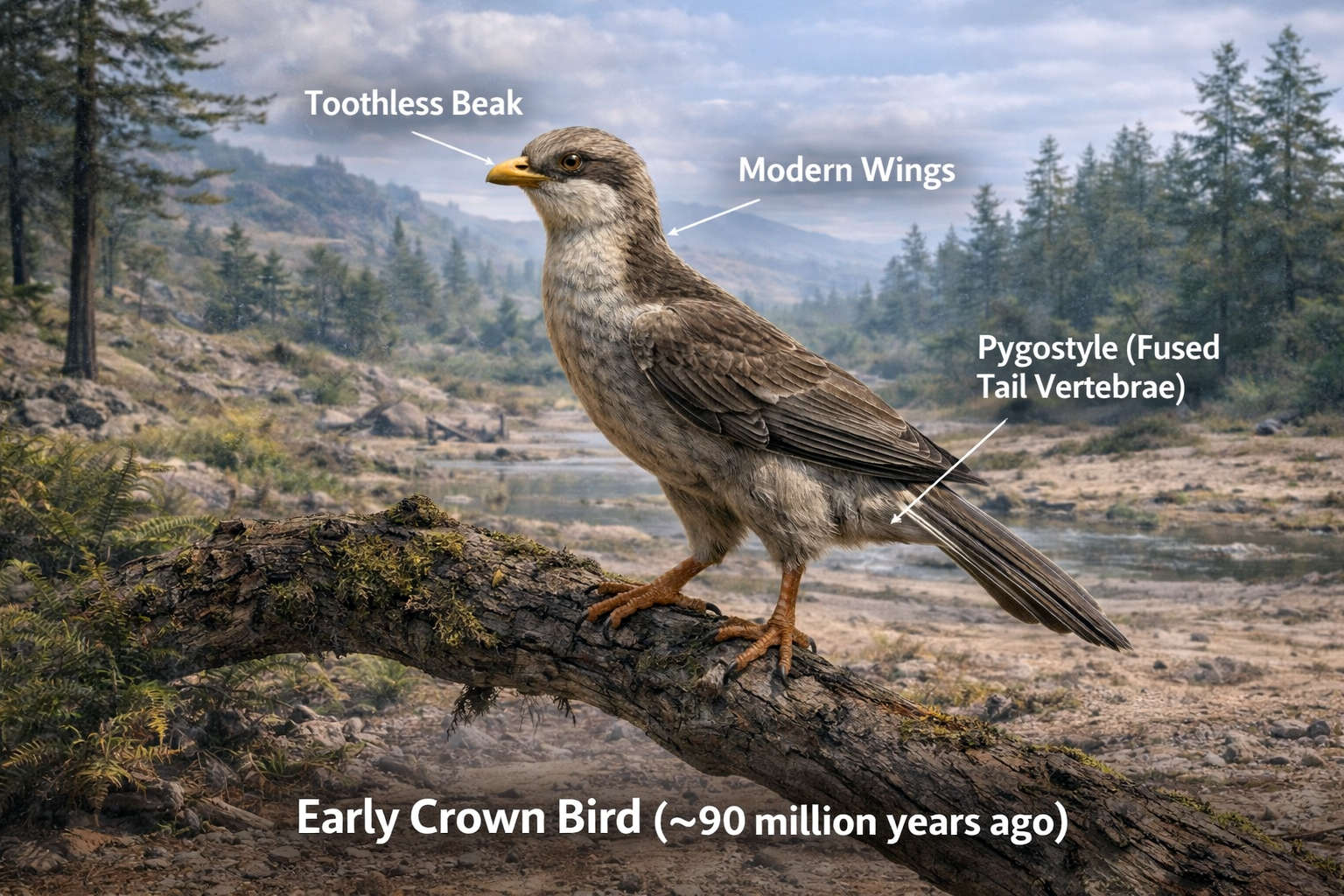
Three branches of modern birds evolved from within neornithes: Struthio camelus (the ostrich), Gallus gallus (chickens), and Passer domesticus (the house sparrow is a good one).
~90 Million years ago (+/- 10 million).
Zuniceratops
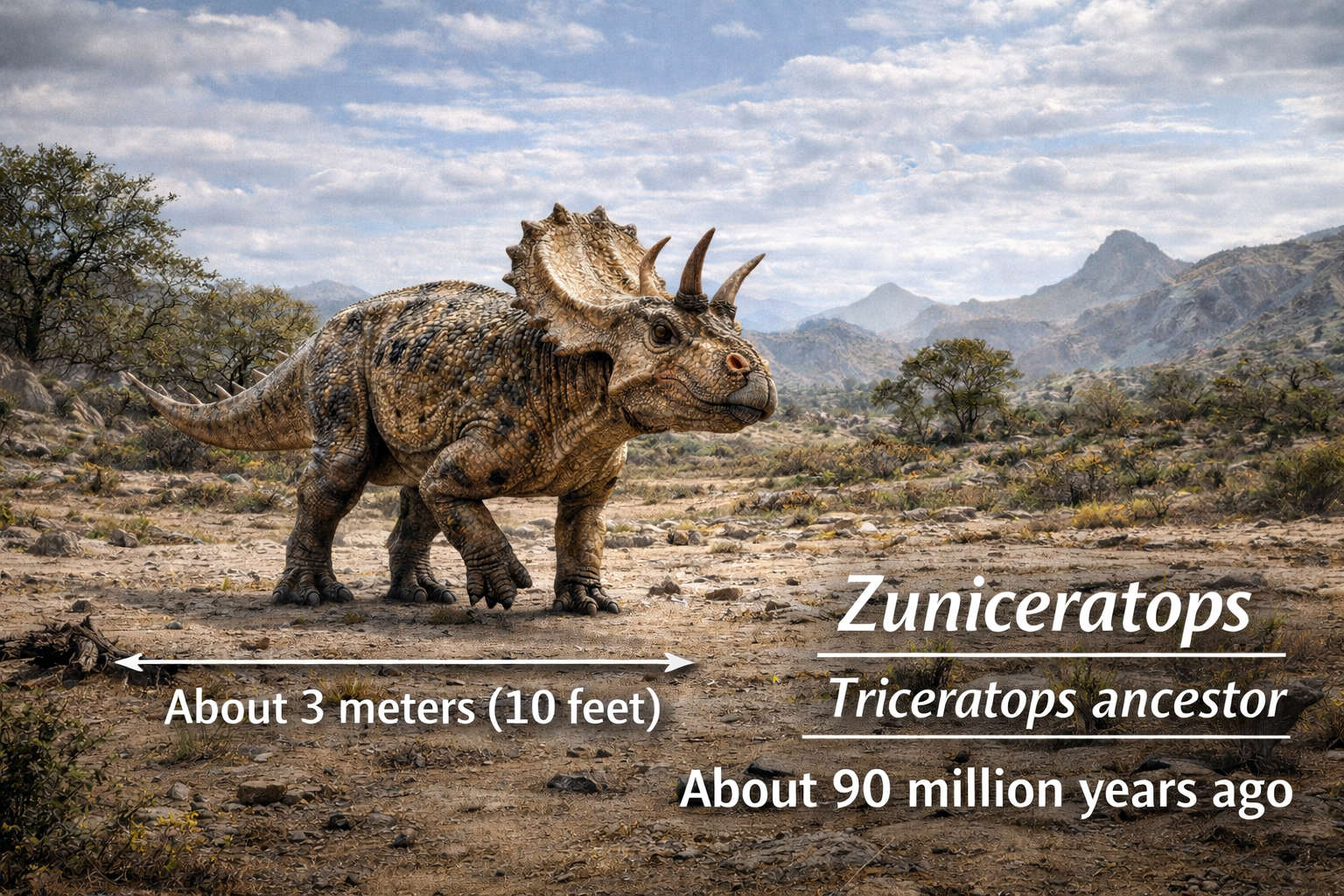
A smaller, earlier horned dinosaur that helps show the transition toward the larger, more elaborate ceratopsids.
Lived from about 90 to 89 million years ago.
Triceratops ancestor
Pteranodons Emerge
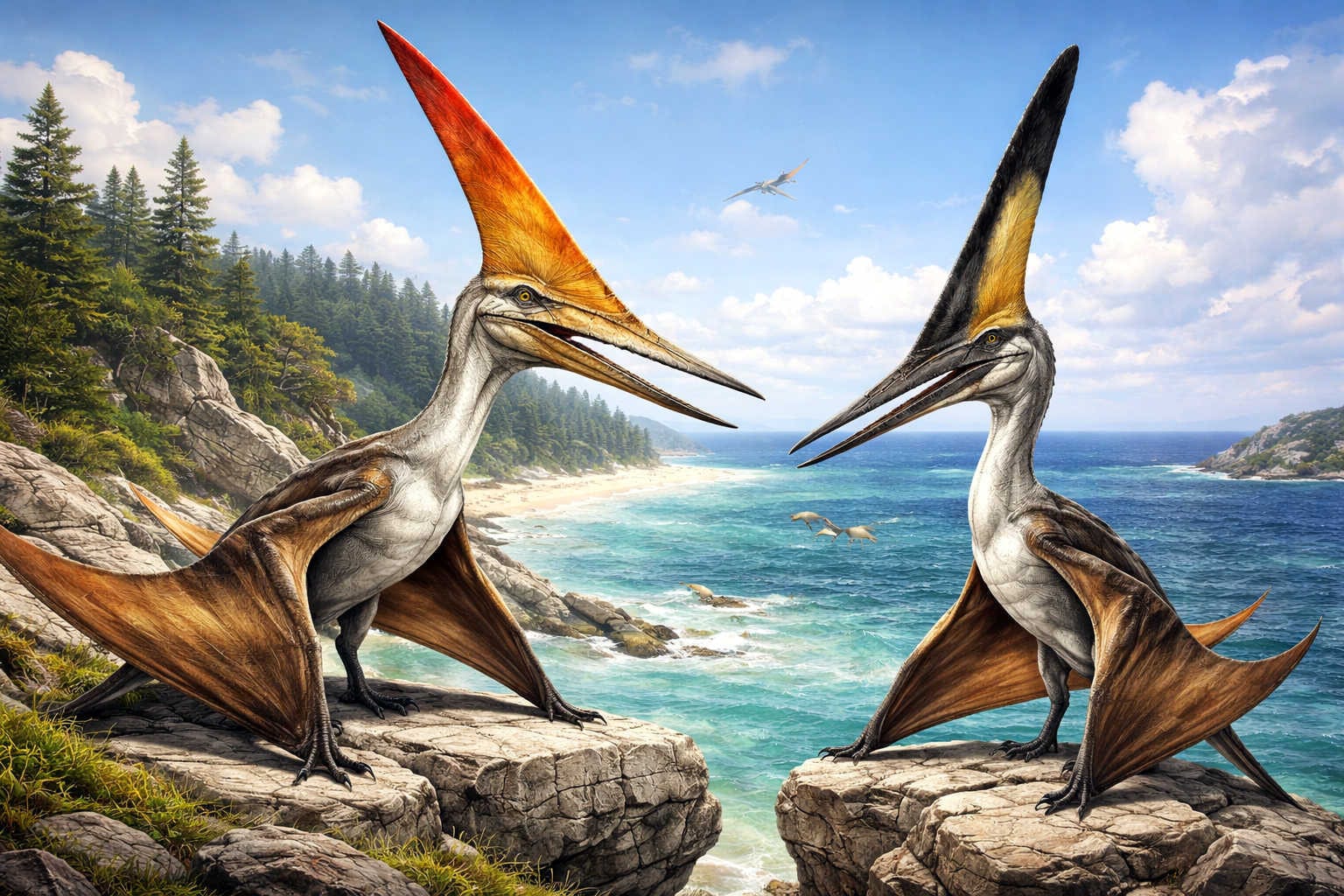
Pteranodon was one of the great soaring pterosaurs of the Late Cretaceous, but it was only one branch in a much larger pterosaur story.
~88 million years ago (+/- 4 million)
Palaeognathae Birds Emerge
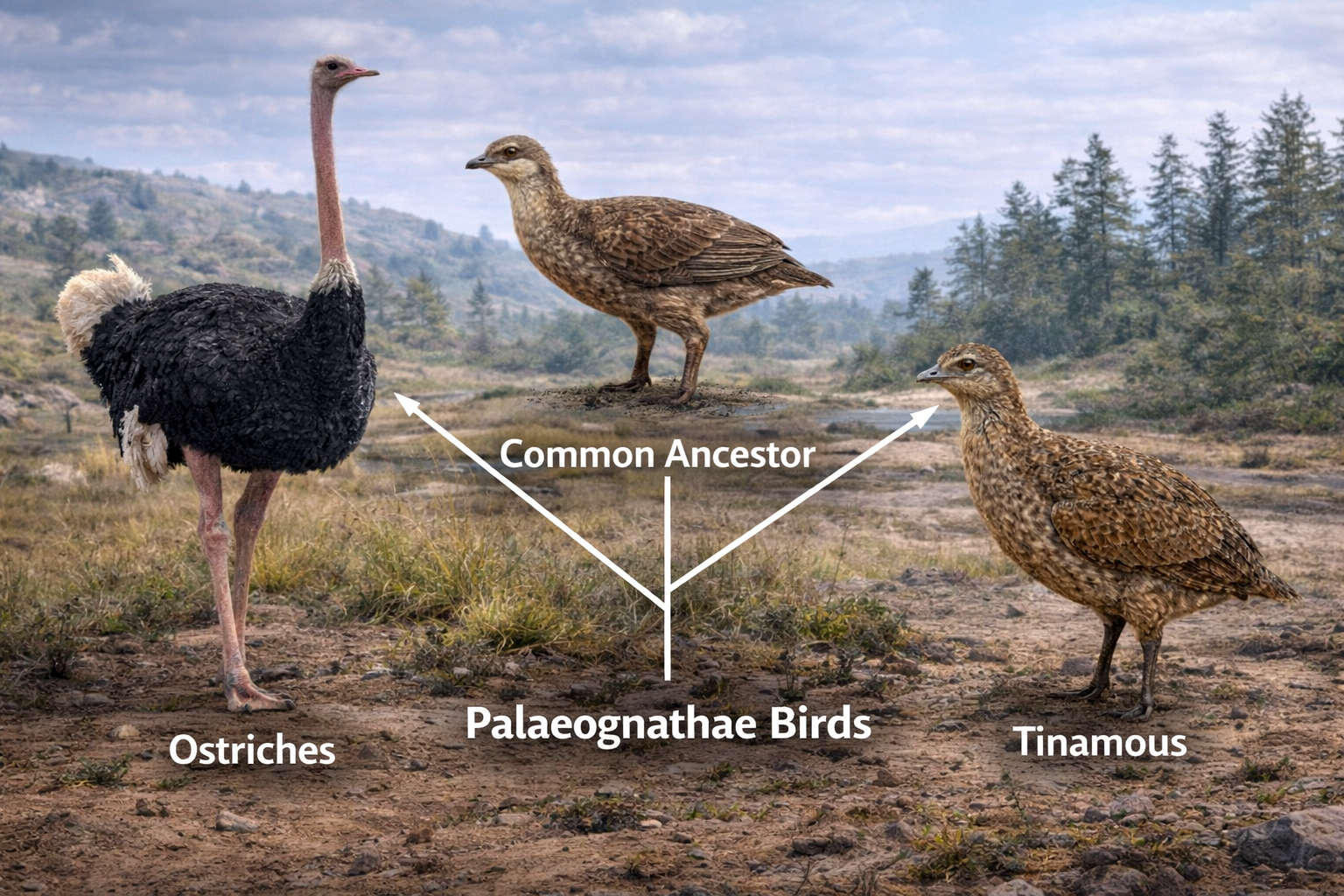
Palaeognathae is the living bird branch that includes ostriches, emus, cassowaries, rheas, kiwis, and tinamous.
~85 Million years ago (+/- 10 million).
Ground birds: ostriches, emus, tinamous, etc.
Galloanserae Birds Emerge (from Neognathae)
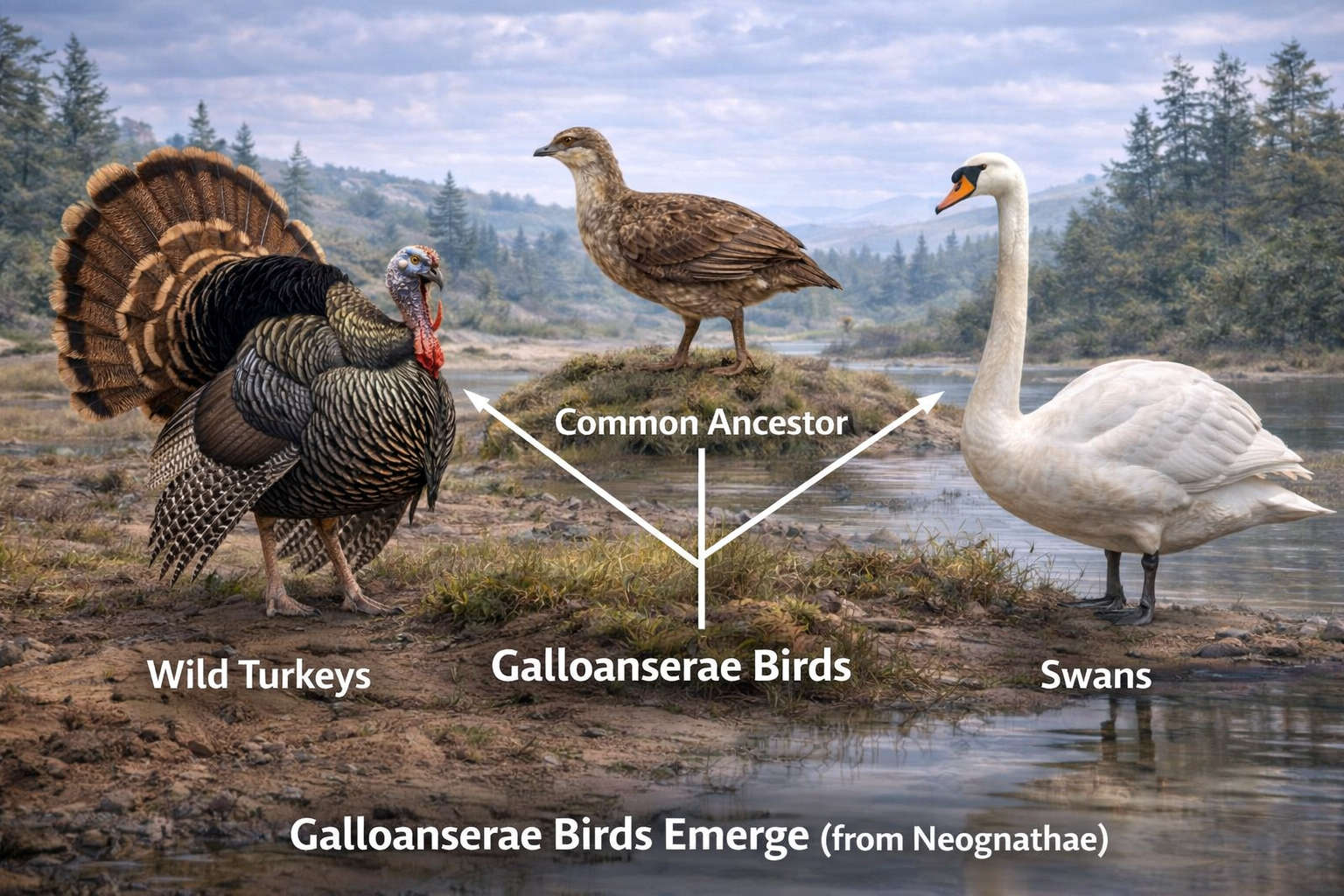
Galloanserae is the living bird branch that includes landfowl and waterfowl: chickens, turkeys, pheasants, ducks, geese, and swans.
~80 Million years ago (+/- 8 million).
Fowl: chickens, turkeys, pheasants, ducks, etc.
Neoaves Birds Emerge (from Neognathae)

Neoaves is the enormous living bird branch that includes all birds that are not part of the ostrich-tinamou branch and not part of the duck-chicken branch.
~78 Million years ago (+/- 4 million).
Led to common birds: crows, sparrows, robins, hawks, owls, hummingbirds, etc.
Styracosaurus
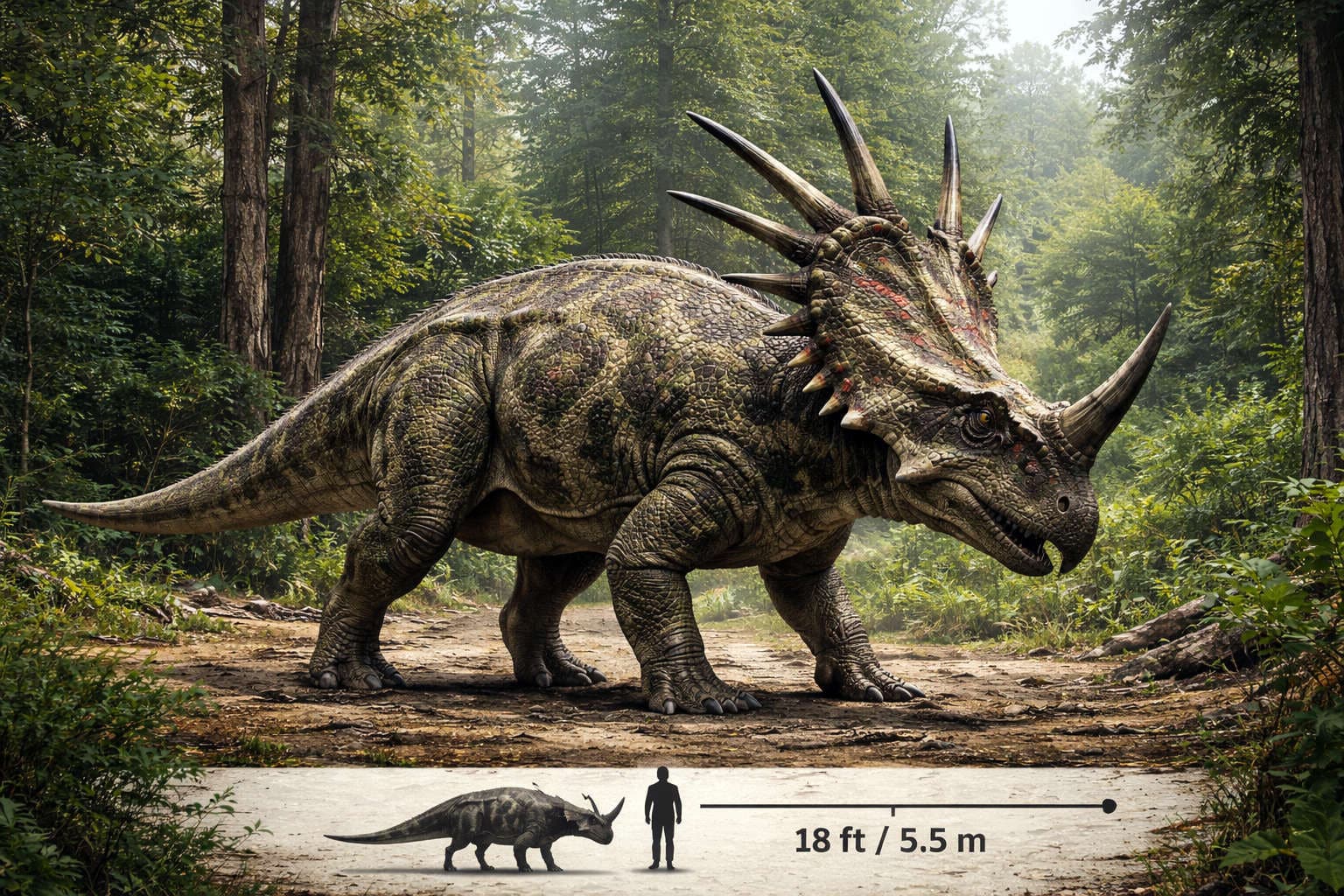
Styracosaurus was a striking horned ancient cousin of Triceratops, showing that ceratopsids branched into different styles long before the dinosaurs came to an end.
Lived ~76 to 75 million years ago.
Tyrannosaurus Rex
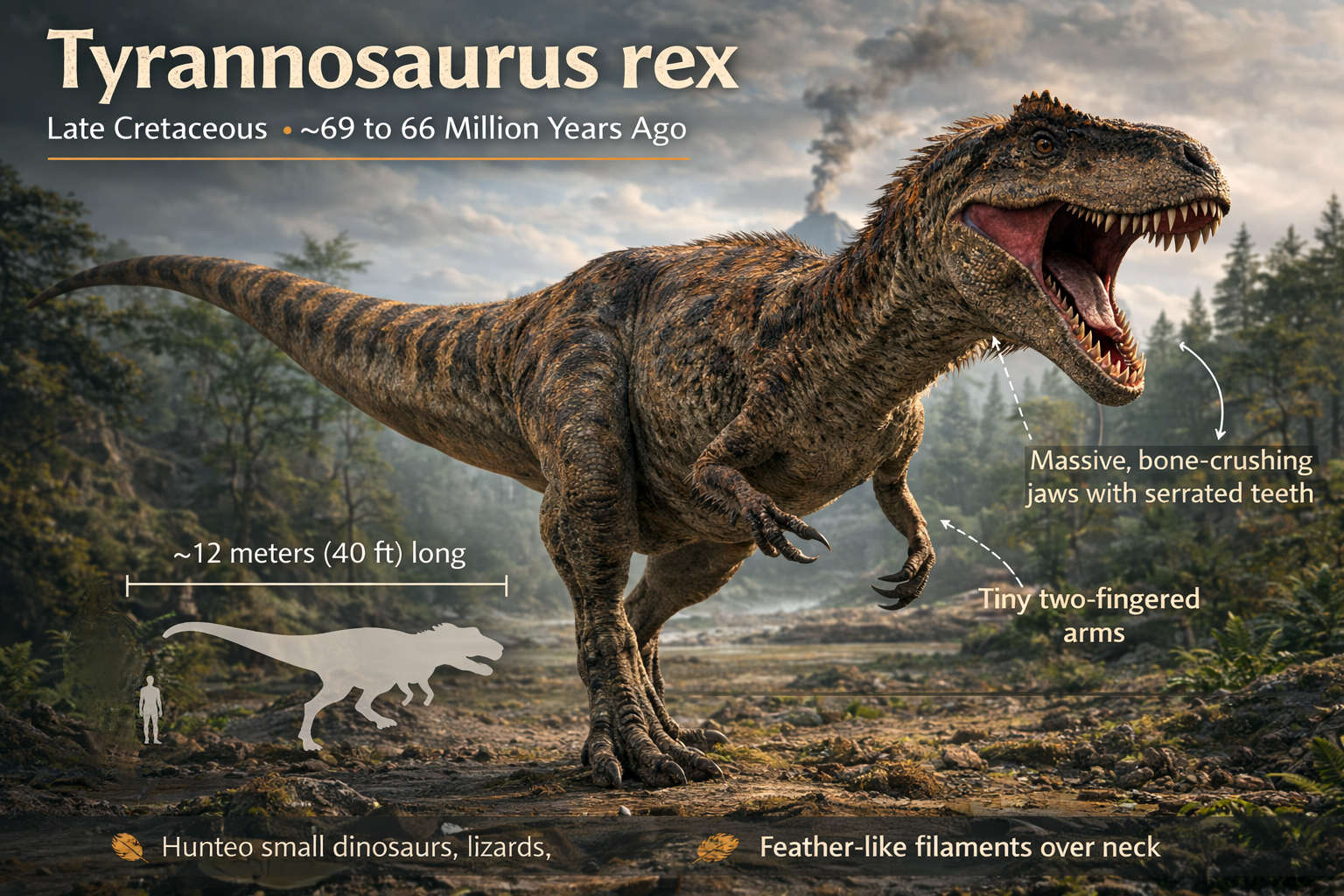
T. rex lived in western North America about 69 to 66 million years ago. All dinosaurs, except potentially three lines of bires, went extinct 66 million years ago, when the Chicxulub asteroid hit.
Lived from ~69 to 66.04 million years ago.
Triceratops
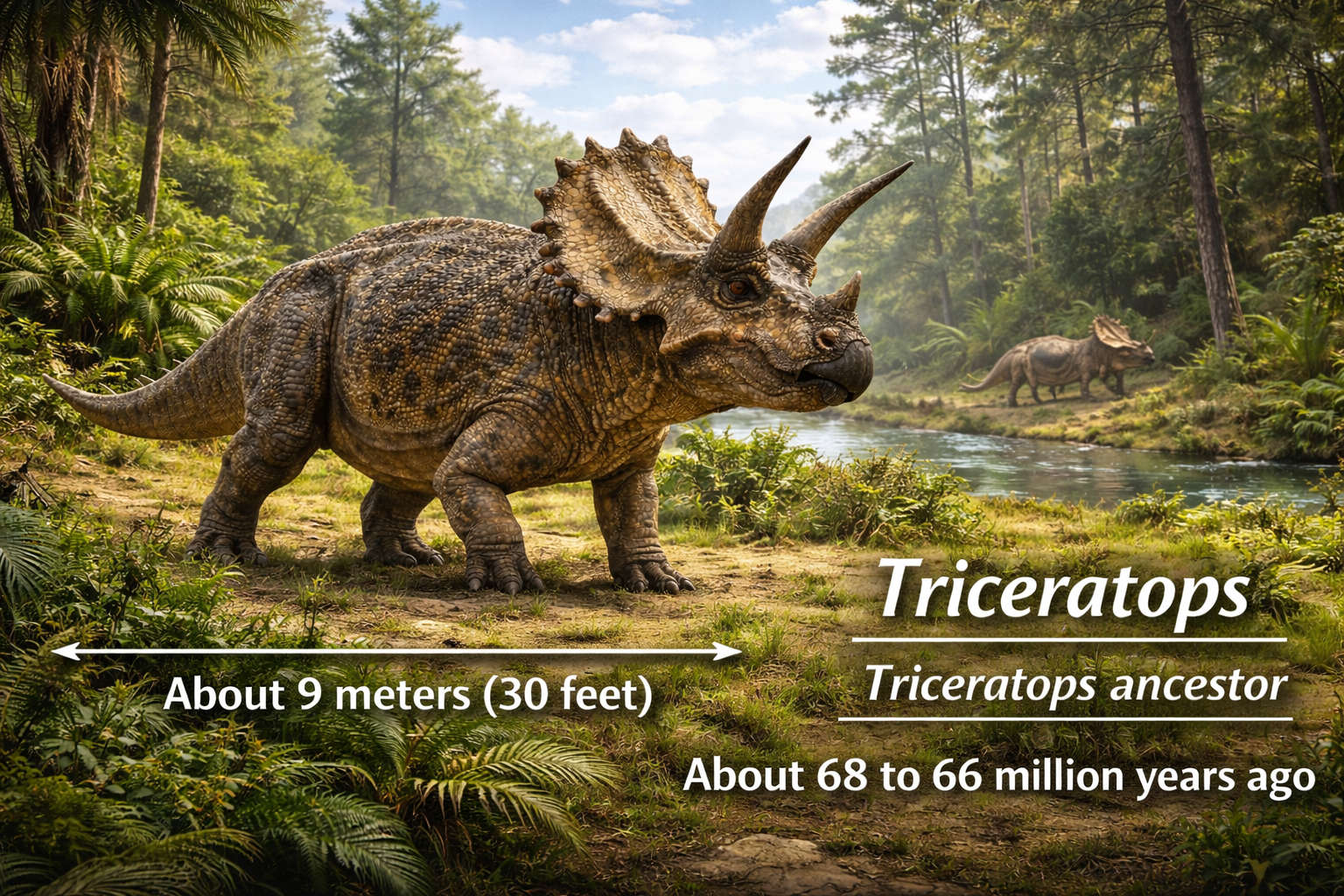
Three facial horns, broad frill, and powerful four-legged body. It was one of the last great non-avian dinosaurs and is the classic fully developed ceratopsid most people picture when they think of horned dinosaurs. Lived from about 68 to 66 million years ago.
Lived from ~68 to 66.04 million years ago.
The Last Pterosaurs
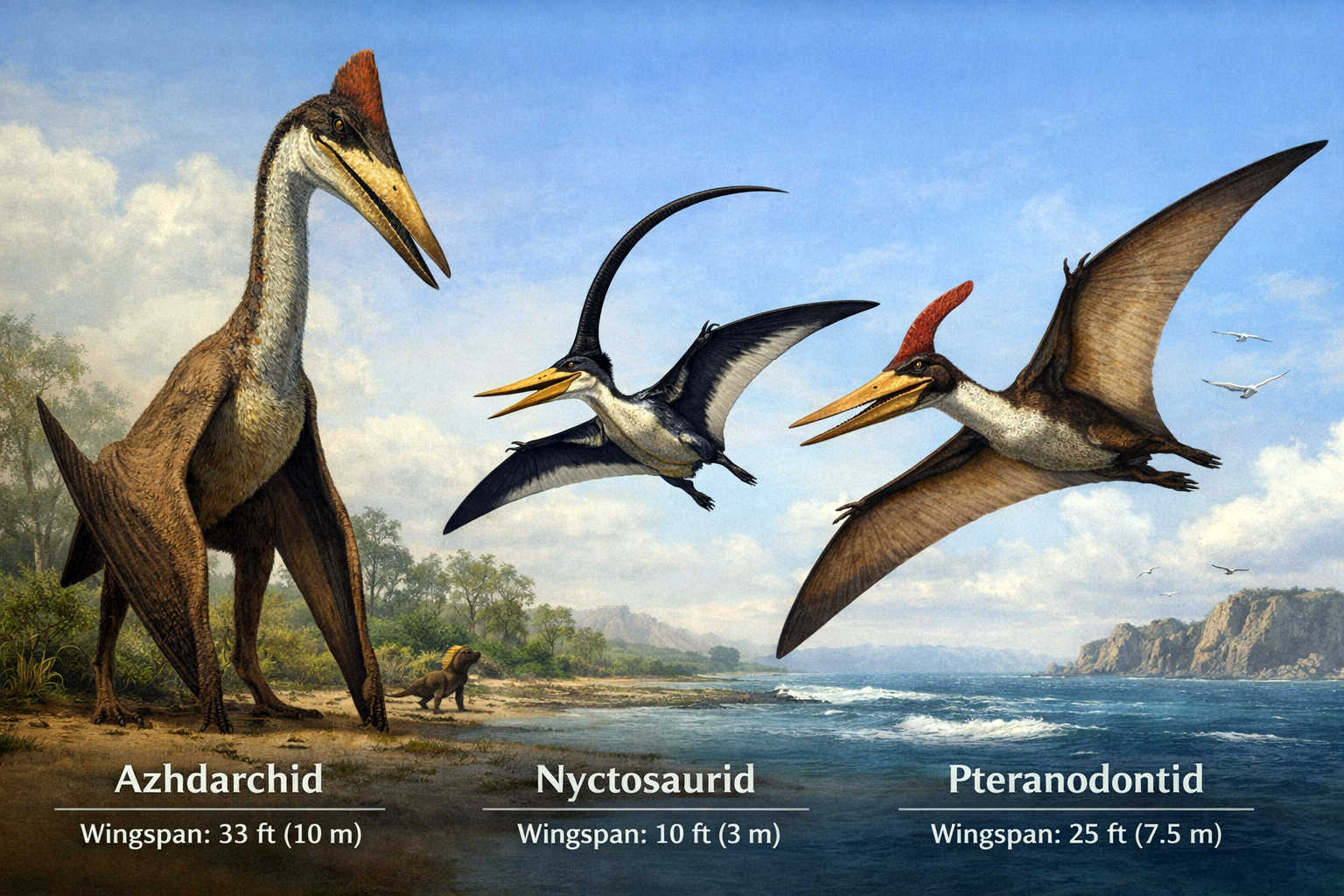
By the end of the Cretaceous, the surviving pterosaurs were mostly advanced, toothless pterodactyloids.
66.04 Million years ago (K–Pg extinction)
The Last Ornithischians
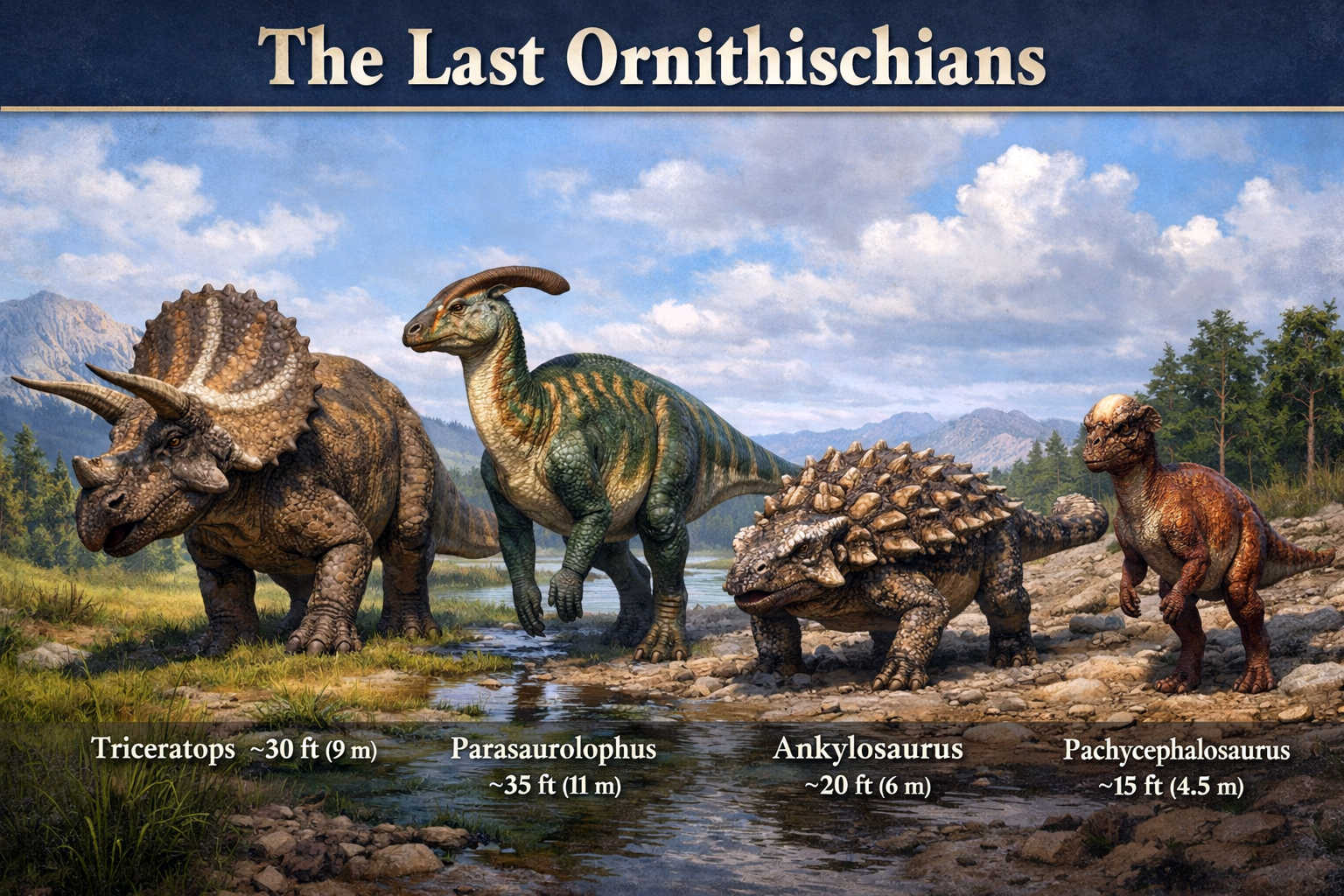
The last ornithischians still displayed four striking body plans at the end of the Cretaceous: horned ceratopsians, duck-billed hadrosaurs, armored ankylosaurs, and dome-headed pachycephalosaurs.
66.04 Million years ago (K–Pg extinction)
The Last Sauropods
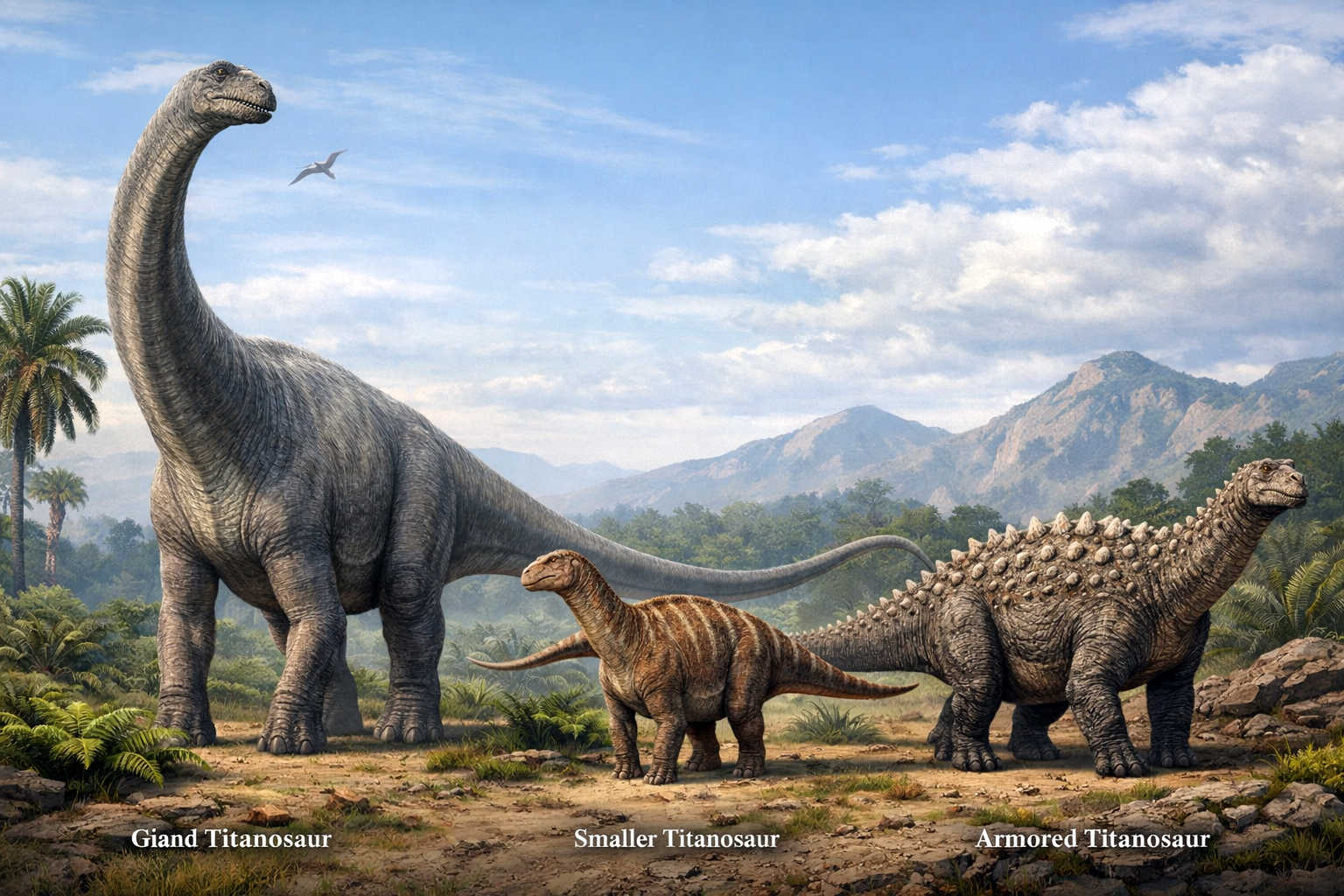
By the end, sauropods had narrowed to one last great branch—titanosaurs—but that branch still held real variety.
66.04 Million years ago (K–Pg extinction)
The Last Theropods
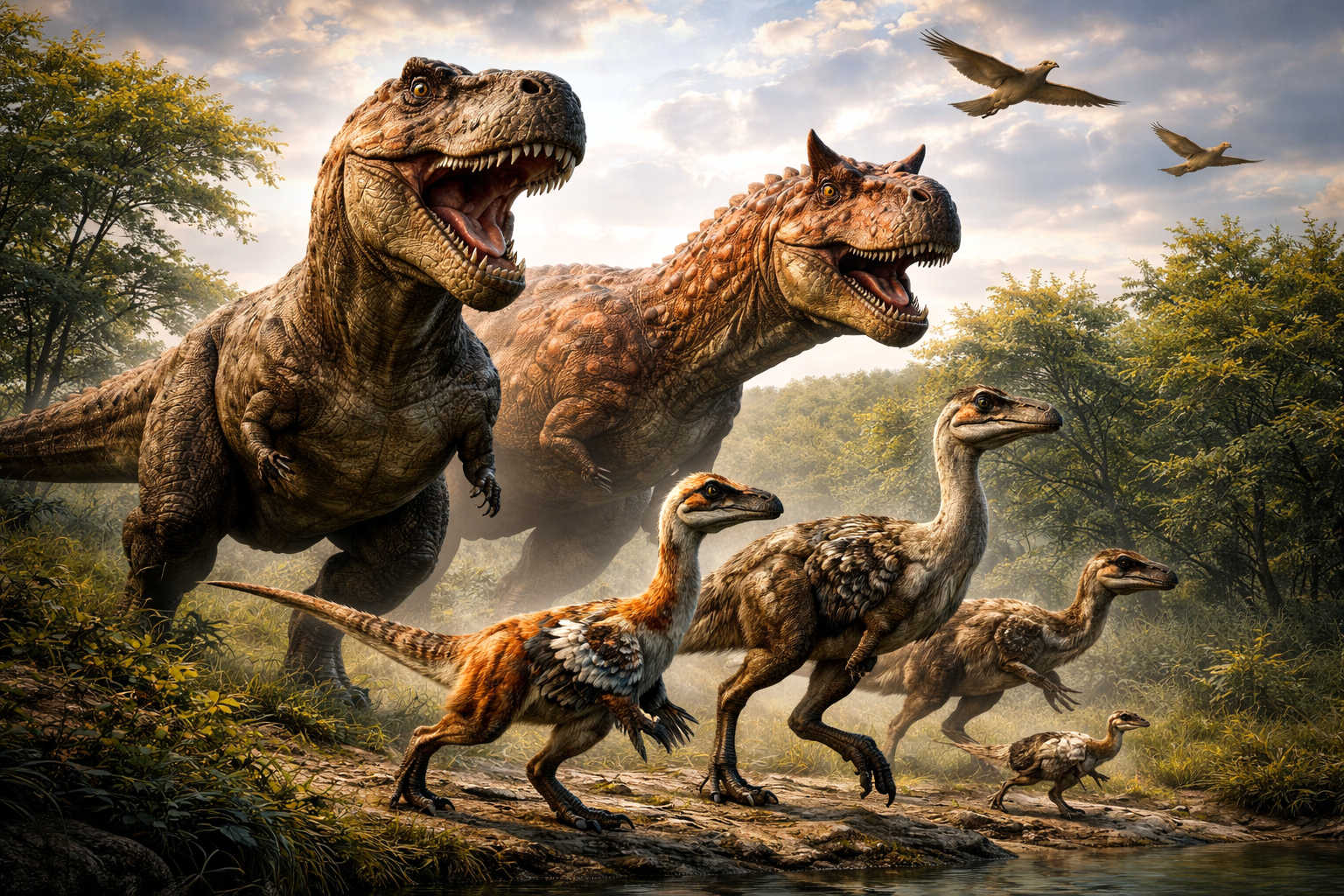
The last theropods still ranged from giant apex predators to smaller runners and hunters, while birds overhead carried the theropod branch beyond the extinction event.
66.04 Million years ago (K–Pg extinction)
Toothed Birds Go Extinct
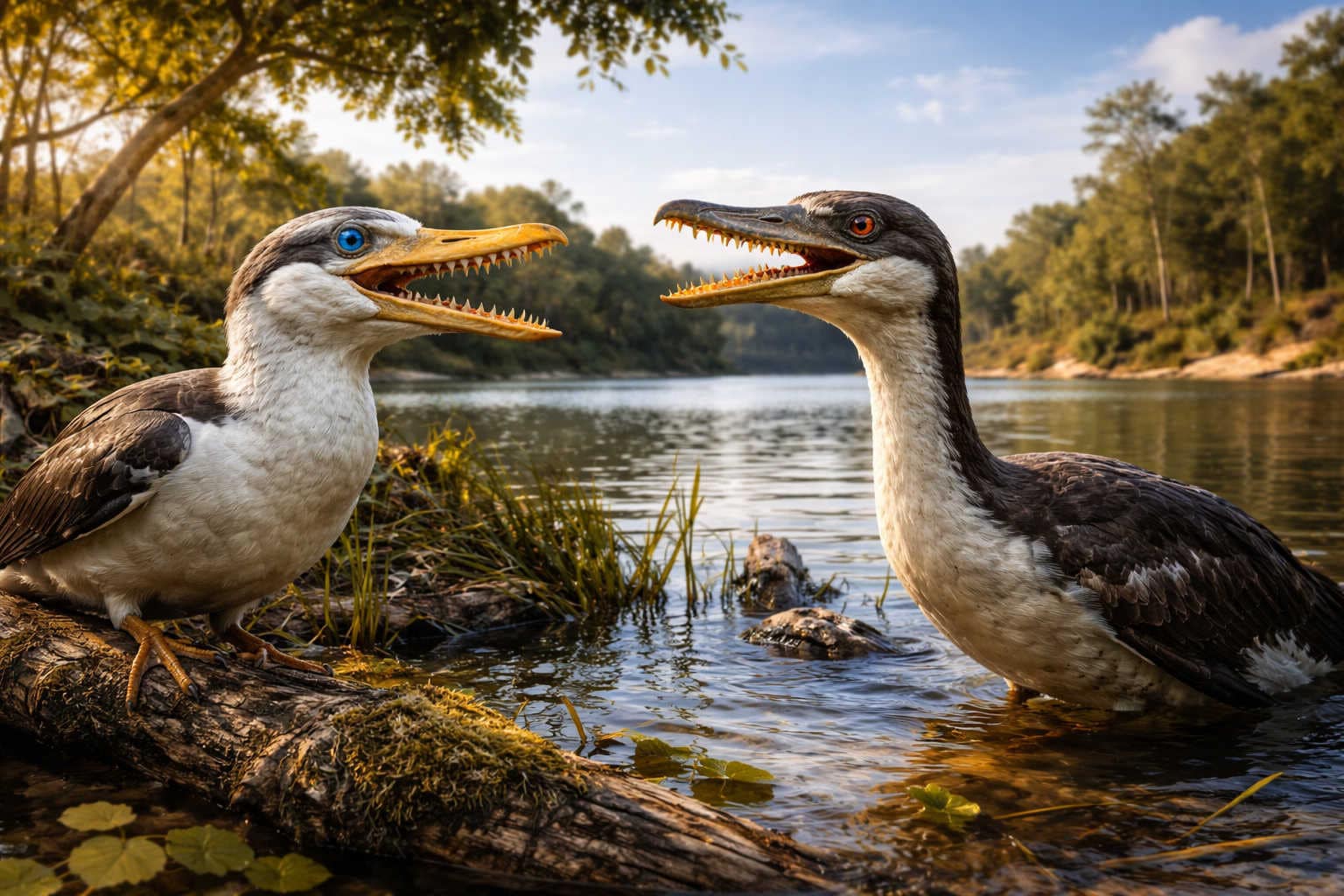
At the K–Pg boundary, birds were already diverse, but most of that Late Cretaceous variety died out, leaving only a small toothless slice of the bird world to continue.
66.04 Million years ago (K–Pg extinction)
The K-Pg Extinction
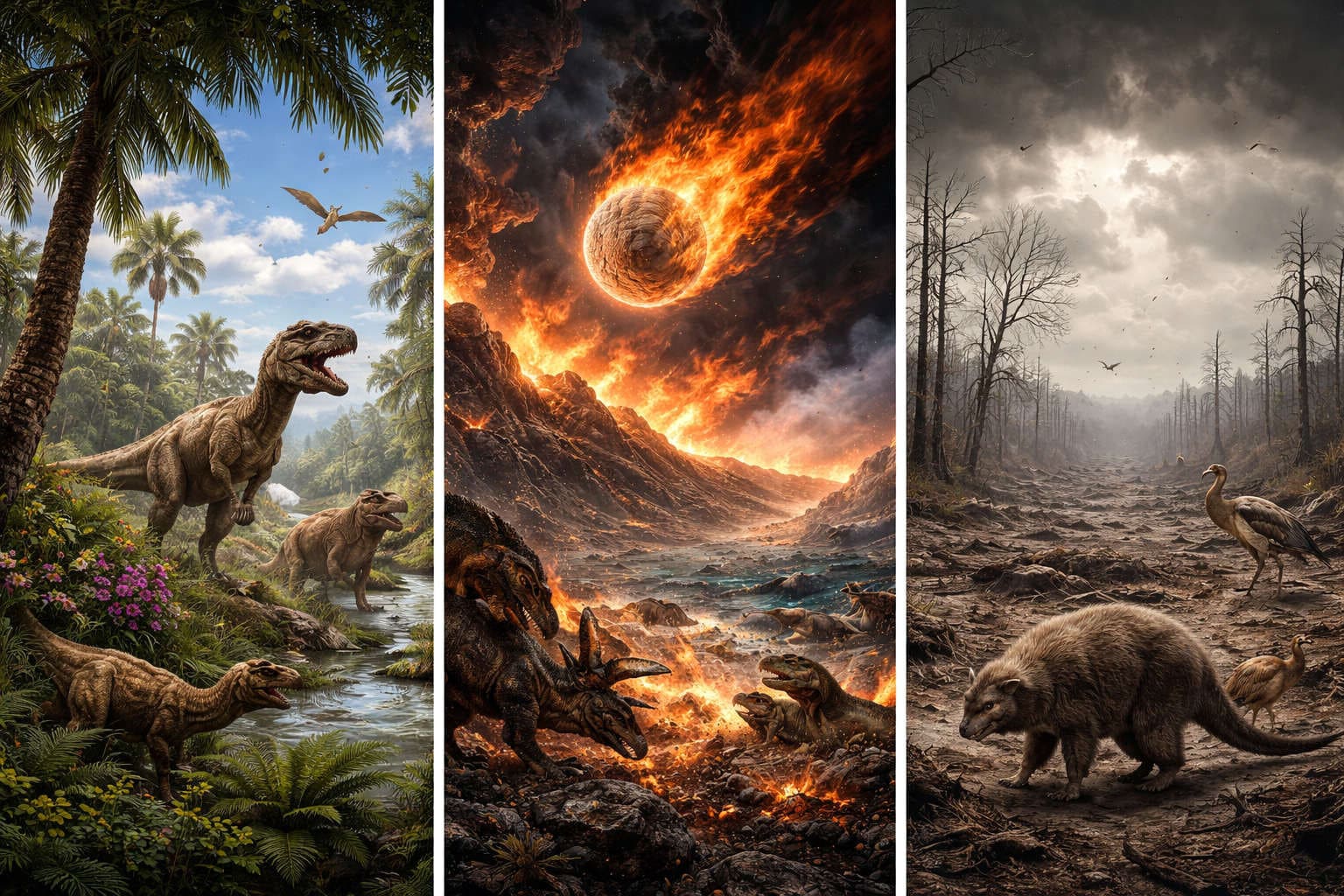
The K–Pg extinction was a sudden global catastrophe that ended the long dominance of non-avian dinosaurs and opened the way for mammals and modern birds to expand into a transformed world.
66.04 million years ago (+/- 900 years).
Cause: Massive Meteor
Cenozoic Era: Age of Mammals & Birds
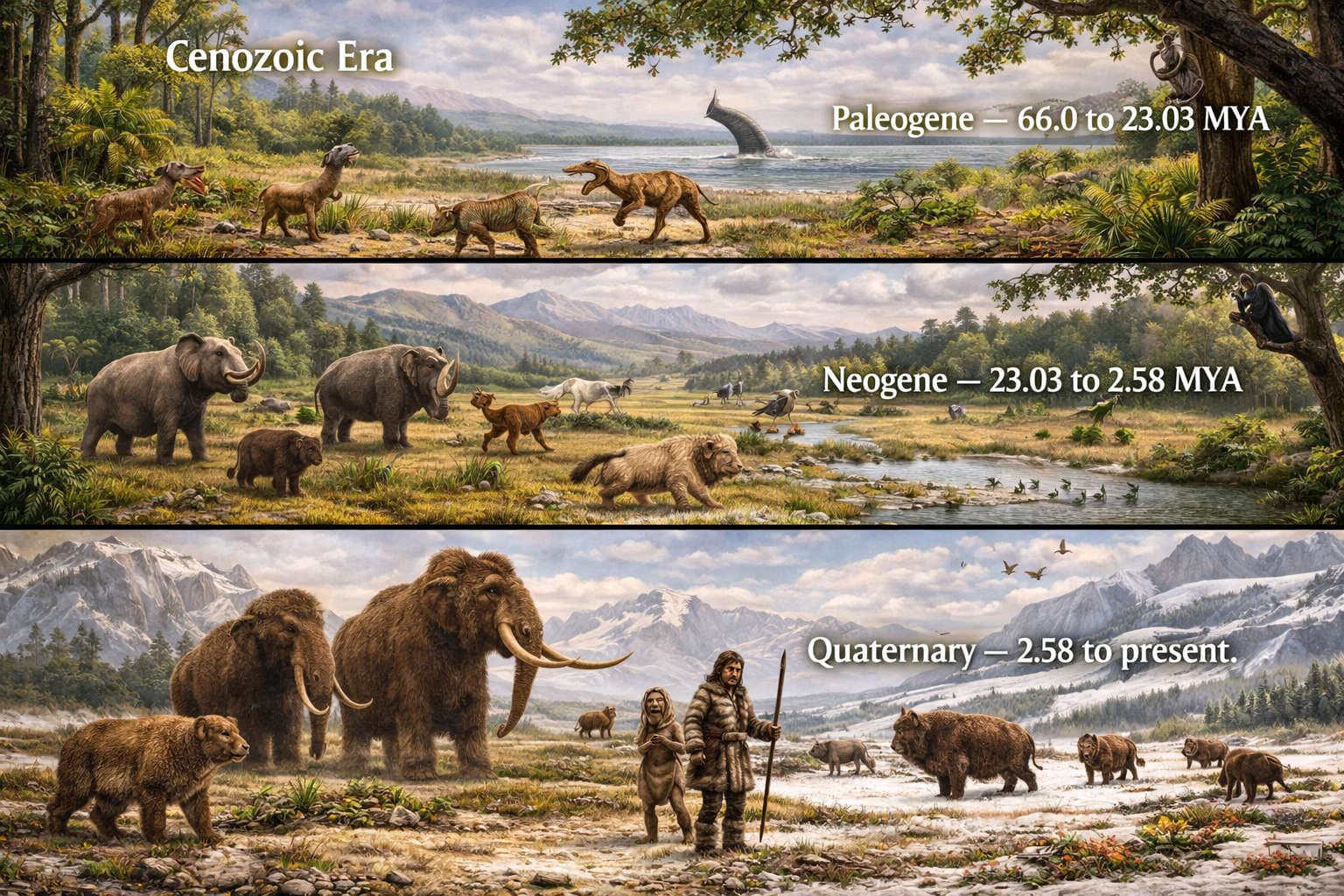
The Cenozoic era starts with the K–Pg extinction 66 million years ago. That event marks the sudden end of the reign of dinosaurs and the rise of mammals and birds.
66.04 million years ago to the present.
66 Million years: From extinction to society.