

Reptile evolution begins over 300 million years ago with early amniotes and unfolds into a lineage that conquered land, diversified into dinosaurs, and eventually gave rise to birds. Reptile evolution marks the full independence from water through the amniotic egg — a structural innovation that aligned life more completely with terrestrial constraint.
Reptile Evolution
Snowball Earth: When Ice Reached the Equator
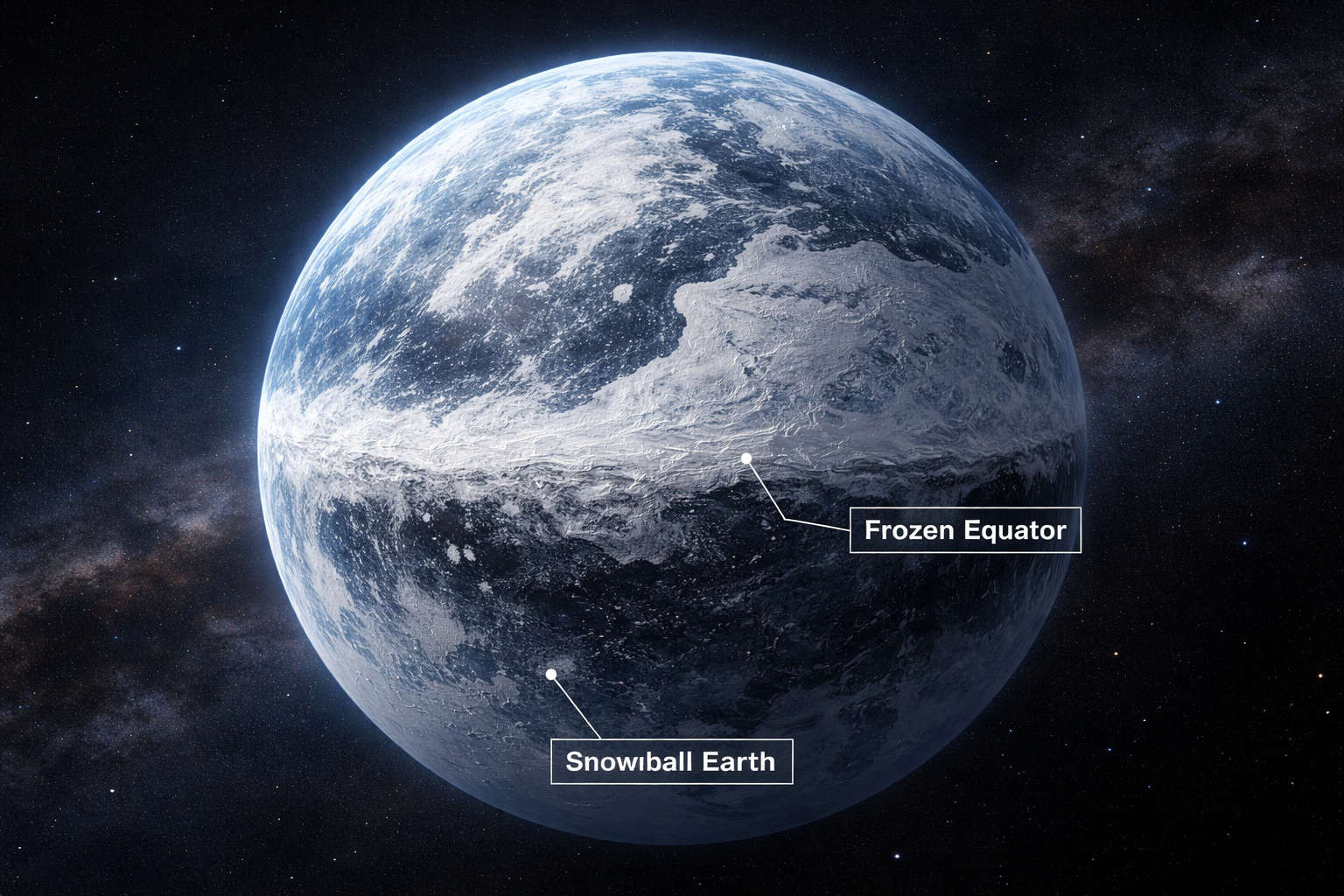
For tens of millions of years, Earth plunged into its deepest known freeze. Ice sheets reached sea level at low latitudes, perhaps even the equator, turning the planet into a near-global ice world and reshaping the path toward complex life.
From 717 million years ago through 635.
Cause: Continental Drift, Falling CO₂
Bilaterian Split: The Origin of Agency
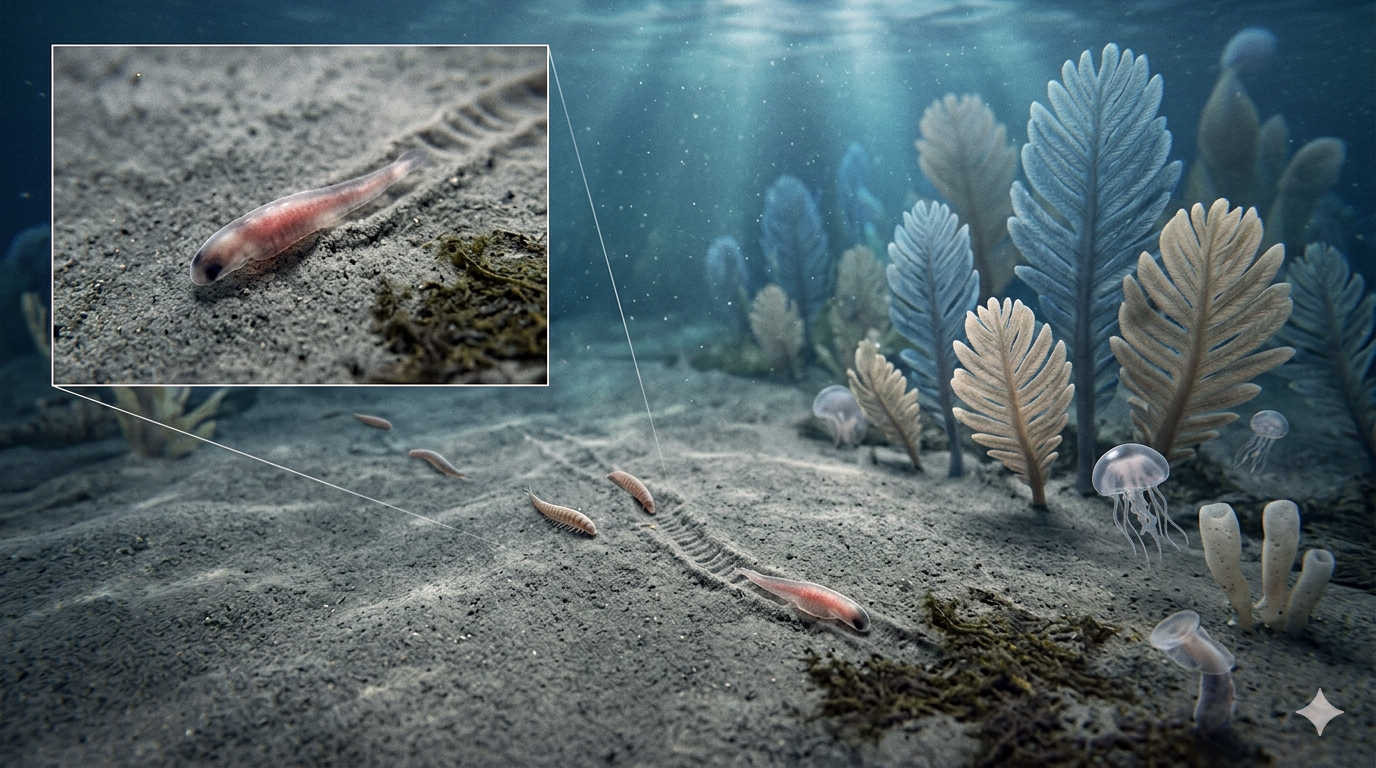
The bilaterian branch gave rise to today's arthropods, mollusks, fish, amphibians, reptiles, birds, and mammals. The significant idea is directionality. From a radial (circle) to a bilateral (line) symmetry, life transitioned from a passive "being" to an active "doing."
590 Million Years Ago (± 10 million)
Agency and directional action with intent.
Paleozoic Era: The Age of Synapsids
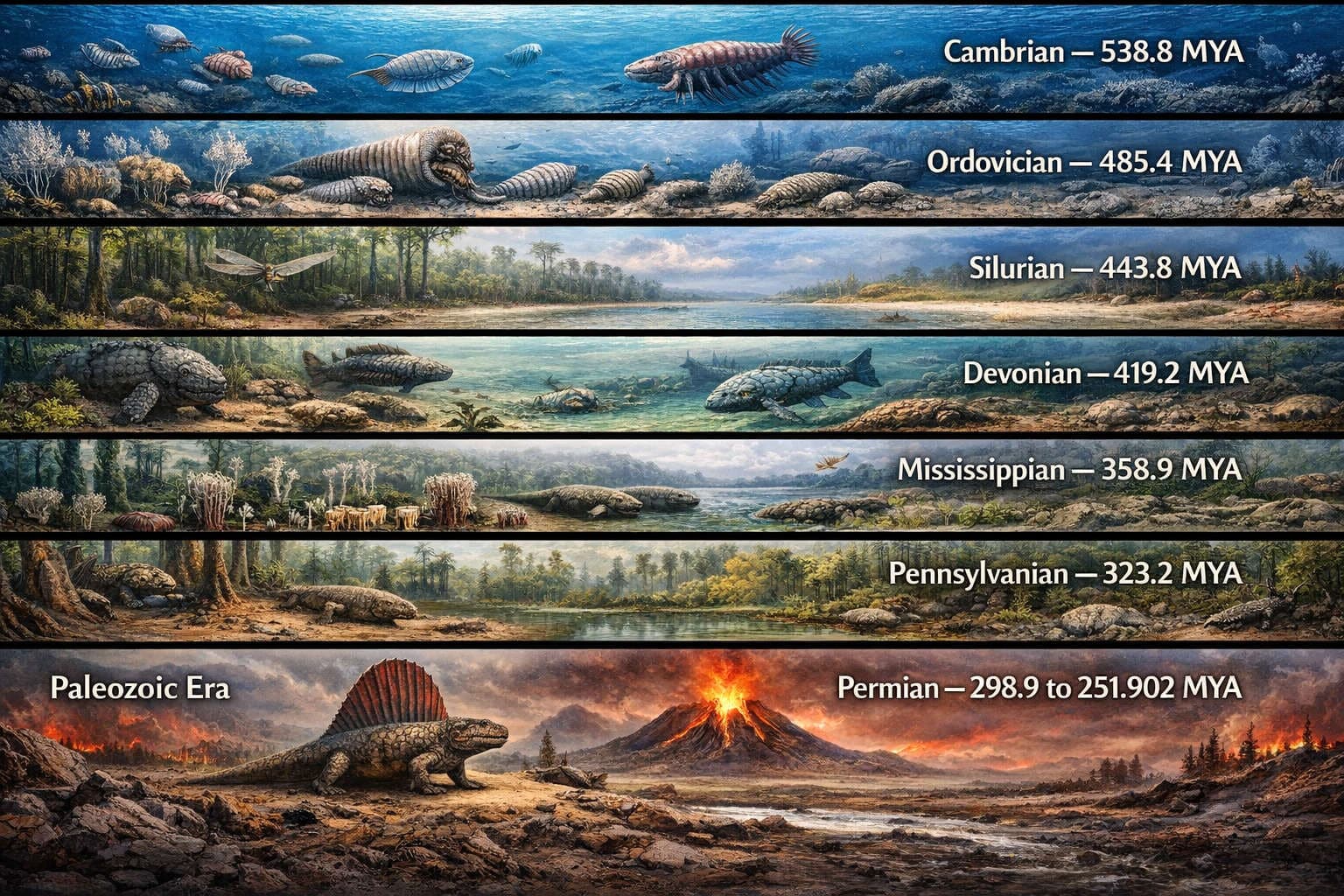
The Paleozoic era is marked by the rise of complex animal life 538.8 million years ago. It ends with the end-Permian mass extinction 252 million years ago. A volcanic cascade global warming event.
From 538.8 to 251.902 million years ago.
287 Million years: From burrowing to extinction.
Ordovician–Silurian Extinction: Ice Strikes the Seas
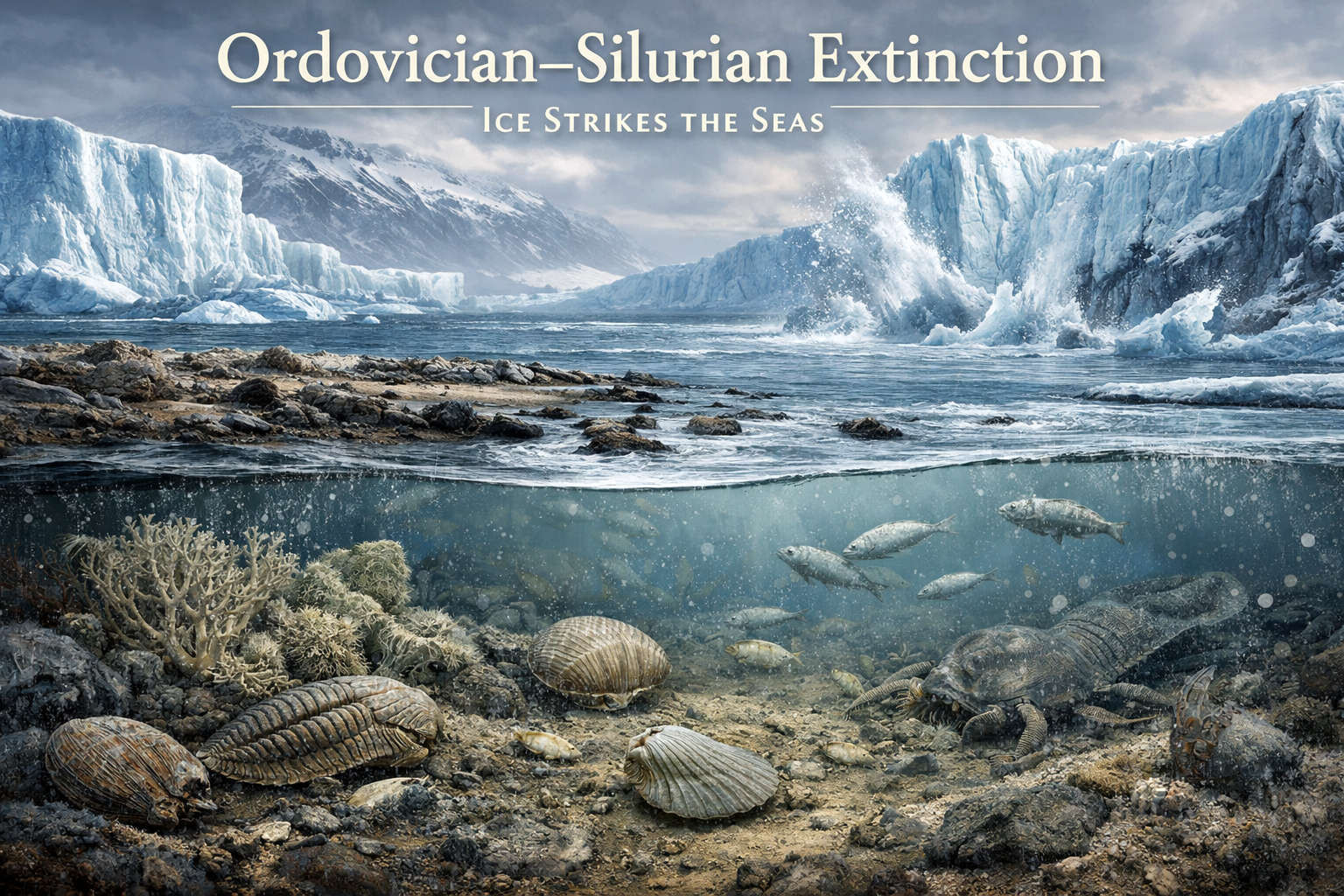
The Ordovician–Silurian extinction shows how climate change can reshape evolution by collapsing old ecosystems and opening space for new life.
~444 Million Years Ago
Cause: Global Cooling and Falling Seas
Oceans Lose Their Breath
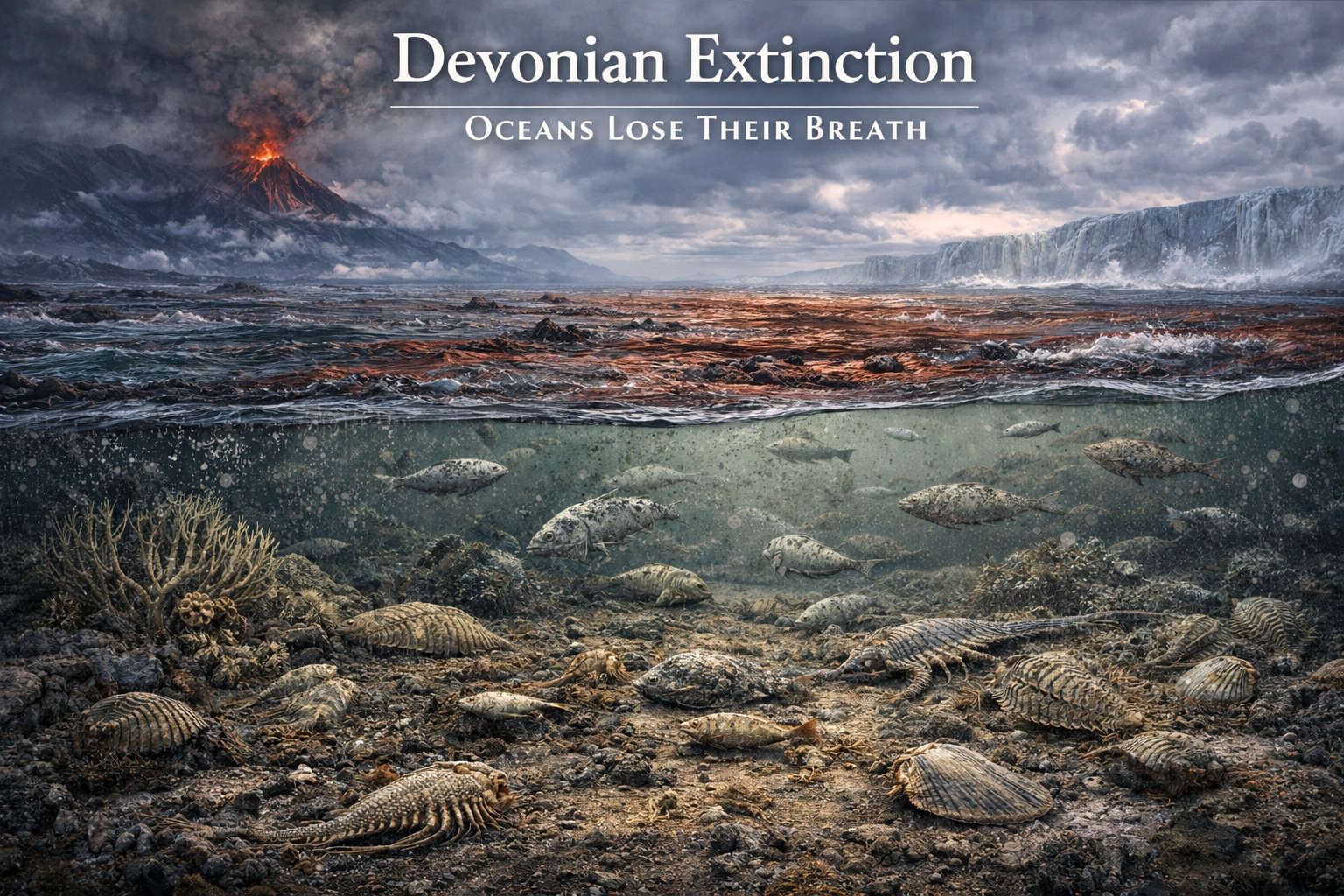
The Devonian extinction shows that evolution can be reshaped not by one sudden blow, but by a long collapse in ocean health.
~372–359 Million Years Ago
Cause: Ocean Anoxia
Amniotes Emerge: Amniotic Eggs
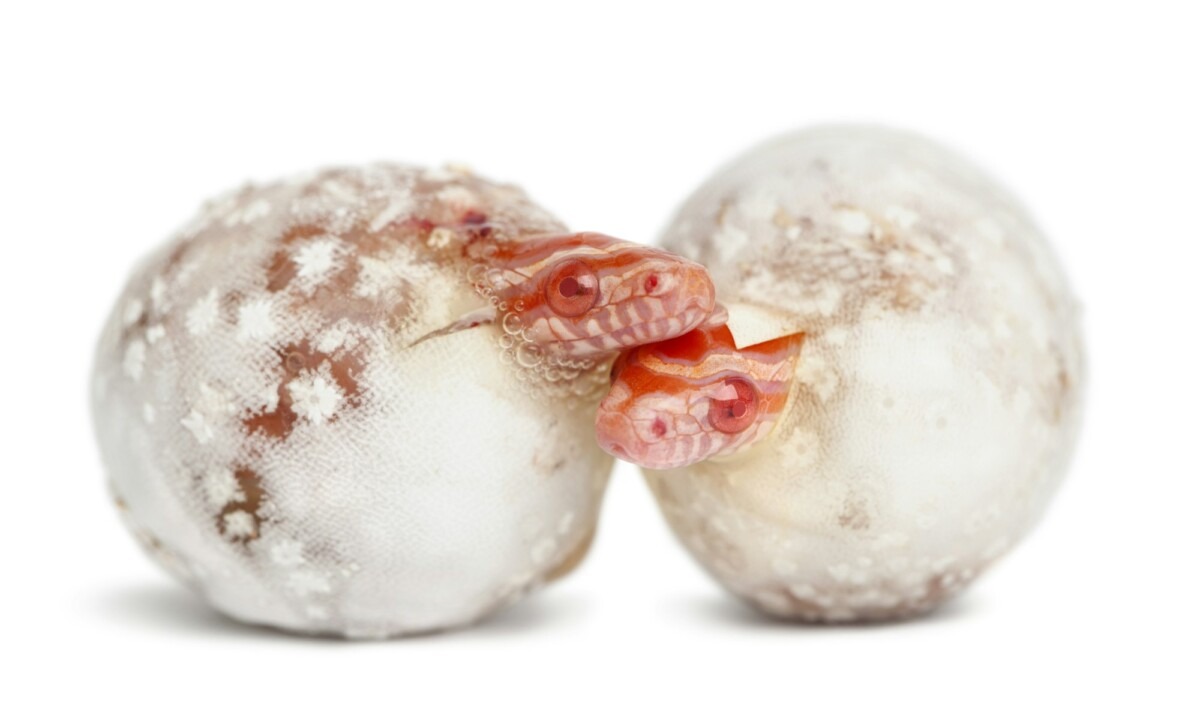
The amniotic egg evolved in the first amniotes, which evolved into today's reptiles, birds, and mammals.
340 Million years ago (+/- 10 million)
Ancestor or reptiles, birds, and mammals.
First Land Herbivore: Tyrannoroter heberti
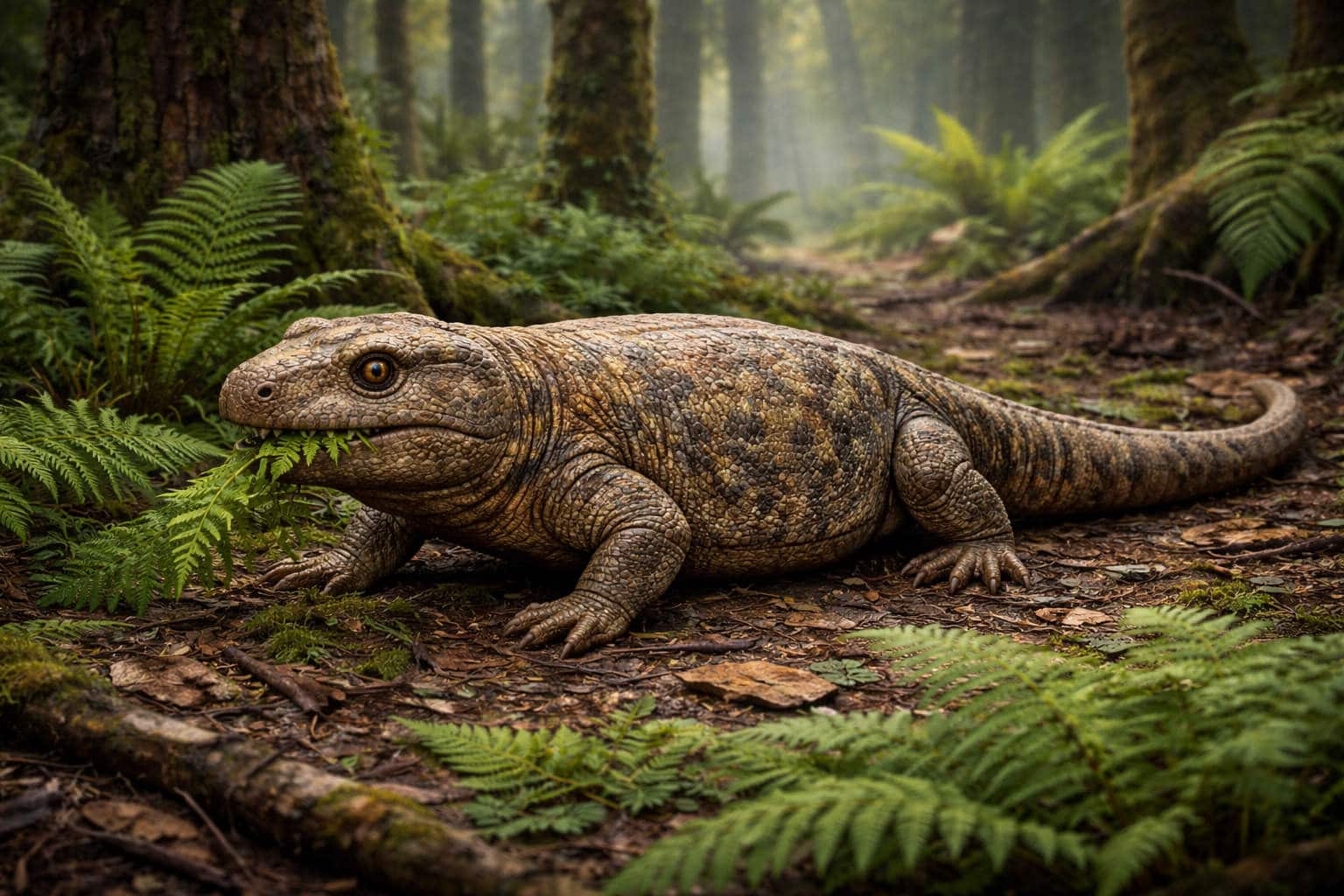
Tyrannoroter heberti (≈307 million years ago). One of the earliest known plant-experimenting tetrapods, Tyrannoroter heberti hints that land herbivory began not with giants, but with small, evolutionary pioneers over 300 million years ago.
307 million years ago
2026 Discovery Pushing Back Herbivores
Proto-Play

Proto-play emerged in animals as brains got more complex about 300 million years ago. Something like enjoyment or satisfaction evolved as animals mimicked survival-like skills.
300 million years ago
±20 million years
The Synapsid World of the Late Permian
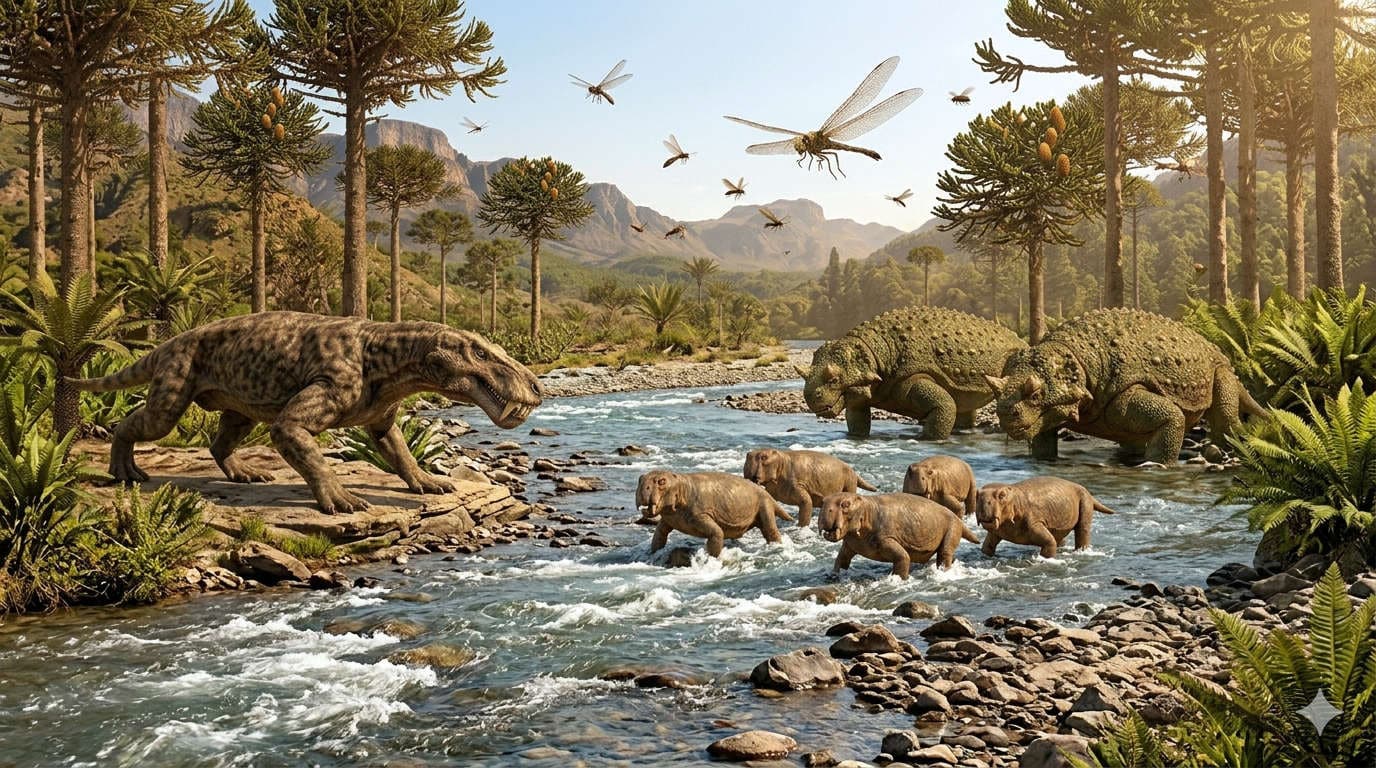
A Late Permian river world about 255 million years ago, where synapsids still ruled the land. A gorgonopsid stalks near the water while dicynodonts gather at the river’s edge and pareiasaurs move through the floodplain, alongside amphibians, large insects, and hardy pre-flowering plants.
255 Million years ago.
The P-T Extinction
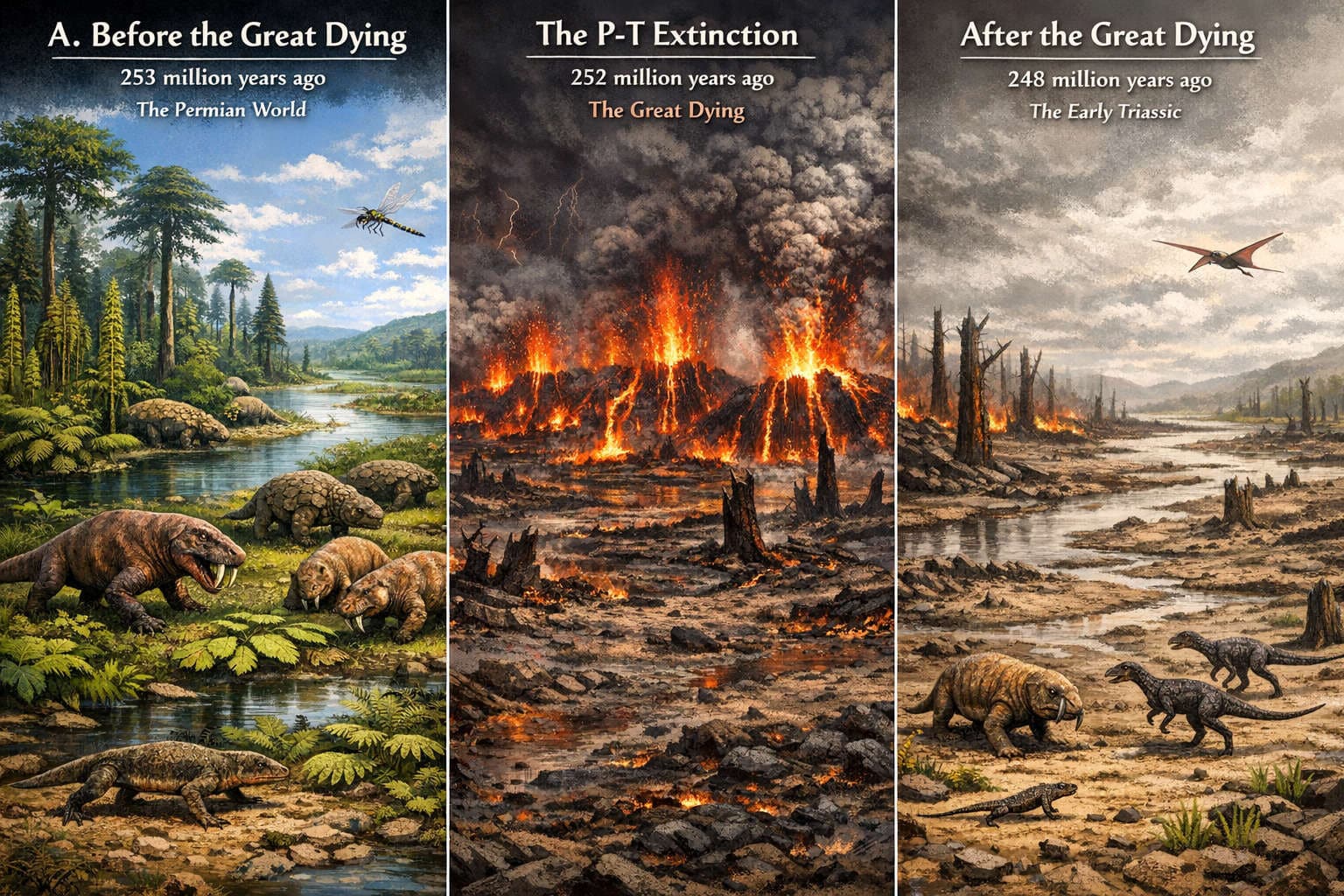
The Permian-Triassic extinction was not just the end of many species. It was a planetary reset that destroyed the old synapsid-dominated world and opened the door for the archosaur line that would later give rise to dinosaurs.
251,902,000 years ago (+/- 900 years).
Cause: Massive Volcanic Eruptions in Siberia
Mesozoic Era: Age of Dinosaurs
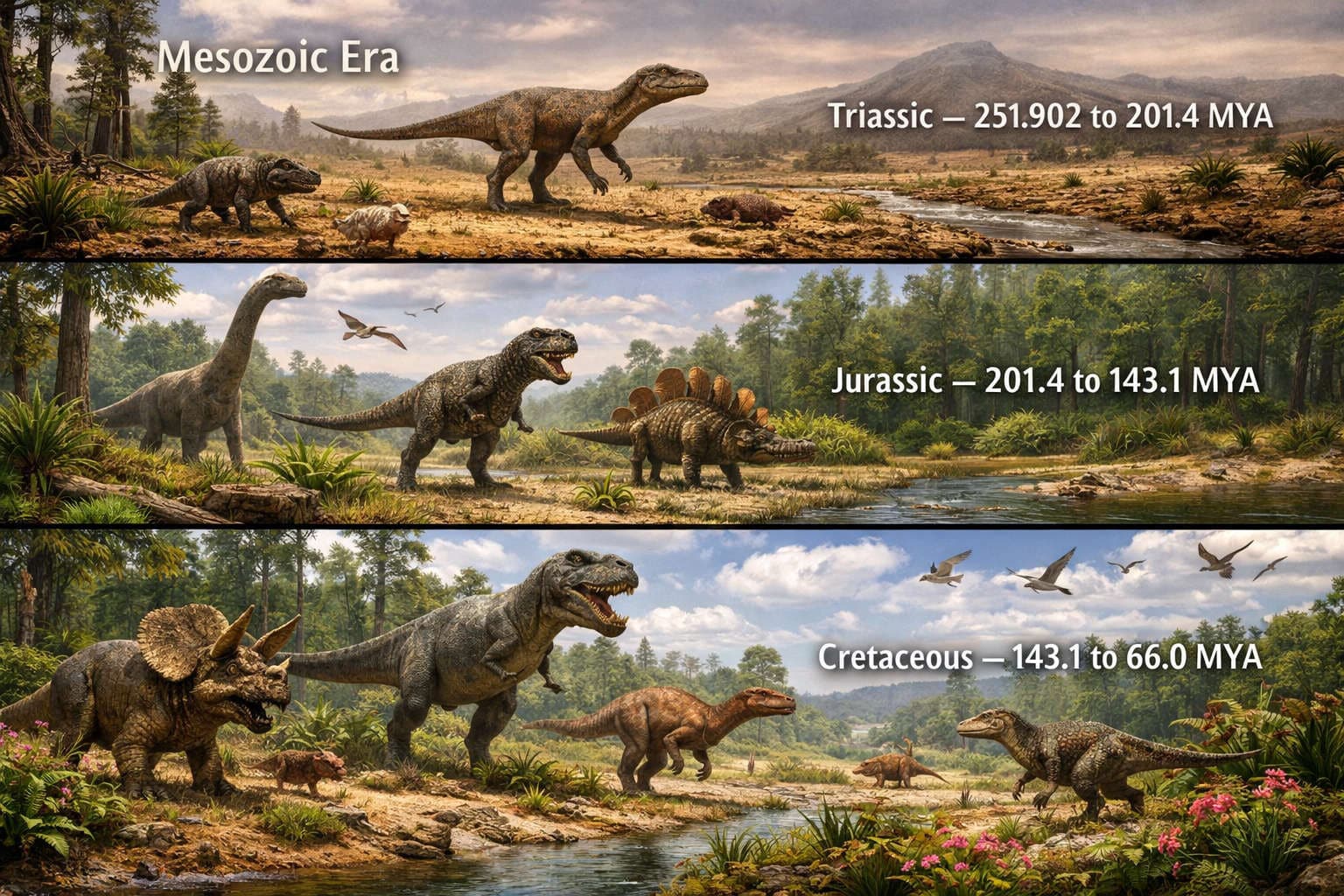
The Mesozoic era starts with the end-Permian mass extinction 252 million years ago. It ends the reign of dinosaurs with the K–Pg extinction 66 million years ago.
From 251.902 to 66.0 million years ago.
186 Million years: Dinosauria reigned from extinction to extinction.
Archosauria Diverge Within Reptiles
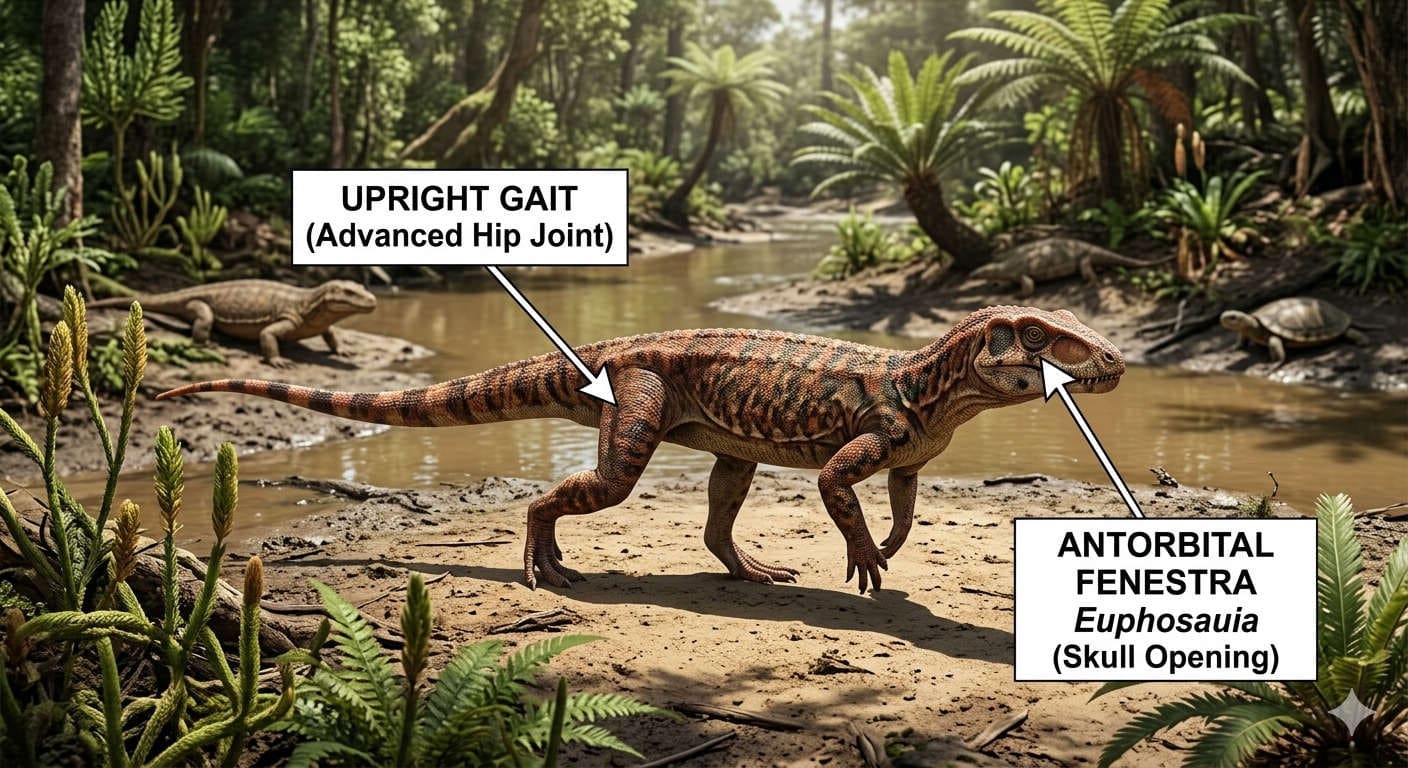
LCA of crocodiles and birds — the larger archosaur branch that later gave rise to crocodilians, pterosaurs, dinosaurs, and birds.
~250 million years ago (+/- 10 million)
LCA of crocodilians and birds (pterosaurs & dinosauria)
Bird-line Archosaurs: Asilisaurus kongwe (within Ornithodira)

Asilisaurus shows that the bird-line archosaurs were already evolving dinosaur-like bodies before true dinosaurs appeared.
245 Million Years Ago
Dinosauromorphs Emerge: Erect hind-limb posture leads to birds and dinosaurs.
Bird-line Archosaur: Nyasasaurus parringtoni

Nyasasaurus is a late bird-line archosaur from just before Dinosauria clearly emerge. It sits on the dinosaur side of Ornithodira, but its exact placement remains uncertain: some analyses place it within Dinosauria, while others place it just outside the group, near other bird-line archosaurs.
243 Million Years Ago
Strengthened hip and shoulder architecture
Dinosauria Emerge: True Dinosaurs!
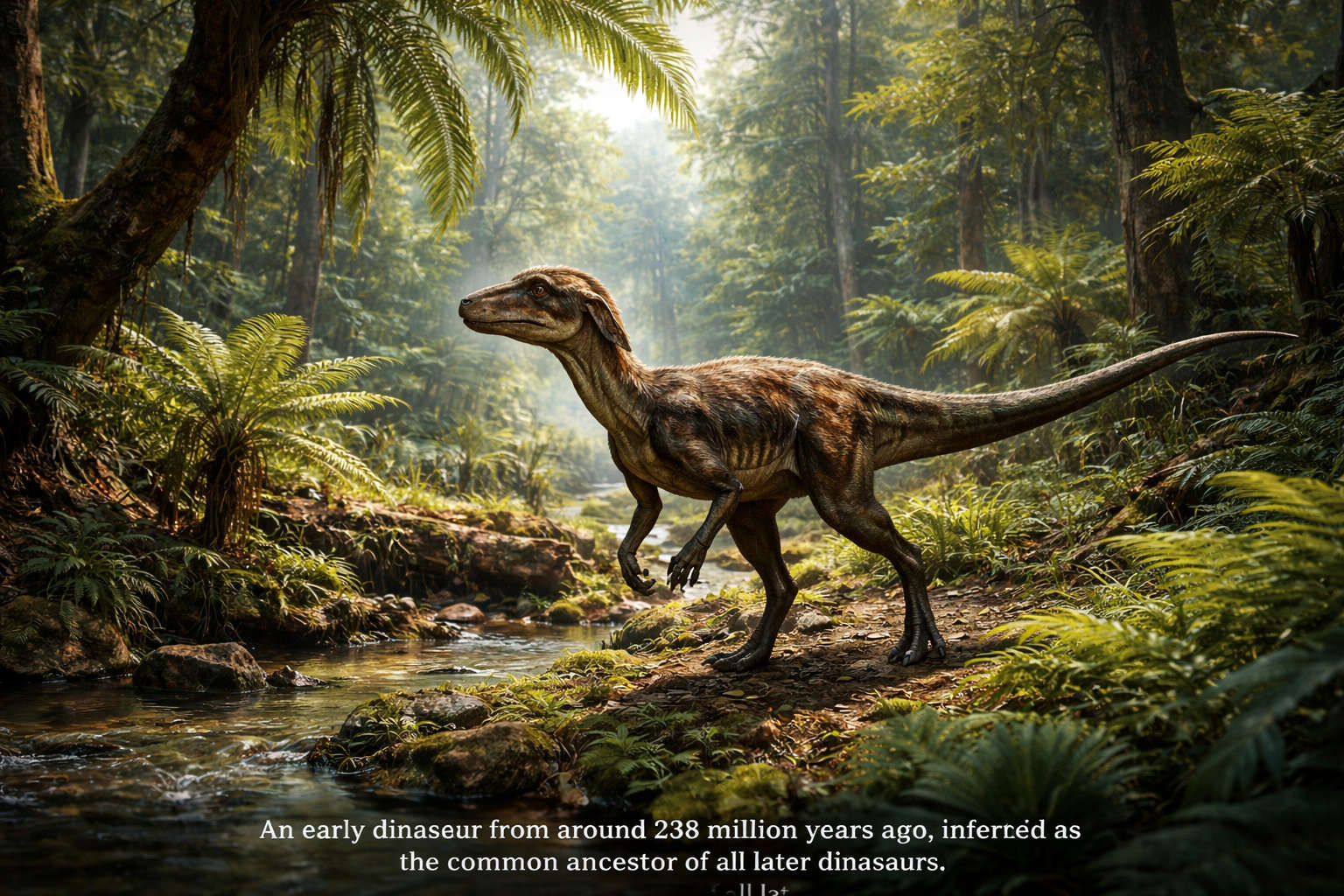
Dinosauria emerge from a single population of a species about 238 million years ago. This population will lead to all dinosaurs and birds including T.Rex, Brontosaurus, and Triceratops.
238 Million years ago (+/- 5 million)
Fully open hip socket (perforated acetabulum)
Pterosaurs Diverge From Dinosaur Ancestors (within Ornithodira)
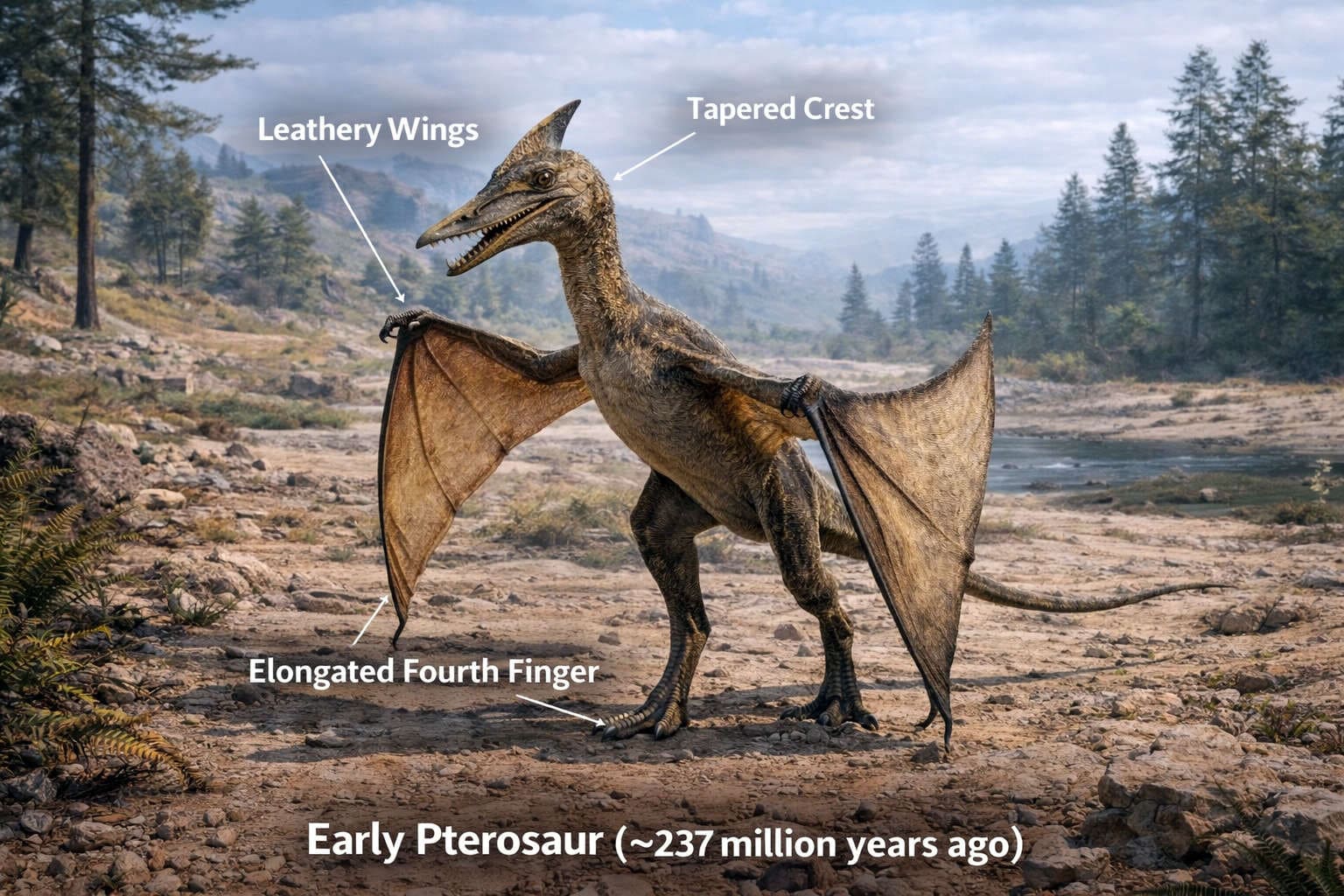
Pterosaurs were the first vertebrates to conquer the air, evolving a unique "finger-wing" anatomy that allowed them to dominate the skies for 160 million years.
~237 million years ago (+/- 2 million)
Pterosauria line: Not in dinosauria (split first).
Pterosaurs Emerge
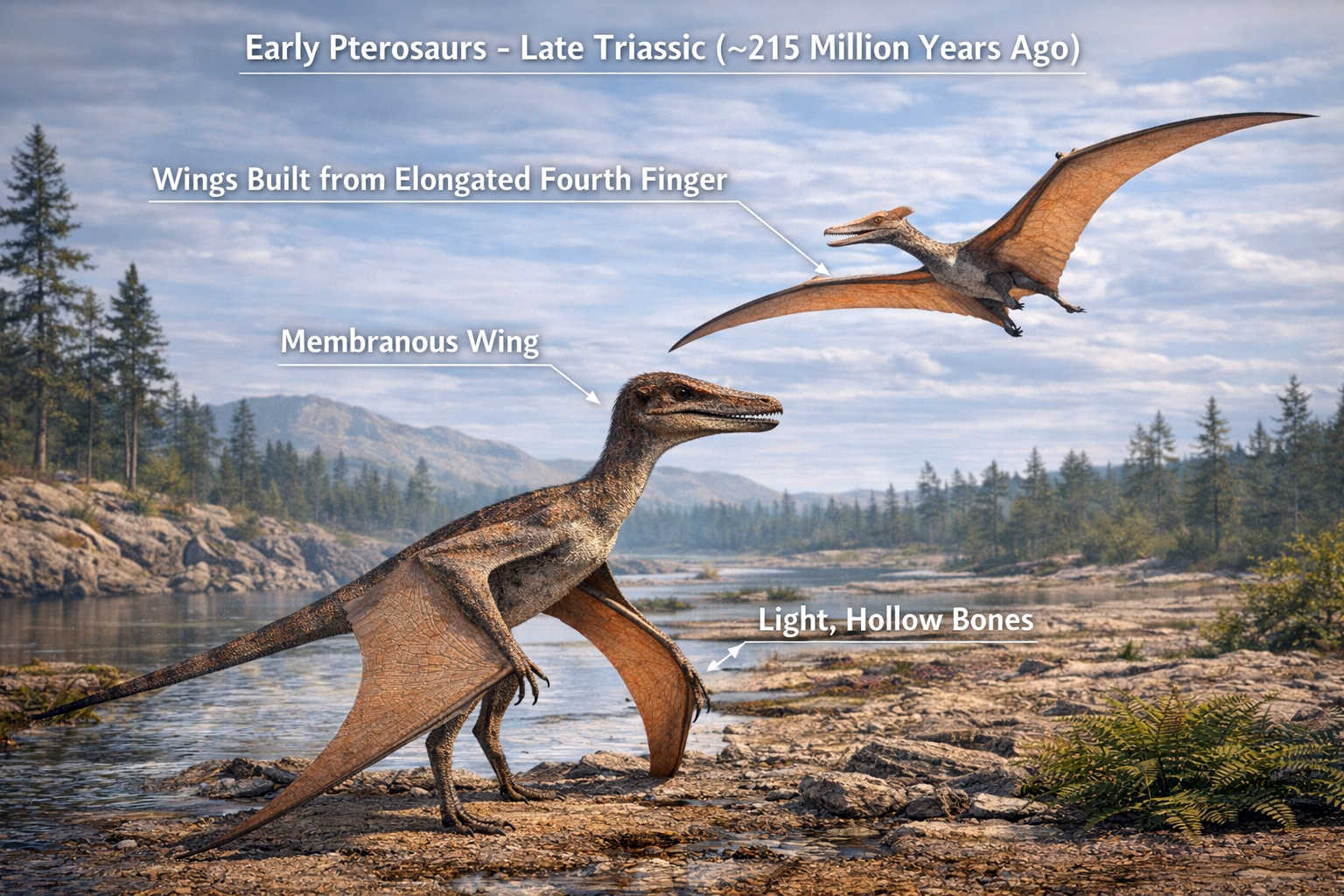
Pterosaurs were not dinosaurs but do share a common ancestor. They are a distinct group of flying reptiles that emerged in the Late Triassic.
215 Million years ago (+/- 5 million)
Triassic–Jurassic Extinction: Volcanoes Open the Age of Dinosaurs
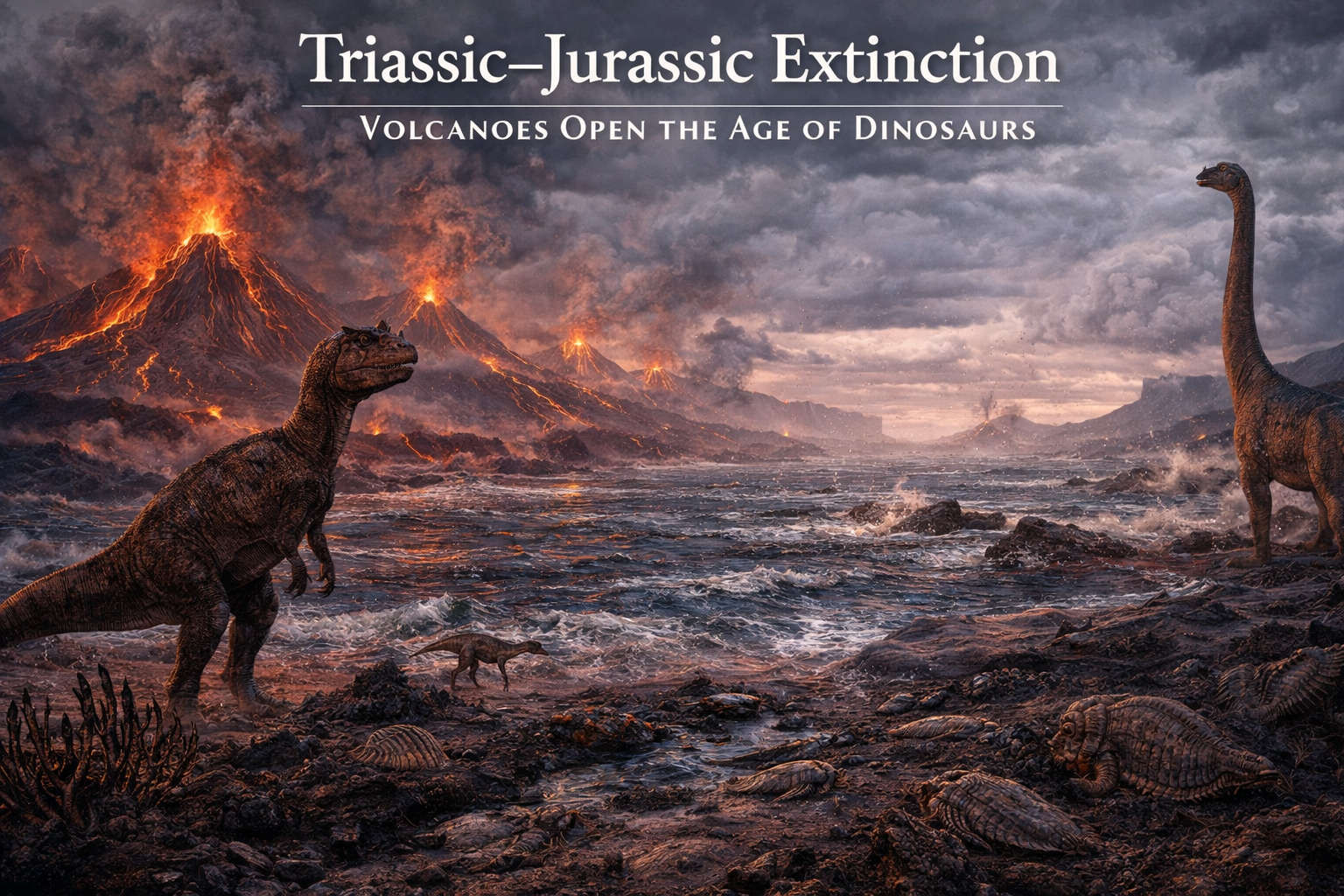
As Pangea cracked apart, massive volcanic eruptions poisoned air and oceans. This image includes early dinosaurs as foreshadowing: survivors waiting in the smoke before their Jurassic rise.
~201 Million Years Ago
Cause: Massive Volcanic Eruptions
Avialae: Bird Line Diverges
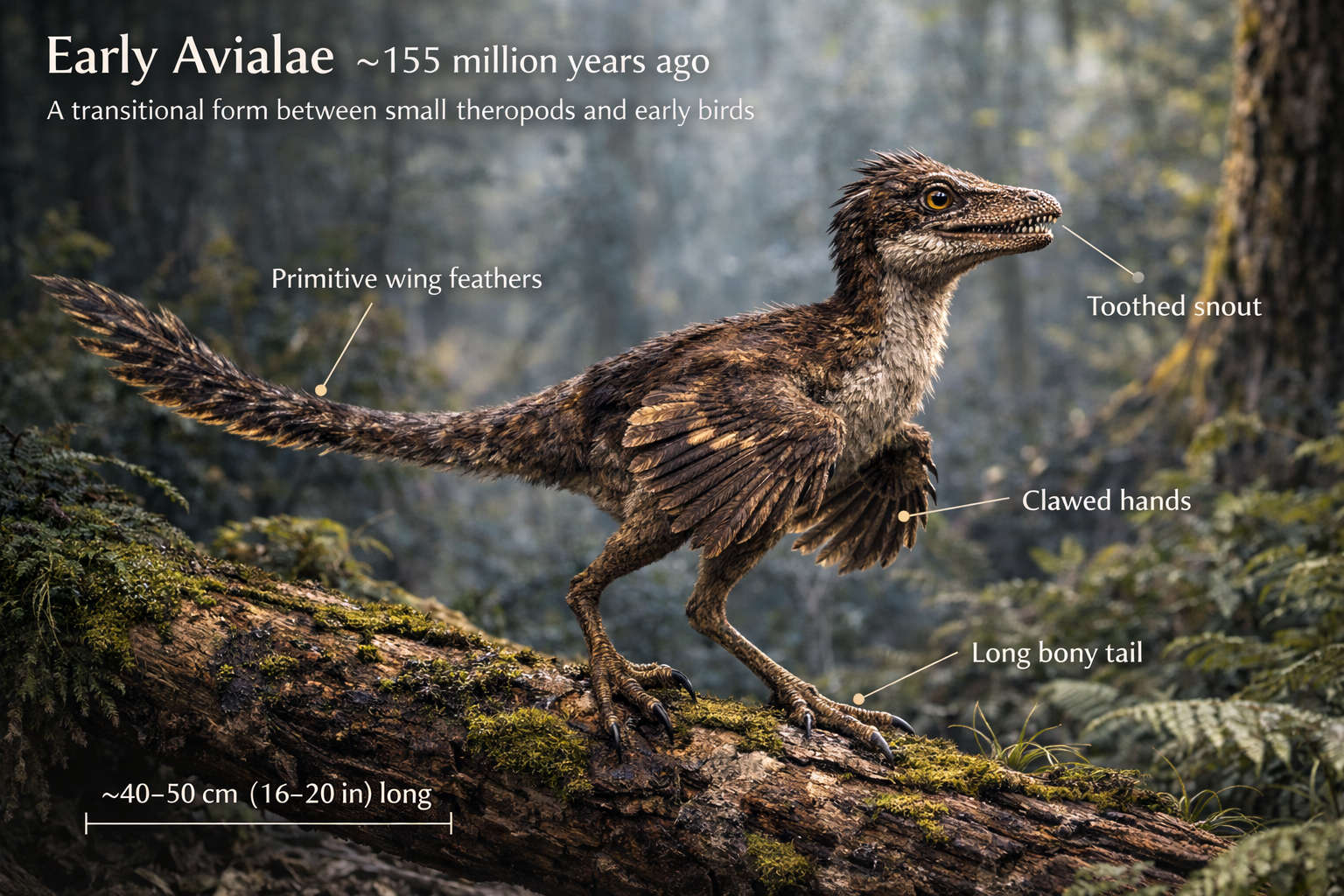
Around 155 million years ago, an early avialan was probably already broadly Archaeopteryx-like, yet still unmistakably dinosaurian: small feathered theropod with teeth, claws, and a long bony tail.
155 Million years ago (+/- 5 million)
The K-Pg Extinction
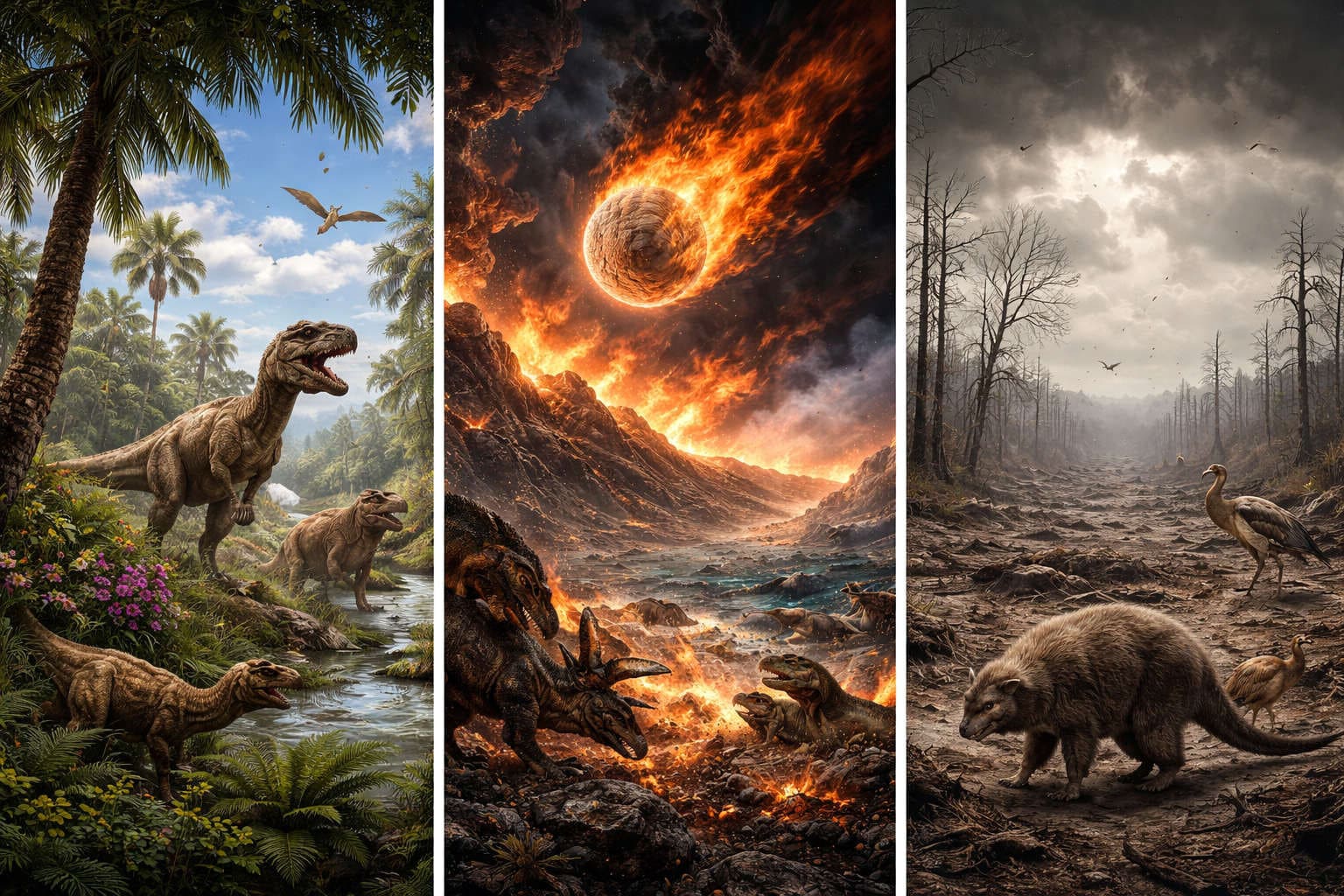
The K–Pg extinction was a sudden global catastrophe that ended the long dominance of non-avian dinosaurs and opened the way for mammals and modern birds to expand into a transformed world.
66.04 million years ago (+/- 900 years).
Cause: Massive Meteor
Cenozoic Era: Age of Mammals & Birds
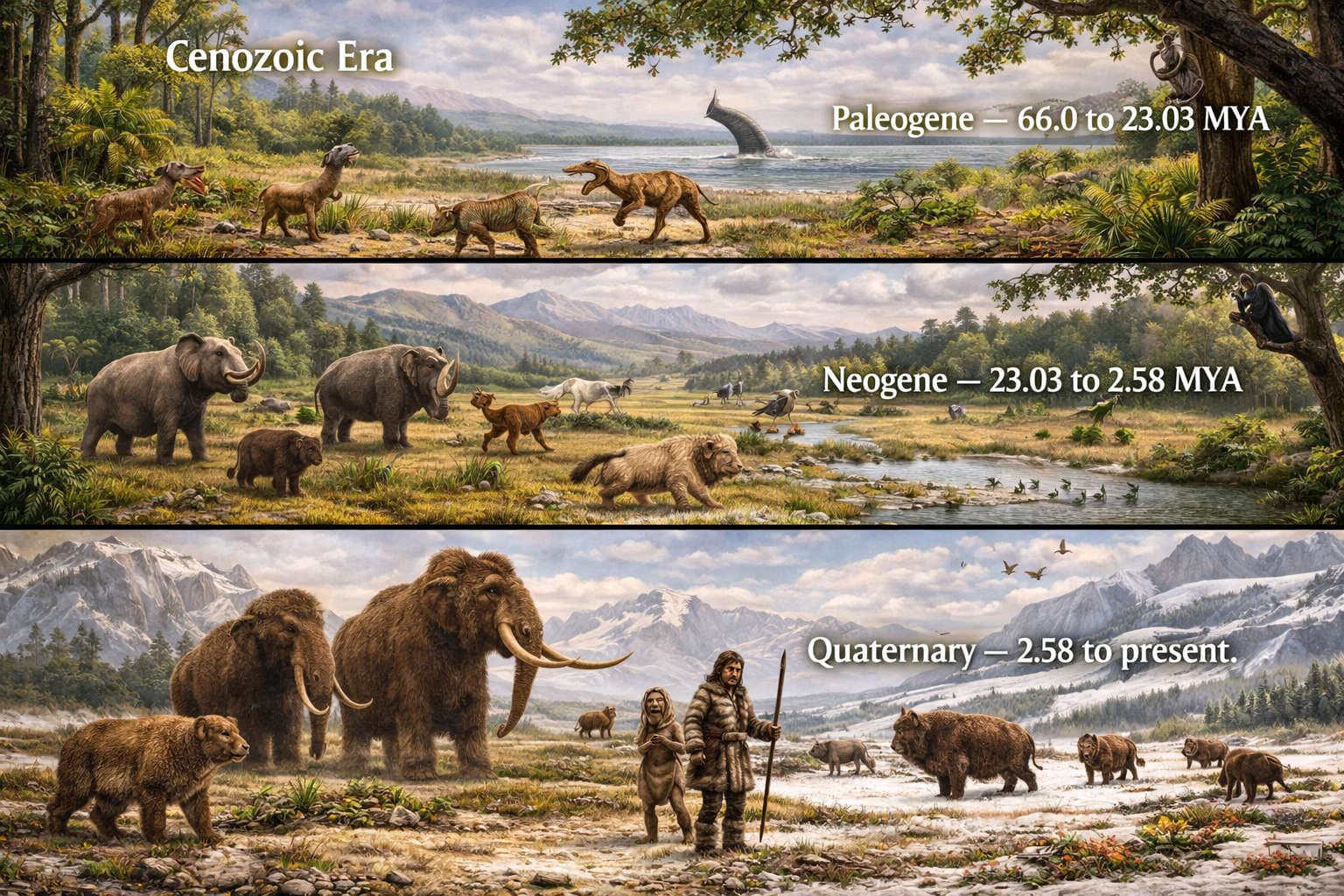
The Cenozoic era starts with the K–Pg extinction 66 million years ago. That event marks the sudden end of the reign of dinosaurs and the rise of mammals and birds.
66.04 million years ago to the present.
66 Million years: From extinction to society.