

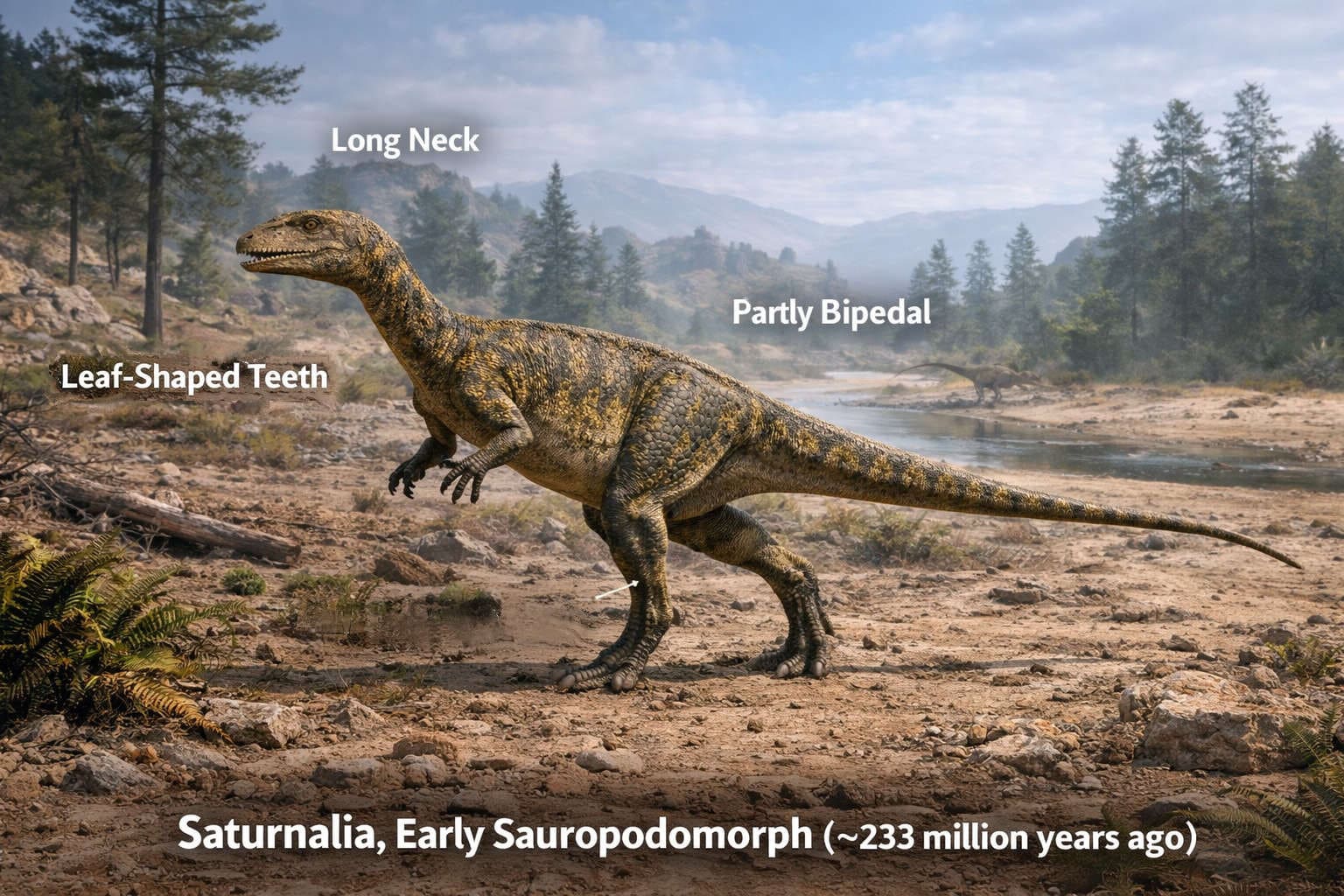
While the theropods mastered the art of the hunt, another branch of the dinosaur lineage took a different path toward specialized gigantism. The Sauropodomorphs began as modest, bipedal omnivores in the Late Triassic, but they soon committed to a radical body plan centered on herbivory. This divergence marked the beginning of a biological arms race against gravity. By evolving elongated necks and specialized digestive systems, they gained access to high-canopy vegetation that no other creatures could reach. They did not just inhabit their ecosystems; they reshaped them, becoming the largest land animals to ever walk the Earth.
The anatomy of a classic sauropod was a marvel of biological engineering. To support their massive bulk—which in some species exceeded 70 tons—they transitioned to a “columnar” four-legged stance, with limbs like pillars. Their long necks were made possible by air-filled, hollowed-out vertebrae that reduced weight without sacrificing structural integrity. Small, peg-like teeth were designed not for chewing, but for stripping foliage, which was then processed in enormous gut chambers. From the whip-tailed Diplodocus to the towering Brachiosaurus, these animals functioned as mobile, self-sustaining grazing machines, protected from predators by sheer scale and powerful tails.
The legacy of the sauropodomorphs is one of total environmental dominance that lasted for over 100 million years. They survived the fragmentation of the supercontinent Pangea, spreading to every corner of the globe from the snowy forests of the north to the vast plains of Patagonia. Although they left no living descendants—falling victim to the same mass extinction that claimed all non-avian dinosaurs—their influence remains etched in the fossil record. They represent the absolute limit of what vertebrate physiology can achieve on land, a testament to an evolutionary strategy that traded speed and agility for the unstoppable power of size.

