

30 Philosophers, Chapter 21: Galileo and the Scientific Revolution.
Galileo Galilei, more of a scientist than a traditional philosopher, forever altered our understanding of nature. He was born on February 15, 1564. Galileo was a great scientist in his time. His “way,” his method, of performing science helped push us toward our modern approach. The story of Galileo is also the story of Copernicus, and the story of modern cosmology. This is the era in which humanity started to learn about the fundamental structure of the universe. Galileo’s book “Two New Sciences,” published in 1638, contains his most significant contributions to science, particularly his work on motion and the strength of materials. Galileo was a master mathematician, and his contributions to mathematics were both scientific and philosophical. Galileo’s ideas about the infinitesimal were so clear, within decades, both Isaac Newton and Gottfried Leibniz independently developed calculus. Still under house arrest, he passed away at the age of 78 in January 1642.
STORY
Galileo Galilei
☐ Read
☑ Read
You’ve read this 0 times.
You’ve listened to this 0 times.
By Michael Alan Prestwood
Wed 10 Apr 2024
Published 3 years ago.
Updated 6 months ago.
Related Stories
- Related Categories: Astronomy, Post Medieval, Science
Share :
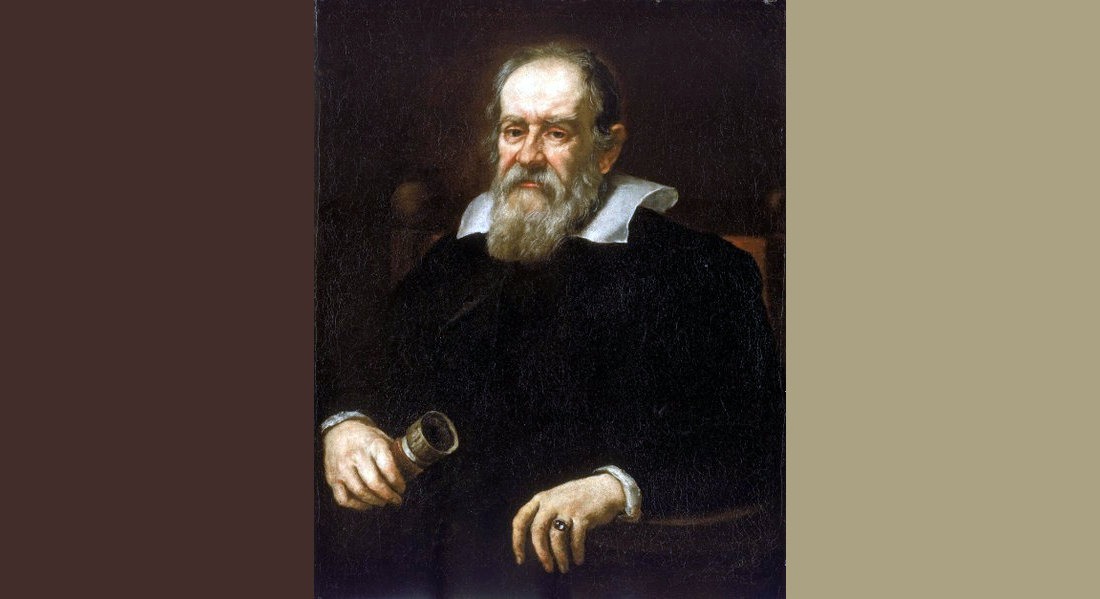
Galileo Galilei
born 1564.
Lived from 1564 to 1642, aged 77.
- < 1 minute read
18 Generations Ago
— map / TST —

Michael Alan Prestwood
Author & Natural Philosopher
Author & Natural Philosopher
Prestwood writes on science-first philosophy, with particular attention to the convergence of disciplines. Drawing on his TST Framework, his work emphasizes rational inquiry grounded in empirical observation while engaging questions at the edges of established knowledge. With TouchstoneTruth positioned as a living touchstone, this work aims to contribute reliable, evolving analysis in an emerging AI era where the credibility of information is increasingly contested.
Email
Print
The Prestwood Column
Menu
October 2026
»COLUMN ARCHIVE
--COLUMN--
Column Research….
NEW BOOK! NOW AVAILABLE!!
30 Philosophers: A New Look at Timeless Ideas
by Michael Alan Prestwood
