
Explore Science-first Philosophy

FAQ

Was Plato’s Academy the first university?

Wed 25 Sep 2024
Published 2 years ago.
Updated 2 weeks ago.
Related FAQs
Did existential authenticity originate in the East?
Were evangelicals and catholics a part of the first 100 years of the United States?
Does Musk’s Mars vision highlight poor reasoning?
What is the difference between Public Truth and Public Belief?
Can our perception of size and scale be trusted?
Did talking our way through life drive a million years of brain growth?
Share :
Email
Print

Was Plato’s Academy the first university?

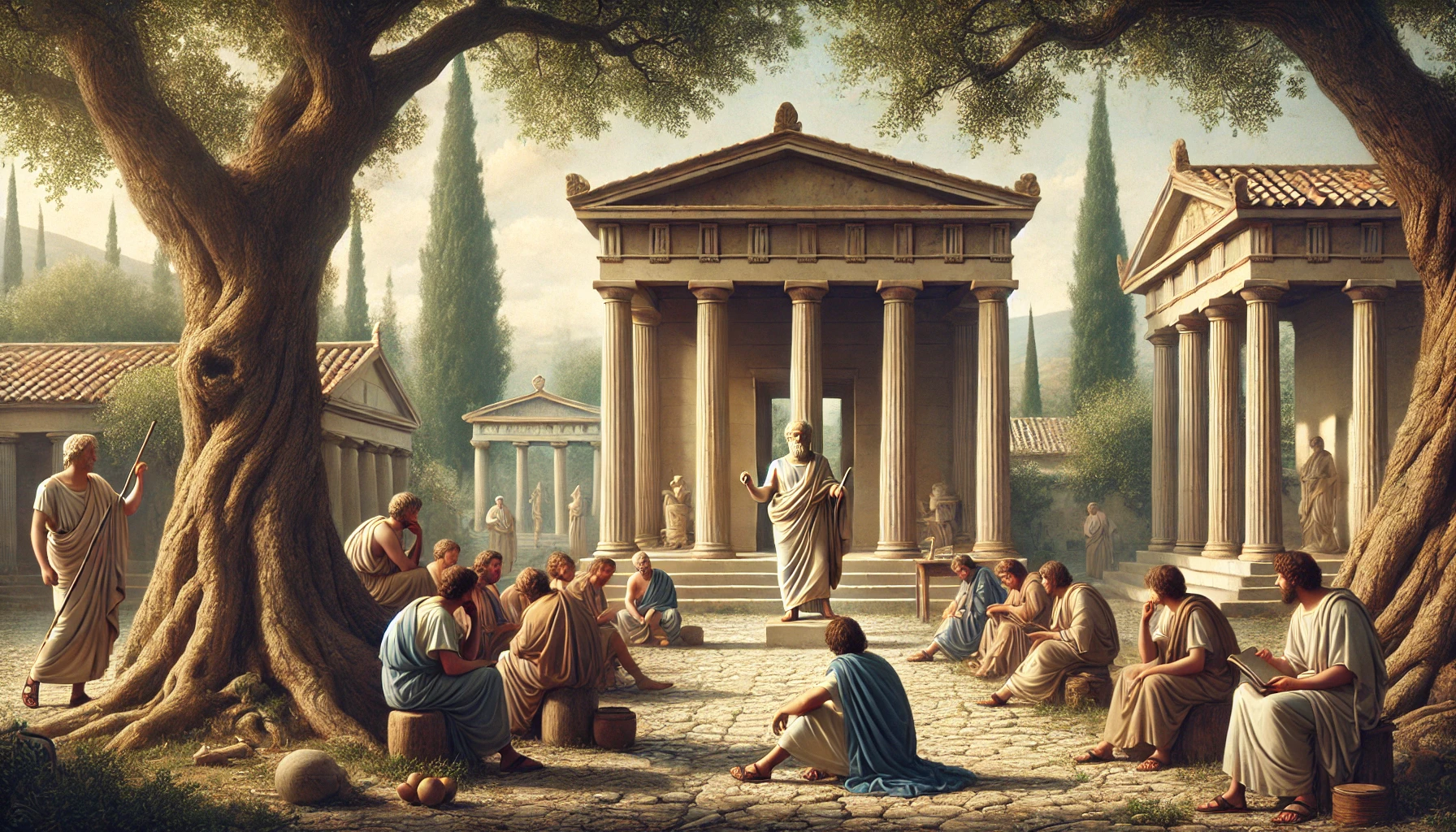
No, Plato’s Academy wasn’t the first university, despite what some may claim online. While the term “university” can be debated, the Academy doesn’t fit the criteria. In fact, there were several learning centers like it before the Academy was founded in 387 BCE. The concept of a university, with formal degrees and structured curricula, didn’t emerge until the 12th century with institutions like the University of Bologna in Italy.

That being said, Plato’s Academy was incredibly influential. It was one of the earliest schools of philosophy, where students gathered not for diplomas, but to explore ideas, debate, and pursue wisdom. Most schools in ancient Greece operated in a similar way—without degrees or certifications. Learning took place in the open air, in homes, or at gymnasiums, which were as much centers of intellectual exercise as they were for physical activity.

The Academy, named after the location where it met, was a place for studying subjects like mathematics, ethics, and philosophy. It fostered dialogue and critical thinking under the guidance of a head teacher, in this case, Plato. While it didn’t resemble modern universities, its legacy laid the foundation for formal education as we know it today.
— map / TST —

Michael Alan Prestwood
Author & Natural Philosopher
Prestwood writes on science-first philosophy, with particular attention to the convergence of disciplines. Drawing on his TST Framework, his work emphasizes rational inquiry grounded in empirical observation while engaging questions at the edges of established knowledge. With TouchstoneTruth positioned as a living touchstone, this work aims to contribute reliable, evolving analysis in an emerging AI era where the credibility of information is increasingly contested.
This Week @ TST
April 15, 2026
»Column Archive
WWB Research….
1. Story of the Week
John Snow and the Broad Street Pump
2. Quote of the Week
“A wise man proportions his belief to the evidence.”
3. Science FAQ »
Were dinosaurs Jurassic movie smart?
4. Philosophy FAQ »
How does the idea of Identity in Christ fit within TST?
5. Critical Thinking FAQ »
What is the difference between Public Truth and Public Belief?
6. History FAQ!
Did Einstein’s driver really give one of his early talks?
Bonus Deep-Dive Article
TST Epistemic Calibration: Credence and Degrees of Belief

Comments

Join the Conversation! Currently logged out.
NEW BOOK! NOW AVAILABLE!!

30 Philosophers: A New Look at Timeless Ideas

by Michael Alan Prestwood
The story of the history of our best ideas!
Scroll to Top