
Weekly Insights for Thinkers

FAQ

Did Copernicus remove humanity from the center of the universe?

Wed 21 Jan 2026
Published 2 months ago.
Updated 2 months ago.
Copernicus
Related FAQs
What is Ontology and why is it important?
What does existence before essence mean?
Share :

Did Copernicus remove humanity from the center of the universe?

In a literal sense, yes—Copernicus moved Earth out of the center of the cosmos. But philosophically, that’s not what shook people. The real shock wasn’t astronomical. It was existential.

For centuries, being at the center meant meaning. Purpose. Specialness. When Copernicus suggested that Earth was just another planet in motion, it felt like a demotion—not just of our location, but of our place in the story of reality.

But here’s the twist: Copernicus didn’t take meaning away. He separated meaning from position. He showed that truth doesn’t revolve around us—and that maybe it never did.

This was the beginning of a harder, humbler idea: that significance isn’t guaranteed by where we stand in the universe, but by how honestly we understand it. The universe didn’t get colder. Our illusions just got thinner.

Copernicus didn’t shrink humanity.
He challenged us to grow up.
— map / TST —

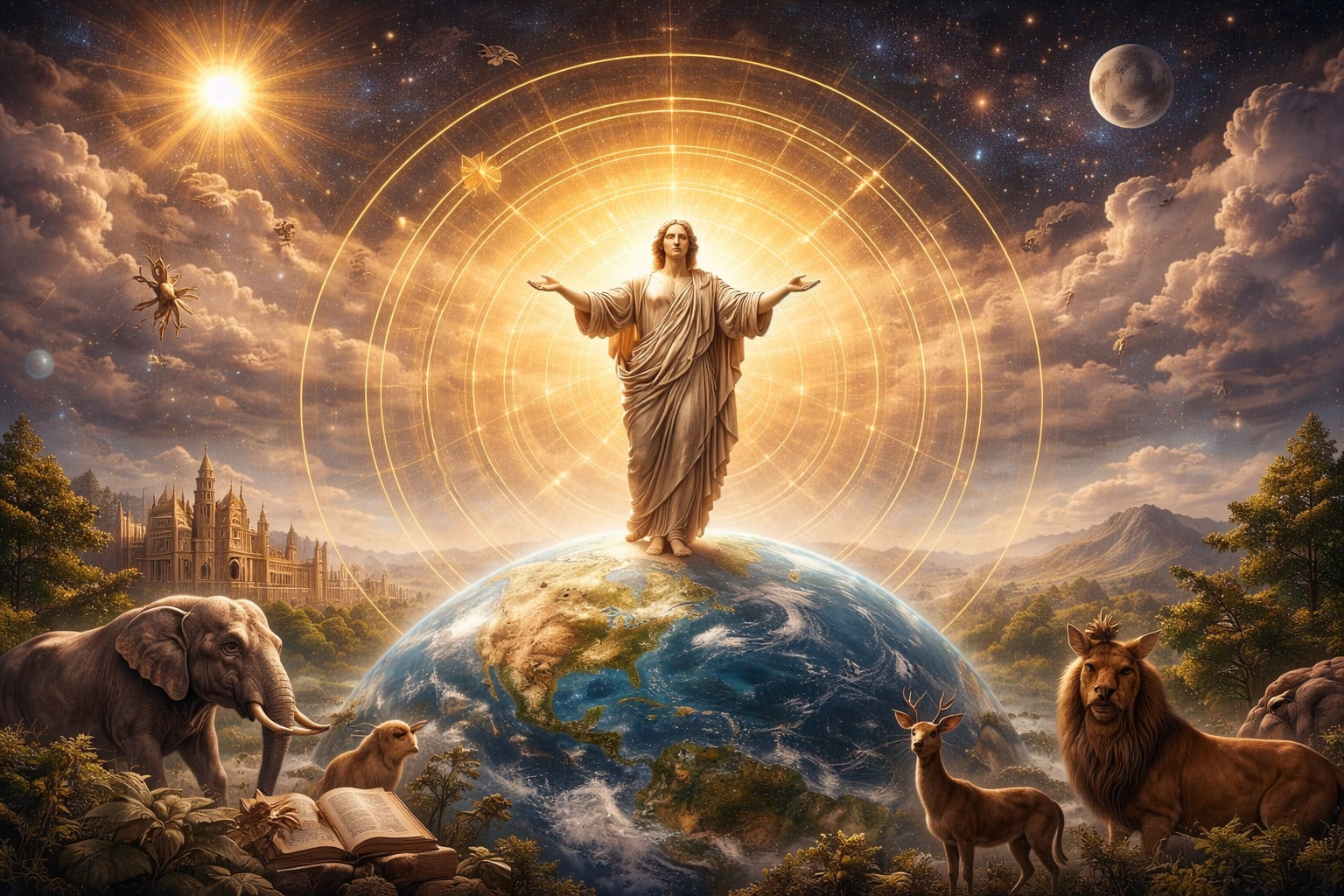
Anthropocentrism places humans at the center of reality, assuming importance flows from proximity to us. It shaped early thought and continues to shape it.
Michael Alan Prestwood
Author & Natural Philosopher
Prestwood writes on science-first philosophy, with particular attention to the convergence of disciplines. Drawing on his TST Framework, his work emphasizes rational inquiry grounded in empirical observation while engaging questions at the edges of established knowledge. With TouchstoneTruth positioned as a living touchstone, this work aims to contribute reliable, evolving analysis in an emerging AI era where the credibility of information is increasingly contested.
This Week @ TST
March 4, 2026
»Edition Archive
WWB Research….
1. Story of the Week
Marcus Aurelius: An Explorative Agnostic
2. Quote of the Week
“Our knowledge is finite, while our ignorance is infinite.”
3. Science FAQ »
Do we experience reality directly?
4. Philosophy FAQ »
What is TST Ethics?
5. Critical Thinking FAQ »
What is confirmation bias, and why does it matter?
6. History FAQ!
What historical ideas shaped TST Philosophy?
Bonus Deep-Dive Article
1-2-3-4-5: TST Philosophy Overview

Comments

Join the Conversation! Currently logged out.
NEW BOOK! NOW AVAILABLE!!

30 Philosophers: A New Look at Timeless Ideas

by Michael Alan Prestwood
The story of the history of our best ideas!
Scroll to Top