Weekly Insight for Thinkers
Science  Philosophy  Critical Thinking  History  Politics RW  AI  Physics  •  Evolution  Astronomy 30 Phil Book More…

1-Prehistory Age

Prehistory Age (50,000 to 4,000 years ago): After the cognitive age, the prehistory for modern humans starts. The time after the stabilization of our raw cognitive abilities.

Dispilio Tablet: European Proto-Writing

Location: Neolithic Settlement of Dispilio, Greece. Discovered in 1993, the Dispilio Tablet is an ancient wooden tablet, etched with intricate symbols. Its symbols have yet to be deciphered, leaving its true purpose shrouded in mystery. Were these marks part of a record-keeping system? A symbolic ritual? Or could they represent one of the earliest known forms […]

Dispilio Tablet: European Proto-Writing Read More »

Sunghir Burial Site

The Sungir Burial Site, dating back to around 30,000 BCE, offers a remarkable glimpse into the lives of Upper Paleolithic humans in what is now Russia. The people of Sungir were part of a sophisticated hunter-gatherer society, living in the cold climate of the Russian Plain. They were highly skilled artisans and craftsmen, evidenced by

Sunghir Burial Site Read More »

Vinor Circular Building: a roundel

Europe, Czech Republic: The Vinor Circular Building, discovered in Vinoř, Prague, is a remarkable archaeological site dating back to approximately 900 years before the common Biblical creation date. This Neolithic structure, known as a roundel, consists of three concentric trenches forming a large circular enclosure with multiple entrances. With an internal diameter of about 55

Vinor Circular Building: a roundel Read More »

Cuban Underwater City: More Research Needed

The sea offers tremendous resources and stability. The rising and receding oceans continue to destroy the homes of many. How many unknown cultures in our vast history thrived on the coast for millennia?   The site discovered off the coast of Cuba, also known as the “Cuban Underwater Pyramids,” includes pyramid-like structures and other geometric formations

Cuban Underwater City: More Research Needed Read More »

Proto-Inca People

The Proto-Inca people likely lived in the Andean region of Peru as far back as 4500 BCE. It’s reasonable to assume they were hunter-gatherers, adapted to the challenging mountain environment. They may have had a nomadic lifestyle, following the seasonal migration of animals and plants. The Proto-Inca people likely developed early forms of textiles, ceramics,

Proto-Inca People Read More »

Proto-Maya People

The Proto-Maya people likely inhabited the Yucatan region of Mexico, Guatemala, Belize, and Honduras around 3500 BCE. It’s reasonable to assume they were also hunter-gatherers, taking advantage of the area’s diverse wildlife and plant resources. They may have had a more settled lifestyle, with early evidence of ceramics and permanent settlements. The Proto-Maya people likely

Proto-Maya People Read More »

Czeck: Dolní Věstonice Community

The Dolní Věstonice people thrived in a harsh Ice Age landscape. They built sturdy huts from mammoth bones, crafted intricate art, and developed symbolic expression. They honored their dead with elaborate burials and likely held spiritual beliefs. With early ceramics and resourceful hunting practices, they demonstrated remarkable adaptability and creativity, leaving behind a lasting legacy

Czeck: Dolní Věstonice Community Read More »

Ukraine: Mezhyrich Community

The Mezhyrich community thrived in Ukraine, living in huts built from mammoth bones. These resourceful people used mammoth skulls, tusks, and bones to construct shelters covered with animal skins. They engaged in daily activities such as cooking, tool-making, and socializing, showcasing a harmonious, bustling life. The nearby rivers provided resources and sustenance, while their sophisticated

Ukraine: Mezhyrich Community Read More »

Extinction: Homo Erectus

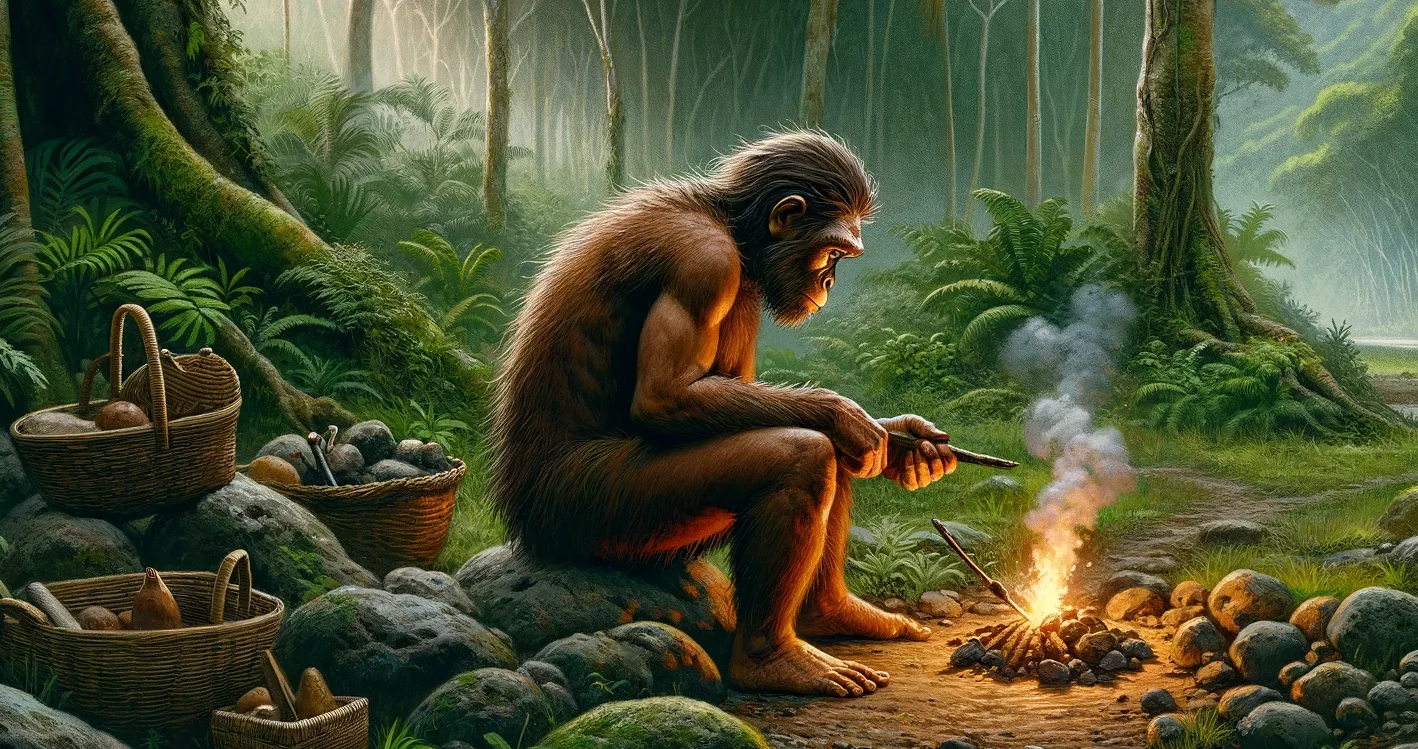
Homo erectus and humans last coexisted in Javanese in Asia around 50,000 years ago. Imagined image above: A late-stage Homo erectus individual in Java, Indonesia, focused on crafting a tool from volcanic rock near a simple fire, set within the lush tropical rainforest. This visualization aims to capture the essence and appearance of Homo erectus

Extinction: Homo Erectus Read More »

Extinction: Denisovans

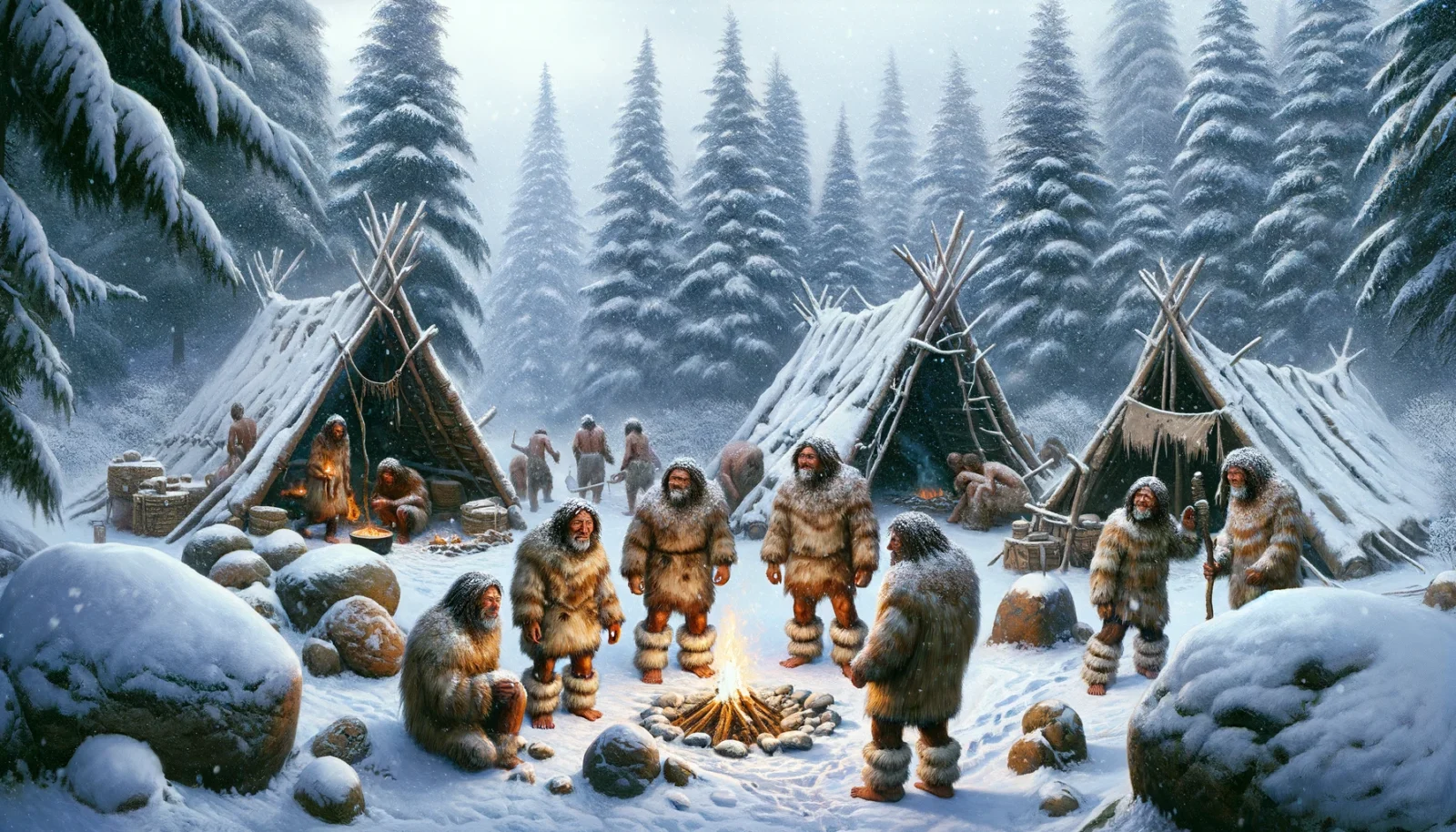
Denisovans and humans coexisted in Siberia from about 194,000 to around 40,000 years ago. While their exact cause of extinction remains debated, competition with modern humans and climate change are thought to be contributing factors. Imagined image: Set in Siberia around 45,000 years ago, a group of Denisovans is depicted in their winter camp, surrounded

Extinction: Denisovans Read More »

Extinction: Neanderthals

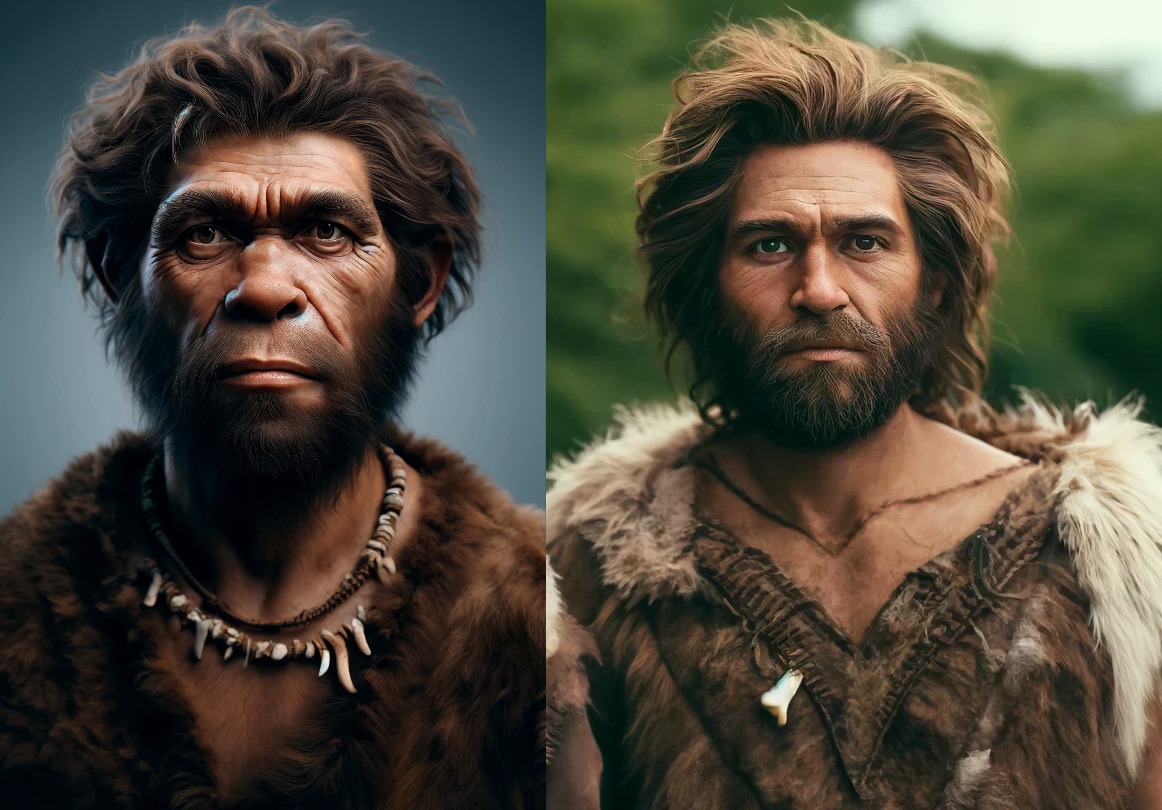
Homo neanderthalensis: Neanderthals and humans coexisted in Europe and Asia until around 40,000 years ago. While their exact cause of extinction remains debated, competition with modern humans and climate change are thought to be contributing factors. Imagined image: Left is a neanderthal, right a human. Just as human looks vary widely, Neanderthals did too. This

Extinction: Neanderthals Read More »

Upper Paleolithic Cave Art with Symbols

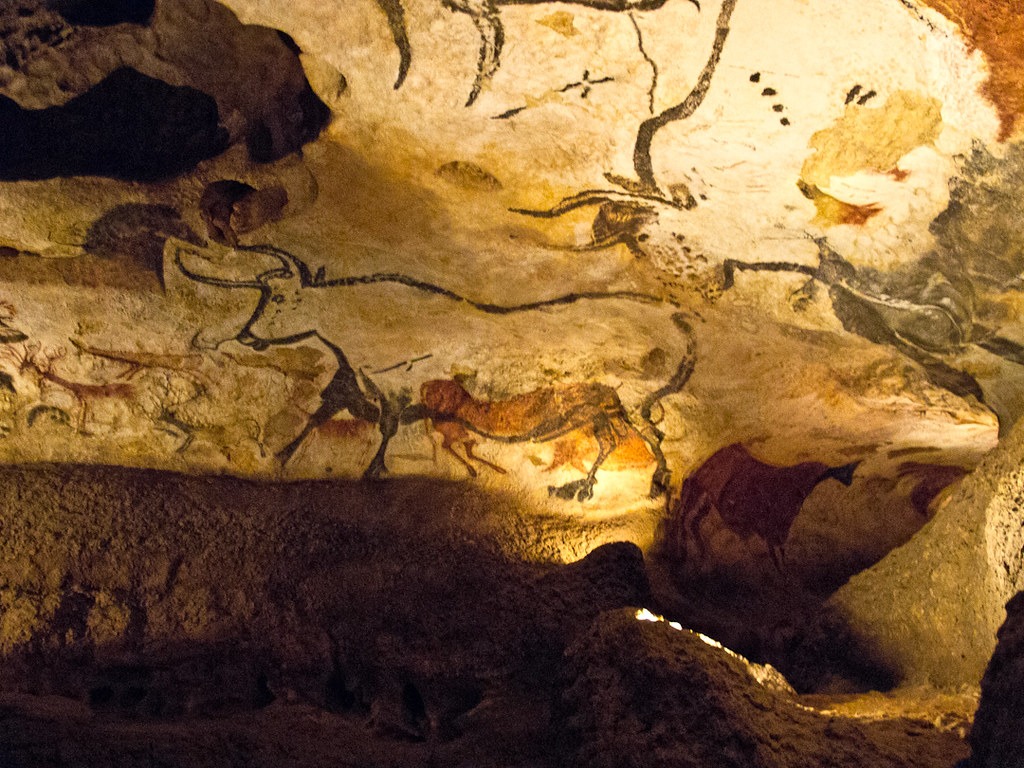
Earliest known symbol use in the Europe/Mediterranean zone.  Dating back to around 40,000 BCE, the Upper Paleolithic cave art found across Europe presents a compelling narrative of early human communication and symbolic expression. Sites like Lascaux in France and Altamira in Spain feature elaborate depictions of animals, human figures, and abstract symbols that recur with

Upper Paleolithic Cave Art with Symbols Read More »

World Population: 1.5 Million

Cognitive Revolution By 70,000 BCE. Population range: 500,000 to 2.5 million. Given the uncertainties and lack of direct data, the following are speculative estimates. Africa-Middle East: 50-60% or 600,000 to 1 million people Africa, being the origin of modern humans, likely had the highest population density at this time, particularly in Sub-Saharan regions which were

World Population: 1.5 Million Read More »

Seasonal Settlements at Monte Verde

Earliest Known Semi-Permanent Settlement in the Americas: Located in the lush landscapes of southern Chile, Monte Verde marks one of the earliest known human settlements in the Americas. Dating back to around 14,800 years ago, this site provides compelling evidence of early human ingenuity and adaptability far from the commonly accepted Eurasian cradles of civilization. The

Seasonal Settlements at Monte Verde Read More »

Scroll to Top