Weekly Insights for Thinkers

6-Stone Age

Stone Age (3.3 million to 1.5 million years ago): This is the age of the rise of simple symbolic thought and the dexterous human hand (nature) and the beginning of crafting tools (nurture).

Earliest Known Toothpicks

Homo habilis, one of the earliest known human ancestors, emerged around 2.3 million years ago with a brain size significantly larger than modern chimpanzees. By around 1.8 million years ago, they became the first species known to use toothpicks for dental hygiene, alongside their advanced tool use for specific tasks like skinning animals and cutting […]

Earliest Known Toothpicks Read More »

Human Thumb Evolves

Slightly greater range of movement and precision: Around 2 to 3 million years ago, the evolution of the human thumb reached a pivotal point. Early hominins, such as Australopithecus and later Homo habilis, exhibited a thumb that was more similar to that of modern humans. This thumb was capable of a greater range of movement

Human Thumb Evolves Read More »

Olduvai Gorge Site: A Glimpse into Early Organizational Behavior

The Olduvai Gorge in Tanzania stands as a testament to early human ingenuity and foresight, illustrating a rudimentary form of organizational behavior that predates modern civilization. Utilized extensively over two million years, the site functioned akin to a “factory,” where early humans systematically crafted a variety of stone tools. They strategically selected specific locations that

Olduvai Gorge Site: A Glimpse into Early Organizational Behavior Read More »

Early Wood tools

Simple wood tools starting with picking up a stick to poke at some out of reach fruit likely paralleled the use of stone tools. Wood tools for the most part did not survive the test of time. The earliest so far include advanced javelins from 400,000 years ago and a digging tool from 780,000 years

Early Wood tools Read More »

Emergence of Early Hominin Shelters

The origins of tent-like structures in human history remain shrouded in mystery, primarily due to the perishable materials involved and the lack of direct archaeological evidence. However, as Homo erectus appeared and spread into varied climates, their enhanced tool-making skills and control of fire likely necessitated and enabled the construction of more complex shelters. This

Emergence of Early Hominin Shelters Read More »

First Proto-Containers

The earliest containers were likely simple natural resources that early hominins stumbled upon and adapted for use. Starting possibly with Homo habilis around 2.0 million years ago, these early humans may have utilized large leaves, shells, or naturally hollowed-out pieces of wood as rudimentary containers. This usage marks an innovative step in early human technology,

First Proto-Containers Read More »

Collective Learning Emerges

The dawn of collective learning can be traced back the oldest known stone tools, discovered at Lomekwi 3 in Kenya. The creation of these tools required more than just individual innovation; it involved the rudimentary form of collective learning, where knowledge of toolmaking was shared within groups. This early transmission of skills not only enhanced

Collective Learning Emerges Read More »

Genus: Australopithecus

116,000 Generations Ago This genus is more directly ancestral to humans and includes several species, such as Australopithecus afarensis (famously represented by “Lucy”), Australopithecus africanus, and others. Australopithecines show a greater commitment to bipedalism and have features more closely resembling modern humans, although they still retained some adaptations for climbing. This genus is known for

Genus: Australopithecus Read More »

Oldest Modern Human-like Footprints

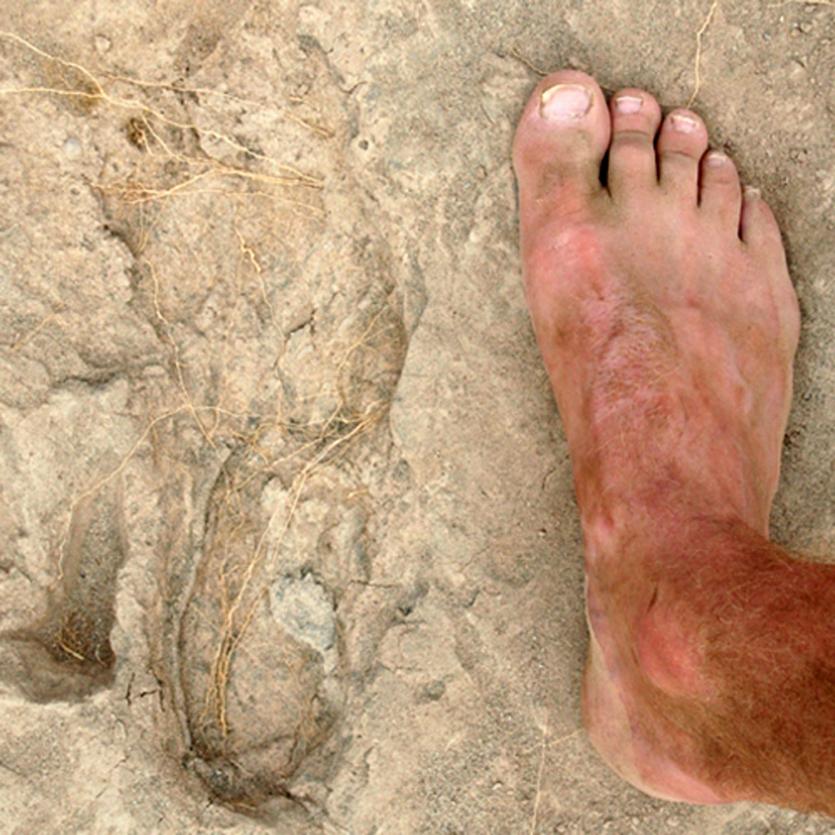
60,800 Generations Ago Species: Likely Homo erectus, our direct ancestor. The footprints found in Ileret, Kenya represent the oldest undisputed evidence of hominins walking upright in an efficient manner characteristic of modern humans. Our style of upright walking, which Homo erectus appears to have shared, is energy-efficient and adapted for long distances. It involves a

Oldest Modern Human-like Footprints Read More »

Hand Axe

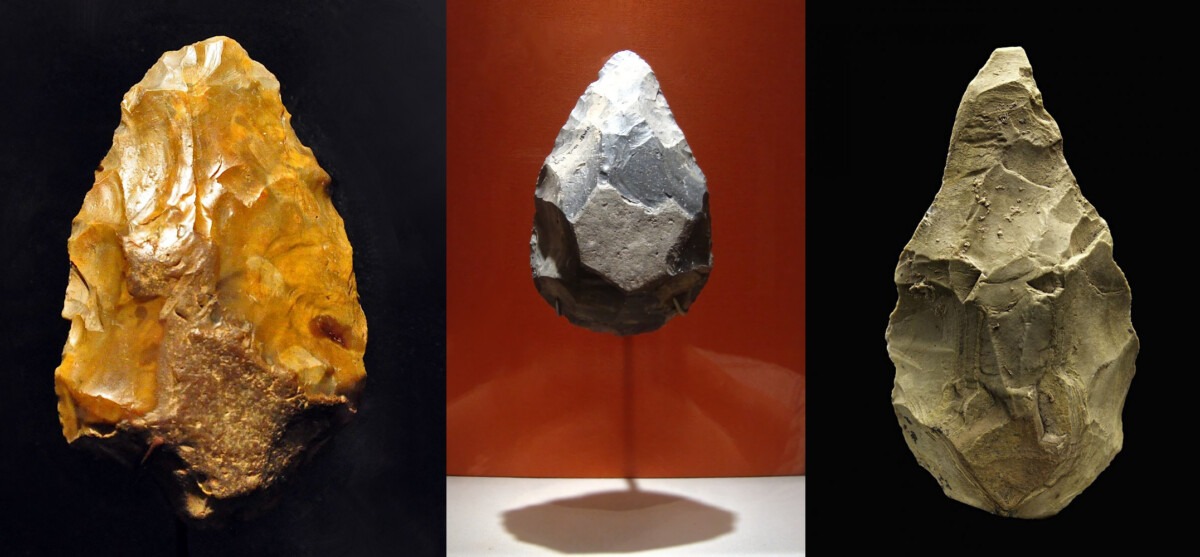
70,400 Generations Ago (from 2020 CE) By about 1.76 million BCE, early humans began to create hand axes. They would strike really large flakes, then continue to shape them around the edges. On the right, the hand axe pictured dates to circa 1.1 million BCE. It was found at Isampur, India.  

Hand Axe Read More »

Early Stone Tools

The earliest known stone tools date back to at least 3.3 million years ago. They are identified by their purposeful flaking patterns, sharp edges, and location with other more identifiable artifacts or fossils. They are then verified with microscopic analysis confirming repetitive use.

Early Stone Tools Read More »

Homo habilis: Our Intelligence Settles.

92,000 Generations Ago Earliest Identified Human: Earlier hominins are “humanoid,” due to their human-like features, but the term “human” is reserved for species in the genus Homo. Homo habilis is the earliest known of these “early humans.” First Earth Explorer: Known as the “handy man,” Homo habilis’s association with the earliest stone tools is evidence

Homo habilis: Our Intelligence Settles. Read More »

Scroll to Top