
Democritus (460 BCE – circa 370 BCE)
Democritus introduced a radical idea: reality is composed of invisible atoms moving through empty space.
Democritus (460 BCE – circa 370 BCE) Read More »


Democritus introduced a radical idea: reality is composed of invisible atoms moving through empty space.
Democritus (460 BCE – circa 370 BCE) Read More »

30 Phil, Chapter 11: The new look at the Epicurean Happiness Toolkit refines Epicurean tools into a clear 1-2-3-4 structure: one goal (pleasure), two types of pleasures, three categories of desires, and the Four-part Remedy (Tetrapharmakos). This presentation emphasizes pleasure as the ultimate aim, specifically ataraxia (peace of mind) and aponia (absence of pain), while replacing
Epicurean Happiness Toolkit: A 4-Step Structure Read More »

30 Phil, Chapter 11, Epicurus, Touchstone 31: Dichotomy of Pleasure. Epicurus defined two types of pleasure: short-term and long-term. Too frequently people put short term pleasures over long-term ones causing deeper harm than warranted. A short-term pleasure is kinetic as in the active enjoyment of fulfilling a desire, such as eating a delicious meal or
Dichotomy of Pleasure Read More »

30 Phil, Chapter 11, Epicurus, Touchstone 30: Agnosticism. Agnostics assert that it is impossible to either prove or disprove certain claims, such as the existence of unicorns, ghosts, or Valhalla. Within OVM, Agnosticism is the empiricist view that sits between true believers and true skeptics. OVM is one of the Five Thought Tools in the TST Framework.
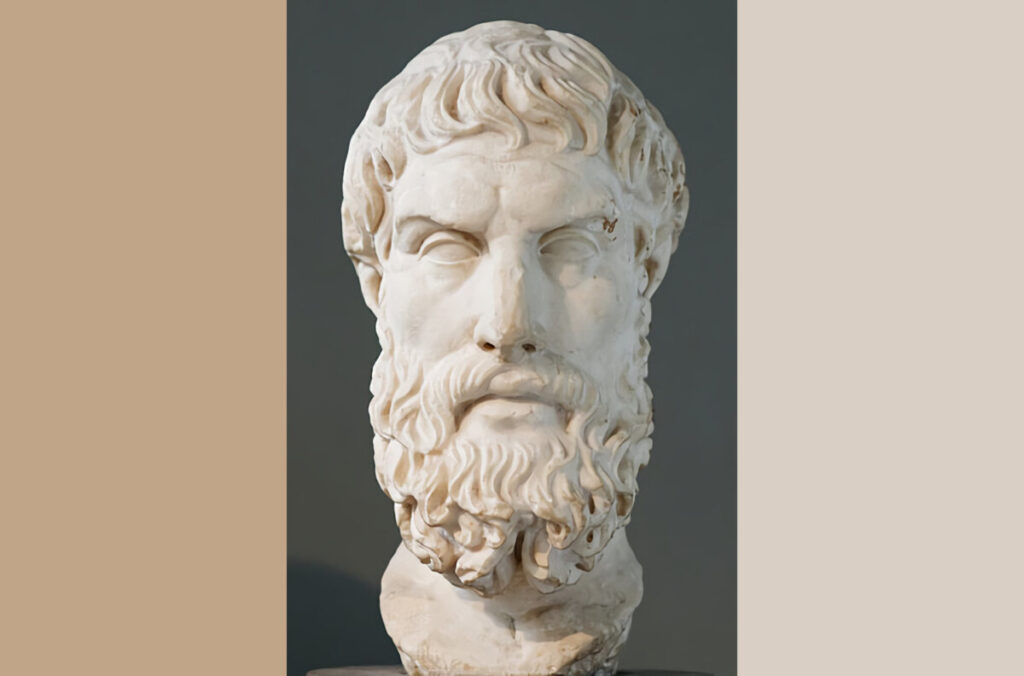
94 Generations Ago 30 Phil, Chapter 11: Epicurus and Epicureanism Epicurus founded Epicureanism in 307 BCE. The goal of Epicureanism is to help people attain a happy (eudaimonic), tranquil life characterized by ataraxia (free from fear) and aponia (free from pain). He authored over 300 books, scrolls, none of which survived the test of time. Some