Weekly Insight for Thinkers
Science  Philosophy  Critical Thinking  History  Politics RW  AI  Physics  •  Evolution  Astronomy 30 Phil Book More…

Land: Asia

This history of Asia.

Chuang Tzu (369-286 BCE)

105 Generations Ago Chuang Tzu, or in modern pinyin, “Zhuangzi,” is a cornerstone of Daoist philosophy. His collection of essays and stories delves into themes of spontaneity, relativity, and the natural order. The famous Butterfly Dream, which questions the boundaries between dreaming and waking states, epitomizes his exploration of transformation and reality. Chuang Tzu championed […]

Chuang Tzu (369-286 BCE) Read More »

Fuxi (伏羲)

If Fuxi existed as one person, that person likely lived sometime between 8000 and 7000 BCE. Fuxi is a legendary figure in Chinese mythology, considered one of the Three Sovereigns. He is credited with creating humanity, inventing writing, and teaching people to fish and hunt. Fuxi’s contributions laid the foundation for early Chinese civilization and culture,

Fuxi (伏羲) Read More »

Nüwa (女娲)

If Nüwa existed as one person, that person likely lived sometime between 8000 and 7000 BCE. Nüwa is a mother goddess in Chinese mythology, often associated with Fuxi. She is credited with creating mankind and repairing the pillar of heaven, symbolizing the restoration of order in the universe. Nüwa’s story highlights themes of creation, nurturing,

Nüwa (女娲) Read More »

Shennong (神农)

If Shennong existed as one person, that person likely lived sometime around 2800 BCE. Shennong, also known as the Divine Farmer, is another of the Three Sovereigns. He is said to have taught the Chinese people agriculture and herbal medicine. Shennong’s contributions emphasize the relationship between humans and nature, the importance of agriculture for societal

Shennong (神农) Read More »

The Yellow Emperor (Huangdi)

The Yellow Emperor, or Huangdi, is a legendary figure in Chinese history, traditionally credited with foundational contributions to Chinese civilization. He is associated with the development of the concept of Yin and Yang, the dualistic nature of reality, and balance, which profoundly influenced Chinese philosophy, medicine, and cosmology. Attributed to his era are the Huangdi

The Yellow Emperor (Huangdi) Read More »

Extinction: Gigantopithecus

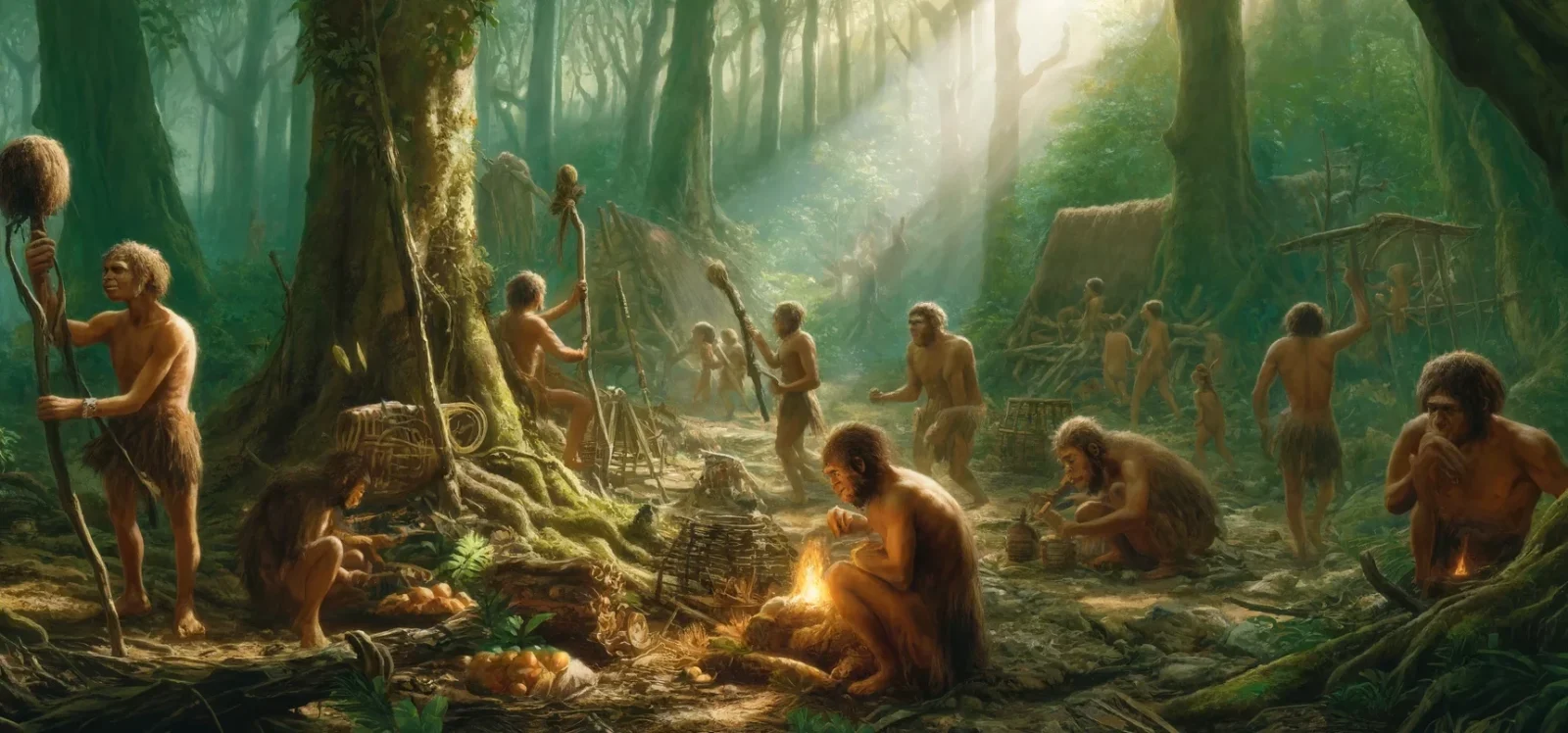
Gigantopithecus is believed to have gone extinct approximately 100,000 years ago. The primary evidence for their existence and extinction comes from fossilized teeth and jawbones found in caves in southern China, Vietnam, and India. About King Kong: The legend of King Kong is a modern fiction rather than an ancient tale. The character of King Kong

Extinction: Gigantopithecus Read More »

Extinction: Homo Erectus

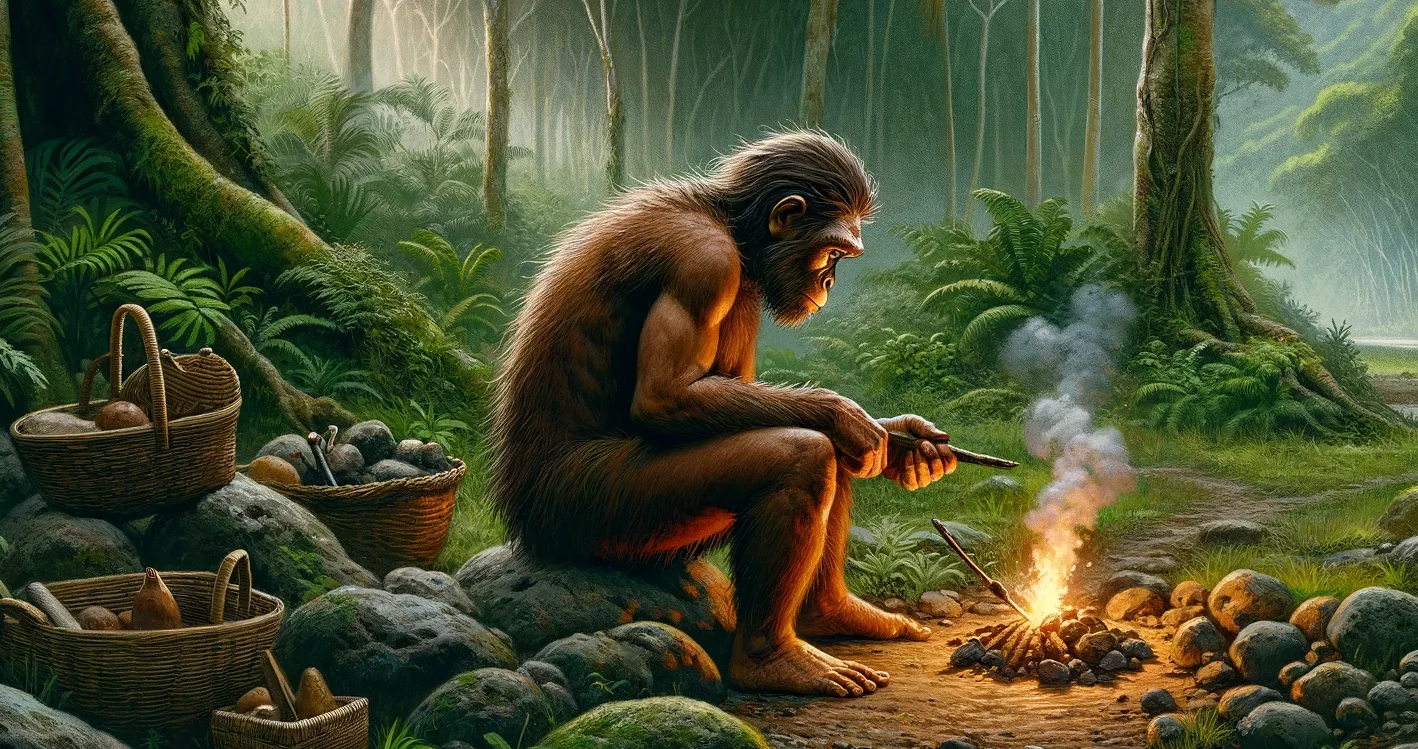
Homo erectus and humans last coexisted in Javanese in Asia around 50,000 years ago. Imagined image above: A late-stage Homo erectus individual in Java, Indonesia, focused on crafting a tool from volcanic rock near a simple fire, set within the lush tropical rainforest. This visualization aims to capture the essence and appearance of Homo erectus

Extinction: Homo Erectus Read More »

Extinction: Denisovans

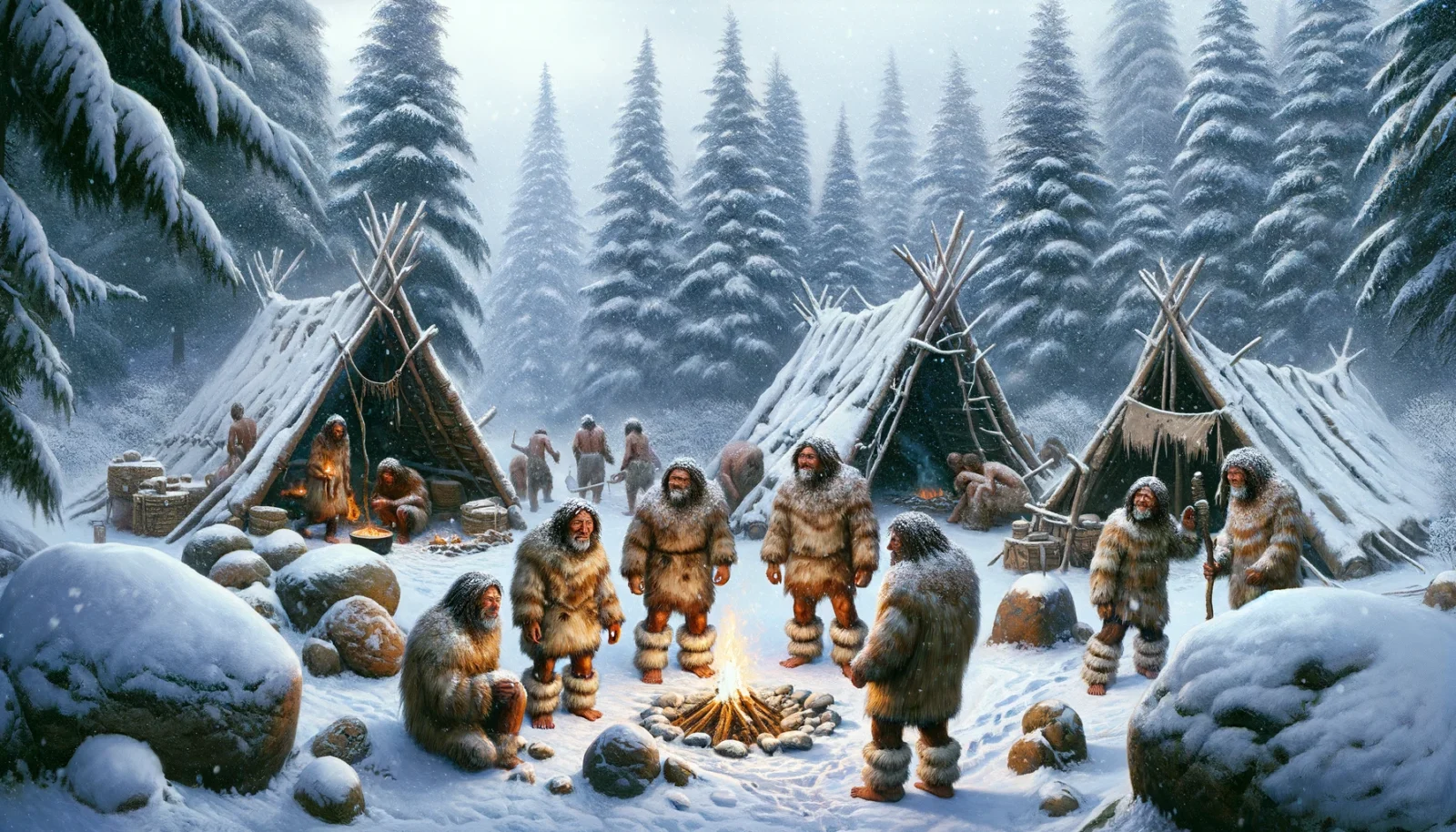
Denisovans and humans coexisted in Siberia from about 194,000 to around 40,000 years ago. While their exact cause of extinction remains debated, competition with modern humans and climate change are thought to be contributing factors. Imagined image: Set in Siberia around 45,000 years ago, a group of Denisovans is depicted in their winter camp, surrounded

Extinction: Denisovans Read More »

Extinction: Neanderthals

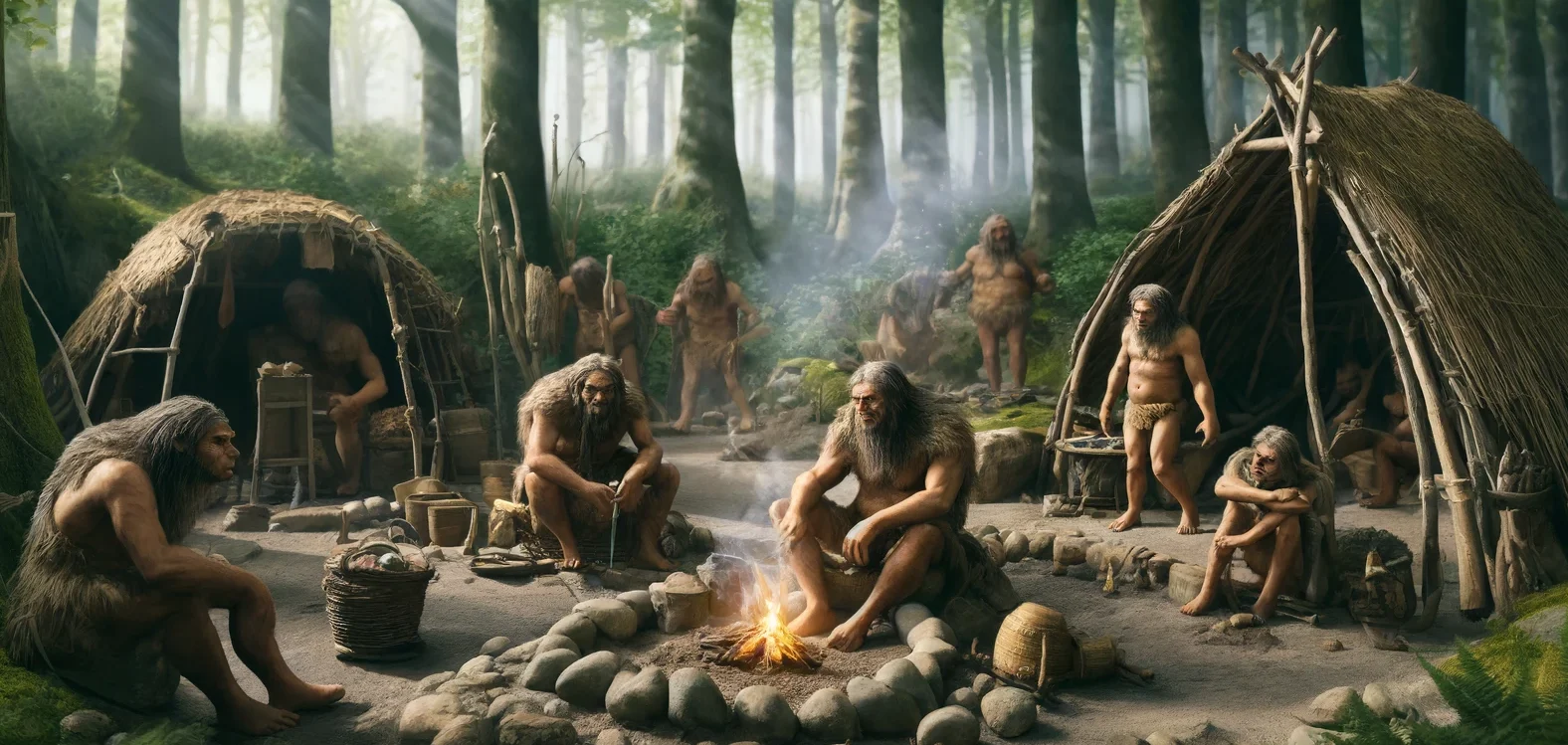
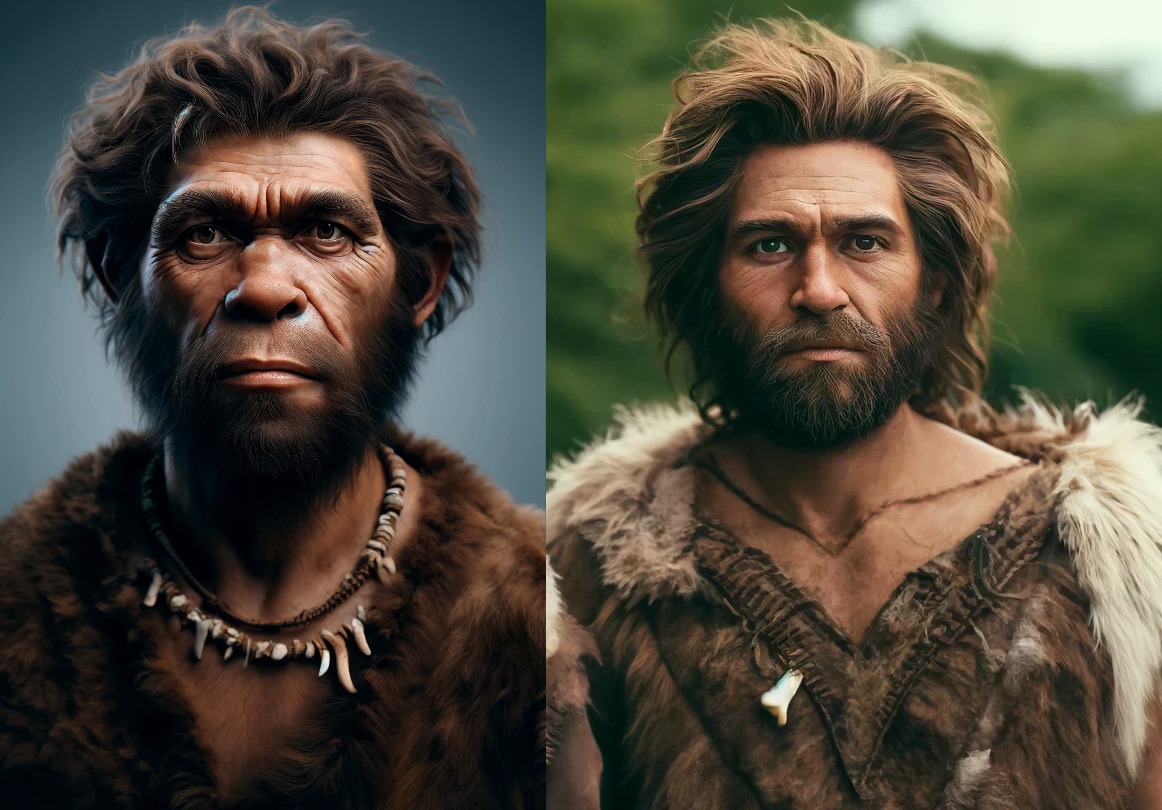
Homo neanderthalensis: Neanderthals and humans coexisted in Europe and Asia until around 40,000 years ago. While their exact cause of extinction remains debated, competition with modern humans and climate change are thought to be contributing factors. Imagined image: Left is a neanderthal, right a human. Just as human looks vary widely, Neanderthals did too. This

Extinction: Neanderthals Read More »

Indus Valley Script: Northwest India

Earliest undeciphered writing in the Asian zone.  The Indus Valley script, emerging around 2600 BCE in one of the world’s earliest urban civilizations, remains one of archaeology’s greatest puzzles. Found across a vast expanse from today’s northeast Afghanistan to Pakistan and northwest India, this script comprises over 400 unique symbols, ranging from geometric shapes to

Indus Valley Script: Northwest India Read More »

Oracle Bone Script: China

Earliest deciphered writing in Asian zone: Indus Valley writing, undeciphered, predates this to circa 2600 BCE. The earliest known writing system in Asia is typically considered to be the Oracle Bone Script from ancient China. This script was used during the Shang Dynasty around 1200 BCE, but evidence suggests it may have developed as early

Oracle Bone Script: China Read More »

Hominin World Population: 2 Million (maybe)

When Homo sapiens first emerged, their population in Africa was likely just a few hundred thousand, while the total hominin population, including other species like Neanderthals and Homo heidelbergensis, may have ranged from 1.1 to 2.1 million. During this period, Homo sapiens were primarily found in Africa, while other hominins occupied broader ranges across Eurasia,

Hominin World Population: 2 Million (maybe) Read More »

World Population: 1.5 Million

Cognitive Revolution By 70,000 BCE. Population range: 500,000 to 2.5 million. Given the uncertainties and lack of direct data, the following are speculative estimates. Africa-Middle East: 50-60% or 600,000 to 1 million people Africa, being the origin of modern humans, likely had the highest population density at this time, particularly in Sub-Saharan regions which were

World Population: 1.5 Million Read More »

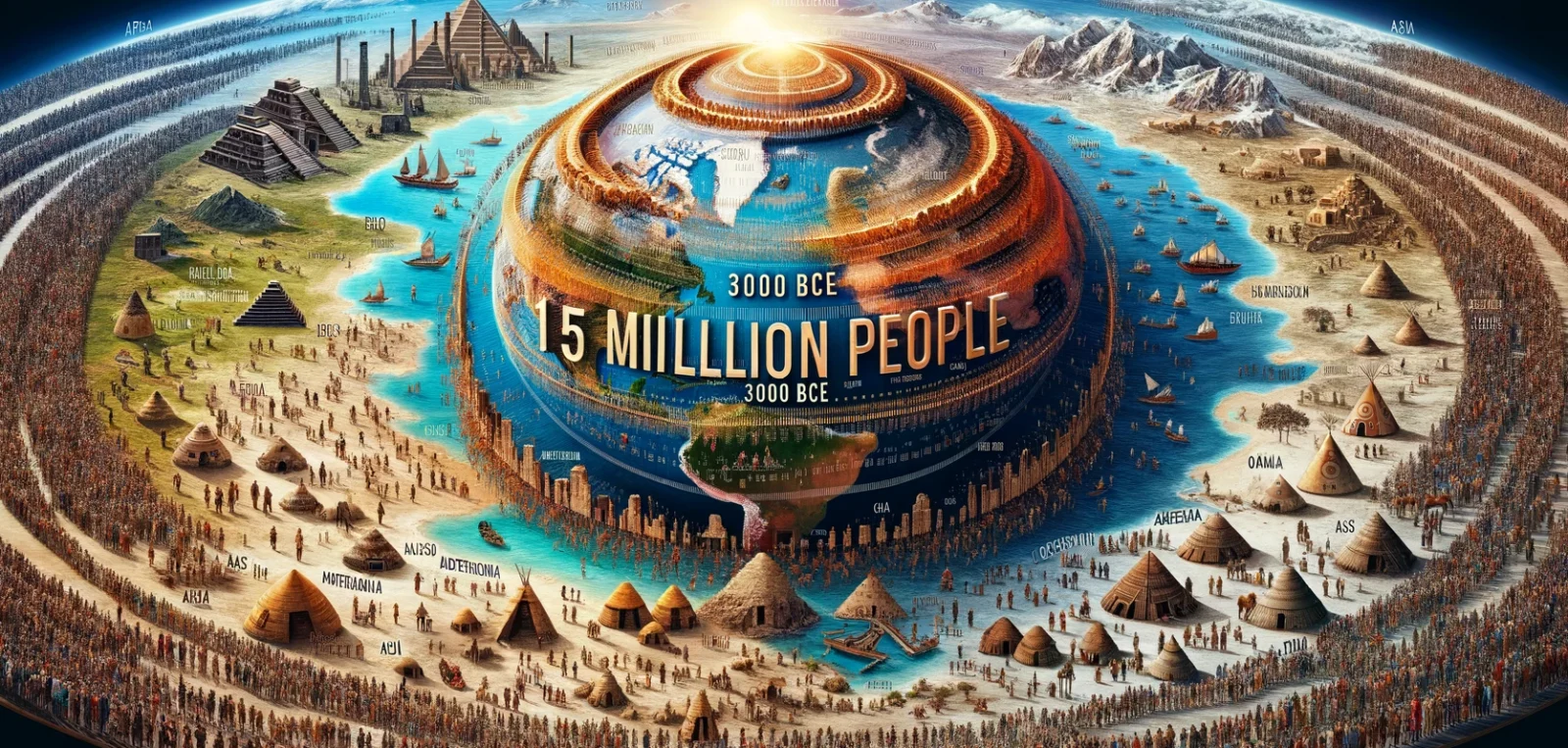
World Population: 15 Million

Stone Copper Age Chalcolithic Period: 3,000 BCE – 500 BCE. Africa-Middle East: 36% or 5 million people Early civilizations include Egypt and Mesopotamia with a relatively higher population density. Asia: 36% or 5 million people Early civilizations include Indus Valley and ancient China. They saw early urban development and agriculture which supported larger populations. Europe-Mediterranean:

World Population: 15 Million Read More »

Scroll to Top