

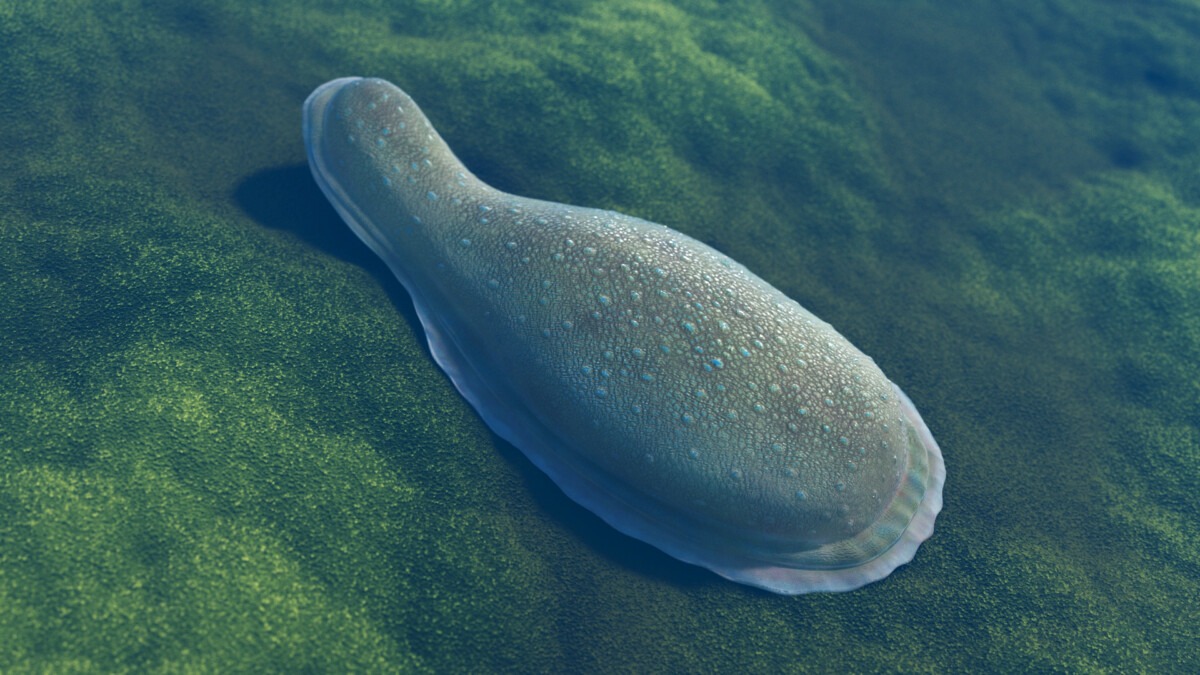
Chemoreception, the ability to detect chemical stimuli, likely emerged around 600 million years ago among some of the earliest soft-bodied multicellular organisms. This evolutionary leap did not necessarily require a proto- or pre-brain in the complex sense associated with later animals but rather relied on cellular mechanisms capable of processing chemical information. These early forms of chemoreception enabled organisms to make rudimentary distinctions necessary for survival, such as identifying nutritive substances versus harmful ones. They could “taste” potential food sources upon direct contact and “smell” chemicals dissolved in the water, guiding them towards nourishment or away from danger. These primitive sensory mechanisms laid the groundwork for the sophisticated development of taste and smell in more complex animals.
Kimberella (circa 560 Mya): The Kimberella, while not an ancestor of vertebrates, is a likely early example of a creature with chemoreception. It is potentially an early mollusk, and exemplifies the importance of chemoreception in early animal life. Its grazing on microbial mats would have necessitated a basic form of chemoreception to discern between nutritious and non-nutritious substances. The distinction between food sources implies an elementary ability to ‘taste’ and ‘smell,’ integral for selecting suitable food. This behavior marks a significant step in the evolutionary sophistication of sensory systems, foreshadowing the complex senses of taste and smell found in later species.
- Domain: Eukaryota > Kingdom: Animalia > Phylum: Bilateria or Mollusca
