

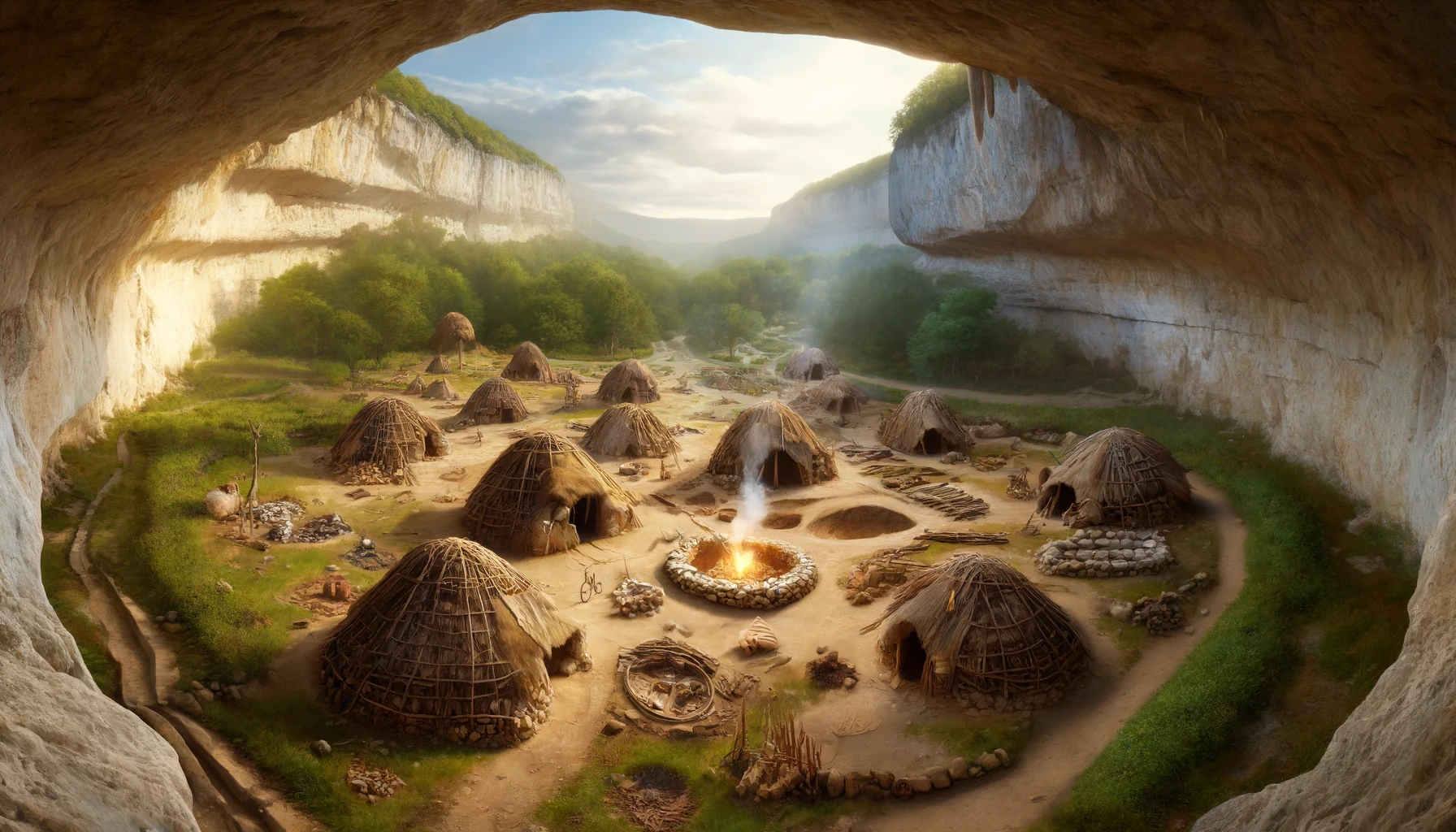
Earliest known seasonal settlement in the European Mediterean zone: Nestled in the Argolid region of the Peloponnese in Greece, the Franchthi Cave offers a unique window into the lives of early Europeans spanning from the Upper Paleolithic through the Mesolithic and into the Neolithic periods. For over 23,000 years, from about 20,000 BCE to 3,000 BCE, this cave served as a seasonal hub for prehistoric communities.
The strategic coastal location of the Franchthi Cave allowed early humans to exploit both marine and terrestrial resources effectively. The abundance of marine shells and fish bones found within the cave layers suggests that these groups were highly adept at fishing and shellfish gathering, activities that likely formed a significant part of their subsistence strategy during their stays.
As seasons turned, these early inhabitants would have utilized the cave as a base from which to conduct their hunting and gathering activities. Over millennia, the evidence shows a gradual shift from reliance on wild resources to the introduction of domesticated plants and animals, signaling the start of agricultural practices in the region.
This transition marks Franchthi Cave not just as a site of temporary habitation but as a pivotal location where significant cultural and technological transformations occurred. The cave’s extensive use and the layers of habitation offer profound insights into the evolutionary journey of human societies in the Mediterranean, showcasing how a simple seasonal settlement could eventually evolve into a cornerstone of early agrarian life.
Franchthi Cave thus represents one of the earliest known seasonal settlements in the European-Mediterranean zone, providing invaluable lessons on the adaptability and innovation of early human communities in the face of changing environmental and social landscapes.
Imagined image: This image portrays a seasonal settlement at Franchthi Cave around 10,000 BCE, where early humans utilized natural materials to construct temporary shelters nestled within a lush landscape. Central hearth areas serve as communal hubs for cooking and social gatherings, illustrating the strategic use of space and resources by these early inhabitants. The arrangement of shelters around the cave entrance highlights their reliance on the natural environment for survival and community activities.
