
Explore Science-first Philosophy

Under Investigation: Yonaguni Monument

~ < 1 of audio

Author note. 

Explore voice = Exploratory style. Very punchy. Personal, and lively using “me,” “you,” “us,” and “I” freely.

I want you to feel me right there with you. We use “I” and “me” and “us” without apology. If the Explain voice is a bridge, the Explore voice is the hike we take across it. It is lively, reflective, and sometimes a bit raw. It is the sound of a shared exploration where I lead you by the hand, but we both discover the view at the same time.

This is where I get to think out loud. Not with definitions, we aren’t just looking at the facts; we are looking at how they feel and what they mean for our lives. I’m talking to you about what I’ve found and what I’m still figuring out. It is engaging because it is real, and it is reflective because it is honest.

The goal is real advice and enjoyable reading. I want to land on something you can actually use. It’s about being direct, being punchy, and making sure that by the time we reach the end of the page, we’ve both found something worth keeping.

And now the piece.

Under Investigation: Yonaguni Monument

circa 8000 BCE (speculative)

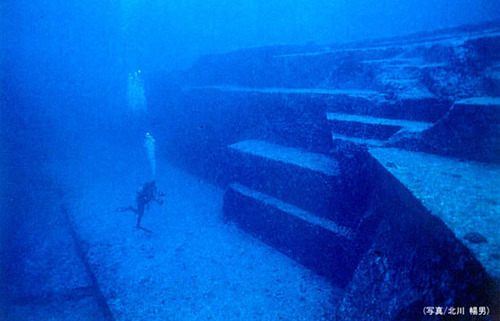
Possible lost city off Japan: Discovered in 1985 off the coast of Yonaguni, Japan, it has captivated archaeologists, geologists, and conspiracy theorists alike. Characterized by its monolithic, terraced structures, this submerged rock formation resembles architectural craftsmanship that some suggest could date back to around 8000 BCE, a time when global sea levels were significantly lower. This date remains highly speculative, as definitive scientific consensus on the monument’s origins—natural or man-made—has yet to be established.

The debate hinges on the monument’s peculiar features, such as precise angles and straight edges that evoke images of human-made pyramids and temples. Proponents of the man-made theory argue that these features are too structured to be products of natural geological processes and suggest a lost civilization’s handiwork.

That History Story, 

was first published on TST 2 years ago.

The flashcard inspired by it is this.

All this is part of the broader TST project.
This structure allows essays to remain readable and reflective, while citations stay precise, visible, and accountable.
Each weekly edition of the TST Weekly Column consists of a central column supported by a research layer of stories, quotes, timelines, and FAQs.

The end!

Scroll to Top