
Explore Science-first Philosophy

FAQ

Can Carl Jung’s shadow work help us think well?

Fri 15 May 2026
Published 4 weeks ago.
Updated 4 weeks ago.
Related FAQs
What does existence before essence mean?
Why does TST Ethics favor preservation over destruction?
Can our perception of size and scale be trusted?
What is the difference between Public Truth and Public Belief?
Who were the Presocratic Philosophers?
What does neuroscience say about “identity?”
Share :
Email
Print

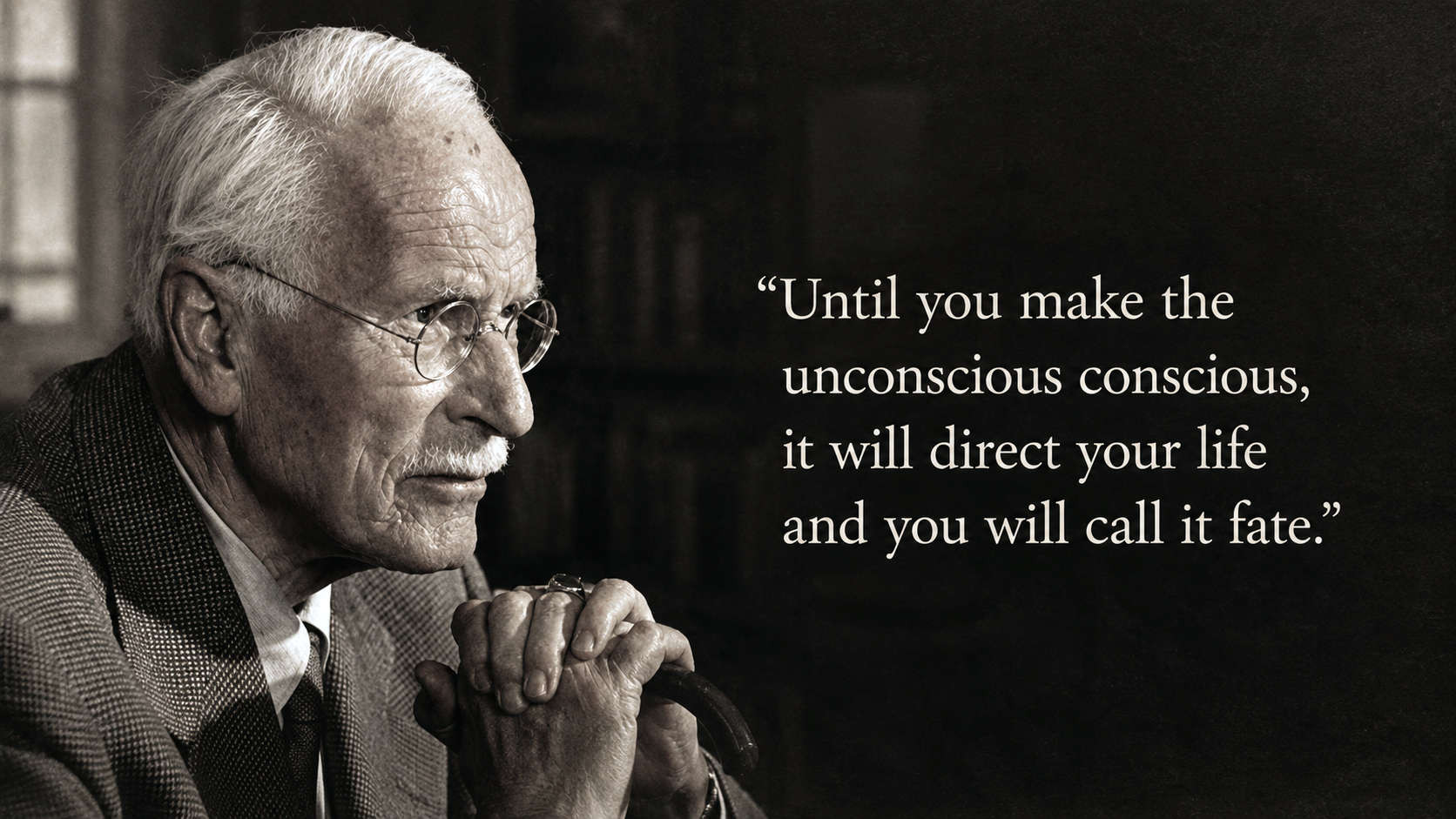
Can Carl Jung’s shadow work help us think well?

Carl Jung (1875-1961) was a Swiss psychiatrist and founder of analytical psychology. He explored the unconscious mind, archetypes, dreams, symbols, the persona, and the shadow—the hidden parts of the self we often avoid.

Jung helps you understand the stories rising from within you; TST helps you decide how much truth those stories deserve.

Carl Jung’s idea of the shadow points to the parts of ourselves we would rather not see. These can include fear, anger, shame, selfishness, insecurity, resentment, and even hidden strengths we have pushed aside. Shadow work begins with a simple but difficult act:

Stop pretending your inner life is cleaner than it is.

That fits nicely within critical thinking and philosophy because both require self-honesty. If your hidden fears are steering your beliefs, you are not really following reason. If your resentment is choosing your facts, you are not seeking truth. These are mind traps in motion: biases, shortcuts, emotional reactions, and distorted stories quietly shaping what feels true. Jung gives us language for the inner fog; critical thinking gives us tools for testing what comes out of it.

But shadow work has limits. A dream, symbol, or emotional reaction can reveal something meaningful, but meaning is not the same as truth. Your feelings may point toward a real wound, a distorted memory, a useful insight, or a false story your mind has been repeating for years. Critical thinking asks us to slow down and sort the claim: What is empirical? What is rational? What is speculation?

So yes, Jung’s shadow work can help us think well—when we use it as a doorway, not a verdict. It can help us notice what we are avoiding, soften our ego, and see the mind traps shaping our inner story. Then critical thinking takes the next step: calibrate the story, test the belief, and bring the self back into better alignment with reality.

— map / TST —

Michael Alan Prestwood
Author & Natural Philosopher
Prestwood writes on science-first philosophy, with particular attention to the convergence of disciplines. Drawing on his TST Framework, his work emphasizes rational inquiry grounded in empirical observation while engaging questions at the edges of established knowledge. With TouchstoneTruth positioned as a living touchstone, this work aims to contribute reliable, evolving analysis in an emerging AI era where the credibility of information is increasingly contested.
This month @ TST
Column Menu
June 2026
»COLUMN ARCHIVE
Column Research….
1. Timeline Story
Secular Spirituality Settles
2. Linked Quote
“Extraordinary claims require extraordinary evidence.”
3. Science FAQ »
What is the difference between a spiritual and empirical belief?
4. Philosophy FAQ »
What is secular spirituality?
5. Critical Thinking FAQ »
How does spirituality relate to public belief?
6. History FAQ!
Is secular spirituality supported in history and science?
Bonus Deep-Dive Article
The Material-Spiritual Framework: A Philosophy of Spirituality

Comments

Join the Conversation! Currently logged out.
NEW BOOK! NOW AVAILABLE!!

30 Philosophers: A New Look at Timeless Ideas

by Michael Alan Prestwood
The story of the history of our best ideas!
Scroll to Top