
Phil • Cr. Think • Science • Hist •

Explore Natural Philosophy

Natural Philosophy Term

Two Tables of the Ten Commandments

Tue 23 Jun 2026
Published 2 months ago.
Updated 2 months ago.
Related Terms
Share :
Email
Print

Two Tables of the Ten Commandments

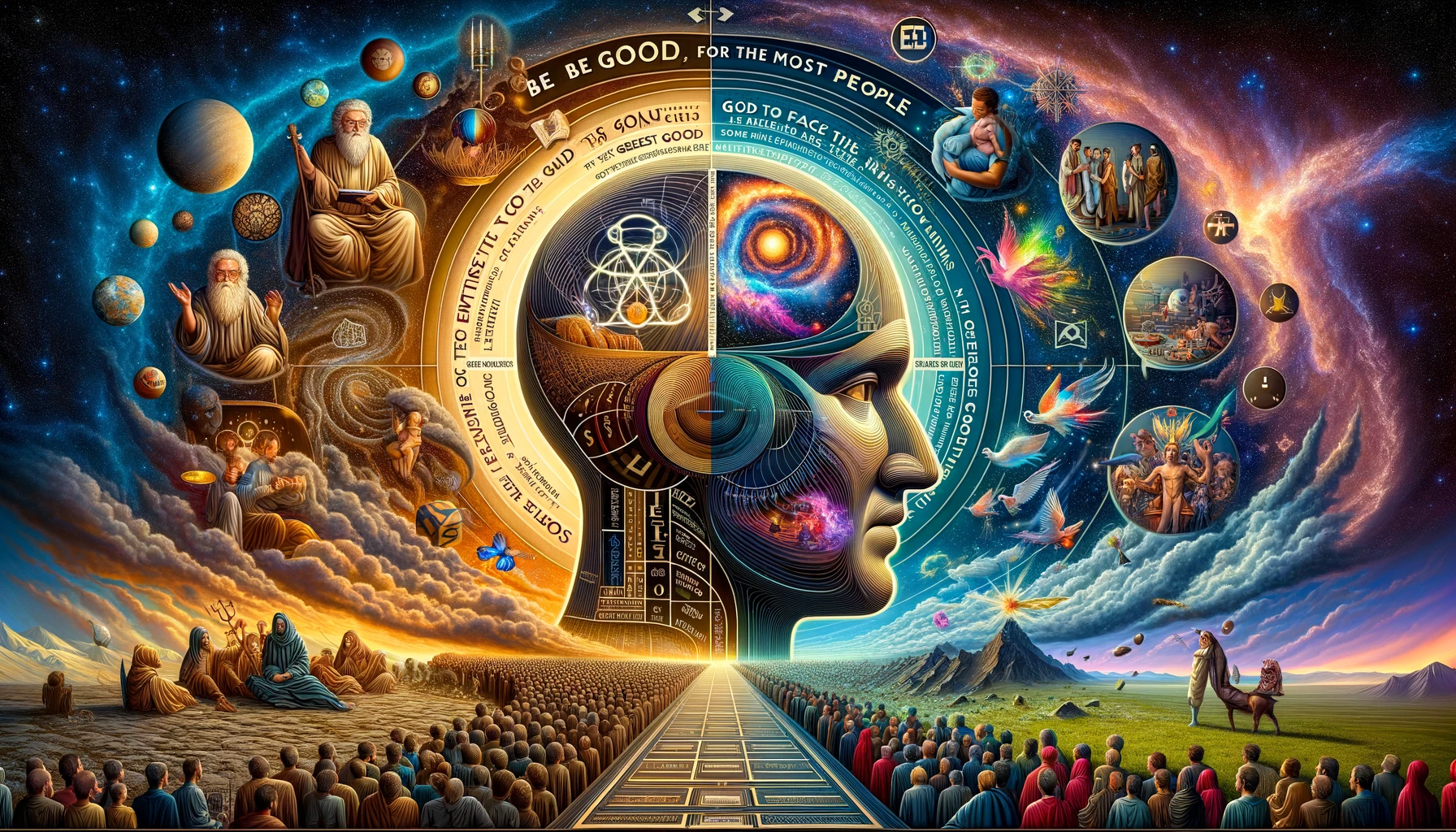
The Two Tables of the Ten Commandments is borrowed from the writing of Roger Williams and used in TST as a needed floor of separation between church and state. The first table points toward one’s relationship with God, the sacred, the unknown, and the unknowable. The second table points toward one’s relationship with other people. In TST, this split helps protect freedom of conscience while preserving the common ground we all must coexist on.

The common floor is simple: governments should not enforce first-table religion. A state should not decide which God people must worship, which church they must join, which prayer they must say, or which sacred doctrine they must accept. Those questions belong to conscience, family, religious community, and voluntary tradition. The state’s role is to protect civil peace, public safety, equal rights, and the shared moral ground needed for people of many faiths and no faith to live together.

This also gives TST a hook into the three major Abrahamic branches: Judaism, Islam, and Christianity. Each tradition can explore the first table in its own way. Religious communities can teach, guide, worship, interpret, and define their members’ relationship with the unknown and unknowable. But they should not use the state to force that relationship onto everyone else. The first table belongs to conscience. The second table overlaps with public life.
That is why the Two Tables of the Ten Commandments matters for TST Ethics. It honors religion without handing religion the state. It protects unbelief without making the state anti-religious. It gives Abrahamic faiths room to flourish while protecting the civic floor everyone must share. In this way, church-state separation is not hostility toward religion. It is the public condition that lets freedom of conscience survive.

— map / TST —

Hume's Ethical Framework opposed religious morality, such as the Ten Commandments and divine judgment, for secular morality and the societal impact of actions. He emphasizedacts of kindness and empathy. The role of emotions, our feelings, guide our moral actions. He shifted ethical thought from "be good, or face God’s wrath" to promoting the greatest good for the most people.
Michael Alan Prestwood
Author & Natural Philosopher
Prestwood writes on science-first philosophy, with particular attention to the convergence of disciplines. Drawing on his TST Framework, his work emphasizes rational inquiry grounded in empirical observation while engaging questions at the edges of established knowledge. With TouchstoneTruth positioned as a living touchstone, this work aims to contribute reliable, evolving analysis in an emerging AI era where the credibility of information is increasingly contested.
The Prestwood Column
Menu
August 2026
»COLUMN ARCHIVE
--COLUMN--
Column Research….
1. Timeline Story
Ethical Roadmap
2. Linked Quote
“The greatest weapon against stress is our ability to choose one thought over another.”
3. Science FAQ »
Did morality evolve?
4. Philosophy FAQ »
Is the Me Too movement consistent with TST Ethics?
5. Critical Thinking FAQ »
When should you stop following the crowd?
6. History FAQ!
What did the Nuremberg Trials clarify about moral agents?
Bonus Deep-Dive Article
TST Ethical Roadmap: A Process Model for Ethical Guidance and Moral Choice

Comments

Join the Conversation! Currently logged out.
NEW BOOK! NOW AVAILABLE!!

30 Philosophers: A New Look at Timeless Ideas

by Michael Alan Prestwood
The story of the history of our best ideas!
Scroll to Top